Seok Ji-Woo, Kim Joong Il
Digital Health Research Division, Korea Institute of Oriental Medicine, Daejeon 34054, Republic of Korea.
J Clin Med. 2024 Sep 23;13(18):5633. doi: 10.3390/jcm13185633.
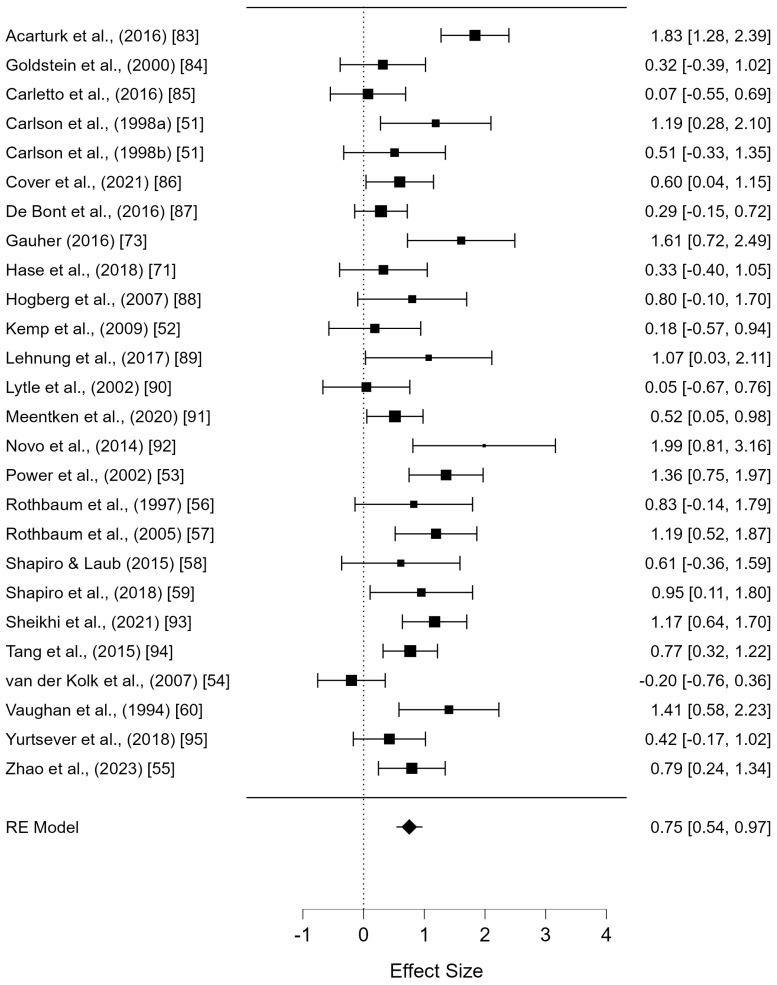
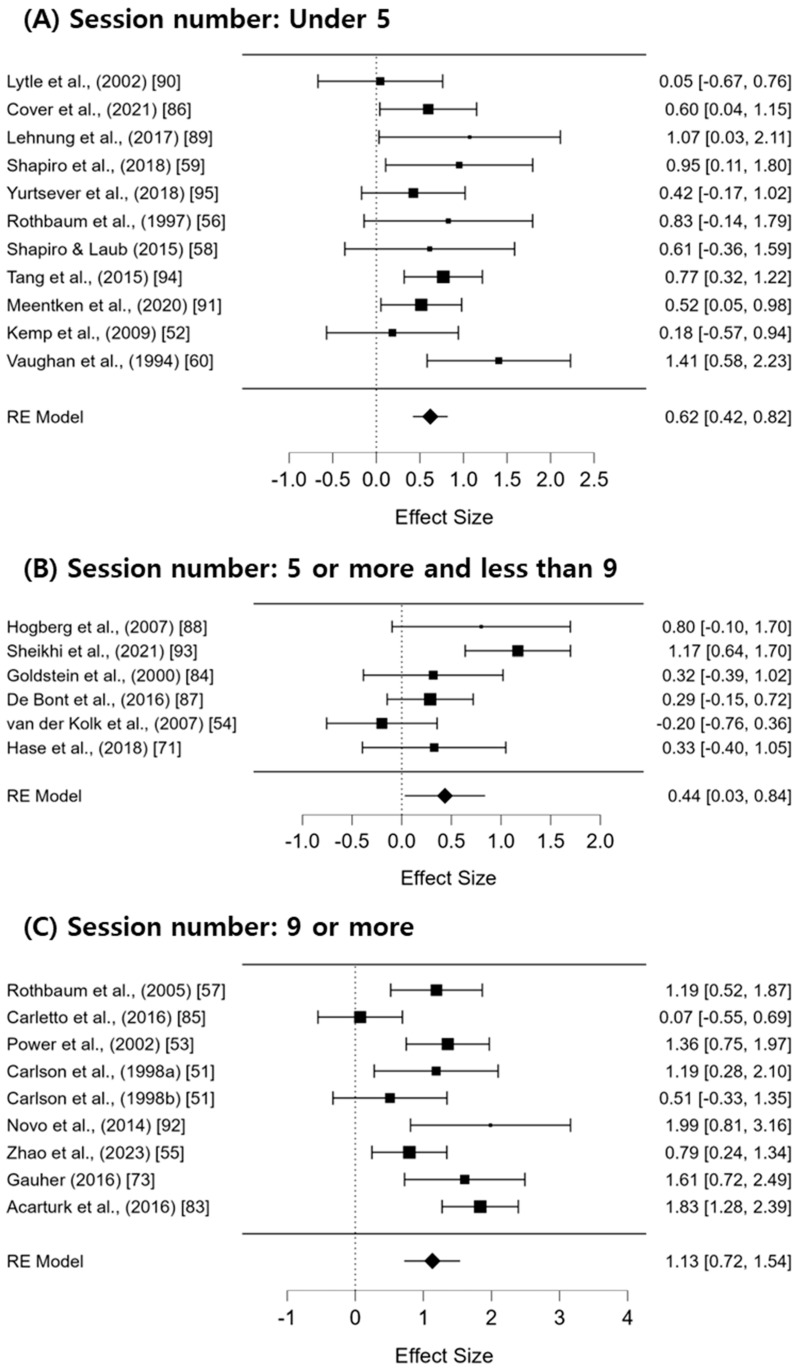
: Eye Movement Desensitization and Reprocessing (EMDR) therapy has gained attention for its potential effectiveness in treating depression beyond its initial use for PTSD. This systematic review and meta-analysis aims to evaluate the efficacy of EMDR in treating depression and to identify the variables influencing its effectiveness. : A comprehensive search was conducted across databases, including MEDLINE, PubMed, and EMBASE, covering studies up to January 2023. A total of 521 studies were screened, and 25 studies with 1042 participants (522 EMDR, 520 control) met the inclusion criteria and were included in the meta-analysis. The inclusion criteria involved randomized controlled trials (RCTs) comparing EMDR to control conditions such as usual care or waitlist groups, with outcomes focused on changes in depression symptoms. The results show that EMDR had a significant effect on reducing depression symptoms (Hedges' g = 0.75), with moderate heterogeneity being observed. The meta-regression indicated that the severity of depression was a significant predictor of EMDR's effectiveness, with greater effects in severe cases. Additionally, the systematic review analyzed and evaluated various theoretical models and related studies that explain how EMDR works for the treatment of depression, reporting on neurobiological models proposed in previous research. This study confirms that EMDR is effective in treating depression, particularly in severe cases, and highlights its potential as a non-pharmacological intervention. However, this study highlights the need for more standardized research and long-term evaluations to assess EMDR's lasting impact. Integrating EMDR into multimodal treatment plans and primary care, especially for treatment-resistant depression, could significantly improve patient outcomes.
眼动脱敏再处理(EMDR)疗法最初用于治疗创伤后应激障碍(PTSD),后来其在治疗抑郁症方面的潜在效果受到了关注。本系统评价和荟萃分析旨在评估EMDR治疗抑郁症的疗效,并确定影响其有效性的变量。对多个数据库进行了全面检索,包括MEDLINE、PubMed和EMBASE,涵盖截至2023年1月的研究。共筛选了521项研究,25项研究(1042名参与者,522名接受EMDR治疗,520名作为对照)符合纳入标准并被纳入荟萃分析。纳入标准包括随机对照试验(RCT),将EMDR与常规护理或等待名单组等对照条件进行比较,结果聚焦于抑郁症状的变化。结果表明,EMDR对减轻抑郁症状有显著效果(Hedges' g = 0.75),观察到中等程度的异质性。元回归表明,抑郁严重程度是EMDR有效性的显著预测因素,在严重病例中效果更明显。此外,系统评价分析并评估了解释EMDR如何治疗抑郁症的各种理论模型和相关研究,报告了先前研究中提出的神经生物学模型。本研究证实EMDR在治疗抑郁症方面有效,尤其是在严重病例中,并突出了其作为非药物干预措施的潜力。然而,本研究强调需要更标准化的研究和长期评估,以评估EMDR的长期影响。将EMDR纳入多模式治疗计划和初级保健,特别是对于难治性抑郁症,可显著改善患者预后。