Department of Nutrition and Dietetics, Faculty of Public Health, Health Institute, Jimma University, Jimma 378, Ethiopia.
Rehabilitation Research Centre (REVAL), Rehabilitation Sciences and Physiotherapy, Hasselt University, Wetenschapspark 7, 3590 Diepenbeek, Belgium.
Nutrients. 2024 Sep 15;16(18):3118. doi: 10.3390/nu16183118.
In Ethiopia, moderate thinness (MT) is a persistent issue among children. Yet, evidence on the effects of dietary supplementation and motor skills training in these children is limited.
This study aimed to assess the effect of Ready-to-Use Supplementary Food (RUSF), whether or not combined with high-intensity motor learning (HiML), on weight, height, body composition, and muscle strength in children 5-7 years old with MT living in Jimma Town, Ethiopia.
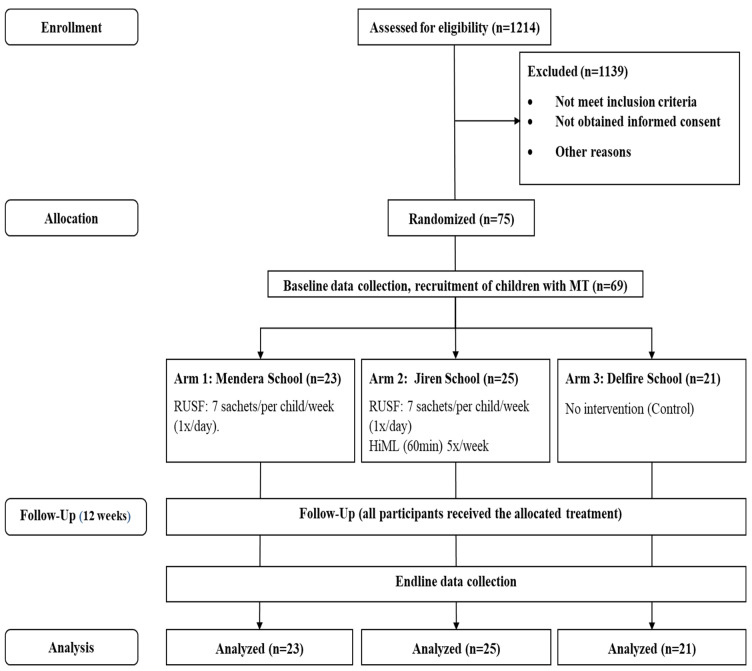
A cluster-randomized controlled trial was carried out among 69 children (aged 5-7) with MT assigned to receive RUSF (n = 23), RUSF + HiML (n = 25), or no intervention (control group, n = 21). A multivariable Generalized Estimating Equations model was used and the level of significance was set at alpha < 0.05.
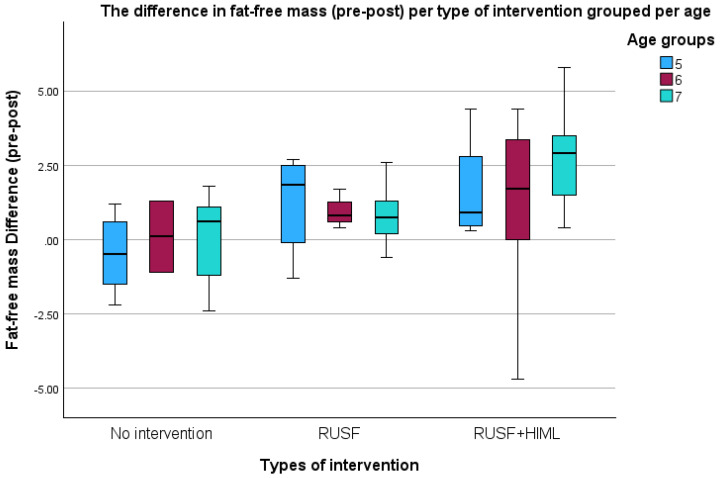
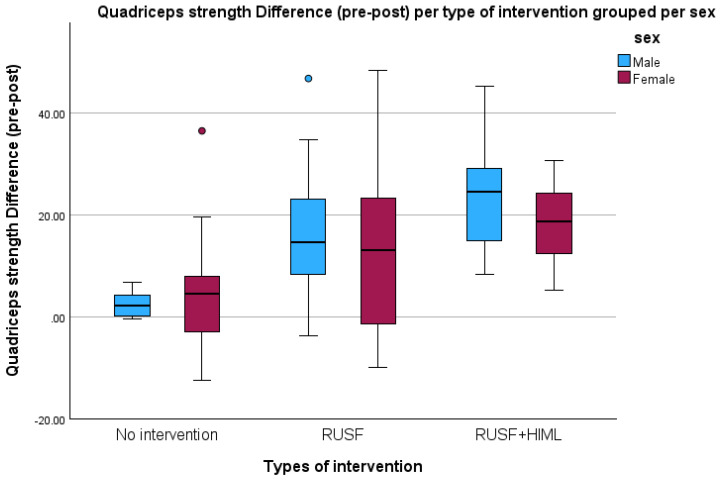
At baseline, there were no significant differences in the outcome measurements between the RUSF, RUSF + HiML, and control groups. However, after 12 weeks of intervention, there were significant mean differences in differences (DIDs) between the RUSF group and the control arm, with DIDs of 1.50 kg for weight ( < 0.001), 20.63 newton (N) for elbow flexor ( < 0.001), 11.00 N for quadriceps ( = 0.023), 18.95 N for gastrocnemius sup flexor of the leg ( < 0.001), and 1.03 kg for fat-free mass ( = 0.022). Similarly, the mean difference in differences was higher in the RUSF + HiML group by 1.62 kg for weight ( < 0.001), 2.80 kg for grip strength ( < 0.001), 15.93 for elbow flexor ( < 0.001), 16.73 for quadriceps ( < 0.001), 9.75 for gastrocnemius sup flexor of the leg ( = 0.005), and 2.20 kg for fat-free mass ( < 0.001) compared the control arm.
RUSF alone was effective, but combining it with HiML had a synergistic effect. Compared to the control group, the RUSF and RUSF + HiML interventions improved the body composition, height, weight, and muscle strength of the studied moderately thin children. The findings of this study suggest the potential that treating moderately thin children with RUSF and combining it with HiML has for reducing the negative effects of malnutrition in Ethiopia. Future research should explore these interventions in a larger community-based study. This trial has been registered at the Pan African Clinical Trials Registry (PACTR) under trial number PACTR202305718679999.
在埃塞俄比亚,中度消瘦(MT)是儿童中持续存在的问题。然而,关于这些儿童的膳食补充和运动技能训练效果的证据有限。
本研究旨在评估即食补充食品(RUSF)是否结合高强度运动学习(HiML)对居住在埃塞俄比亚吉姆马镇的 5-7 岁 MT 儿童的体重、身高、身体成分和肌肉力量的影响。
在 MT 的 69 名 5-7 岁儿童中进行了一项聚类随机对照试验,他们被分配接受 RUSF(n=23)、RUSF+HiML(n=25)或不干预(对照组,n=21)。使用多变量广义估计方程模型,显著性水平设置为 alpha < 0.05。
在基线时,RUSF、RUSF+HiML 和对照组之间的结局测量值没有显著差异。然而,在 12 周的干预后,RUSF 组和对照组之间的差异均值有显著差异,体重差异为 1.50 公斤(<0.001),肘屈肌差异为 20.63 牛顿(<0.001),股四头肌差异为 11.00 牛顿(=0.023),小腿腓肠肌差异为 18.95 牛顿(<0.001),去脂体重差异为 1.03 公斤(=0.022)。同样,RUSF+HiML 组的差异均值更高,体重差异为 1.62 公斤(<0.001),握力差异为 2.80 公斤(<0.001),肘屈肌差异为 15.93 牛顿(<0.001),股四头肌差异为 16.73 牛顿(<0.001),小腿腓肠肌差异为 9.75 牛顿(=0.005),去脂体重差异为 2.20 公斤(<0.001)与对照组相比。
单独使用 RUSF 是有效的,但与 HiML 结合使用具有协同作用。与对照组相比,RUSF 和 RUSF+HiML 干预改善了研究中中度消瘦儿童的身体成分、身高、体重和肌肉力量。这项研究的结果表明,用 RUSF 治疗中度消瘦儿童并结合 HiML 可能有助于减轻埃塞俄比亚营养不良的负面影响。未来的研究应在更大的基于社区的研究中探索这些干预措施。这项试验已在泛非临床试验注册中心(PACTR)注册,编号为 PACTR202305718679999。