Ko Melissa, Frivold Collrane, Mvundura Mercy, Soble Adam, Gregory Christopher, Christiansen Hans, Hasso-Agopsowicz Mateusz, Fu Han, Jit Mark, Hsu Shan, Mistilis Jessica Joyce, Scarna Tiziana, Earle Kristen, Menozzi-Arnaud Marion, Giersing Birgitte, Jarrahian Courtney, Yakubu Ahmadu, Malvolti Stefano, Amorij Jean-Pierre
MMGH Consulting GmbH, 1211 Geneva, Switzerland.
PATH, Seattle, WA 98121, USA.
Vaccines (Basel). 2024 Sep 19;12(9):1075. doi: 10.3390/vaccines12091075.
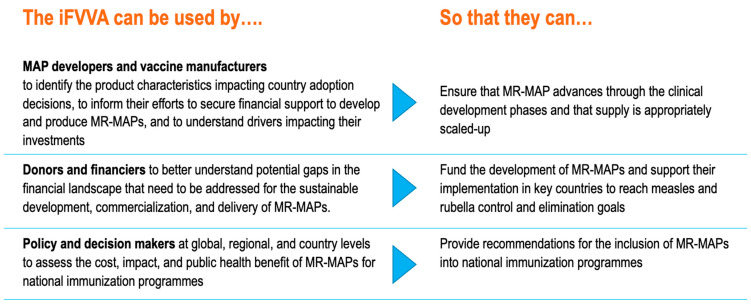
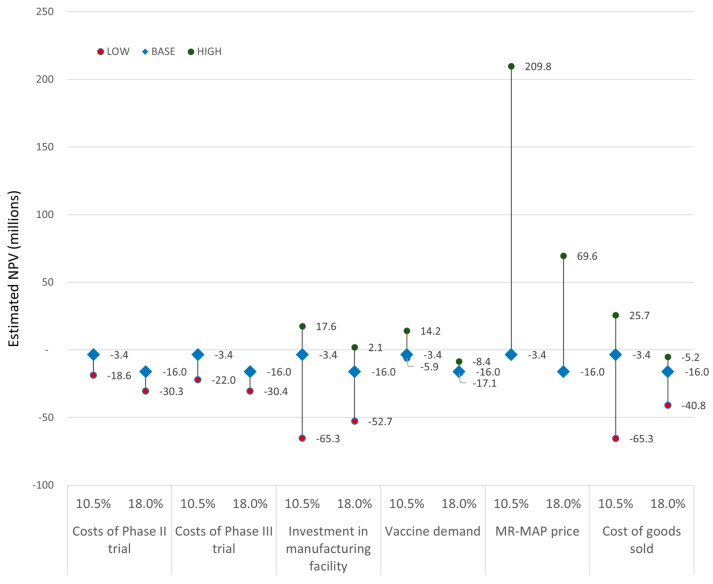
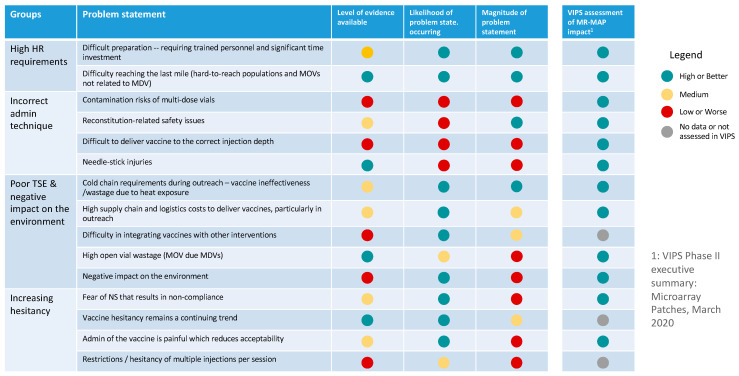
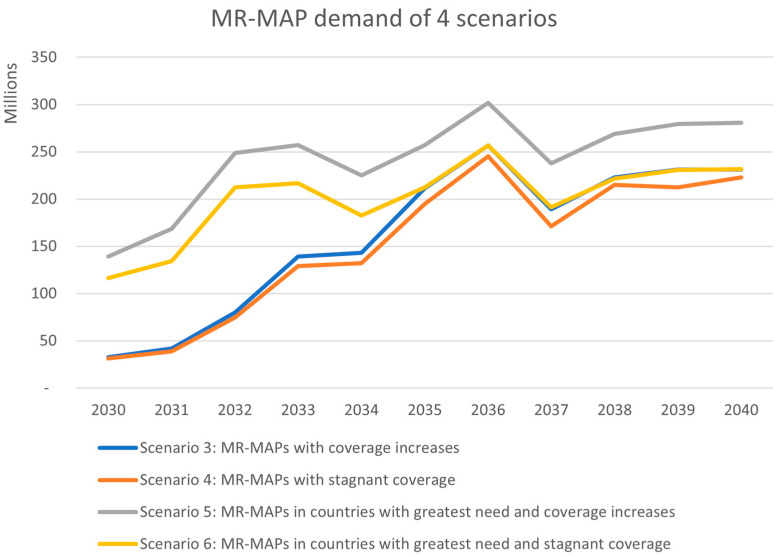
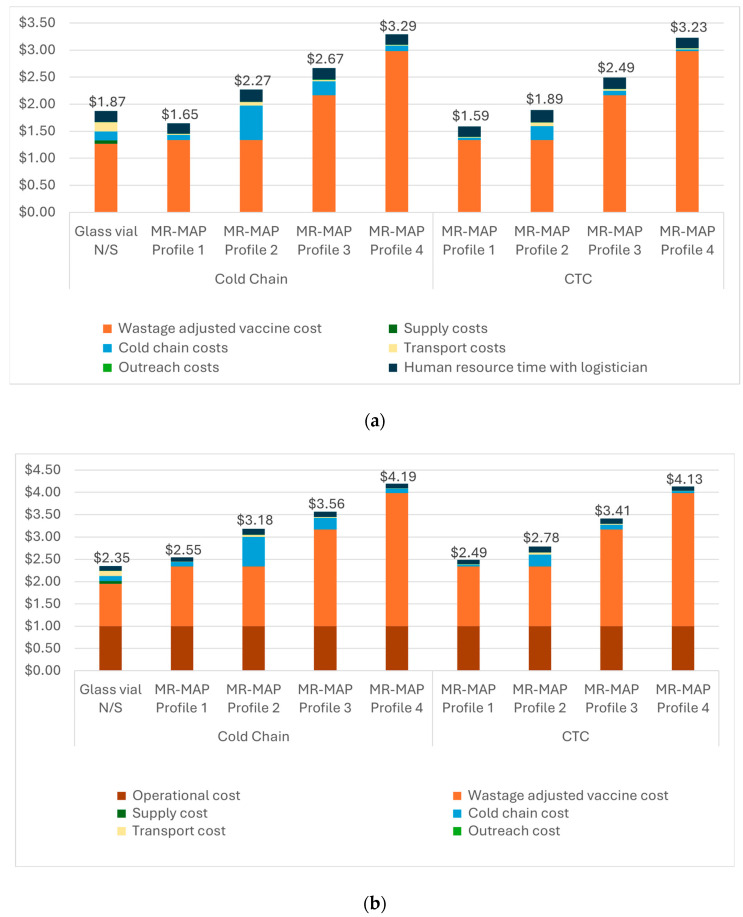
Measles and rubella micro-array patches (MR-MAPs) are a promising innovation to address limitations of the current needle and syringe (N&S) presentation due to their single-dose presentation, ease of use, and improved thermostability. To direct and accelerate further research and interventions, an initial full value vaccine assessment (iFVVA) was initiated prior to MR-MAPs entering phase I trials to quantify their value and identify key data gaps and challenges. The iFVVA utilized a mixed-methods approach with rapid assessment of literature, stakeholder interviews and surveys, and quantitative data analyses to (i) assess global need for improved MR vaccines and how MR-MAPs could address MR problem statements; (ii) estimate costs and benefits of MR-MAPs; (iii) identify the best pathway from development to delivery; and (iv) identify outstanding areas of need where stakeholder intervention can be helpful. These analyses found that if MR-MAPs are broadly deployed, they can potentially reach an additional 80 million children compared to the N&S presentation between 2030-2040. MR-MAPs can avert up to 37 million measles cases, 400,000 measles deaths, and 26 million disability-adjusted life years (DALYs). MR-MAPs with the most optimal product characteristics of low price, controlled temperature chain (CTC) properties, and small cold chain volumes were shown to be cost saving for routine immunization (RI) in low- and middle-income countries (LMICs) compared to N&S. Uncertainties about price and future vaccine coverage impact the potential cost-effectiveness of introducing MR-MAPs in LMICs, indicating that it could be cost-effective in 16-81% of LMICs. Furthermore, this iFVVA highlighted the importance of upfront donor investment in manufacturing set-up and clinical studies and the critical influence of an appropriate price to ensure country and manufacturer financial sustainability. To ensure that MR-MAPs achieve the greatest public health benefit, MAP developers, vaccine manufacturers, donors, financiers, and policy- and decision-makers will need close collaboration and open communications.
麻疹和风疹微阵列贴片(MR-MAPs)是一项很有前景的创新,可解决当前针头和注射器(N&S)剂型存在的局限性,因为它们单剂量给药、使用方便且热稳定性有所提高。为了指导和加速进一步的研究及干预措施,在MR-MAPs进入I期试验之前启动了初始全价值疫苗评估(iFVVA),以量化其价值并确定关键数据差距和挑战。iFVVA采用了混合方法,包括快速文献评估、利益相关者访谈和调查以及定量数据分析,以(i)评估全球对改进型MR疫苗的需求以及MR-MAPs如何解决MR问题陈述;(ii)估计MR-MAPs的成本和收益;(iii)确定从研发到交付的最佳途径;(iv)确定利益相关者干预可能有帮助的突出需求领域。这些分析发现,如果广泛部署MR-MAPs,与2030年至2040年期间的N&S剂型相比,它们有可能惠及额外8000万儿童。MR-MAPs可避免多达3700万例麻疹病例、40万例麻疹死亡以及2600万伤残调整生命年(DALYs)。与N&S相比,具有最低价格、可控温度链(CTC)特性和小冷链体积等最优化产品特性的MR-MAPs在低收入和中等收入国家(LMICs)的常规免疫(RI)中显示出成本节约。价格和未来疫苗覆盖率的不确定性影响了在LMICs引入MR-MAPs的潜在成本效益,表明在16%-81%的LMICs中可能具有成本效益。此外,这项iFVVA强调了捐助者在制造设施建设和临床研究方面的前期投资的重要性,以及适当价格对确保国家和制造商财务可持续性的关键影响。为确保MR-MAPs实现最大的公共卫生效益,MAP开发者、疫苗制造商、捐助者、资助者以及政策和决策者将需要密切合作和开放沟通。