Department of Neurology, New Taipei Municipal TuCheng Hospital (Built and Operated by Chang Gung Medical Foundation, New Taipei City, Taiwan.
Department of Neurology, Chang Gung Memorial Hospital at Linkou Medical Center and Chang Gung University College of Medicine, 5 Fu-Shin Street, Kwei-Shan, Taoyuan, 333, Taiwan.
Sci Rep. 2024 Sep 28;14(1):22480. doi: 10.1038/s41598-024-73001-x.
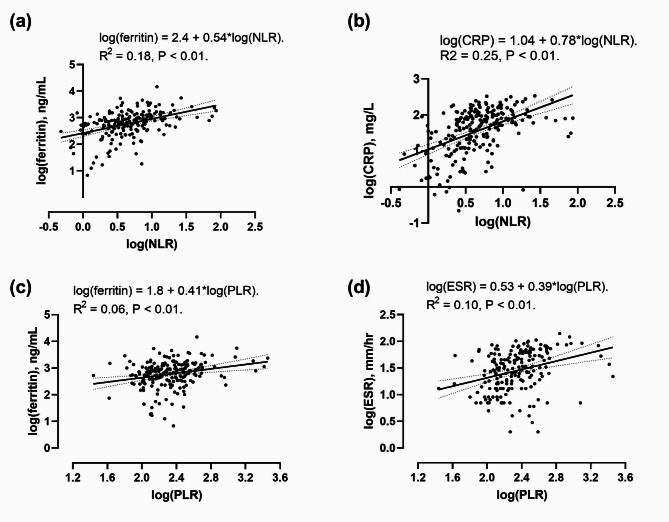
The association of anosmia/ageusia with a positive severe respiratory syndrome coronavirus 2 (SARS-CoV-2) test is well-established, suggesting these symptoms are reliable indicators of coronavirus disease 2019 (COVID-19) infection. This study investigates the clinical characteristics and systemic inflammatory markers in hospitalized COVID-19 patients in Taiwan, focusing on those with anosmia/ageusia. We conducted a retrospective observational study on 231 hospitalized COVID-19 patients (alpha variant) from April to July 2021. Clinical symptoms, dyspnea grading, and laboratory investigations, including neutrophil-lymphocyte ratios (NLRs), platelet-lymphocyte ratios (PLRs), and ANDC scores (an early warning score), were analyzed. Cough (64.1%), fever (58.9%), and dyspnea (56.3%) were the most common symptoms, while anosmia/ageusia affected 9% of patients. Those with anosmia/ageusia were younger, had lower BMI, lower systemic inflammatory markers, and better ANDC scores than those without these symptoms. Female patients exhibited lower NLR values and ANDC scores compared to male patients (all p < 0.05). Multivariable regression analysis demonstrated significant associations between NLR and CRP and ferritin levels (all p < 0.01), and between PLR and ESR and ferritin levels (p < 0.01). Categorized ANDC scores significantly correlated with the total hospital length of stay (all p < 0.05). Despite ethnic differences in the prevalence of anosmia/ageusia, our study highlights similar clinical presentations and inflammatory profiles to those observed in Western countries. The ANDC score effectively predicted hospital stay duration. These findings suggest that anosmia/ageusia may be associated with less severe disease and a lower inflammatory response, particularly in younger and female patients. The ANDC score can serve as a valuable prognostic tool in assessing the severity and expected hospital stay of COVID-19 patients.
嗅觉丧失/味觉丧失与 SARS-CoV-2 检测呈阳性的严重呼吸道综合征之间的关联已得到充分证实,这表明这些症状是冠状病毒疾病 2019(COVID-19)感染的可靠指标。本研究调查了台湾住院 COVID-19 患者的临床特征和系统炎症标志物,重点关注嗅觉丧失/味觉丧失的患者。我们对 2021 年 4 月至 7 月期间的 231 名住院 COVID-19 患者(阿尔法变异株)进行了回顾性观察性研究。分析了临床症状、呼吸困难分级以及实验室检查,包括中性粒细胞-淋巴细胞比值(NLRs)、血小板-淋巴细胞比值(PLRs)和 ANDC 评分(预警评分)。最常见的症状是咳嗽(64.1%)、发热(58.9%)和呼吸困难(56.3%),而嗅觉丧失/味觉丧失影响了 9%的患者。有嗅觉丧失/味觉丧失的患者年龄较小,BMI 较低,系统炎症标志物较低,ANDC 评分较高。与男性患者相比,女性患者的 NLR 值和 ANDC 评分较低(均 p < 0.05)。多变量回归分析表明,NLR 和 CRP 与 ferritin 水平之间存在显著相关性(均 p < 0.01),PLR 与 ESR 和 ferritin 水平之间存在显著相关性(p < 0.01)。分类的 ANDC 评分与总住院时间显著相关(均 p < 0.05)。尽管嗅觉丧失/味觉丧失在不同种族中的患病率存在差异,但我们的研究强调了与西方国家相似的临床表现和炎症特征。ANDC 评分可有效预测住院时间。这些发现表明,嗅觉丧失/味觉丧失可能与疾病较轻和炎症反应较低有关,尤其是在年轻和女性患者中。ANDC 评分可作为评估 COVID-19 患者严重程度和预期住院时间的有价值的预后工具。