Key Laboratory of Resource Biology and Biotechnology in Western China, Ministry of Education, College of Life Sciences, Northwest University, Xi'an, 710069, China.
Xi'an Botanical Garden of Shaanxi Province, Institute of Botany of Shaanxi Province, Shaanxi Academy of Science, Xi'an, Shaanxi, 710061, China.
BMC Genomics. 2024 Sep 28;25(1):894. doi: 10.1186/s12864-024-10818-w.
The Persian walnut (Juglans regia), an economically vital species within the Juglandaceae family, has seen its mitochondrial genome sequenced and assembled in the current study using advanced Illumina and Nanopore sequencing technology.
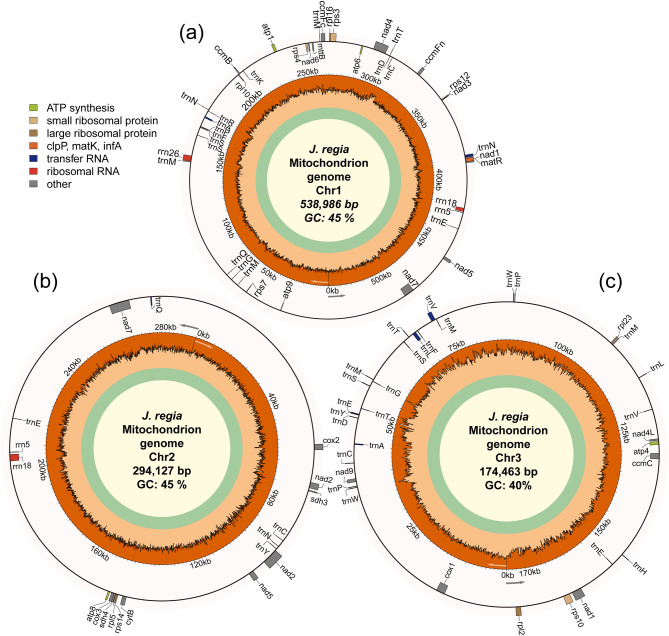
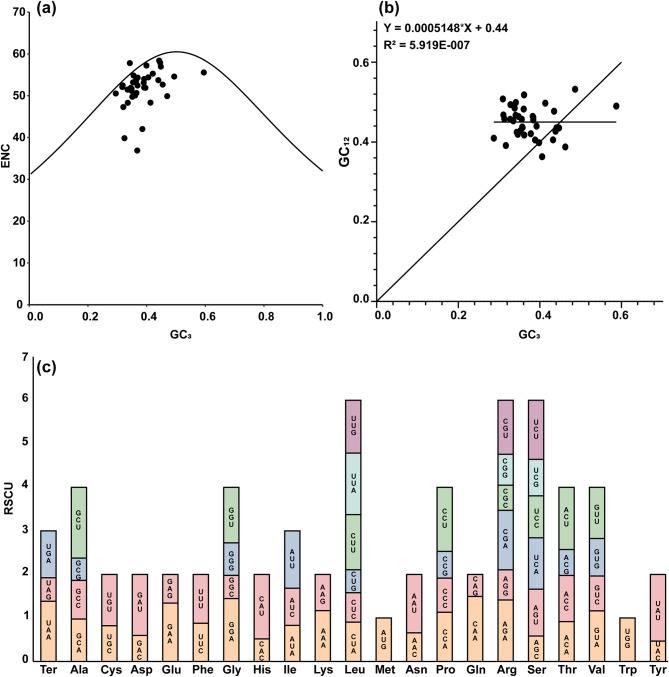
The 1,007,576 bp mitogenome of J. regia consisted of three circular chromosomes with a 44.52% GC content encoding 39 PCGs, 47 tRNA, and five rRNA genes. Extensive repetitive sequences, including 320 SSRs, 512 interspersed, and 83 tandem repeats, were identified, contributing to genomic complexity. The protein-coding sequences (PCGs) favored A/T-ending codons, and the codon usage bias was primarily shaped by selective pressure. Intracellular gene transfer occurred among the mitogenome, chloroplast, and nuclear genomes. Comparative genomic analysis unveiled abundant structure and sequence variation among J. regia and related species. The results of selective pressure analysis indicated that most PCGs underwent purifying selection, whereas the atp4 and ccmB genes had experienced positive selection between many species pairs. In addition, the phylogenetic examination, grounded in mitochondrial genome data, precisely delineated the evolutionary and taxonomic relationships of J. regia and its relatives. We identified a total of 539 RNA editing sites, among which 288 were corroborated by transcriptome sequencing data. Furthermore, expression profiling under temperature stress highlighted the complex regulation pattern of 28 differently expressed PCGs, wherein NADH dehydrogenase and ATP synthase genes might be critical in the mitochondria response to cold stress.
Our results provided valuable molecular resources for understanding the genetic characteristics of J. regia and offered novel perspectives for population genetics and evolutionary studies in Juglans and related woody species.
胡桃树(Juglans regia)是胡桃科中一种具有重要经济价值的物种,本研究采用先进的 Illumina 和 Nanopore 测序技术,对其线粒体基因组进行了测序和组装。
胡桃树的线粒体基因组大小为 1,007,576bp,由三个环状染色体组成,GC 含量为 44.52%,编码 39 个 PCGs、47 个 tRNA 和 5 个 rRNA 基因。大量的重复序列,包括 320 个 SSRs、512 个散布重复序列和 83 个串联重复序列,被鉴定出来,这增加了基因组的复杂性。蛋白质编码序列(PCGs)偏好 A/T 结尾的密码子,密码子使用偏好主要受选择压力的影响。线粒体基因组、叶绿体基因组和核基因组之间发生了基因转移。比较基因组分析揭示了胡桃树和相关物种之间丰富的结构和序列变异。选择压力分析的结果表明,大多数 PCGs 经历了纯化选择,而 atp4 和 ccmB 基因在许多物种对之间经历了正选择。此外,基于线粒体基因组数据的系统发育分析准确描绘了胡桃树及其亲缘种的进化和分类关系。我们总共鉴定出 539 个 RNA 编辑位点,其中 288 个得到了转录组测序数据的支持。此外,温度胁迫下的表达谱分析突出了 28 个差异表达 PCGs 的复杂调控模式,其中 NADH 脱氢酶和 ATP 合酶基因可能在胡桃树线粒体对冷胁迫的反应中具有重要作用。
本研究结果为了解胡桃树的遗传特征提供了有价值的分子资源,并为胡桃属和相关木本物种的群体遗传学和进化研究提供了新的视角。