Department of Anesthesiology and Perioperative Medicine, The Second Affiliated Hospital of Anhui Medical University, Hefei, 230601, People's Republic of China.
Department of Cardiothoracic Surgery, The Second Affiliated Hospital of Anhui Medical University, Hefei, 230601, People's Republic of China.
Cardiovasc Diabetol. 2024 Sep 28;23(1):347. doi: 10.1186/s12933-024-02444-3.
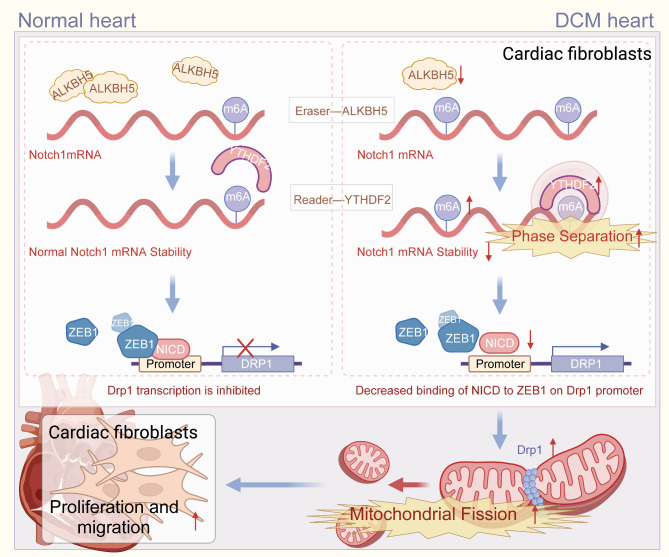
N-methyladenosine (mA) modification of messenger RNA (mRNA) is crucial for liquid-liquid phase separation in mammals. Increasing evidence indicates that liquid-liquid phase separation in proteins and RNAs affects diabetic cardiomyopathy. However, the molecular mechanism by which mA-mediated phase separation regulates diabetic cardiac fibrosis remains elusive.
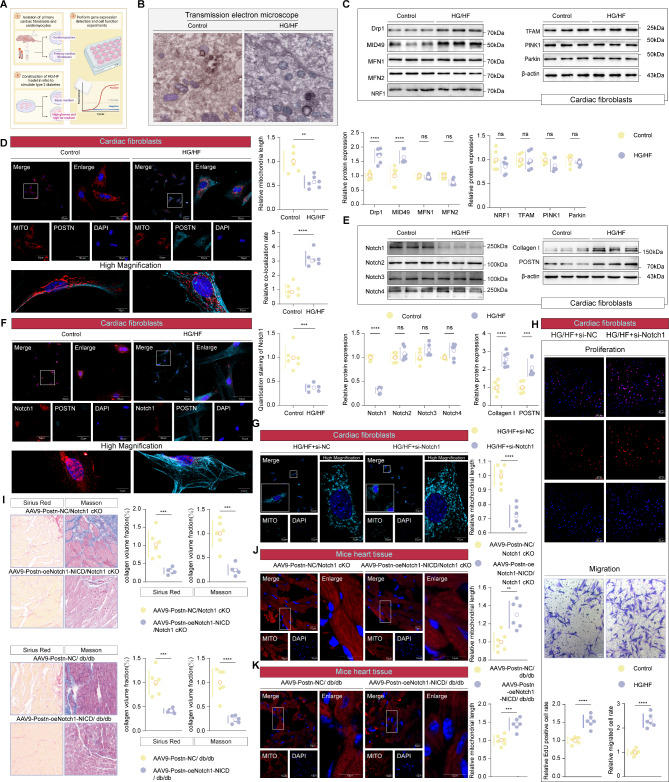
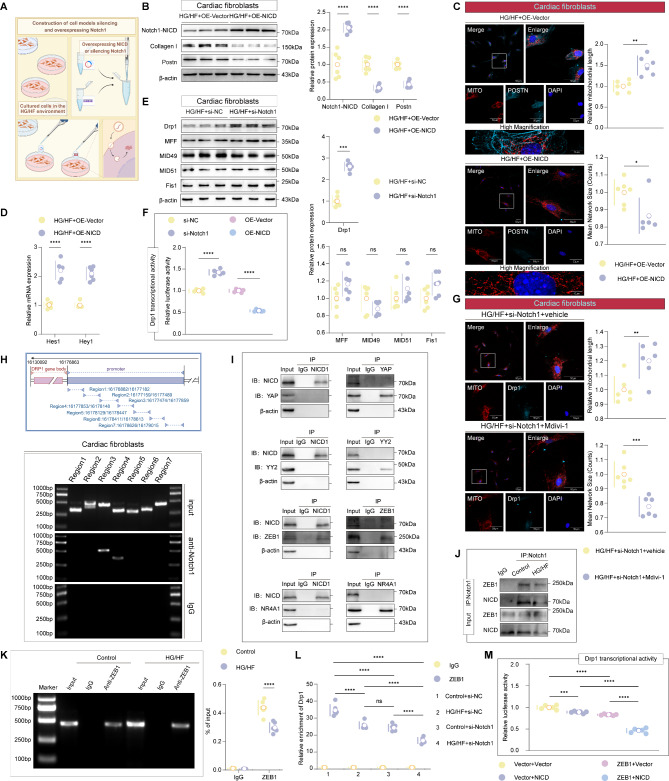
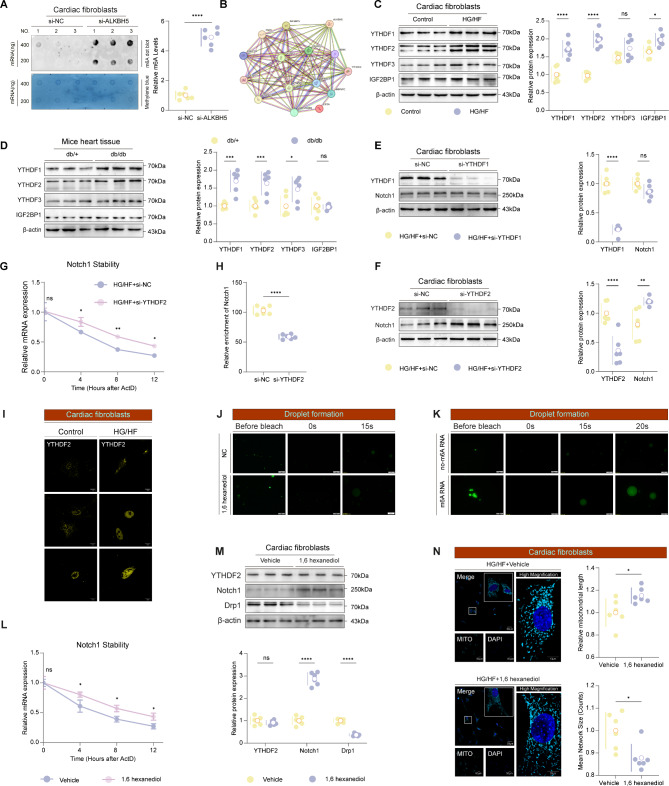
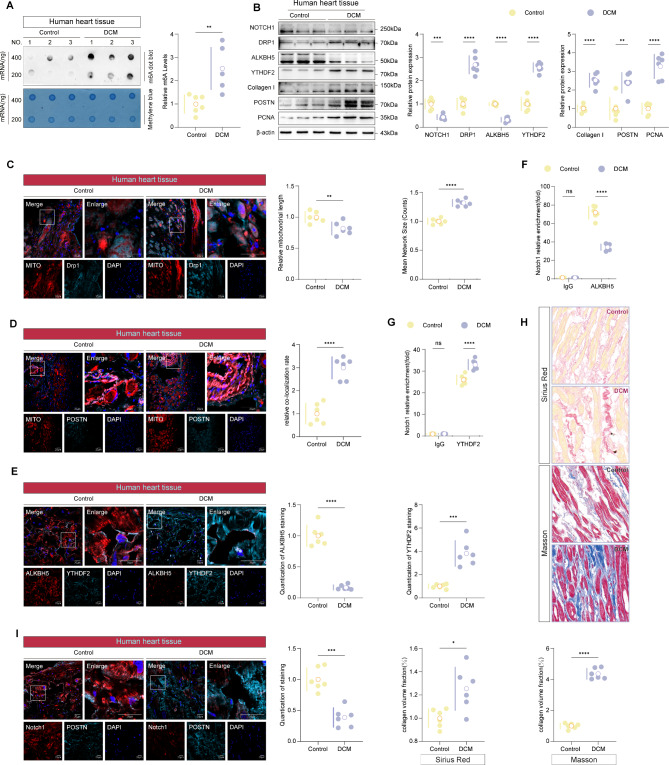
Leptin receptor-deficient mice (db/db), cardiac fibroblast-specific Notch1 conditional knockout (POSTN-Cre × Notch1) mice, and Cre mice were used to induce diabetic cardiac fibrosis. Adeno-associated virus 9 carrying cardiac fibroblast-specific periostin (Postn) promoter-driven small hairpin RNA targeting Alkbh5, Ythdf2, or Notch1, and the phase separation inhibitor 1,6-hexanediol were administered to investigate their roles in diabetic cardiac fibrosis. Histological and biochemical analyses were performed to determine how Alkbh5 and Ythdf2 regulate Notch1 expression in diabetic cardiac fibrosis. NOTCH1 was reconstituted in ALKBH5- and YTHDF2-deficient cardiac fibroblasts and mouse hearts to study its effects on mitochondrial fission and diabetic cardiac fibrosis. Heart tissue samples from patients with diabetic cardiomyopathy were used to validate our findings.
In mice with diabetic cardiac fibrosis, decreased Notch1 expression was accompanied by high mA mRNA levels and mitochondrial fission. Fibroblast-specific deletion of Notch1 enhanced mitochondrial fission and cardiac fibroblast proliferation and induced diabetic cardiac fibrosis in mice. Notch1 downregulation was associated with Alkbh5-mediated mA demethylation in the 3'UTR of Notch1 mRNA and elevated mA mRNA levels. These elevated mA levels in Notch1 mRNA markedly enhanced YTHDF2 phase separation, increased the recognition of mA residues in Notch1 mRNA by YTHDF2, and induced Notch1 degradation. Conversely, epitranscriptomic downregulation rescues Notch1 expression, resulting in the opposite effects. Human heart tissues from patients with diabetic cardiomyopathy were used to validate the findings in mice with diabetic cardiac fibrosis.
We identified a novel epitranscriptomic mechanism by which mA-mediated phase separation suppresses Notch1 expression, thereby promoting mitochondrial fission in diabetic cardiac fibrosis. Our findings provide new insights for the development of novel treatment approaches for patients with diabetic cardiac fibrosis.
N6-甲基腺苷(mA)修饰信使 RNA(mRNA)对于哺乳动物的液-液相分离至关重要。越来越多的证据表明,蛋白质和 RNA 的液-液相分离会影响糖尿病性心肌病。然而,mA 介导的相分离调节糖尿病性心肌纤维化的分子机制仍不清楚。
使用瘦素受体缺陷型小鼠(db/db)、心肌成纤维细胞特异性 Notch1 条件性敲除(POSTN-Cre×Notch1)小鼠和 Cre 小鼠诱导糖尿病性心肌纤维化。给予携带心肌成纤维细胞特异性骨粘连蛋白(Postn)启动子驱动的小发夹 RNA 靶向 Alkbh5、Ythdf2 或 Notch1 的腺相关病毒 9 和相分离抑制剂 1,6-己二醇,以研究它们在糖尿病性心肌纤维化中的作用。进行组织学和生化分析以确定 Alkbh5 和 Ythdf2 如何调节糖尿病性心肌纤维化中的 Notch1 表达。在 Alkbh5 和 Ythdf2 缺陷型心肌成纤维细胞和小鼠心脏中重建 NOTCH1,以研究其对线粒体裂变和糖尿病性心肌纤维化的影响。使用来自糖尿病性心肌病患者的心脏组织样本验证我们的发现。
在糖尿病性心肌纤维化的小鼠中,Notch1 表达降低伴随着高 mA mRNA 水平和线粒体裂变。心肌成纤维细胞特异性敲除 Notch1 增强了线粒体裂变和心肌成纤维细胞增殖,并在小鼠中诱导了糖尿病性心肌纤维化。Notch1 下调与 Alkbh5 介导的 Notch1 mRNA 3'UTR 中的 mA 去甲基化和升高的 mA mRNA 水平有关。Notch1 mRNA 中这些升高的 mA 水平显著增强了 YTHDF2 的相分离,增加了 YTHDF2 对 Notch1 mRNA 中 mA 残基的识别,并诱导了 Notch1 的降解。相反,表观转录组学下调挽救了 Notch1 表达,从而产生相反的效果。使用来自糖尿病性心肌病患者的人心脏组织验证了糖尿病性心肌纤维化小鼠中的发现。
我们确定了一种新的表观转录组学机制,即 mA 介导的相分离抑制 Notch1 表达,从而促进糖尿病性心肌纤维化中的线粒体裂变。我们的发现为开发糖尿病性心肌纤维化患者的新型治疗方法提供了新的见解。