Department of Physiology, College of Medicine, Hallym University, Hallymdaehak-Gil 1, Chuncheon-Si, Gangwon-Do, 24252, South Korea.
Institute for Liver and Digestive Diseases, Hallym University College of Medicine, Chuncheon-Si, Gangwon-Do, 24253, South Korea.
Microbiome. 2024 Sep 28;12(1):181. doi: 10.1186/s40168-024-01924-8.
Akkermansia muciniphila, a next-generation probiotic, is known as a cornerstone regulating the gut-organ axis in various diseases, but the underlying mechanism remains poorly understood. Here, we revealed the neuronal and antifibrotic effects of A. muciniphila on the gut-liver-brain axis in liver injury.
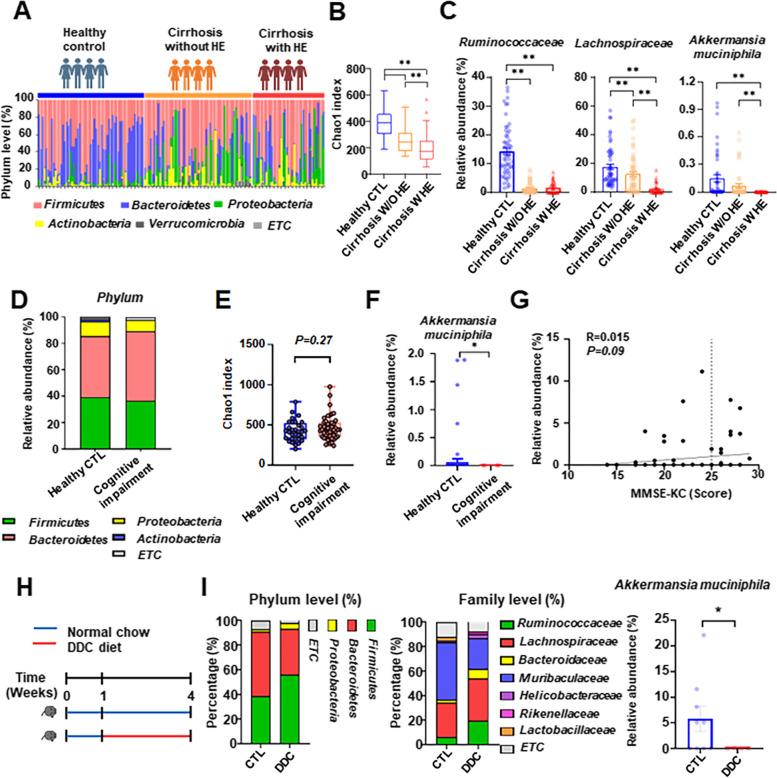
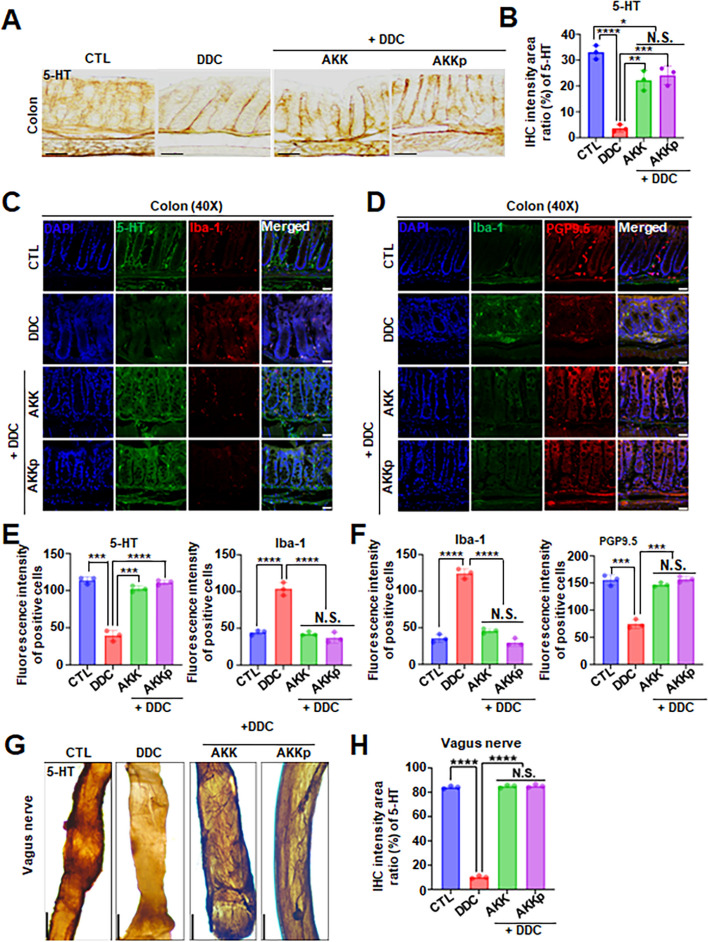
To investigate neurologic dysfunction and characteristic gut microbiotas, we performed a cirrhosis cohort (154 patients with or without hepatic encephalopathy) and a community cognition cohort (80 participants in one region for three years) and validated the existence of cognitive impairment in a 3,5-diethoxycarbonyl-1,4-dihydrocollidine-induced hepatic injury mouse model. The effects of the candidate strain on cognition were evaluated in animal models of liver injury. The expression of brain-derived neurotrophic factor (BDNF) and serotonin receptors was accessed in patients with fibrosis (100 patients) according to the fibrosis grade and hepatic venous pressure gradient. The proportion of A. muciniphila decreased in populations with hepatic encephalopathy and cognitive dysfunction. Tissue staining techniques confirmed gut-liver-brain damage in liver injury, with drastic expression of BDNF and serotonin in the gut and brain. The administration of A. muciniphila significantly reduced tissue damage and improved cognitive dysfunction and the expression of BDNF and serotonin. Isolated vagus nerve staining showed a recovery of serotonin expression without affecting the dopamine pathway. Conversely, in liver tissue, the inhibition of injury through the suppression of serotonin receptor (5-hydroxytryptamine 2A and 2B) expression was confirmed. The severity of liver injury was correlated with the abundance of serotonin, BDNF, and A. muciniphila.
A. muciniphila, a next-generation probiotic, is a therapeutic candidate for alleviating the symptoms of liver fibrosis and cognitive impairment.
阿克曼氏菌(Akkermansia muciniphila),一种新一代益生菌,被认为是调节各种疾病中肠道-器官轴的基石,但潜在机制仍知之甚少。在这里,我们揭示了阿克曼氏菌对肝损伤中肠道-肝-脑轴的神经和抗纤维化作用。
为了研究神经功能障碍和特征性肠道微生物群,我们进行了肝硬化队列(154 名有或无肝性脑病的患者)和社区认知队列(同一地区的 80 名参与者为期三年),并在 3,5-二乙氧羰基-1,4-二氢吡啶诱导的肝损伤小鼠模型中验证了认知障碍的存在。在肝损伤动物模型中评估候选菌株对认知的影响。根据纤维化程度和肝静脉压力梯度,在 100 名纤维化患者中评估了脑源性神经营养因子(BDNF)和血清素受体的表达。在肝性脑病和认知功能障碍患者中,阿克曼氏菌的比例降低。组织染色技术证实了肝损伤中的肠-肝-脑损伤,肠道和大脑中 BDNF 和血清素的表达急剧增加。阿克曼氏菌的给药显著减轻了组织损伤,改善了认知功能障碍以及 BDNF 和血清素的表达。孤立的迷走神经染色显示,在不影响多巴胺途径的情况下,血清素的表达得到恢复。相反,在肝组织中,通过抑制血清素受体(5-羟色胺 2A 和 2B)的表达来抑制损伤得到证实。肝损伤的严重程度与血清素、BDNF 和阿克曼氏菌的丰度相关。
阿克曼氏菌(Akkermansia muciniphila),一种新一代益生菌,是一种缓解肝纤维化和认知障碍症状的治疗候选物。