Bhat Gauri, Ireland Alex, Shah Nikhil, Gondhalekar Ketan, Mandlik Rubina, Kajale Neha, Katapally Tarun, Bhawra Jasmin, Damle Rahul, Khadilkar Anuradha
Hirabai Cowasji Jehangir Medical Research Institute, Jehangir Hospital, Pune, Maharashtra, India.
Department of Health Sciences, Savitribai Phule Pune University, Pune, Maharashtra, India.
PLOS Glob Public Health. 2024 Oct 1;4(10):e0003553. doi: 10.1371/journal.pgph.0003553. eCollection 2024.
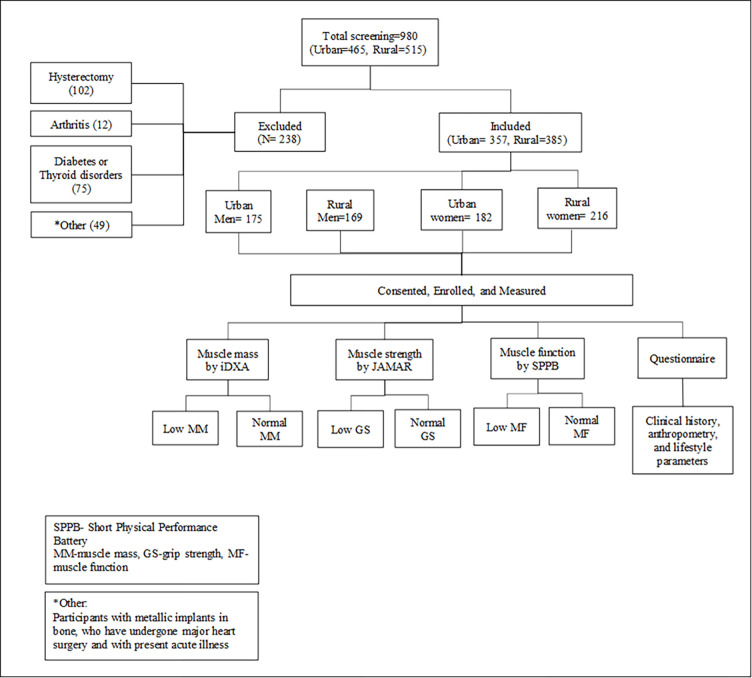
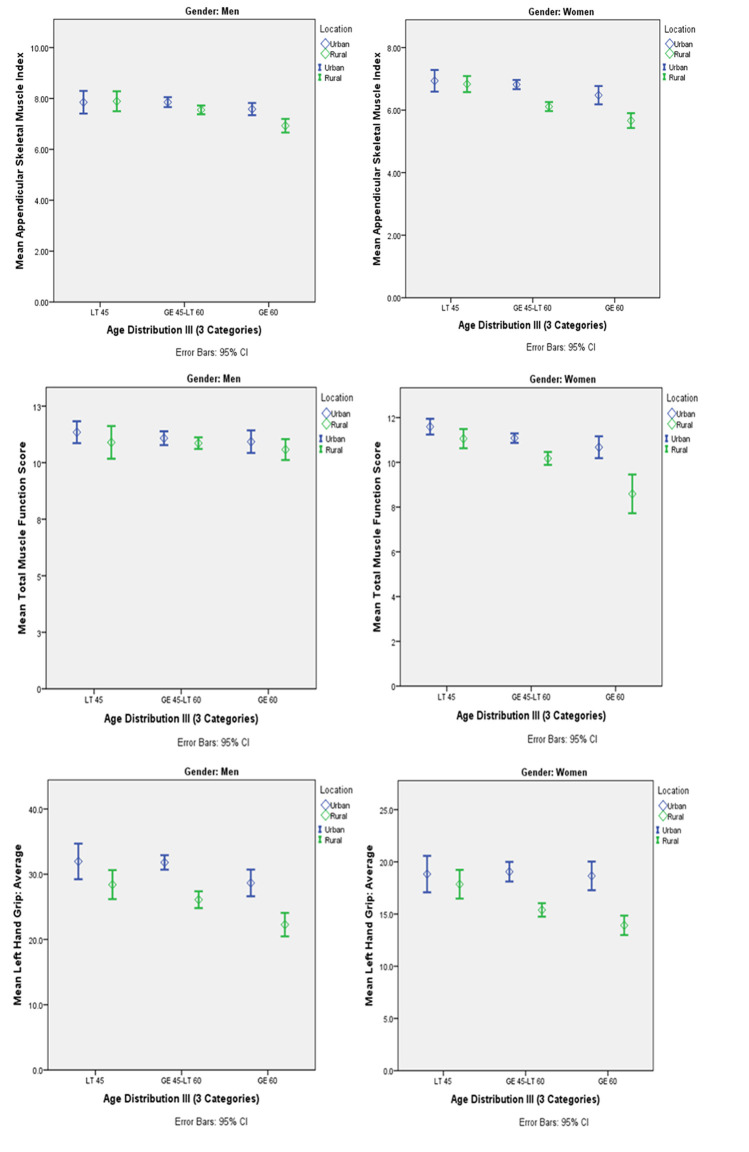
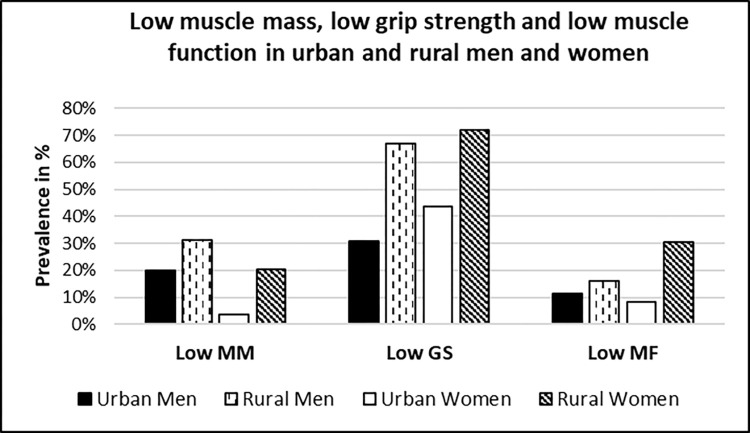
Sarcopenia is the age-related loss of muscle mass and function. India has 8.6% of the global elderly (>60 years) population, and this is expected to increase to 20% by 2050. Around 70% of Indians live in rural areas where lifestyle factors like diet and physical activity differ from urban areas. Understanding age, sex and location-specific sarcopenia prevalence in India is crucial. Thus, our aim was to assess the prevalence and determinants of sarcopenia in urban and rural community-dwelling men and women aged 40 years and older, representing the next generation of older Indian adults. This cross-sectional study included 745 adults (400 women) from urban and rural areas near Pune, Western India. Assessments included socio-demography, diet by-24-hr recall, physical activity, anthropometry (height, weight), muscle mass measurement by dual-energy X-ray absorptiometry, muscle strength (hand grip) & muscle function by Short Physical Performance Battery (SPPB). Sarcopenia was defined by Asian Working Group on Sarcopenia-2019 guidelines Mean age of participants was 53±7.6yrs. Overall prevalence of sarcopenia was 10% and of severe sarcopenia was 4.2%. Sarcopenia prevalence was higher in rural (14.8%) than urban (6.8%) participants and in men (12.5%) than women (8%, all p<0.05). Muscle mass, grip strength and SPPB score were all higher in urban than rural participants (p<0.05). Older age, rural residence, inadequate protein intake, and lower socio-economic status were independently associated with sarcopenia. In this middle-aged group, sarcopenia prevalence was similar to that observed in older Western populations, over 100% higher among rural than urban participants, and higher amongst men than women. Age, location, protein intake and socioeconomic status were factors associated with sarcopenia. Given this rapidly increasing population of older adults in India there is an urgent need to plan strategies for early sarcopenia diagnosis and management, especially in rural populations.
肌肉减少症是与年龄相关的肌肉质量和功能丧失。印度拥有全球8.6%的老年人口(>60岁),预计到2050年这一比例将增至20%。约70%的印度人生活在农村地区,那里的饮食和身体活动等生活方式因素与城市地区不同。了解印度特定年龄、性别和地区的肌肉减少症患病率至关重要。因此,我们的目的是评估年龄在40岁及以上的城市和农村社区居住男性和女性的肌肉减少症患病率及其决定因素,这些人群代表了印度下一代老年成年人。这项横断面研究纳入了来自印度西部浦那附近城乡地区的745名成年人(400名女性)。评估内容包括社会人口统计学、通过24小时回忆法评估的饮食、身体活动、人体测量学(身高、体重)、通过双能X线吸收法测量肌肉质量、肌肉力量(握力)以及通过简短体能表现量表(SPPB)评估肌肉功能。肌肉减少症根据亚洲肌肉减少症工作组2019年指南进行定义。参与者的平均年龄为53±7.6岁。肌肉减少症的总体患病率为10%,严重肌肉减少症的患病率为4.2%。农村参与者(14.8%)的肌肉减少症患病率高于城市参与者(6.8%),男性(12.5%)高于女性(8%),所有p值均<0.05。城市参与者的肌肉质量、握力和SPPB评分均高于农村参与者(p<0.05)。年龄较大、居住在农村、蛋白质摄入不足以及社会经济地位较低与肌肉减少症独立相关。在这个中年人群体中,肌肉减少症患病率与在西方老年人群体中观察到的相似,农村参与者比城市参与者高100%以上,男性高于女性。年龄、地区、蛋白质摄入和社会经济地位是与肌肉减少症相关的因素。鉴于印度老年人口迅速增加,迫切需要制定早期肌肉减少症诊断和管理策略,尤其是在农村人口中。