Abdeldaym Emad A, Hassan Hassan A, El-Mogy Mohamed M, Mohamed Mohamed S, Abuarab Mohamed E, Omar Hanaa S
Department of Vegetable Crops, Faculty of Agriculture, Cairo University, Giza, 12613, Egypt.
Department of Arid Land Agriculture, College of Agricultural and Food Science, King Faisal University, Al-Ahsa, 31982, Saudi Arabia.
BMC Plant Biol. 2024 Oct 1;24(1):917. doi: 10.1186/s12870-024-05310-2.
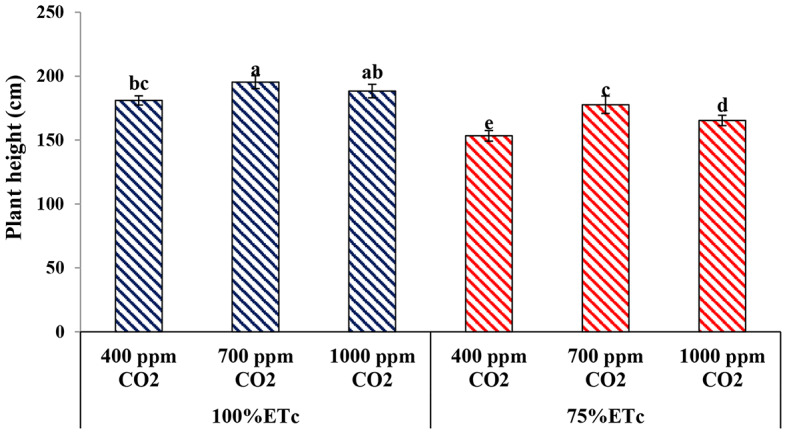
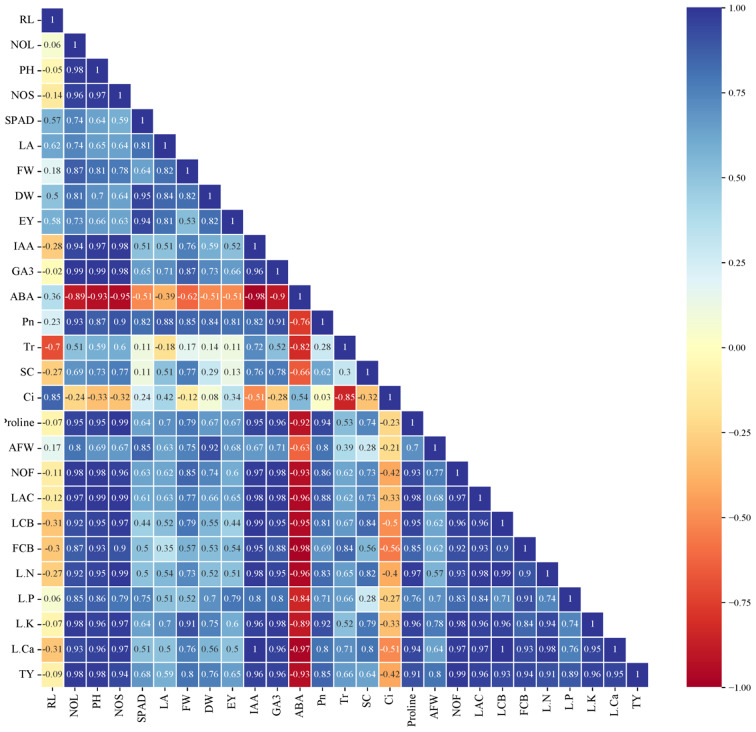
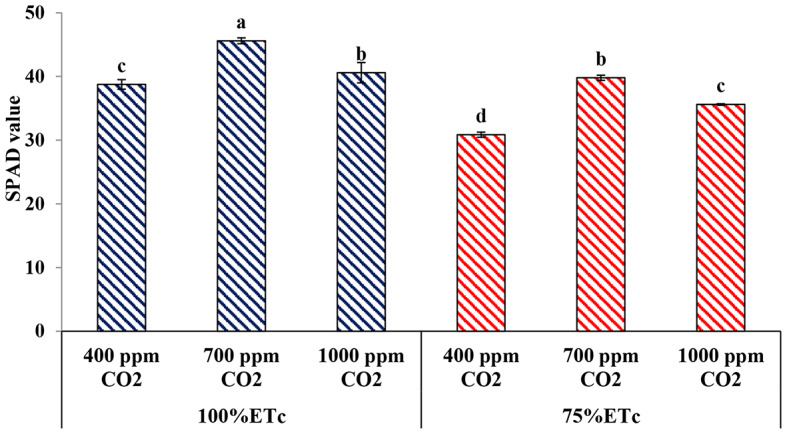
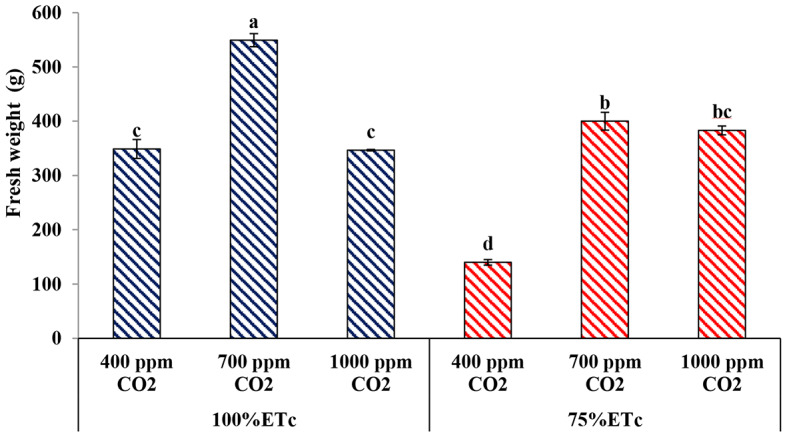
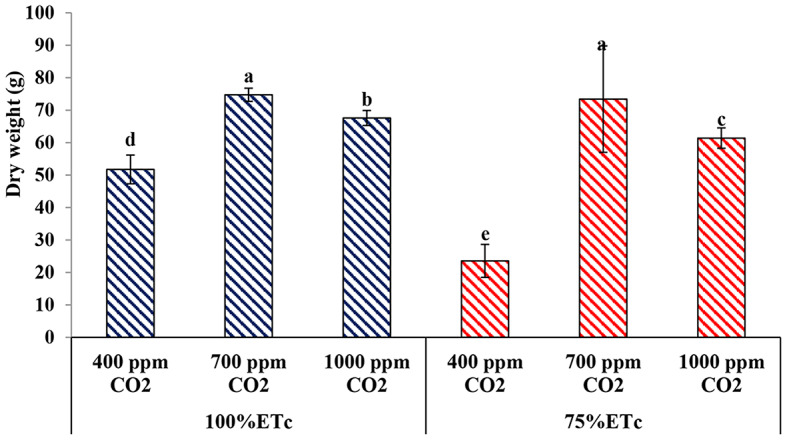
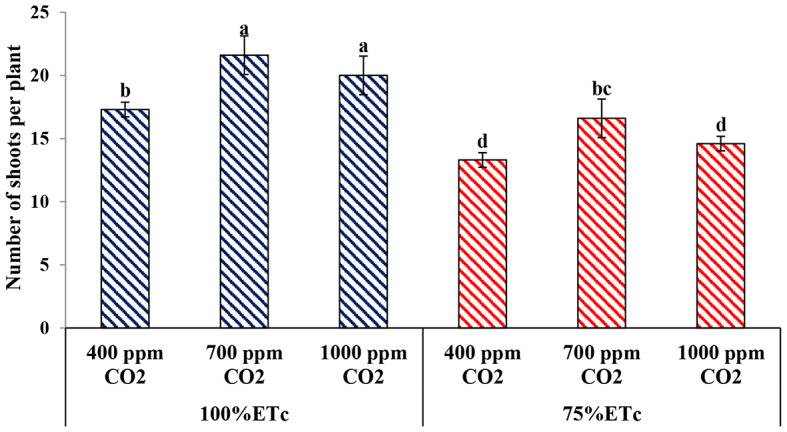
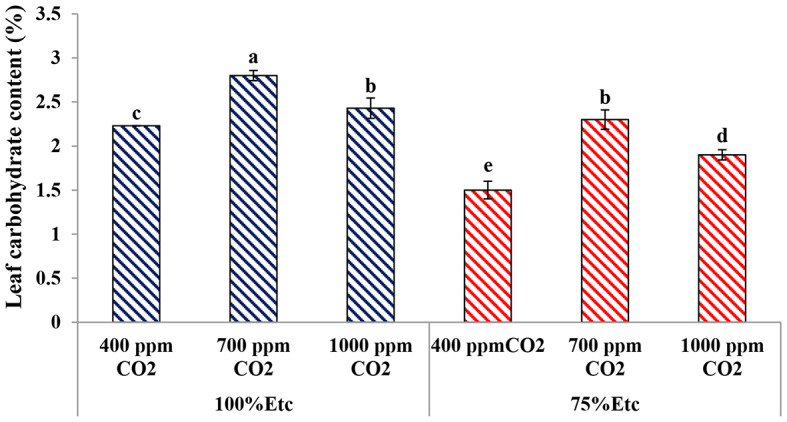
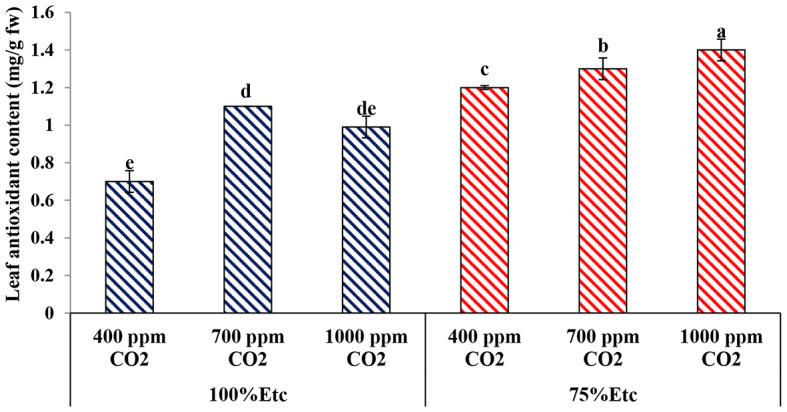
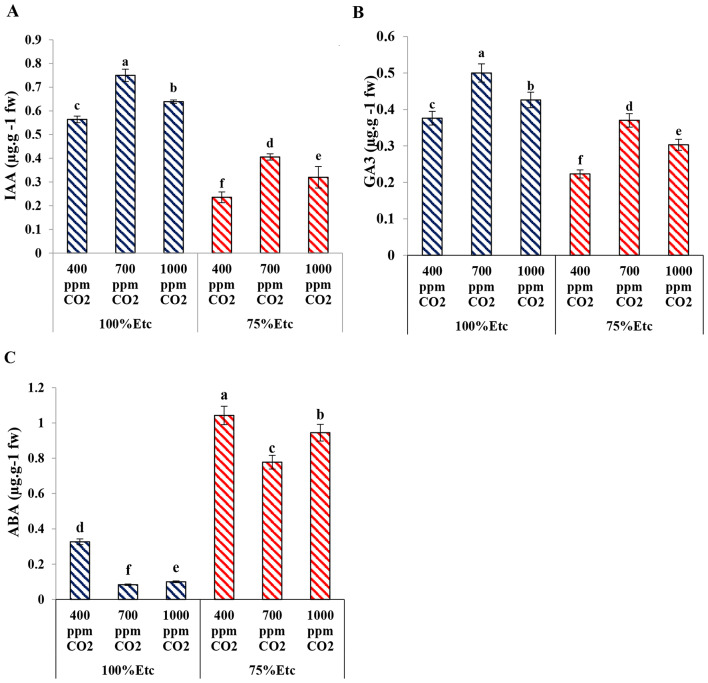
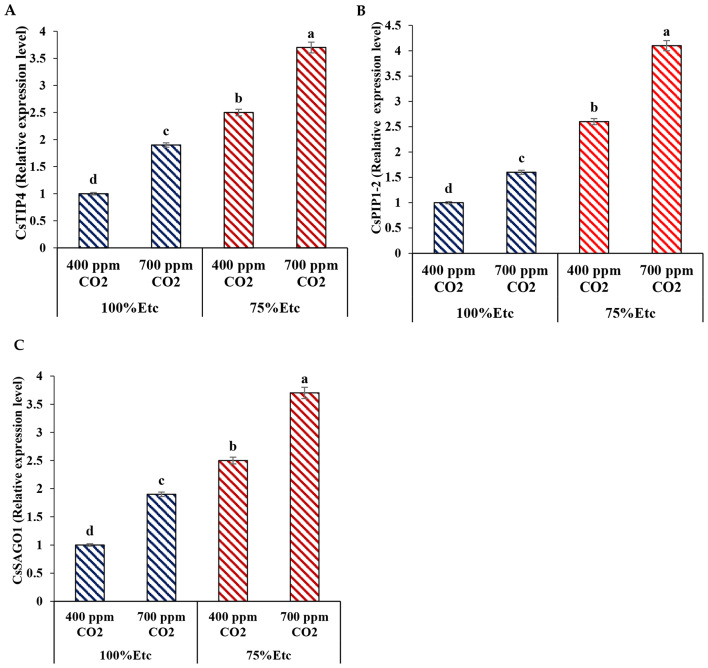
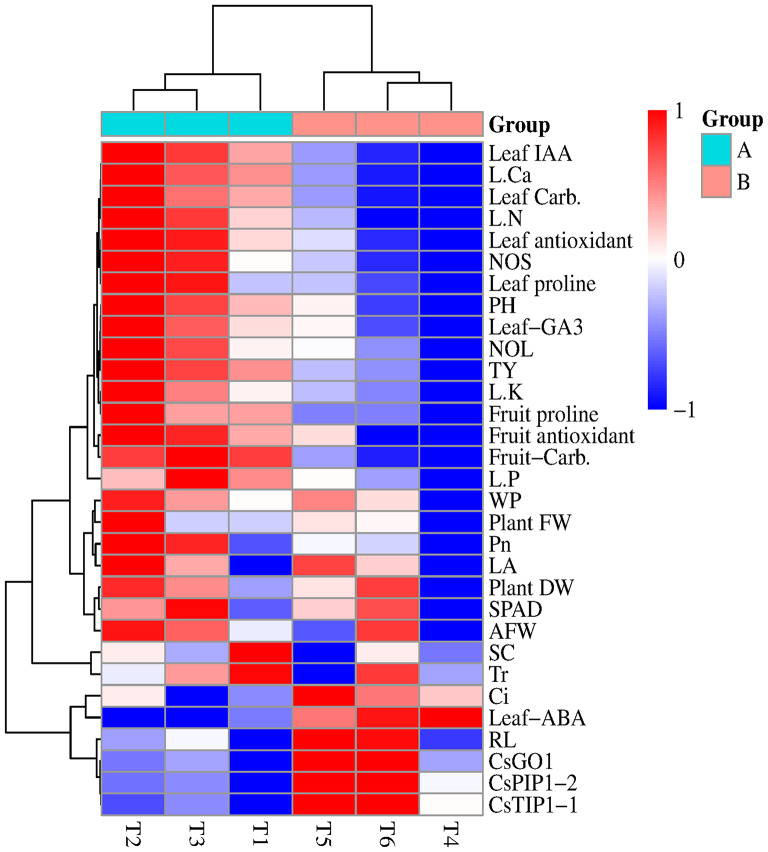
Water scarcity and soil carbon dioxide elevation in arid regions are considered the most serious factors affecting crop growth and productivity. This study aimed to investigate the impacts of elevated CO levels (eCO at rates of 700 and 1000 ppm) on agro-physiological attributes to induce drought tolerance in cucumbers by activating the expression of genes related to aquaporin and stress response, which improved the yield of cucumber under two levels of irrigation water conditions [75% and 100% crop evapotranspiration (ETc)]. Therefore, two field experiments were conducted in a greenhouse with controlled internal climate conditions, at the Mohamed Naguib sector of the national company for protected agriculture, during the winter seasons of 2021-2022 and 2022-2023. The treatments included eCO in soil under normal and partial root zoon drying (PRD, 100% ETc Full irrigations, and 75% ETc). All the applied treatments were organized as a randomized complete block design (RCBD) and each treatment was replicated six times. Untreated plants were designed as control treatment (CO concentration was 400 ppm). The results of this study showed that elevating CO at 700 and 1000 ppm in soil significantly increased plant growth parameters, photosynthesis measurements, and phytohormones [indole acetic acid (IAA) and gibberellic acid (GA3)], under partial root-zone drying (75% ETc) and full irrigation conditions (100% ETc). Under PRD condition, eCO at 700 ppm significantly improved plant height (13.68%), number of shoots (19.88%), Leaf greenness index (SPAD value, 16.60%), root length (24.88%), fresh weight (64.77%) and dry weight (61.25%) of cucumber plant, when compared to untreated plants. The pervious treatment also increased photosynthesis rate, stomatal conductance, and intercellular CO concentration by 50.65%, 15.30% and 12.18%; respectively, compared to the control treatment. Similar findings were observed in nutrient concentration, carbohydrate content, Proline, total antioxidants in the leaf, and nutrients. In contrast, eCO at 700 ppm in the soil reduced the values of transpiration rate (6.33%) and Abscisic acid (ABA, 34.03%) content in cucumber leaves compared to untreated plants under both water levels. Furthermore, the results revealed that the gene transcript levels of the aquaporin-related genes (CsPIP1-2 and CsTIP4) significantly increased compared with a well-watered condition. The transcript levels of CsPIP improved the contribution rate of cell water transportation (intermediated by aquaporin's genes) and root or leaf hydraulic conductivity. The quantitative real-time PCR expression results revealed the upregulation of CsAGO1 stress-response genes in plants exposed to 700 ppm CO. In conclusion, elevating CO at 700 ppm in the soil might be a promising technique to enhance the growth and productivity of cucumber plants in addition to alleviating the adverse effects of drought stresses.
干旱地区的水资源短缺和土壤二氧化碳浓度升高被认为是影响作物生长和生产力的最严重因素。本研究旨在探究升高的二氧化碳水平(700和1000 ppm的eCO)对农业生理特性的影响,通过激活与水通道蛋白和应激反应相关的基因表达来诱导黄瓜的耐旱性,从而提高两种灌溉水条件[75%和100%作物蒸散量(ETc)]下黄瓜的产量。因此,在2021 - 2022年和2022 - 2023年冬季,于国家保护农业公司的穆罕默德·纳吉布区的一个内部气候条件可控的温室中进行了两项田间试验。处理包括正常土壤条件下的eCO以及部分根区干燥(PRD,100% ETc全灌溉和75% ETc)。所有应用的处理均按照随机完全区组设计(RCBD)进行安排,每个处理重复六次。未处理的植株被设计为对照处理(CO浓度为400 ppm)。本研究结果表明,在部分根区干燥(75% ETc)和全灌溉条件(100% ETc)下,土壤中700和1000 ppm的eCO显著增加了植株生长参数、光合作用指标以及植物激素[吲哚乙酸(IAA)和赤霉素(GA3)]。在PRD条件下,与未处理植株相比,700 ppm的eCO显著提高了黄瓜植株的株高(13.68%)、茎数(19.88%)、叶片绿色指数(SPAD值,16.60%)、根长(24.88%)、鲜重(64.77%)和干重(61.25%)。与对照处理相比,上述处理还分别使光合速率提高了50.65%、气孔导度提高了15.30%、胞间CO浓度提高了12.18%。在养分浓度、碳水化合物含量、脯氨酸、叶片中的总抗氧化剂以及养分方面也观察到了类似的结果。相比之下,在两种水分水平下,与未处理植株相比,土壤中700 ppm的eCO降低了黄瓜叶片的蒸腾速率值(6.33%)和脱落酸(ABA,34.03%)含量。此外,结果显示与充分浇水条件相比,水通道蛋白相关基因(CsPIP1 - 2和CsTIP4)的基因转录水平显著增加。CsPIP的转录水平提高了细胞水分运输的贡献率(由水通道蛋白基因介导)以及根或叶片的水力传导率。定量实时PCR表达结果显示,暴露于700 ppm CO的植株中CsAGO1应激反应基因上调。总之,土壤中700 ppm的eCO升高可能是一种有前景的技术,除了减轻干旱胁迫的不利影响外,还能提高黄瓜植株的生长和生产力。