Garner Dustin, Kind Emil, Lai Jennifer Yuet Ha, Nern Aljoscha, Zhao Arthur, Houghton Lucy, Sancer Gizem, Wolff Tanya, Rubin Gerald M, Wernet Mathias F, Kim Sung Soo
Molecular, Cellular, and Developmental Biology, University of California Santa Barbara, Santa Barbara, CA, USA.
Department of Biology, Freie Universität Berlin, Berlin, Germany.
Nature. 2024 Oct;634(8032):181-190. doi: 10.1038/s41586-024-07967-z. Epub 2024 Oct 2.
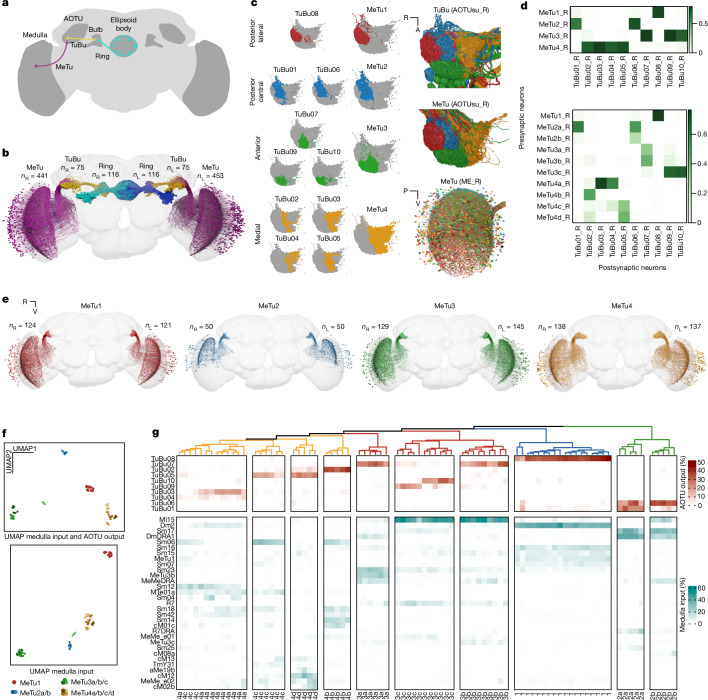
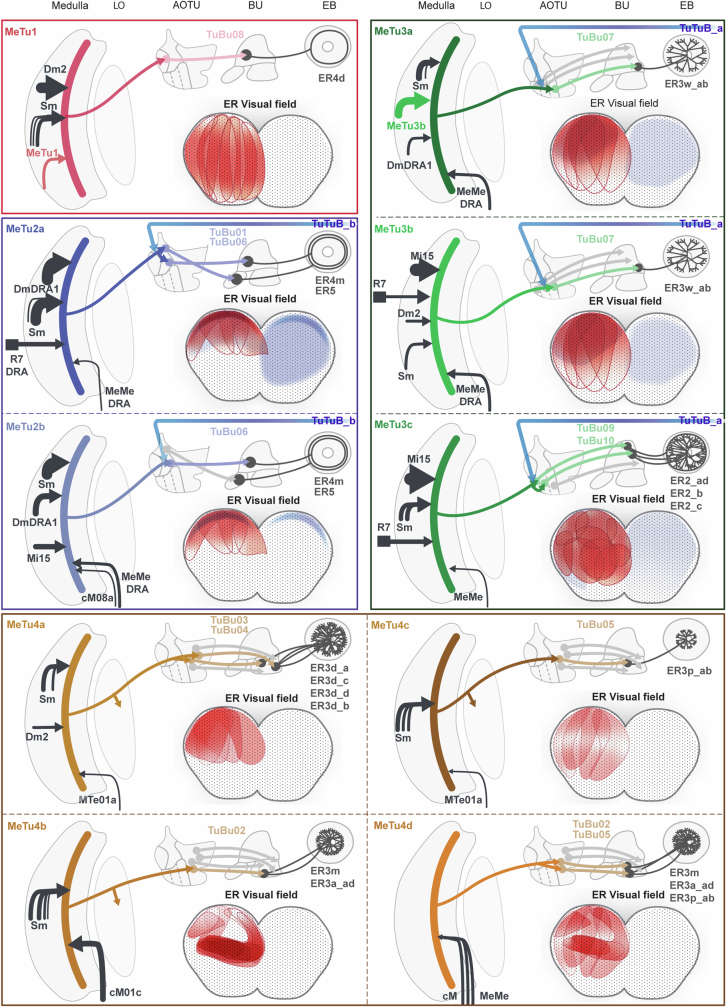
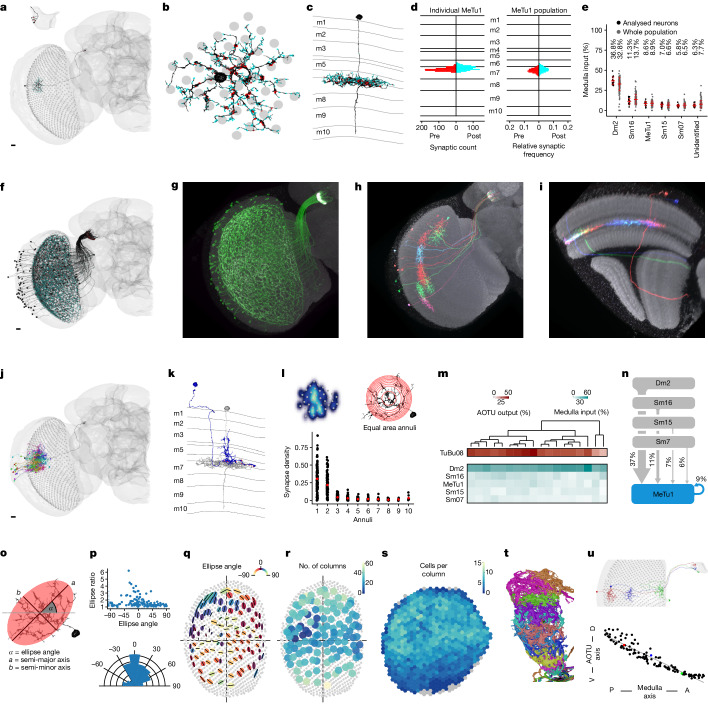
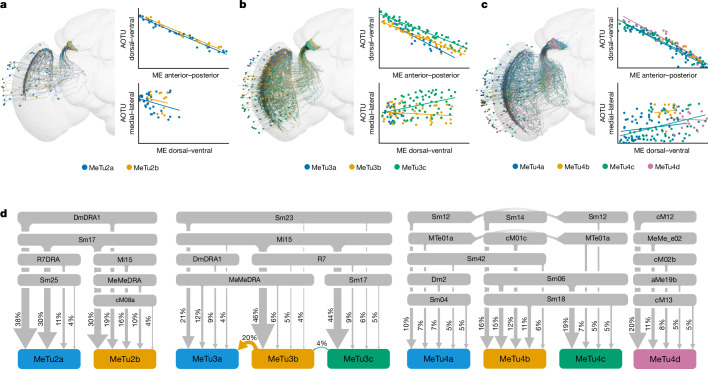
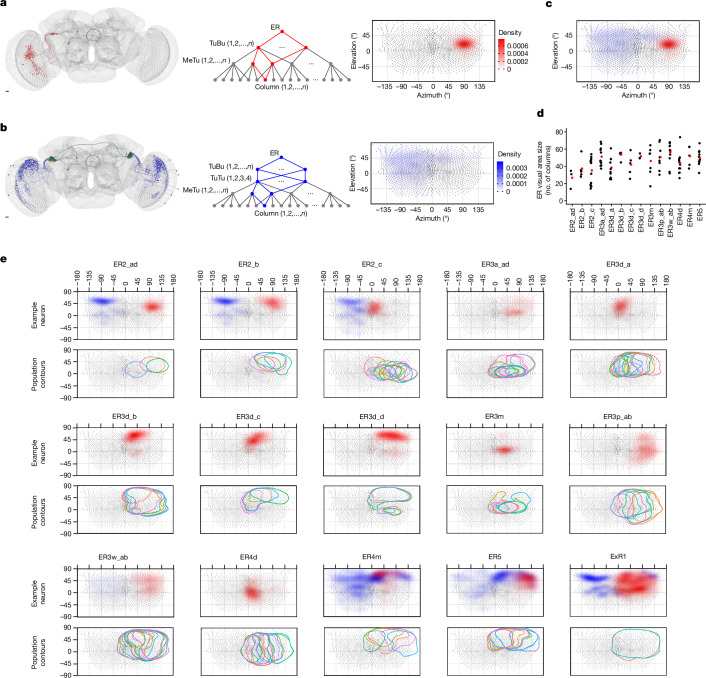
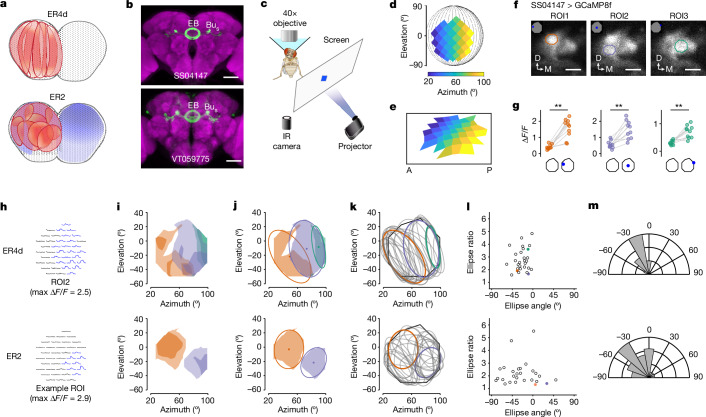
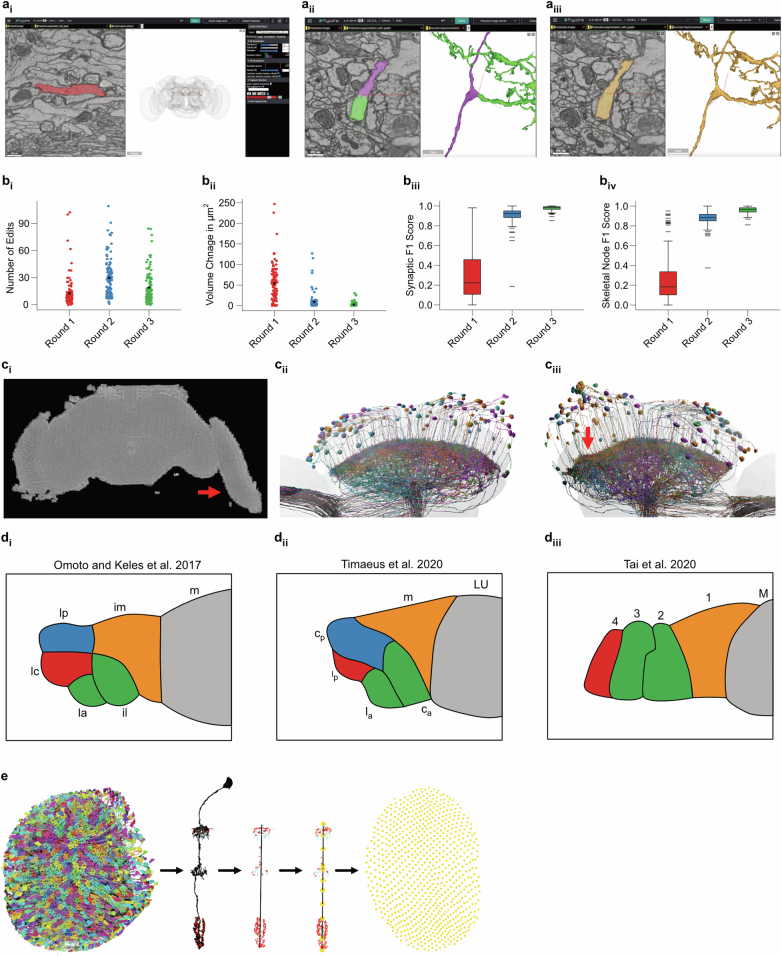
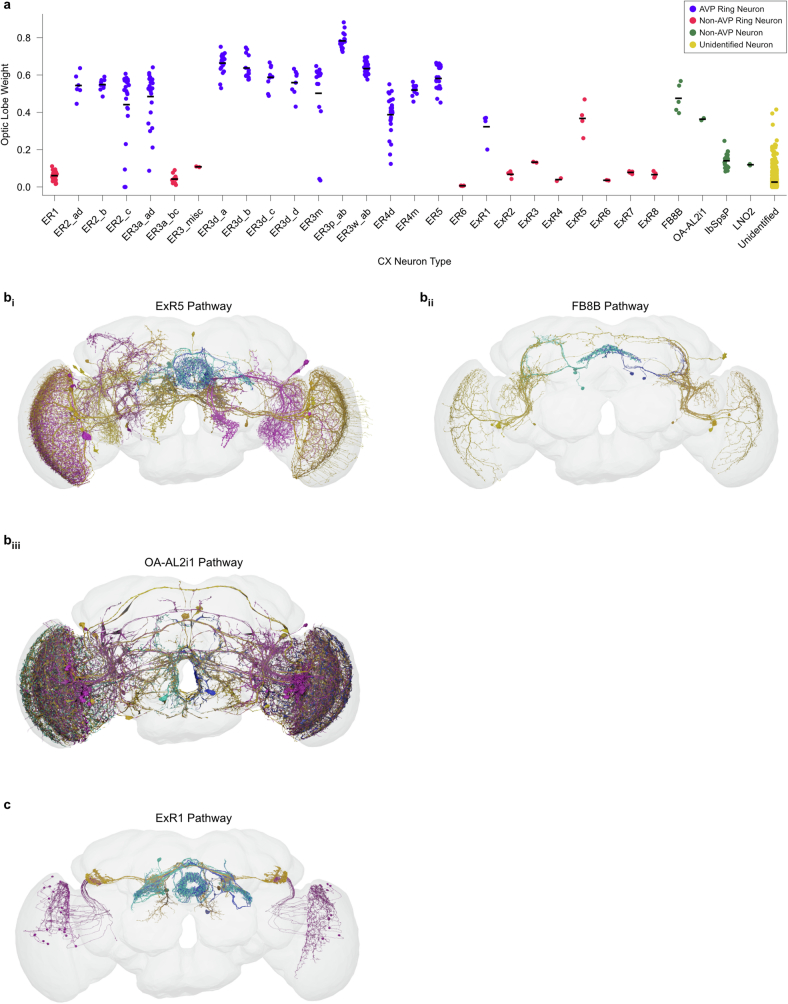
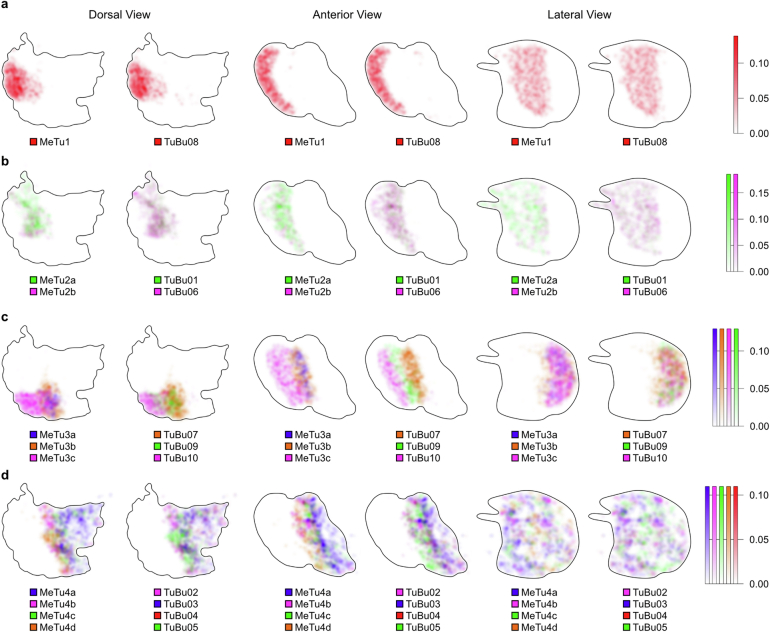
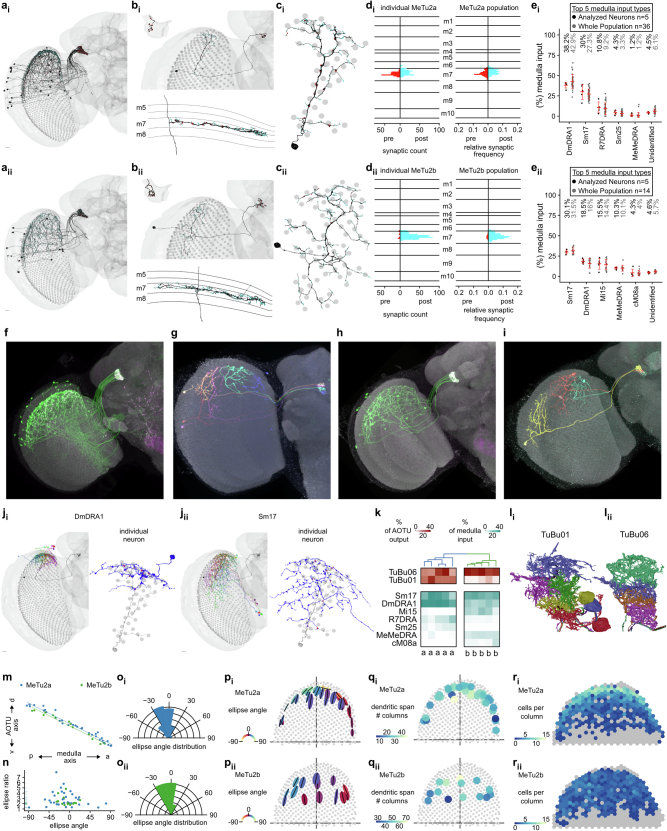
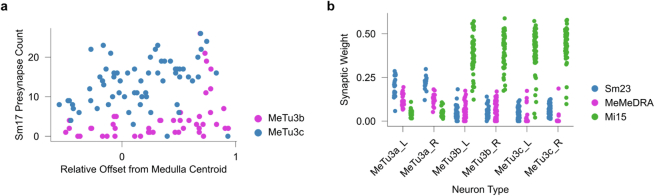
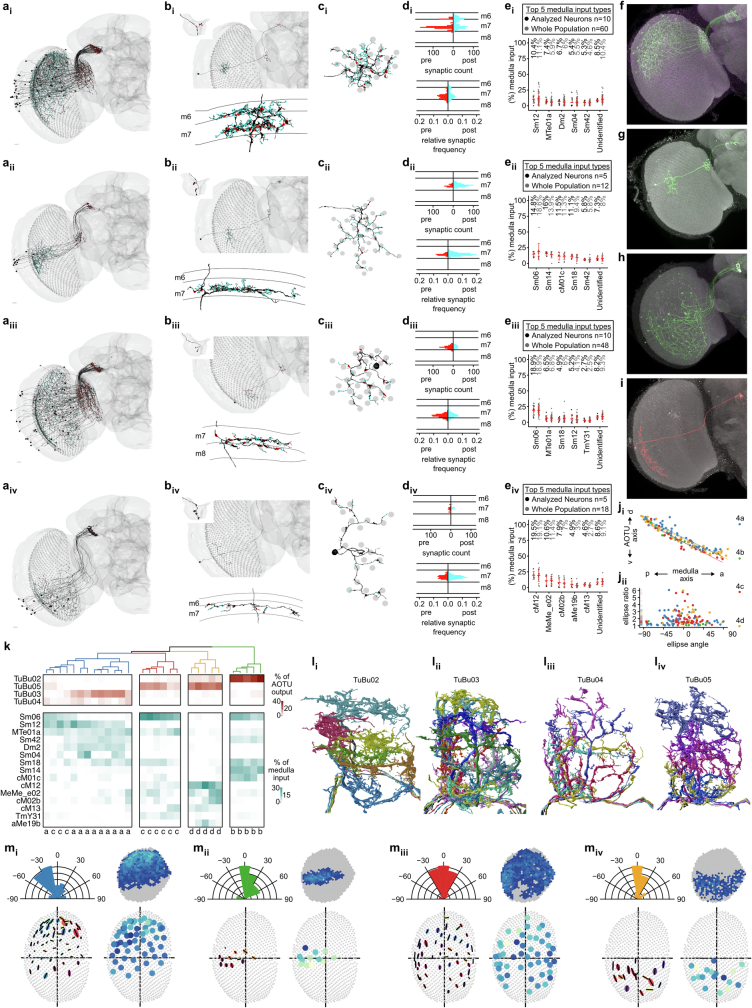
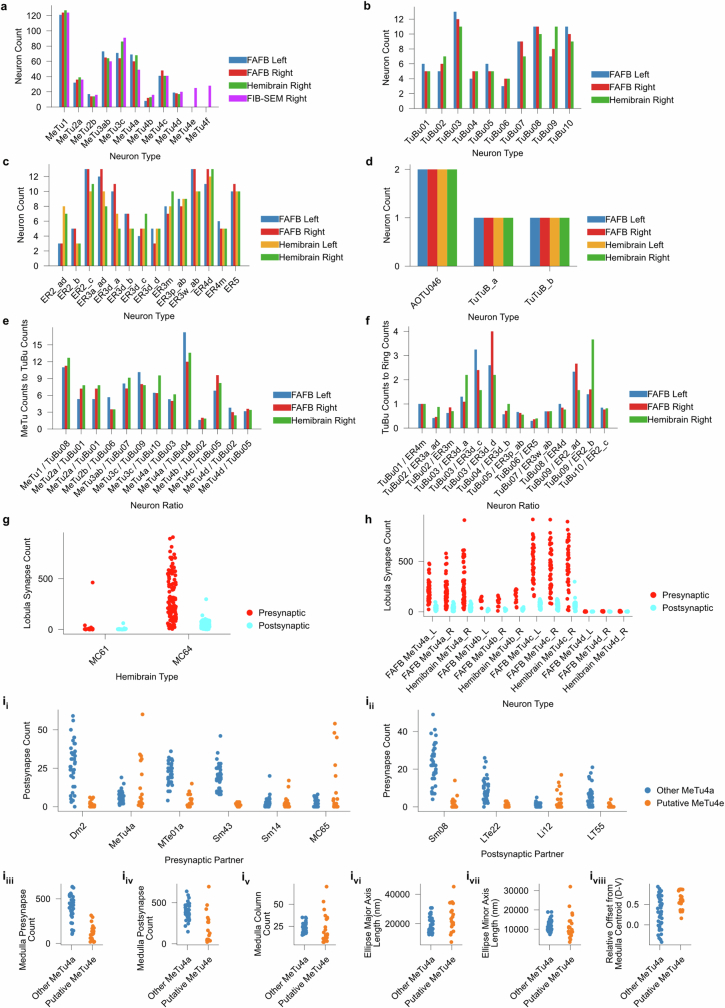
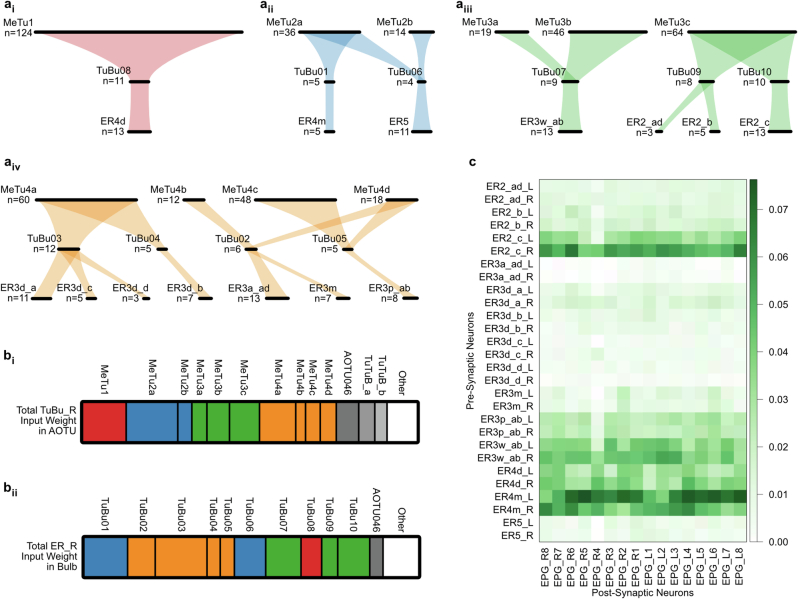
Many animals use visual information to navigate, but how such information is encoded and integrated by the navigation system remains incompletely understood. In Drosophila melanogaster, EPG neurons in the central complex compute the heading direction by integrating visual input from ER neurons, which are part of the anterior visual pathway (AVP). Here we densely reconstruct all neurons in the AVP using electron-microscopy data. The AVP comprises four neuropils, sequentially linked by three major classes of neurons: MeTu neurons, which connect the medulla in the optic lobe to the small unit of the anterior optic tubercle (AOTUsu) in the central brain; TuBu neurons, which connect the AOTUsu to the bulb neuropil; and ER neurons, which connect the bulb to the EPG neurons. On the basis of morphologies, connectivity between neural classes and the locations of synapses, we identify distinct information channels that originate from four types of MeTu neurons, and we further divide these into ten subtypes according to the presynaptic connections in the medulla and the postsynaptic connections in the AOTUsu. Using the connectivity of the entire AVP and the dendritic fields of the MeTu neurons in the optic lobes, we infer potential visual features and the visual area from which any ER neuron receives input. We confirm some of these predictions physiologically. These results provide a strong foundation for understanding how distinct sensory features can be extracted and transformed across multiple processing stages to construct higher-order cognitive representations.
许多动物利用视觉信息进行导航,但导航系统如何对这些信息进行编码和整合仍未完全了解。在黑腹果蝇中,中央复合体中的EPG神经元通过整合来自ER神经元的视觉输入来计算头部方向,ER神经元是前视觉通路(AVP)的一部分。在这里,我们利用电子显微镜数据对AVP中的所有神经元进行了密集重建。AVP由四个神经纤维网组成,通过三类主要神经元依次相连:MeTu神经元,连接视叶中的髓质与中脑前视结节小单元(AOTUsu);TuBu神经元,连接AOTUsu与球茎神经纤维网;以及ER神经元,连接球茎与EPG神经元。基于形态学、神经类之间的连接性以及突触的位置,我们识别出源自四种MeTu神经元的不同信息通道,并根据髓质中的突触前连接和AOTUsu中的突触后连接将这些通道进一步分为十个亚型。利用整个AVP的连接性以及视叶中MeTu神经元的树突场,我们推断出任何ER神经元接收输入的潜在视觉特征和视觉区域。我们通过生理学方法证实了其中一些预测。这些结果为理解如何在多个处理阶段提取和转换不同的感官特征以构建高阶认知表征提供了坚实的基础。