Corponi Filippo, Li Bryan M, Anmella Gerard, Valenzuela-Pascual Clàudia, Pacchiarotti Isabella, Valentí Marc, Grande Iria, Benabarre Antonio, Garriga Marina, Vieta Eduard, Lawrie Stephen M, Whalley Heather C, Hidalgo-Mazzei Diego, Vergari Antonio
School of Informatics, University of Edinburgh, Edinburgh, UK.
Bipolar and Depressive Disorders Unit, Hospìtal Clinic de Barcelona, Barcelona, Spain.
Npj Ment Health Res. 2024 Oct 3;3(1):44. doi: 10.1038/s44184-024-00090-x.
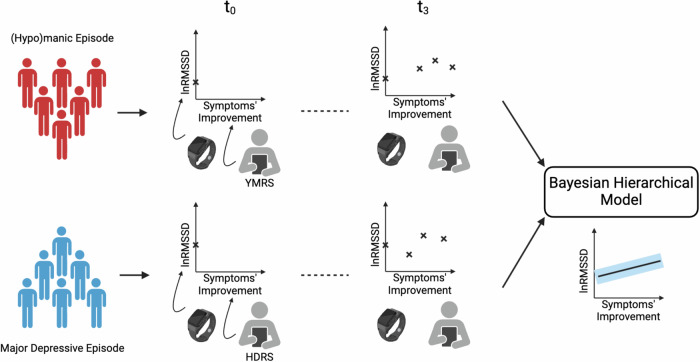
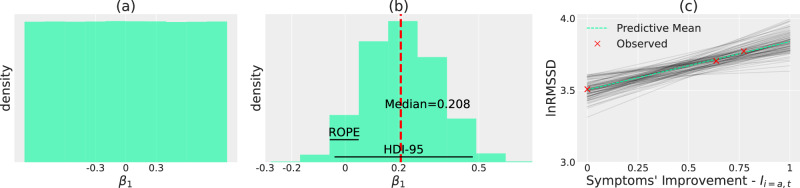
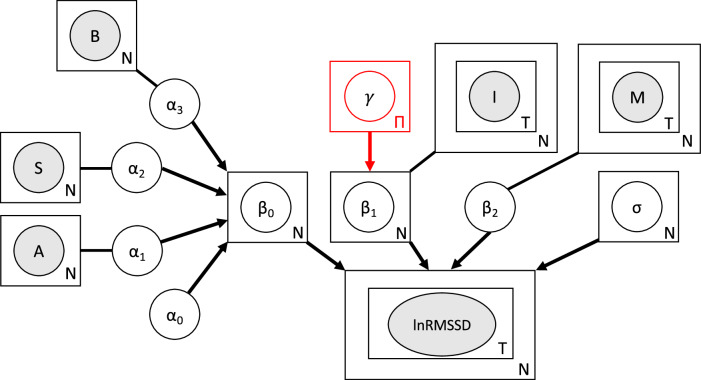
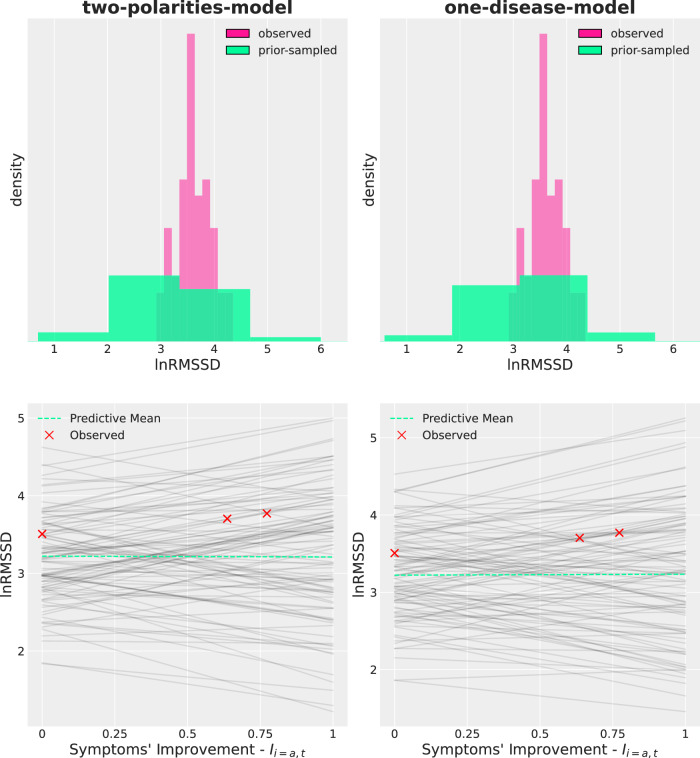
Bipolar disorder (BD) involves autonomic nervous system dysfunction, detectable through heart rate variability (HRV). HRV is a promising biomarker, but its dynamics during acute mania or depression episodes are poorly understood. Using a Bayesian approach, we developed a probabilistic model of HRV changes in BD, measured by the natural logarithm of the Root Mean Square of Successive RR interval Differences (lnRMSSD). Patients were assessed three to four times from episode onset to euthymia. Unlike previous studies, which used only two assessments, our model allowed for more accurate tracking of changes. Results showed strong evidence for a positive lnRMSSD change during symptom resolution (95.175% probability of positive direction), though the sample size limited the precision of this effect (95% Highest Density Interval [-0.0366, 0.4706], with a Region of Practical Equivalence: [-0.05; 0.05]). Episode polarity did not significantly influence lnRMSSD changes.
双相情感障碍(BD)涉及自主神经系统功能障碍,可通过心率变异性(HRV)检测出来。HRV是一种很有前景的生物标志物,但其在急性躁狂或抑郁发作期间的动态变化尚不清楚。我们采用贝叶斯方法,通过连续RR间期差值的均方根的自然对数(lnRMSSD)测量,建立了双相情感障碍患者HRV变化的概率模型。从发作开始到心境正常,对患者进行了三到四次评估。与以往仅进行两次评估的研究不同,我们的模型能够更准确地追踪变化。结果显示,在症状缓解期间lnRMSSD有显著正向变化的有力证据(正向变化概率为95.175%),尽管样本量限制了这种效应的精度(95%最高密度区间[-0.0366, 0.4706],实际等效区间:[-0.05; 0.05])。发作极性对lnRMSSD变化没有显著影响。