Department of Biochemistry & Molecular Biology, Dalhousie University, Halifax, NS, B3H4R2, Canada.
Department of Pathology, Dalhousie University, Halifax, NS, B3H4R2, Canada.
Cell Mol Life Sci. 2024 Oct 5;81(1):415. doi: 10.1007/s00018-024-05437-3.
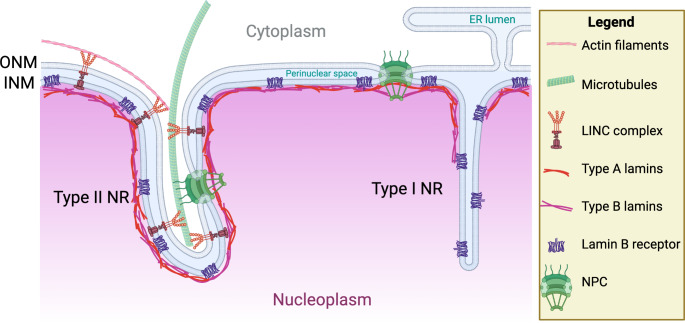
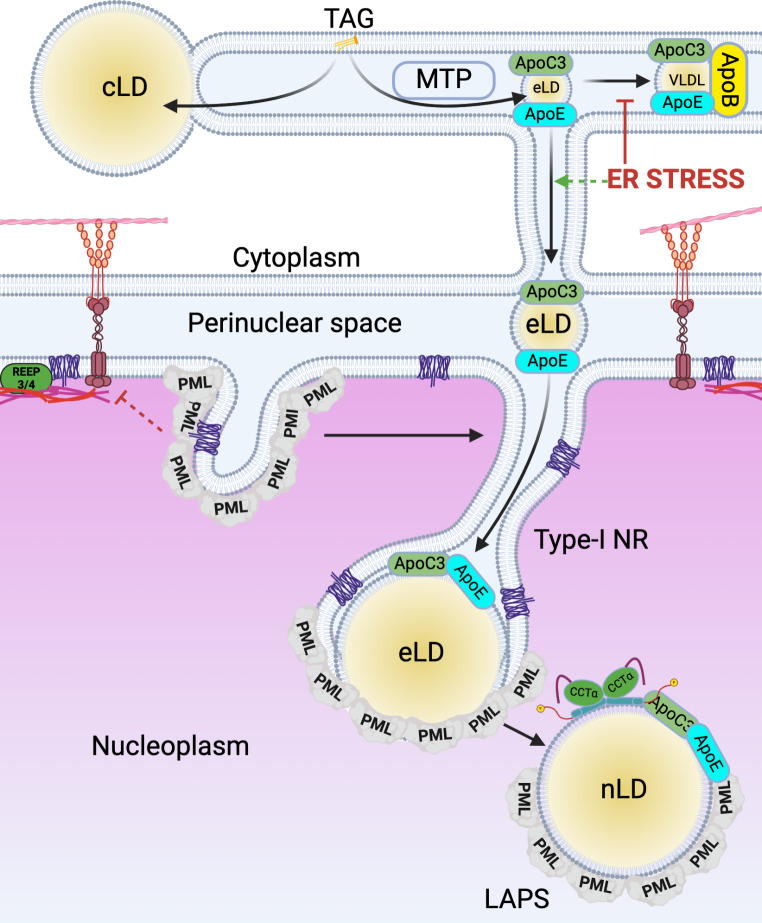
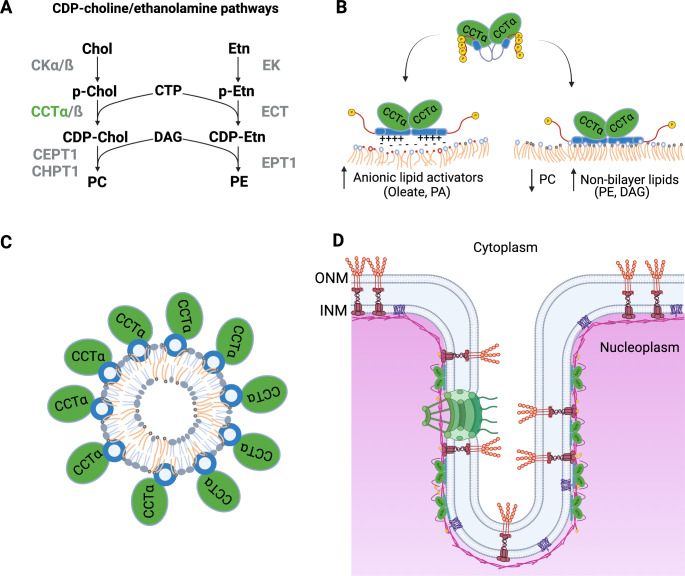
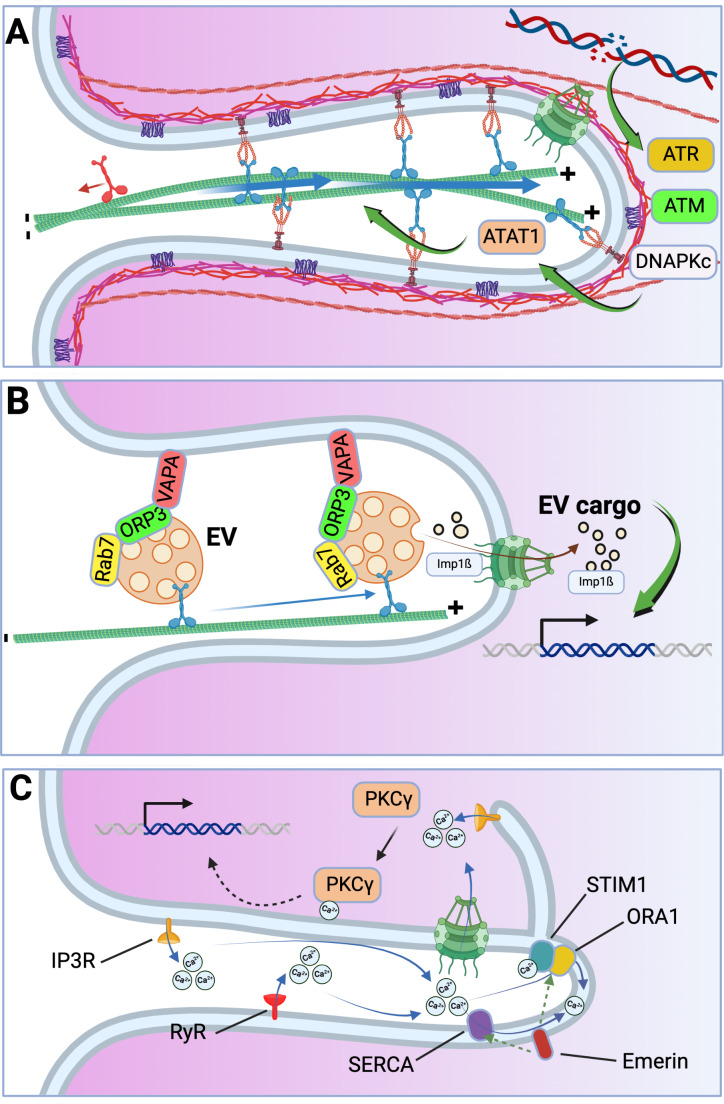
The nuclear envelope consists of an outer membrane connected to the endoplasmic reticulum, an inner membrane facing the nucleoplasm and a perinuclear space separating the two bilayers. The inner and outer nuclear membranes are physically connected at nuclear pore complexes that mediate selective communication and transfer of materials between the cytoplasm and nucleus. The spherical shape of the nuclear envelope is maintained by counterbalancing internal and external forces applied by cyto- and nucleo-skeletal networks, and the nuclear lamina and chromatin that underly the inner nuclear membrane. Despite its apparent rigidity, the nuclear envelope can invaginate to form an intranuclear membrane network termed the nucleoplasmic reticulum (NR) consisting of Type-I NR contiguous with the inner nuclear membrane and Type-II NR containing both the inner and outer nuclear membranes. The NR extends deep into the nuclear interior potentially facilitating communication and exchanges between the nuclear interior and the cytoplasm. This review details the evidence that NR intrusions that regulate cytoplasmic communication and genome maintenance are the result of a dynamic interplay between membrane biogenesis and remodelling, and physical forces exerted on the nuclear lamina derived from the cyto- and nucleo-skeletal networks.
核被膜由外膜与内质网相连、面向核质的内膜和分隔双层的核周腔组成。内、外核膜在核孔复合物处物理连接,核孔复合物介导细胞质和细胞核之间的物质选择性通讯和转运。核被膜的球形形状由细胞骨架和核骨架网络施加的内外力以及位于内核膜下的核纤层和染色质平衡维持。尽管核被膜表面坚硬,但它可以内陷形成核内膜网络,称为核质网(NR),由与内核膜连续的Ⅰ型 NR 和包含内、外核膜的Ⅱ型 NR 组成。NR 深入核内,可能促进核内与细胞质之间的通讯和物质交换。本综述详细介绍了证据表明,调节细胞质通讯和基因组维持的 NR 内陷是膜生物发生和重塑以及来自细胞骨架和核骨架网络的物理力施加在内核纤层上的动态相互作用的结果。