Department of Bioengineering, University of Louisville, Louisville, Kentucky.
Department of Nanomedicine, Houston Methodist Research Institute, Houston, Texas.
Cancer Res Commun. 2024 Oct 1;4(10):2846-2857. doi: 10.1158/2767-9764.CRC-24-0263.
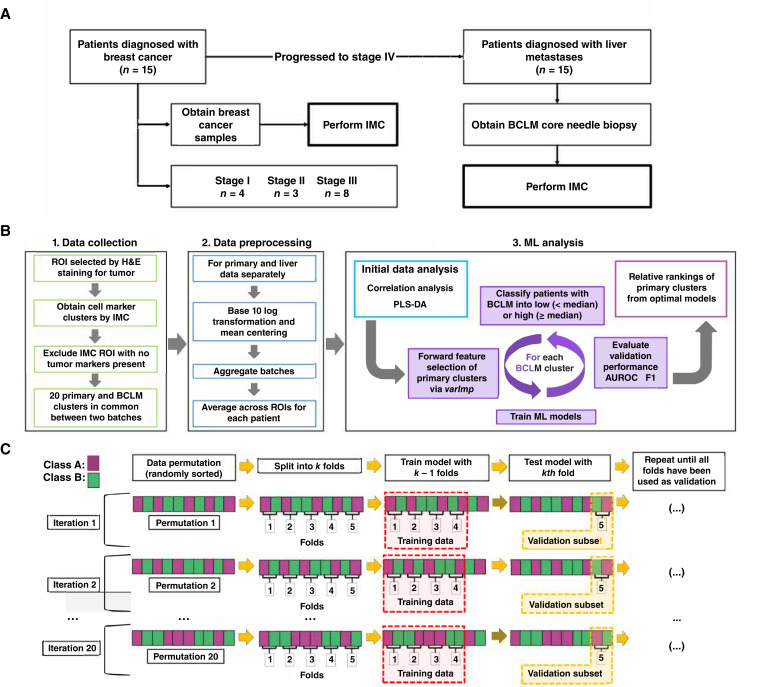
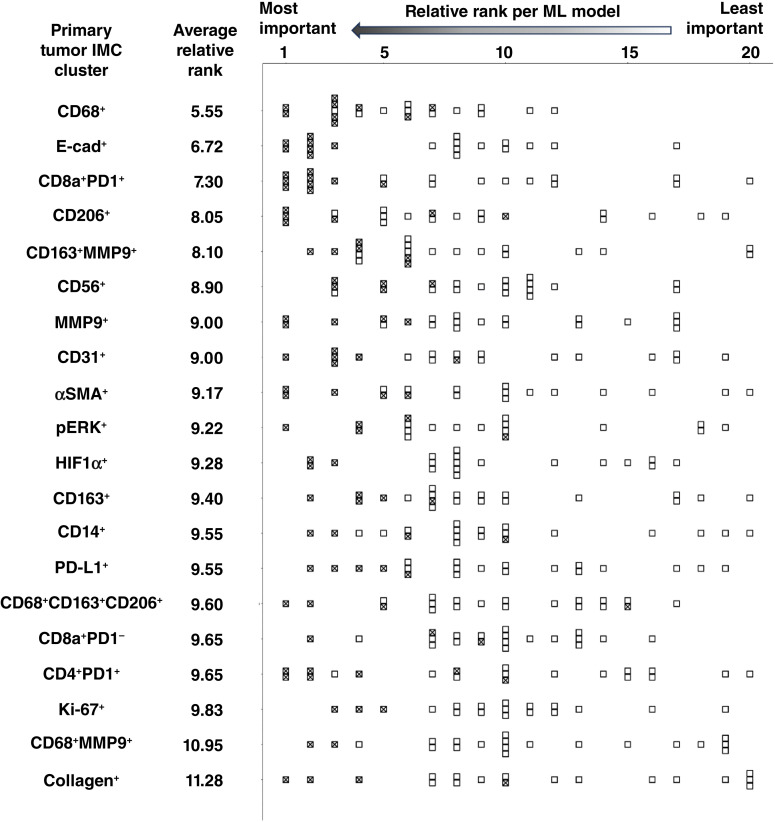
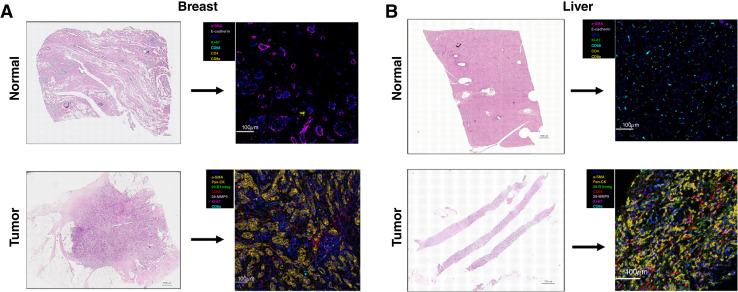
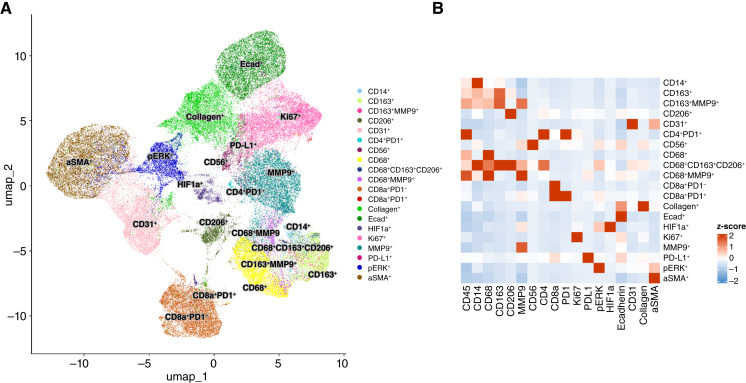
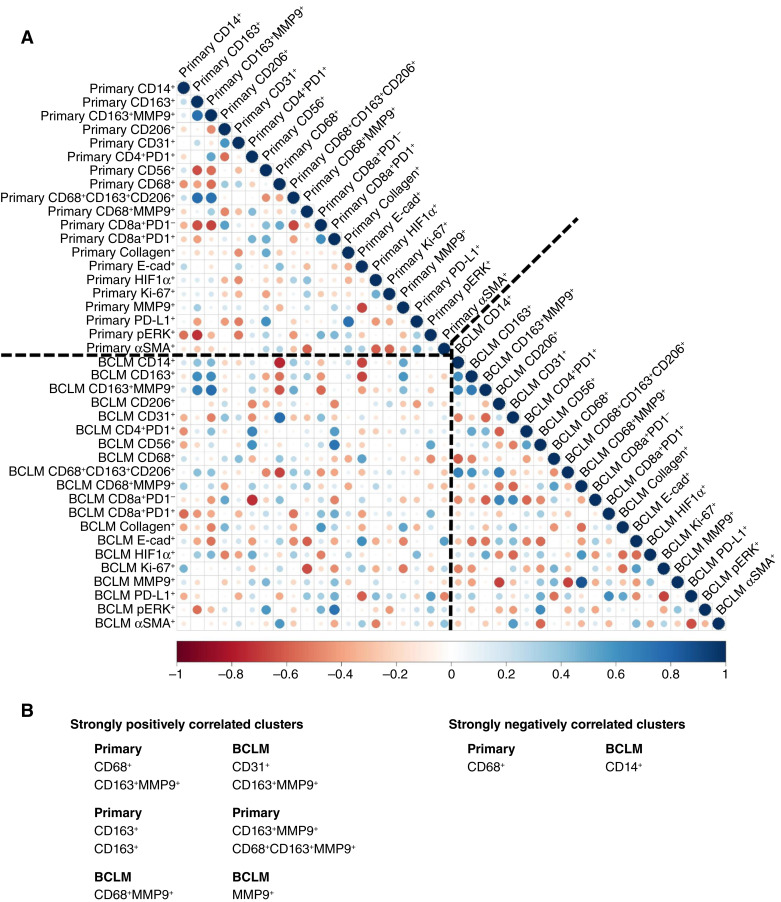
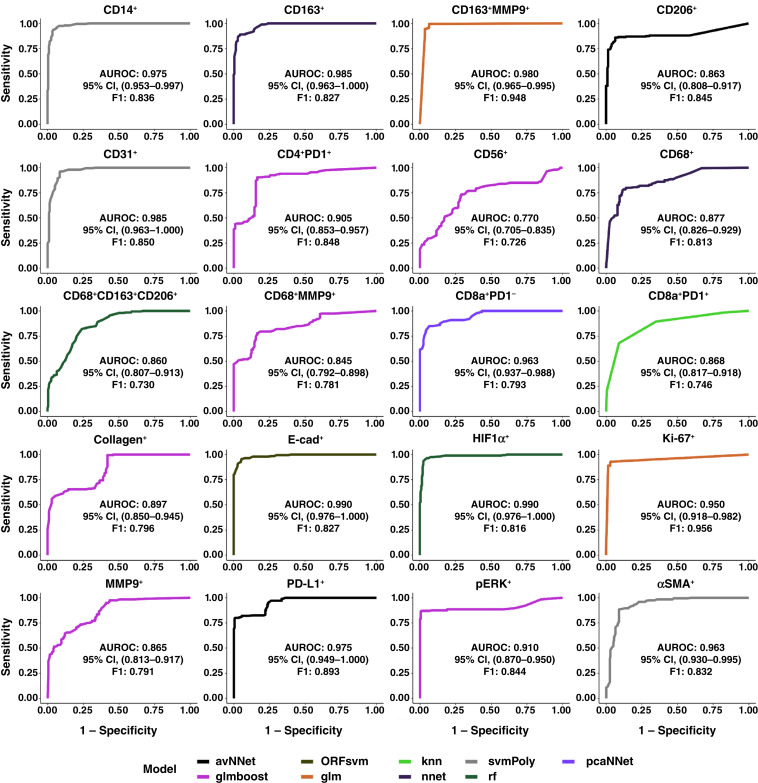
Breast cancer liver metastases (BCLM) are hypovascular lesions that resist intravenously administered therapies and have grim prognosis. Immunotherapeutic strategies targeting BCLM critically depend on the tumor microenvironment (TME), including tumor-associated macrophages. However, a priori characterization of the BCLM TME to optimize therapy is challenging because BCLM tissue is rarely collected. In contrast to primary breast tumors for which tissue is usually obtained and histologic analysis performed, biopsies or resections of BCLM are generally discouraged due to potential complications. This study tested the novel hypothesis that BCLM TME characteristics could be inferred from the primary tumor tissue. Matched primary and metastatic human breast cancer samples were analyzed by imaging mass cytometry, identifying 20 shared marker clusters denoting macrophages (CD68, CD163, and CD206), monocytes (CD14), immune response (CD56, CD4, and CD8a), programmed cell death protein 1, PD-L1, tumor tissue (Ki-67 and phosphorylated ERK), cell adhesion (E-cadherin), hypoxia (hypoxia-inducible factor-1α), vascularity (CD31), and extracellular matrix (alpha smooth muscle actin, collagen, and matrix metalloproteinase 9). A machine learning workflow was implemented and trained on primary tumor clusters to classify each metastatic cluster density as being either above or below median values. The proposed approach achieved robust classification of BCLM marker data from matched primary tumor samples (AUROC ≥ 0.75, 95% confidence interval ≥ 0.7, on the validation subsets). Top clusters for prediction included CD68+, E-cad+, CD8a+PD1+, CD206+, and CD163+MMP9+. We conclude that the proposed workflow using primary breast tumor marker data offers the potential to predict BCLM TME characteristics, with the longer term goal to inform personalized immunotherapeutic strategies targeting BCLM.
BCLM tissue characterization to optimize immunotherapy is difficult because biopsies or resections are rarely performed. This study shows that a machine learning approach offers the potential to infer BCLM characteristics from the primary tumor tissue.
乳腺癌肝转移(BCLM)是血管较少的病变,对静脉内给予的治疗有抵抗力,预后不佳。针对 BCLM 的免疫治疗策略严重依赖肿瘤微环境(TME),包括肿瘤相关巨噬细胞。然而,由于 BCLM 组织很少采集,因此对 BCLM 的 TME 进行预先评估以优化治疗具有挑战性。与通常获得组织并进行组织学分析的原发性乳腺癌相比,由于潜在的并发症,通常不鼓励对 BCLM 进行活检或切除。本研究检验了一个新的假设,即 BCLM 的 TME 特征可以从原发性肿瘤组织中推断出来。通过成像质谱细胞术分析匹配的原发性和转移性人乳腺癌样本,确定了 20 个表示巨噬细胞(CD68、CD163 和 CD206)、单核细胞(CD14)、免疫反应(CD56、CD4 和 CD8a)、程序性细胞死亡蛋白 1、PD-L1、肿瘤组织(Ki-67 和磷酸化 ERK)、细胞黏附(E-钙黏蛋白)、缺氧(缺氧诱导因子-1α)、血管生成(CD31)和细胞外基质(α平滑肌肌动蛋白、胶原蛋白和基质金属蛋白酶 9)的共享标记物簇。实施了机器学习工作流程,并在原发性肿瘤簇上进行了训练,以将每个转移性簇的密度分类为高于或低于中位数。该方法在匹配的原发性肿瘤样本中实现了 BCLM 标记数据的稳健分类(验证子集中的 AUC≥0.75,95%置信区间≥0.7)。用于预测的顶级簇包括 CD68+、E-钙+、CD8a+PD1+、CD206+和 CD163+MMP9+。我们得出的结论是,使用原发性乳腺癌标记物数据的建议工作流程具有预测 BCLM TME 特征的潜力,其长期目标是为针对 BCLM 的个性化免疫治疗策略提供信息。
为了优化免疫治疗,对 BCLM 组织进行特征描述很困难,因为很少进行活检或切除。本研究表明,机器学习方法具有从原发性肿瘤组织推断 BCLM 特征的潜力。