Rosen Laura E, Tortorici M Alejandra, De Marco Anna, Pinto Dora, Foreman William B, Taylor Ashley L, Park Young-Jun, Bohan Dana, Rietz Tyson, Errico John M, Hauser Kevin, Dang Ha V, Chartron Justin W, Giurdanella Martina, Cusumano Giuseppe, Saliba Christian, Zatta Fabrizia, Sprouse Kaitlin R, Addetia Amin, Zepeda Samantha K, Brown Jack, Lee Jimin, Dellota Exequiel, Rajesh Anushka, Noack Julia, Tao Qiqing, DaCosta Yvonne, Tsu Brian, Acosta Rima, Subramanian Sambhavi, de Melo Guilherme Dias, Kergoat Lauriane, Zhang Ivy, Liu Zhuoming, Guarino Barbara, Schmid Michael A, Schnell Gretja, Miller Jessica L, Lempp Florian A, Czudnochowski Nadine, Cameroni Elisabetta, Whelan Sean P J, Bourhy Hervé, Purcell Lisa A, Benigni Fabio, di Iulio Julia, Pizzuto Matteo Samuele, Lanzavecchia Antonio, Telenti Amalio, Snell Gyorgy, Corti Davide, Veesler David, Starr Tyler N
Vir Biotechnology, San Francisco, CA 94158, USA.
Department of Biochemistry, University of Washington, Seattle, WA 98195, USA.
Cell. 2024 Dec 12;187(25):7196-7213.e26. doi: 10.1016/j.cell.2024.09.026. Epub 2024 Oct 8.
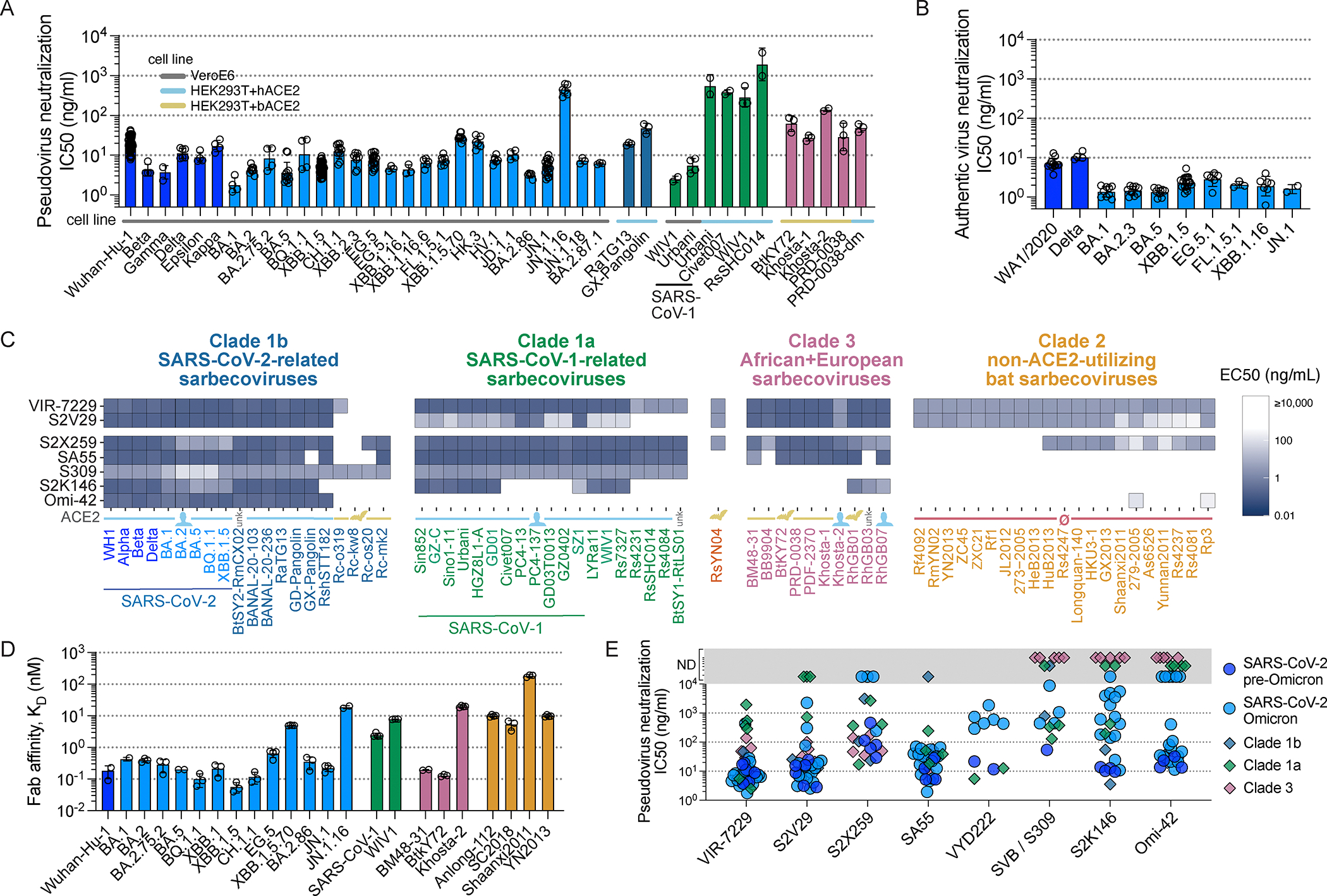
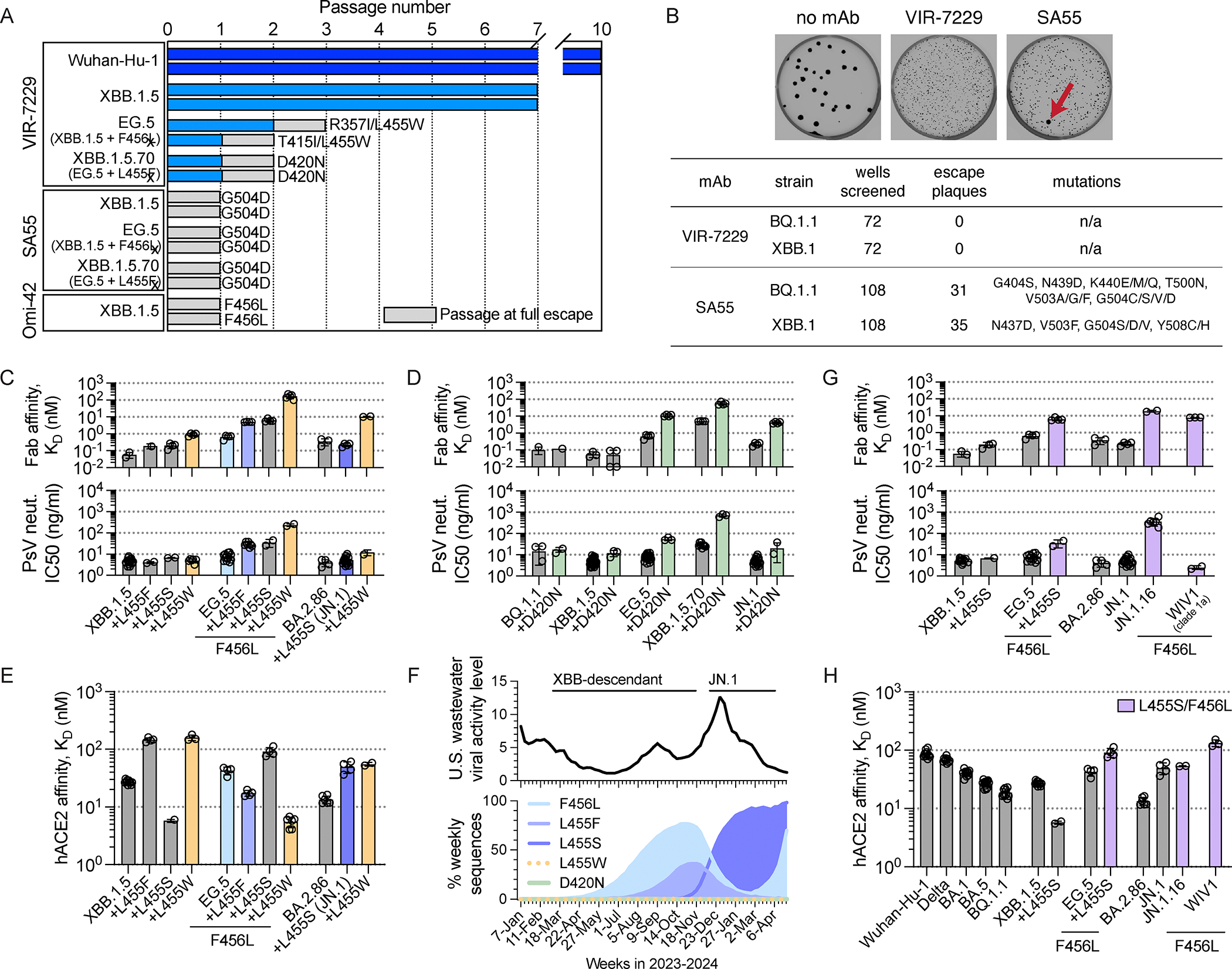
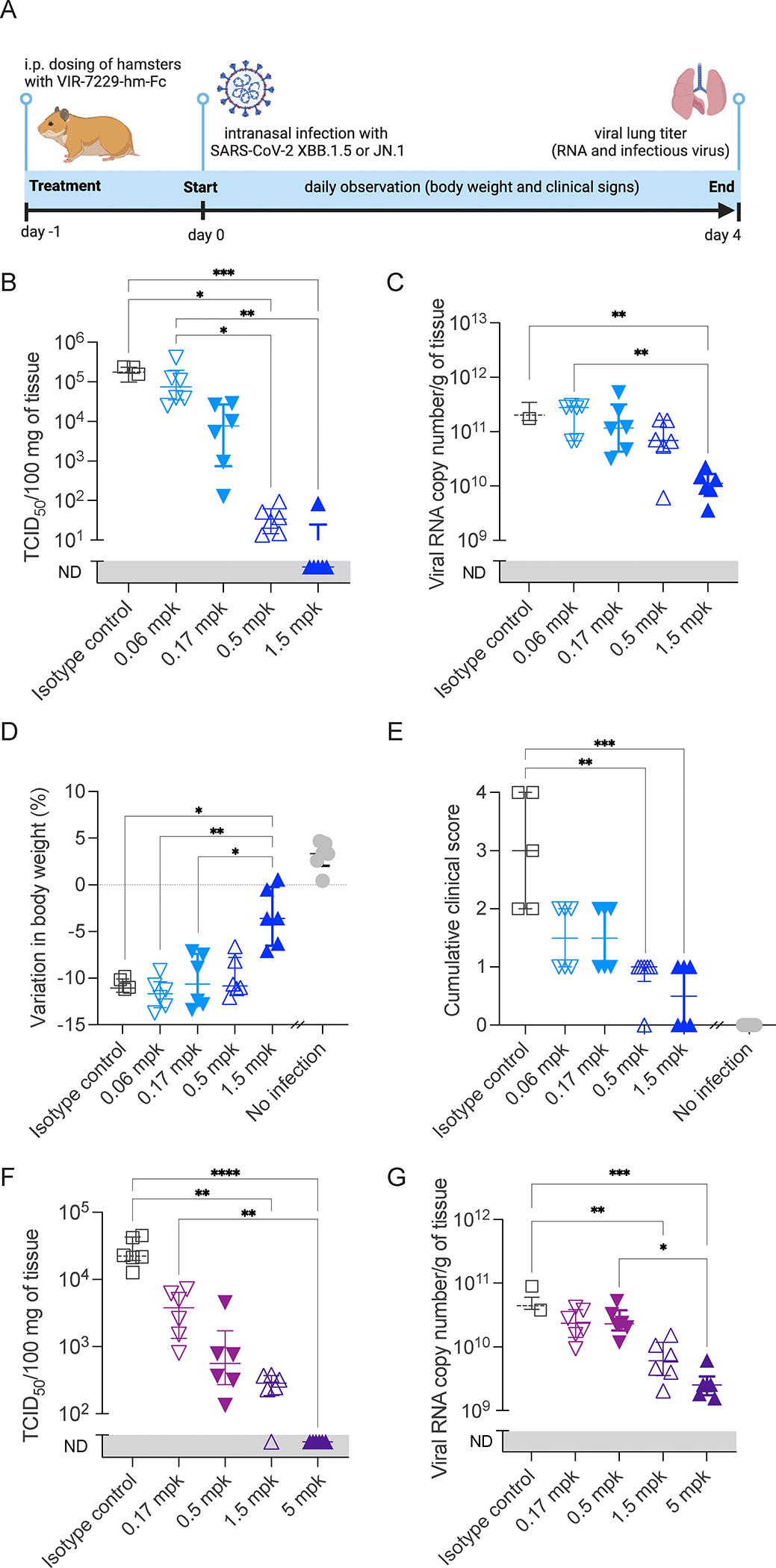
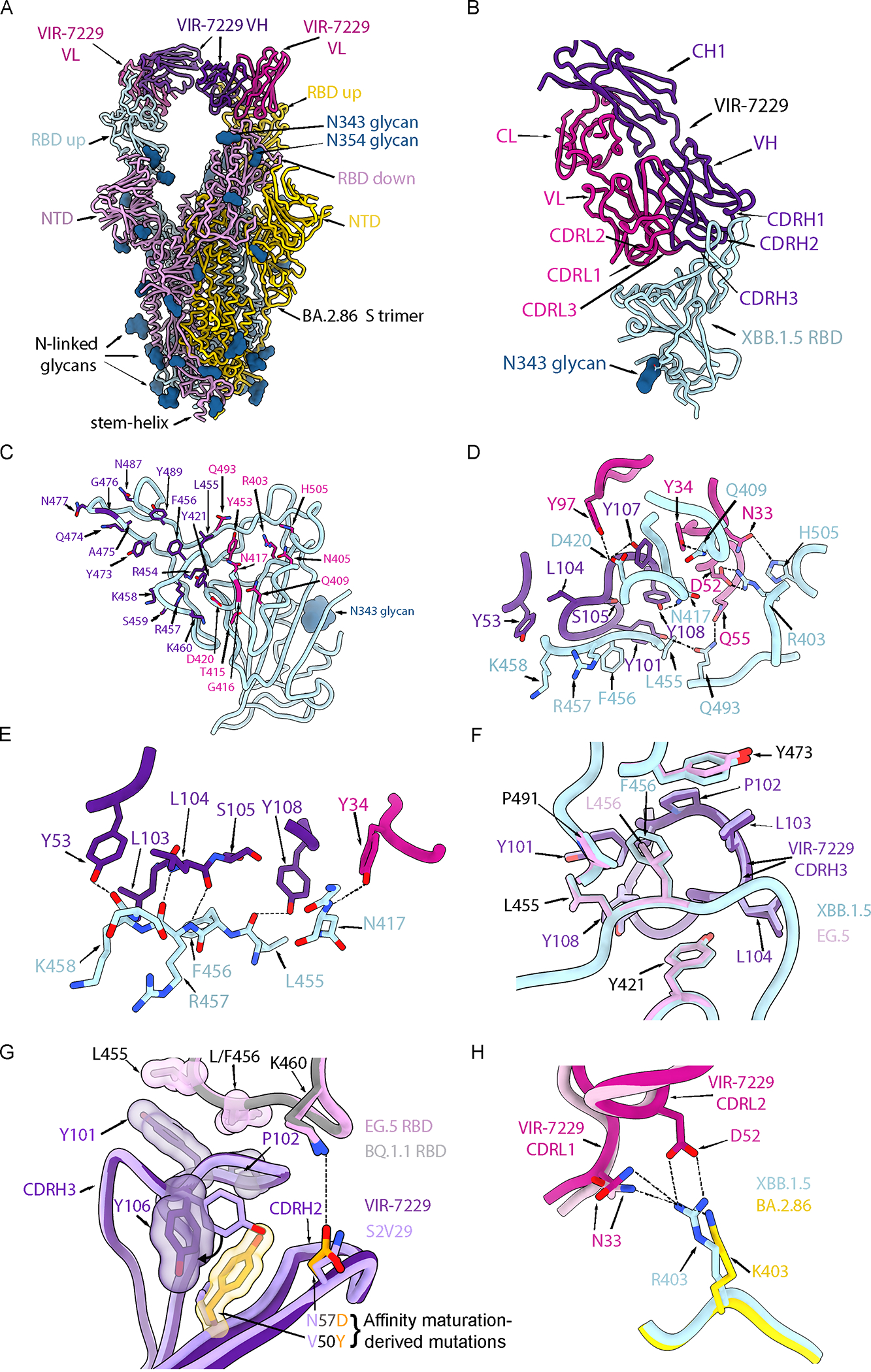
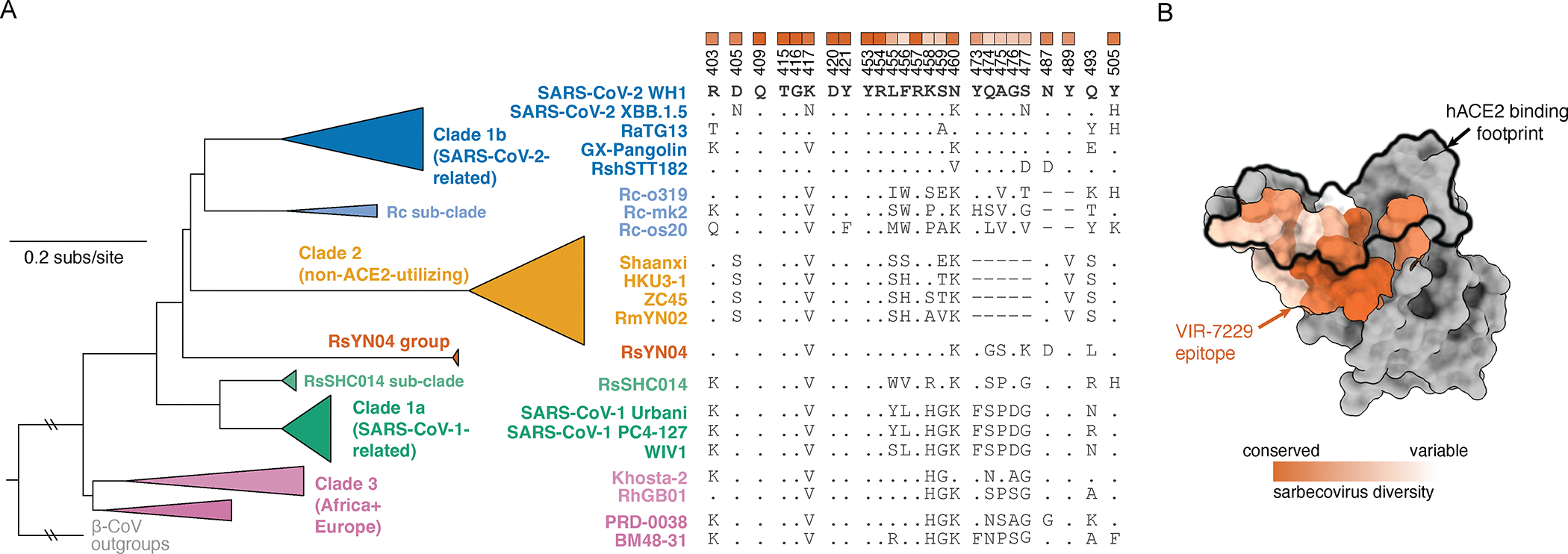
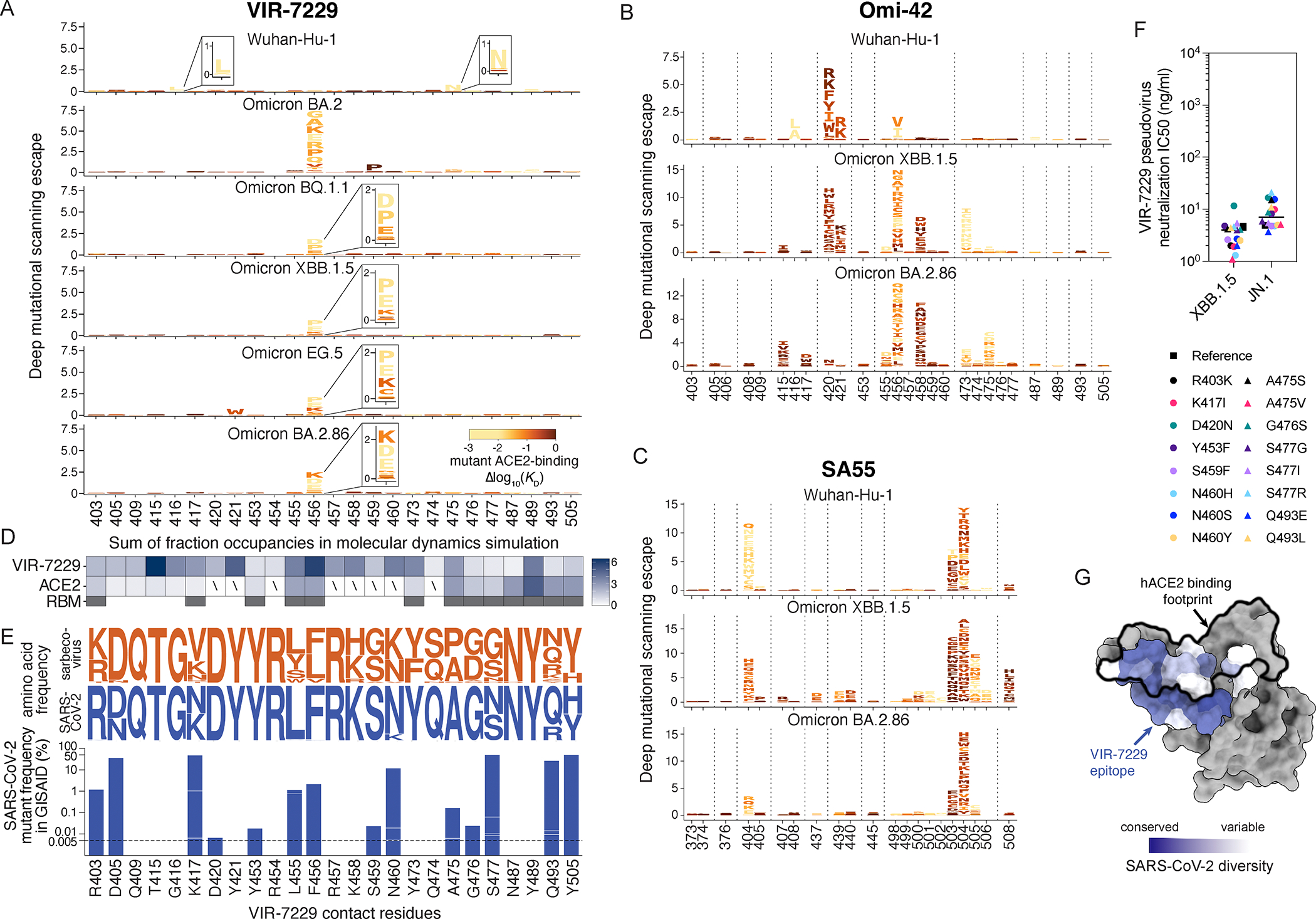
Severe acute respiratory syndrome coronavirus 2 (SARS-CoV-2) evolution has resulted in viral escape from clinically authorized monoclonal antibodies (mAbs), creating a need for mAbs that are resilient to epitope diversification. Broadly neutralizing coronavirus mAbs that are sufficiently potent for clinical development and retain activity despite viral evolution remain elusive. We identified a human mAb, designated VIR-7229, which targets the viral receptor-binding motif (RBM) with unprecedented cross-reactivity to all sarbecovirus clades, including non-ACE2-utilizing bat sarbecoviruses, while potently neutralizing SARS-CoV-2 variants since 2019, including the recent EG.5, BA.2.86, and JN.1. VIR-7229 tolerates extraordinary epitope variability, partly attributed to its high binding affinity, receptor molecular mimicry, and interactions with RBM backbone atoms. Consequently, VIR-7229 features a high barrier for selection of escape mutants, which are rare and associated with reduced viral fitness, underscoring its potential to be resilient to future viral evolution. VIR-7229 is a strong candidate to become a next-generation medicine.
严重急性呼吸综合征冠状病毒2(SARS-CoV-2)的进化导致病毒对临床批准的单克隆抗体(mAb)产生逃逸,因此需要对表位多样化具有抗性的单克隆抗体。能够广泛中和冠状病毒的单克隆抗体,其效力足以用于临床开发且能在病毒进化的情况下保持活性,目前仍然难以获得。我们鉴定出一种名为VIR-7229的人源单克隆抗体,它靶向病毒受体结合基序(RBM),对所有沙贝病毒分支具有前所未有的交叉反应性,包括不利用血管紧张素转换酶2(ACE2)的蝙蝠沙贝病毒,同时能有效中和自2019年以来的SARS-CoV-2变体,包括最近的EG.5、BA.2.86和JN.1。VIR-7229能够耐受非同寻常的表位变异性,部分归因于其高结合亲和力、受体分子模拟以及与RBM主链原子的相互作用。因此,VIR-7229具有很高的逃逸突变体选择屏障,逃逸突变体很少见且与病毒适应性降低有关,这突出了其对未来病毒进化具有抗性的潜力。VIR-7229是成为下一代药物的有力候选者。