Instituto de Radiologia (InRad) da Universidade de São Paulo (USP), São Paulo, SP, Brasil; Machiron, Guarulhos, SP, Brasil.
Instituto de Radiologia (InRad) da Universidade de São Paulo (USP), São Paulo, SP, Brasil.
Clinics (Sao Paulo). 2024 Oct 9;79:100512. doi: 10.1016/j.clinsp.2024.100512. eCollection 2024.
Hepatocellular carcinoma (HCC) is a prevalent tumor with high mortality rates. Computed tomography (CT) is crucial in the non-invasive diagnosis of HCC. Recent advancements in artificial intelligence (AI) have shown significant potential in medical imaging analysis. However, developing these AI algorithms is hindered by the scarcity of comprehensive, publicly available liver imaging datasets.
This study aims to detail the tools, data organization, and database structuring used in creating HepatIA, a medical imaging annotation platform and database at a Brazilian tertiary teaching hospital. HepatIA supports liver disease AI research at the institution.
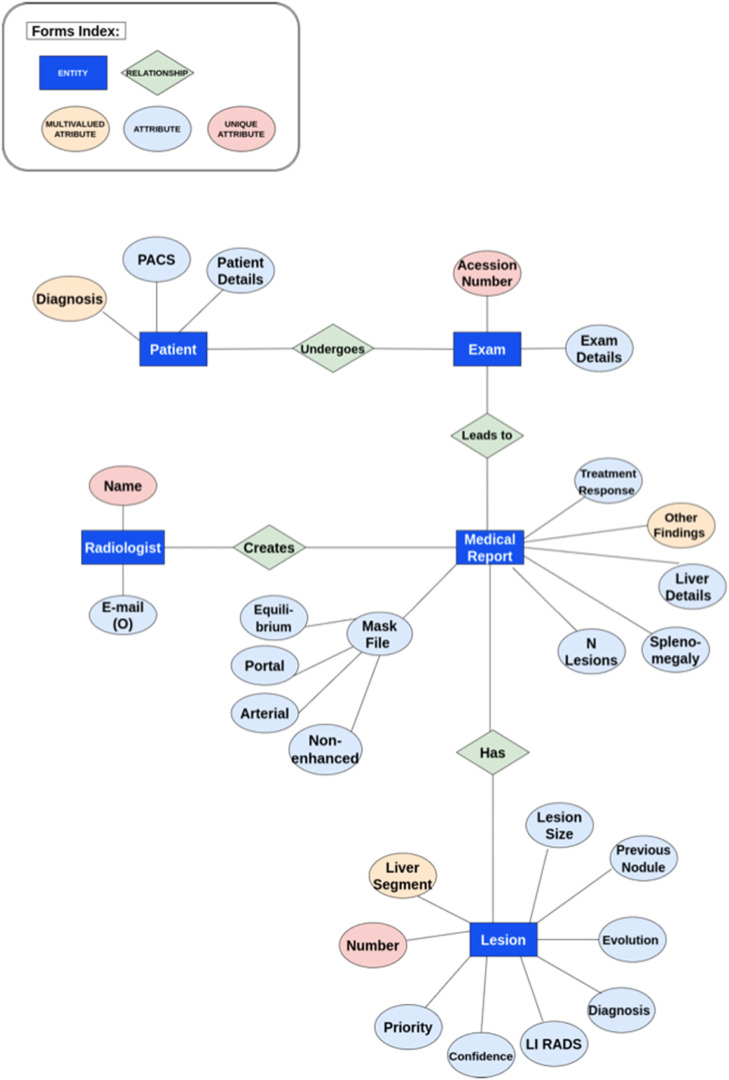
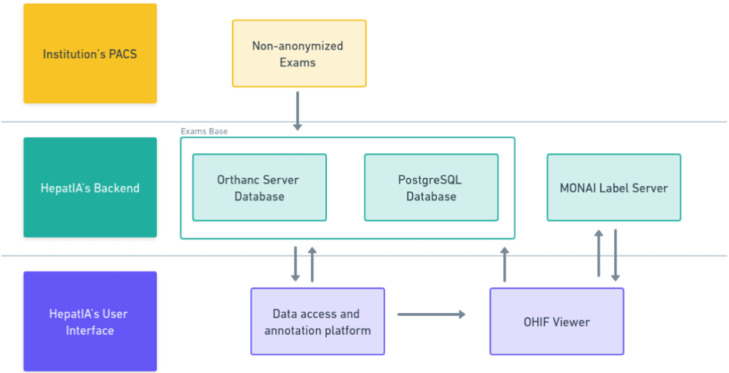
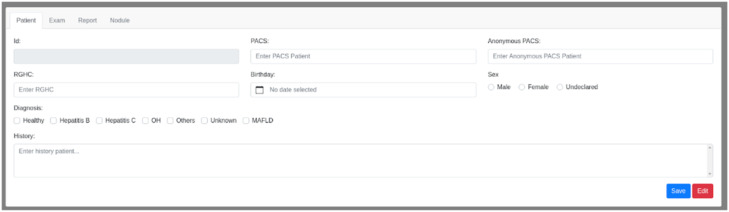
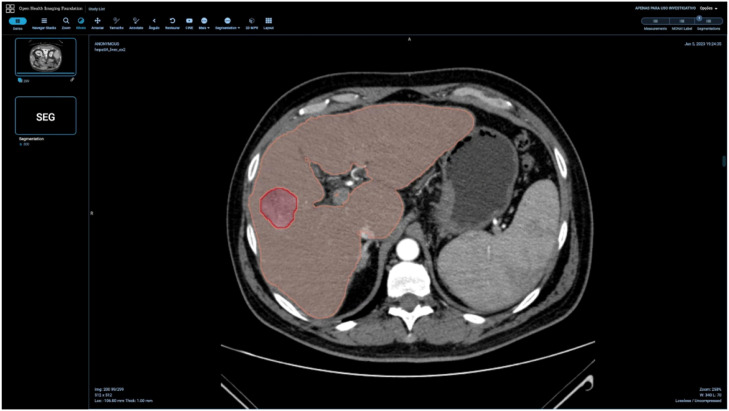
The authors collected baseline characteristics and CT scans of 656 patients from 2008 to 2021. The database, designed using PostgreSQL and implemented with Django and Vue.js, includes 692 CT volumes from a four-phase abdominal CT protocol. Radiologists made segmentation annotations using the OHIF medical image viewer, incorporating MONAI Label for pre-annotation segmentation models. The annotation process included detailed descriptions of liver morphology and nodule characteristics.
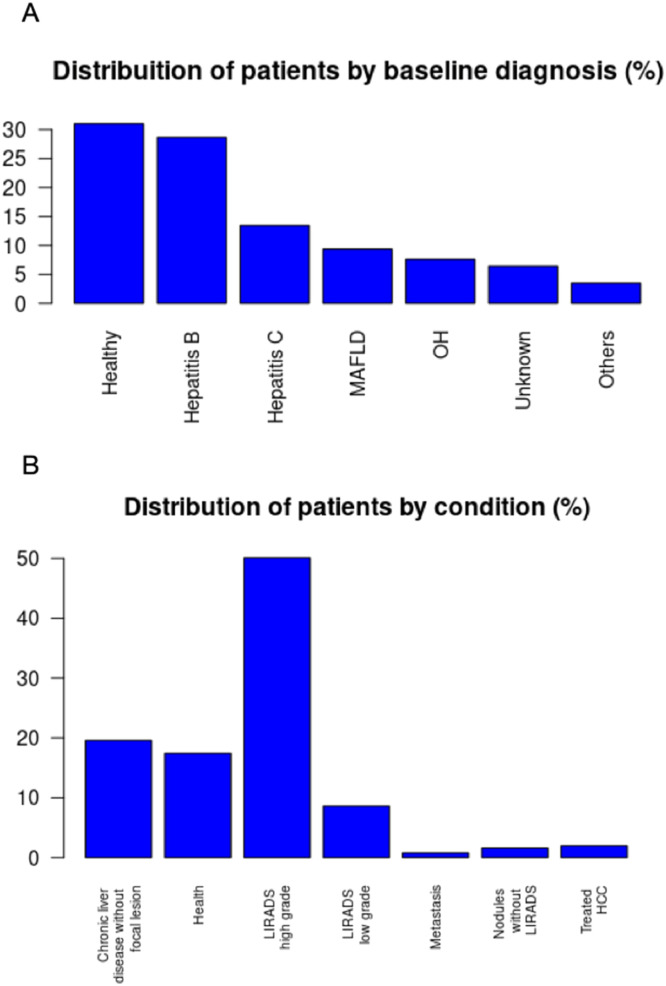
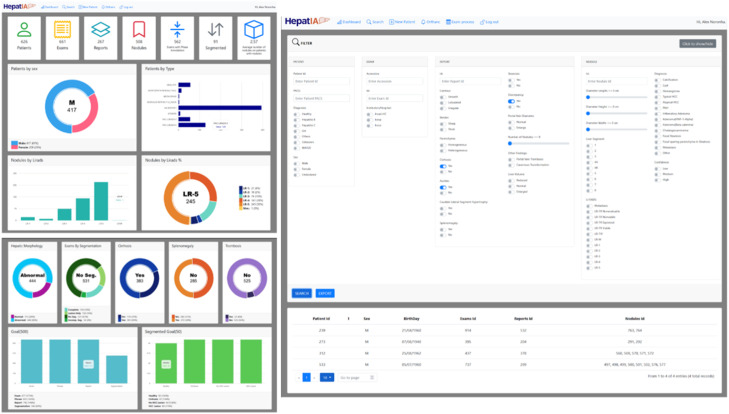
The HepatIA database currently includes healthy individuals and those with liver diseases such as HCC and cirrhosis. The database dashboard facilitates user interaction with intuitive plots and histograms. Key patient demographics include 64% males and an average age of 56.89 years. The database supports various filters for detailed searches, enhancing research capabilities.
A comprehensive data structure was successfully created and integrated with the IT systems of a teaching hospital, enabling research on deep learning algorithms applied to abdominal CT scans for investigating hepatic lesions such as HCC.
肝细胞癌(HCC)是一种高发肿瘤,死亡率较高。计算机断层扫描(CT)在 HCC 的非侵入性诊断中至关重要。人工智能(AI)的最新进展在医学影像分析中显示出了巨大的潜力。然而,开发这些 AI 算法受到缺乏全面、公开可用的肝脏成像数据集的限制。
本研究旨在详细介绍在巴西一所三级教学医院创建 HepatIA 的工具、数据组织和数据库结构,这是一个医学影像注释平台和数据库。HepatIA 支持该机构的肝脏疾病 AI 研究。
作者收集了 2008 年至 2021 年 656 名患者的基线特征和 CT 扫描。该数据库使用 PostgreSQL 设计,并使用 Django 和 Vue.js 实现,包含来自四期腹部 CT 方案的 692 个 CT 容积。放射科医生使用 OHIF 医学图像查看器进行分割注释,结合 MONAI Label 进行预注释分割模型。注释过程包括详细描述肝脏形态和结节特征。
HepatIA 数据库目前包括健康个体以及患有 HCC 和肝硬化等肝脏疾病的个体。数据库仪表板通过直观的图表和直方图促进用户交互。关键患者人口统计学特征包括 64%的男性和平均 56.89 岁的年龄。数据库支持各种详细搜索过滤器,增强了研究能力。
成功创建了一个全面的数据结构,并将其与教学医院的 IT 系统集成,能够研究应用于腹部 CT 扫描的深度学习算法,以研究 HCC 等肝脏病变。