Department of Pathology, Instituto Nacional de Enfermedades Neoplasicas, Lima, Peru.
Mycology Laboratory, Instituto de Medicina Tropical Daniel Alcides Carrion - Universidad Nacional Mayor de San Marcos, Lima, Peru.
BMC Infect Dis. 2024 Oct 12;24(1):1145. doi: 10.1186/s12879-024-10044-5.
Candidemia is an invasive mycosis with an increasing global incidence and high mortality rates in cancer patients. The production of biofilms by some strains of Candida constitutes a mechanism that limits the action of antifungal agents; however, there is limited and conflicting evidence about its role in the risk of death. This study aimed to determine whether biofilm formation is associated with mortality in cancer patients with candidemia.
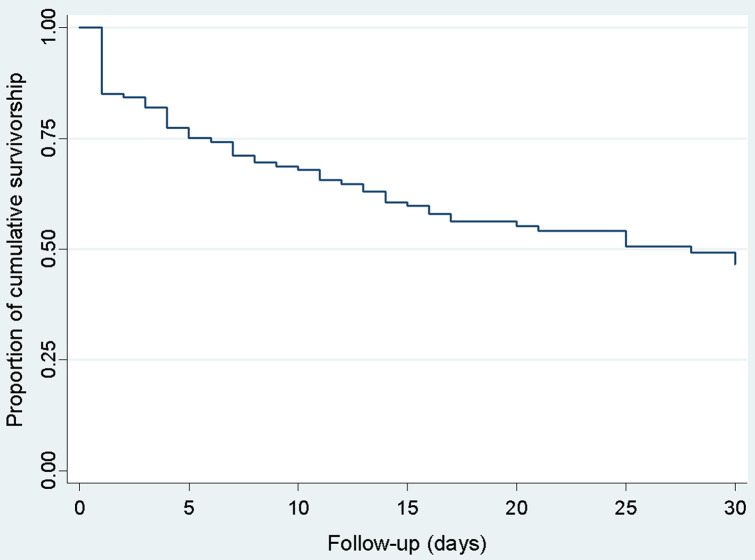
This retrospective cohort study included patients treated at Peru's oncologic reference center between June 2015 and October 2017. Data were collected by monitoring patients for 30 days from the diagnosis of candidemia until the date of death or hospital discharge. Statistical analyses evaluated the association between biofilm production determined by XTT reduction and mortality, adjusting for demographic, clinical, and microbiological factors assessed by the hospital routinary activities. Survival analysis and bivariate and multivariate Cox regression were used, estimating the hazard ratio (HR) as a measure of association with a significance level of p < 0.05.
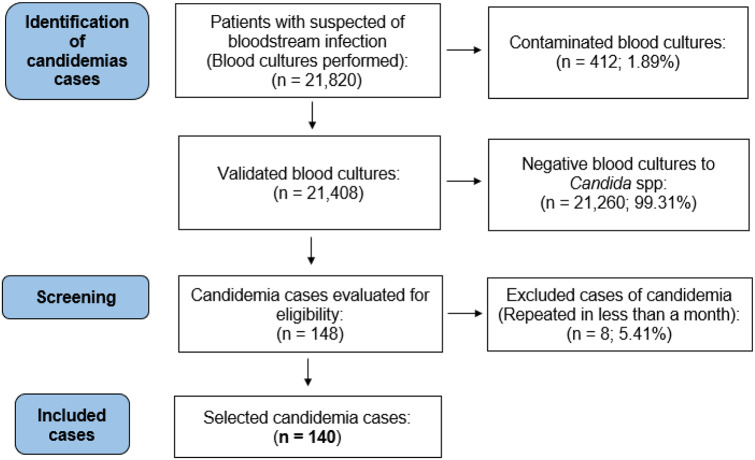
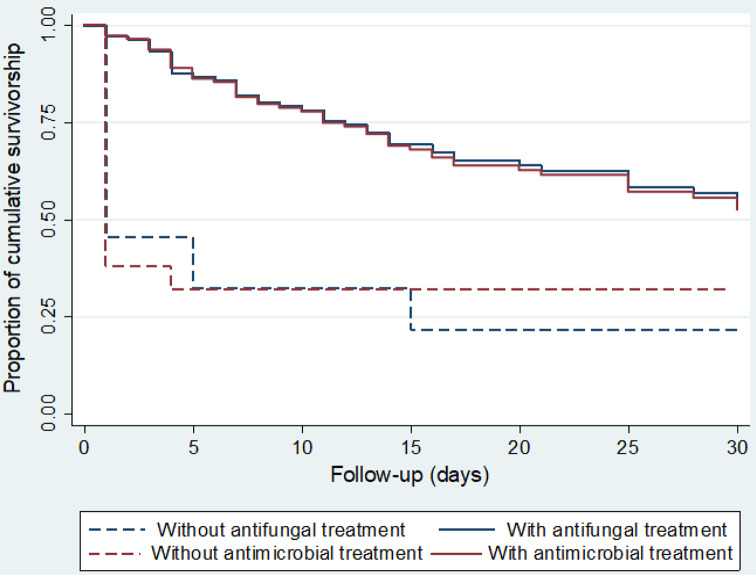
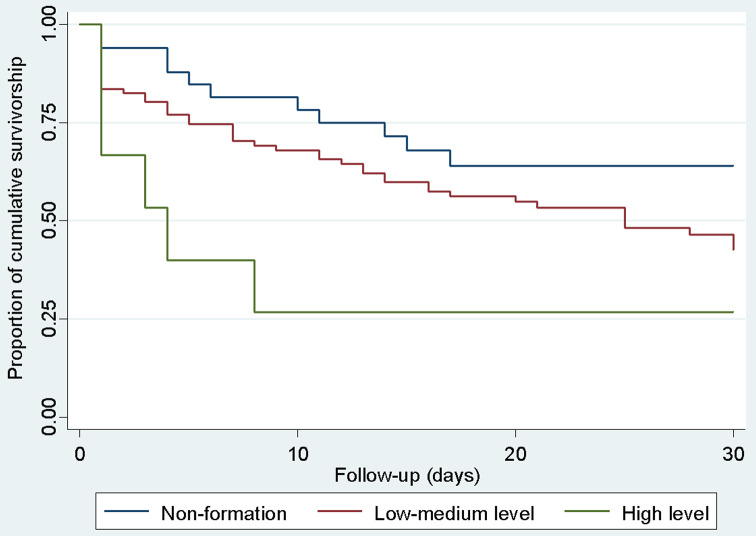
A total of 140 patients with candidemia were included in the study. The high mortality observed on the first day of post-diagnosis follow-up (81.0%) among 21 patients who were not treated with either antifungal or antimicrobial drugs led to stratification of the analyses according to whether they received treatment. In untreated patients, there was a mortality gradient in patients infected with non-biofilm-forming strains vs. low/medium and high-level biofilm-forming strains (25.0%, 66.7% and 82.3%, respectively, p = 0.049). In treated patients, a high level of biofilm formation was associated with increased mortality (HR, 3.92; 95% p = 0.022), and this association persisted after adjusting for age, comorbidities, and hospital emergency admission (HR, 6.59; CI: 1.87-23.24, p = 0.003).
The association between candidemia with in vitro biofilm formation and an increased risk of death consistently observed both in patients with and without treatment, provides another level of evidence for a possible causal association. The presence of comorbidities and the origin of the hospital emergency, which reflect the fragile clinical condition of the patients, and increasing age above 15 years were associated with a higher risk of death.
念珠菌血症是一种侵袭性真菌感染,其在癌症患者中的全球发病率和死亡率均呈上升趋势。一些念珠菌菌株产生生物膜是限制抗真菌药物作用的机制;然而,关于其在死亡风险中的作用的证据有限且存在冲突。本研究旨在确定生物膜形成是否与念珠菌血症癌症患者的死亡率相关。
这是一项回顾性队列研究,纳入了 2015 年 6 月至 2017 年 10 月期间在秘鲁肿瘤学参考中心治疗的患者。通过监测患者从念珠菌血症诊断后 30 天,直到死亡或出院的日期,来收集数据。统计分析评估了通过 XTT 减少法确定的生物膜形成与死亡率之间的关联,同时调整了医院常规活动评估的人口统计学、临床和微生物学因素。进行生存分析和双变量及多变量 Cox 回归,以危害比(HR)作为关联的度量,显著性水平为 p<0.05。
共有 140 例念珠菌血症患者纳入本研究。在未接受抗真菌或抗菌药物治疗的 21 例患者中,在诊断后第一天观察到的高死亡率(81.0%)导致根据是否接受治疗对分析进行分层。在未接受治疗的患者中,与非生物膜形成株相比,低/中水平生物膜形成株和高水平生物膜形成株的感染患者的死亡率呈梯度分布(分别为 25.0%、66.7%和 82.3%,p=0.049)。在接受治疗的患者中,高水平生物膜形成与死亡率增加相关(HR,3.92;95%置信区间:1.87-23.24,p=0.002),并且这种关联在调整年龄、合并症和医院急诊入院后仍然存在(HR,6.59;95%置信区间:1.87-23.24,p=0.003)。
在接受治疗和未接受治疗的患者中均一致观察到念珠菌血症与体外生物膜形成之间的关联与死亡风险增加有关,这为可能的因果关联提供了另一层证据。合并症的存在以及医院急诊的来源,反映了患者脆弱的临床状况,以及年龄超过 15 岁与更高的死亡风险相关。