Johnsen Hennie Marie, Pokle Anuj, Filtvedt Werner, Hiorth Marianne, Klaveness Jo, Sjåstad Anja Olafsen
Department of Pharmacy, University of Oslo Sem Sælands vei 3 0371 Oslo Norway
Nacamed AS Oslo Science Park, Gaustadalléen 21 0349 Oslo Norway
Nanoscale Adv. 2024 Oct 11;6(24):6196-204. doi: 10.1039/d4na00586d.
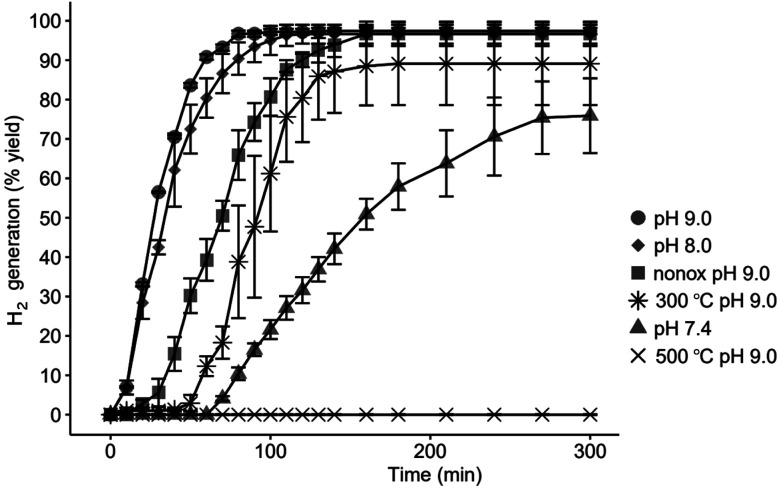
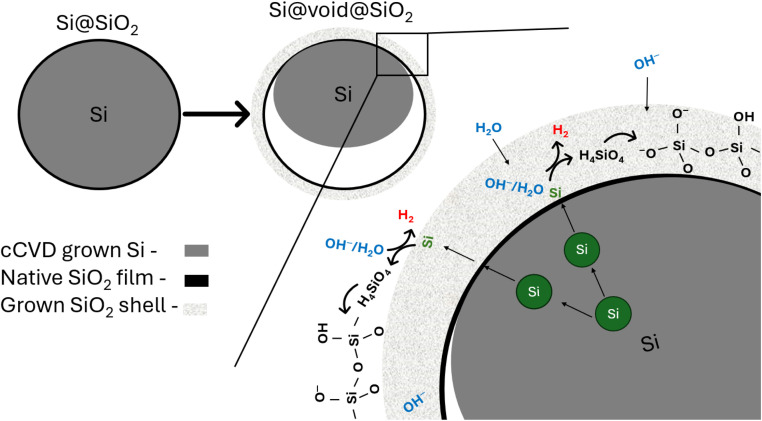
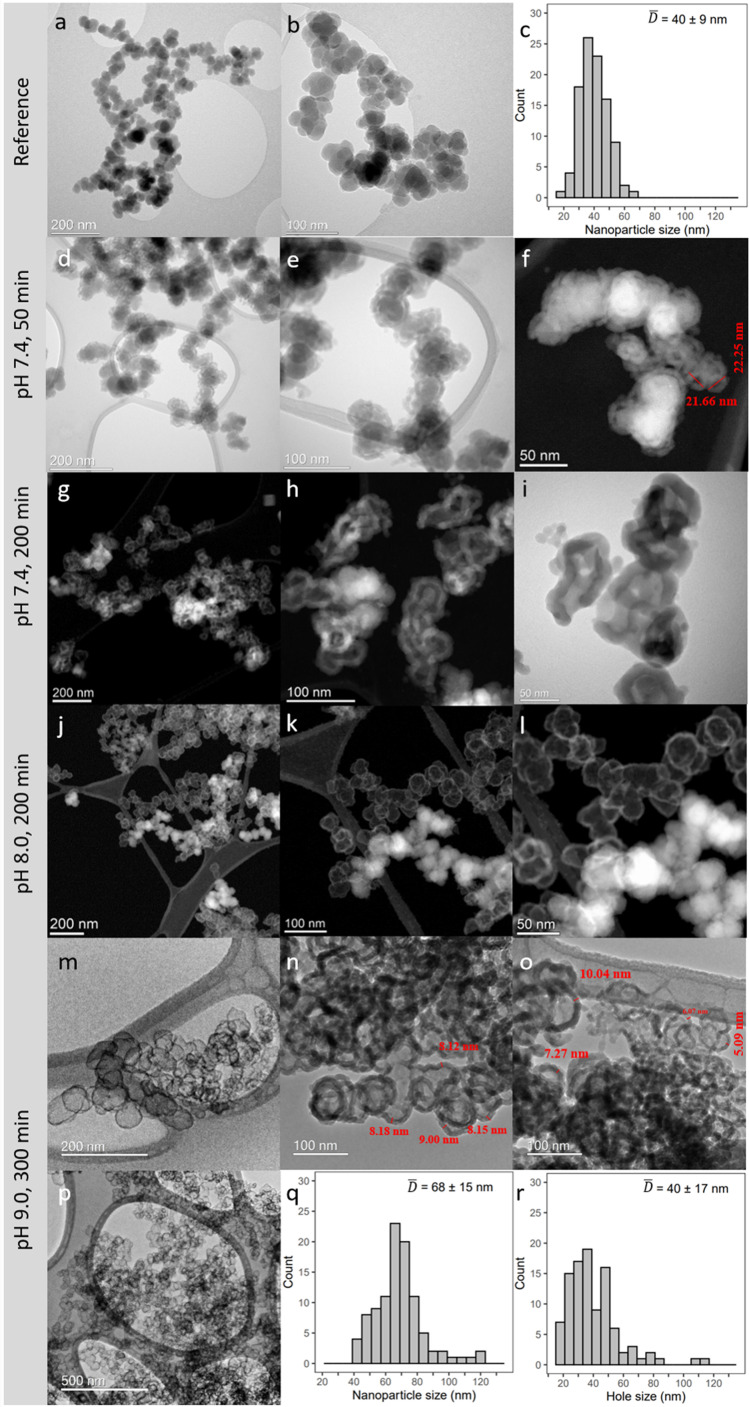
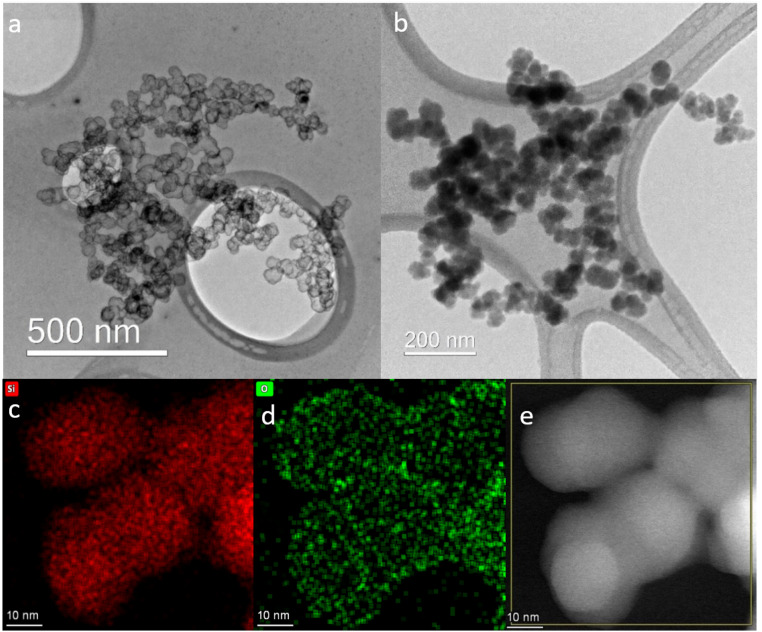
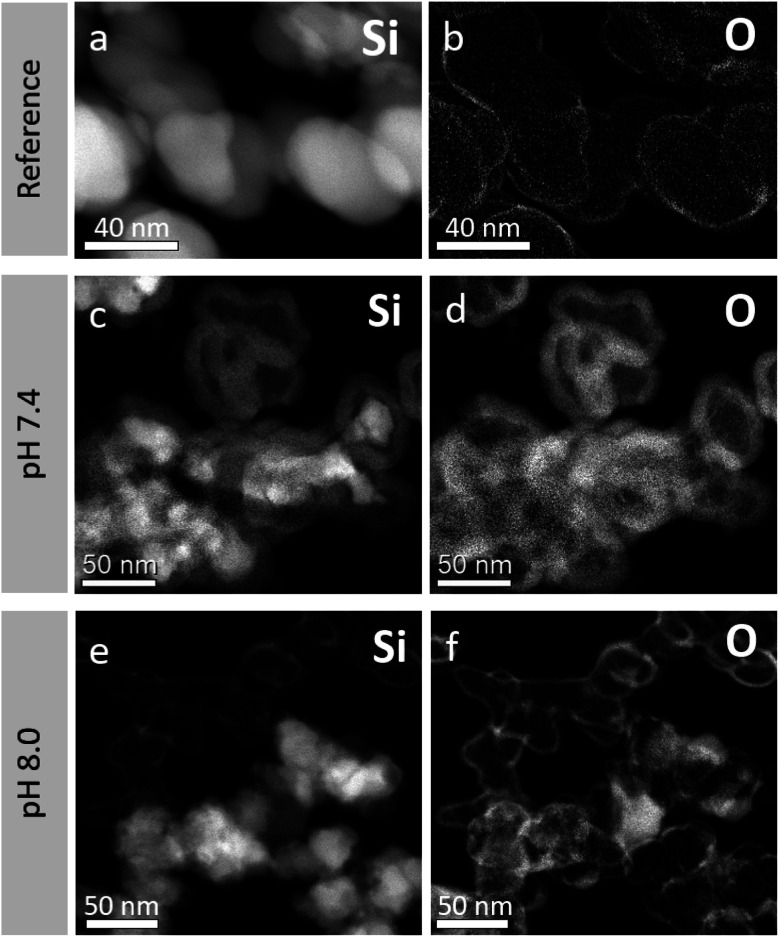
Herein we report on an environmentally friendly and scalable production route for hollow silica spheres (HSSs). The process is based on close to 100% conversion of non-crystalline solid Si nanoparticles ( = 40 ± 9 nm) in mild alkaline solutions (pH ≤ 9.0) at ambient temperature. The Si nanoparticles are prepared using the centrifugal chemical vapor deposition (cCVD) method. Combining transmission electron microscopy (TEM) imaging and nanoparticle size analysis with hydrogen evolution data, elemental mapping, and nitrogen adsorption for surface area measurement, we show for the first time experimental data that document a Kirkendall type Si-to-HSS formation process. Our understanding is that the Si nanoparticles exposed to air form a SiO film, which is stable in the mild alkaline environment. Silicon from the Si nanoparticles is transported through the thin SiO film and is reacting with HO/OH species on the particle surface or in the already thickened SiO shell to form silicic acid that in turn rapidly gets converted to a sol-gel to continue the growing of the silica shell. We foresee that this green chemistry approach can be utilized for HSS preparation for use in batteries, insulation materials and drug delivery.
在此,我们报告一种用于制备中空二氧化硅球(HSSs)的环境友好且可扩展的生产路线。该过程基于在室温下,非晶态固体硅纳米颗粒(直径 = 40 ± 9 nm)在弱碱性溶液(pH ≤ 9.0)中接近100%的转化率。硅纳米颗粒采用离心化学气相沉积(cCVD)法制备。结合透射电子显微镜(TEM)成像、纳米颗粒尺寸分析、析氢数据、元素映射以及用于表面积测量的氮吸附,我们首次展示了记录柯肯达尔型硅到HSS形成过程的实验数据。我们的理解是,暴露在空气中的硅纳米颗粒形成一层SiO膜,该膜在弱碱性环境中是稳定的。硅纳米颗粒中的硅通过薄的SiO膜传输,并与颗粒表面或已经增厚的SiO壳中的HO/OH物种反应形成硅酸,硅酸进而迅速转化为溶胶 - 凝胶以继续二氧化硅壳的生长。我们预计这种绿色化学方法可用于制备用于电池、绝缘材料和药物递送的HSS。