• 文献检索
  • 文档翻译
  • 深度研究
  • 学术资讯
  • Suppr Zotero 插件Zotero 插件
  • 邀请有礼
  • 套餐&价格
  • 历史记录
应用&插件
Suppr Zotero 插件Zotero 插件浏览器插件Mac 客户端Windows 客户端微信小程序
定价
高级版会员购买积分包购买API积分包
服务
文献检索文档翻译深度研究API 文档MCP 服务
关于我们
关于 Suppr公司介绍联系我们用户协议隐私条款
关注我们

Suppr 超能文献

核心技术专利:CN118964589B侵权必究
粤ICP备2023148730 号-1Suppr @ 2026

文献检索

告别复杂PubMed语法,用中文像聊天一样搜索,搜遍4000万医学文献。AI智能推荐,让科研检索更轻松。

立即免费搜索

文件翻译

保留排版,准确专业,支持PDF/Word/PPT等文件格式,支持 12+语言互译。

免费翻译文档

深度研究

AI帮你快速写综述,25分钟生成高质量综述,智能提取关键信息,辅助科研写作。

立即免费体验

推进患者安全:人工智能在减轻医疗相关感染方面的未来:一项系统综述。

Advancing Patient Safety: The Future of Artificial Intelligence in Mitigating Healthcare-Associated Infections: A Systematic Review.

作者信息

Radaelli Davide, Di Maria Stefano, Jakovski Zlatko, Alempijevic Djordje, Al-Habash Ibrahim, Concato Monica, Bolcato Matteo, D'Errico Stefano

机构信息

Department of Medical Surgical and Health Sciences, University of Trieste, 34127 Trieste, Italy.

Institute of Forensic Medicine, Criminalistic and Medical Deontology, University Ss. Cyril and Methodius, 1000 Skopje, North Macedonia.

出版信息

Healthcare (Basel). 2024 Oct 6;12(19):1996. doi: 10.3390/healthcare12191996.

DOI:10.3390/healthcare12191996
PMID:39408177
原文链接:https://pmc.ncbi.nlm.nih.gov/articles/PMC11477207/
Abstract

BACKGROUND

Healthcare-associated infections are infections that patients acquire during hospitalization or while receiving healthcare in other facilities. They represent the most frequent negative outcome in healthcare, can be entirely prevented, and pose a burden in terms of financial and human costs. With the development of new AI and ML algorithms, hospitals could develop new and automated surveillance and prevention models for HAIs, leading to improved patient safety. The aim of this review is to systematically retrieve, collect, and summarize all available information on the application and impact of AI in HAI surveillance and/or prevention.

METHODS

We conducted a systematic review of the literature using PubMed and Scopus to find articles related to the implementation of artificial intelligence in the surveillance and/or prevention of HAIs.

RESULTS

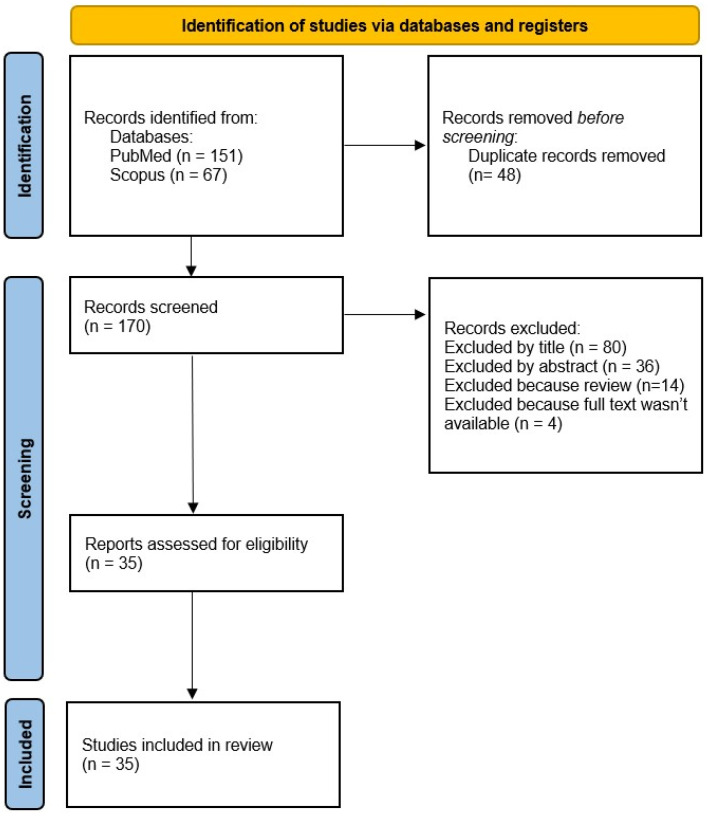
We identified a total of 218 articles, of which only 35 were included in the review. Most studies were conducted in the US (n = 10, 28.6%) and China (n = 5; 14.3%) and were published between 2021 and 2023 (26 articles, 74.3%) with an increasing trend over time. Most focused on the development of ML algorithms for the identification/prevention of surgical site infections (n = 18; 51%), followed by HAIs in general (n = 9; 26%), hospital-acquired urinary tract infections (n = 5; 9%), and healthcare-associated pneumonia (n = 3; 9%). Only one study focused on the proper use of personal protective equipment (PPE) and included healthcare workers as the study population. Overall, the trend indicates that several AI/ML models can effectively assist clinicians in everyday decisions, by identifying HAIs early or preventing them through personalized risk factors with good performance. However, only a few studies have reported an actual implementation of these models, which proved highly successful. In one case, manual workload was reduced by nearly 85%, while another study observed a decrease in the local hospital's HAI incidence from 1.31% to 0.58%.

CONCLUSIONS

AI has significant potential to improve the prevention, diagnosis, and management of healthcare-associated infections, offering benefits such as increased accuracy, reduced workloads, and cost savings. Although some AI applications have already been tested and validated, adoption in healthcare is hindered by barriers such as high implementation costs, technological limitations, and resistance from healthcare workers. Overcoming these challenges could allow AI to be more widely and cost-effectively integrated, ultimately improving patient care and infection management.

摘要

背景

医疗保健相关感染是患者在住院期间或在其他医疗机构接受医疗保健时获得的感染。它们是医疗保健中最常见的负面结果,可以完全预防,并且在财务和人力成本方面构成负担。随着新的人工智能和机器学习算法的发展,医院可以开发用于医疗保健相关感染的新的自动化监测和预防模型,从而提高患者安全性。本综述的目的是系统地检索、收集和总结关于人工智能在医疗保健相关感染监测和/或预防中的应用及影响的所有可用信息。

方法

我们使用PubMed和Scopus对文献进行了系统综述,以查找与人工智能在医疗保健相关感染监测和/或预防中的应用相关的文章。

结果

我们共识别出218篇文章,其中只有35篇被纳入综述。大多数研究在美国(n = 10,28.6%)和中国(n = 5;14.3%)进行,发表于2021年至2023年之间(26篇文章,74.3%),且呈逐年增加趋势。大多数研究聚焦于开发用于识别/预防手术部位感染的机器学习算法(n = 18;51%),其次是一般医疗保健相关感染(n = 9;26%)、医院获得性尿路感染(n = 5;9%)和医疗保健相关肺炎(n = 3;9%)。只有一项研究关注个人防护装备(PPE)的正确使用,并将医护人员作为研究对象。总体而言,趋势表明一些人工智能/机器学习模型可以通过早期识别医疗保健相关感染或通过具有良好性能的个性化风险因素预防感染,有效地协助临床医生进行日常决策。然而,只有少数研究报告了这些模型的实际应用情况,且证明非常成功。在一个案例中,人工工作量减少了近85%,而另一项研究观察到当地医院的医疗保健相关感染发生率从1.31%降至0.58%。

结论

人工智能在改善医疗保健相关感染的预防、诊断和管理方面具有巨大潜力,可带来提高准确性、减少工作量和节省成本等益处。尽管一些人工智能应用已经经过测试和验证,但医疗保健领域的采用受到高实施成本、技术限制和医护人员抵触等障碍的阻碍。克服这些挑战可以使人工智能更广泛且经济高效地整合,最终改善患者护理和感染管理。
https://cdn.ncbi.nlm.nih.gov/pmc/blobs/2174/11477207/e88bf131c1ed/healthcare-12-01996-g002.jpg
https://cdn.ncbi.nlm.nih.gov/pmc/blobs/2174/11477207/0483fa07a459/healthcare-12-01996-g001.jpg
https://cdn.ncbi.nlm.nih.gov/pmc/blobs/2174/11477207/e88bf131c1ed/healthcare-12-01996-g002.jpg
https://cdn.ncbi.nlm.nih.gov/pmc/blobs/2174/11477207/0483fa07a459/healthcare-12-01996-g001.jpg
https://cdn.ncbi.nlm.nih.gov/pmc/blobs/2174/11477207/e88bf131c1ed/healthcare-12-01996-g002.jpg

相似文献

1
Advancing Patient Safety: The Future of Artificial Intelligence in Mitigating Healthcare-Associated Infections: A Systematic Review.推进患者安全:人工智能在减轻医疗相关感染方面的未来:一项系统综述。
Healthcare (Basel). 2024 Oct 6;12(19):1996. doi: 10.3390/healthcare12191996.
2
Artificial intelligence-based tools to control healthcare associated infections: A systematic review of the literature.基于人工智能的工具控制医院感染:文献系统评价。
J Infect Public Health. 2020 Aug;13(8):1061-1077. doi: 10.1016/j.jiph.2020.06.006. Epub 2020 Jun 16.
3
Harnessing of Artificial Intelligence for the Diagnosis and Prevention of Hospital-Acquired Infections: A Systematic Review.利用人工智能诊断和预防医院获得性感染:一项系统综述。
Diagnostics (Basel). 2024 Feb 23;14(5):484. doi: 10.3390/diagnostics14050484.
4
Innovative Techniques for Infection Control and Surveillance in Hospital Settings and Long-Term Care Facilities: A Scoping Review.医院环境和长期护理机构中感染控制与监测的创新技术:一项范围综述
Antibiotics (Basel). 2024 Jan 13;13(1):77. doi: 10.3390/antibiotics13010077.
5
Healthcare-Acquired Infection Surveillance in Neurosurgery Patients, Incidence and Microbiology, Five Years of Experience in Two Polish Units.神经外科患者获得性感染监测:发病率和微生物学,波兰两个单位五年经验。
Int J Environ Res Public Health. 2022 Jun 20;19(12):7544. doi: 10.3390/ijerph19127544.
6
Importance of Hospital Infection Control.医院感染控制的重要性。
Cureus. 2023 Dec 22;15(12):e50931. doi: 10.7759/cureus.50931. eCollection 2023 Dec.
7
Incidence of healthcare-associated infections in a tertiary hospital in Beijing, China: results from a real-time surveillance system.中国北京一家三级医院的医源性感染发生率:实时监测系统的结果。
Antimicrob Resist Infect Control. 2019 Aug 27;8:145. doi: 10.1186/s13756-019-0582-7. eCollection 2019.
8
Barriers to and Facilitators of Artificial Intelligence Adoption in Health Care: Scoping Review.医疗保健中人工智能采用的障碍和促进因素:范围综述。
JMIR Hum Factors. 2024 Aug 29;11:e48633. doi: 10.2196/48633.
9
Hospital acquired COVID-19 infections amongst patients before the rollout of COVID-19 vaccinations, a scoping review.医疗机构中 COVID-19 疫苗接种前发生的患者获得性感染:范围综述。
BMC Infect Dis. 2022 Feb 10;22(1):140. doi: 10.1186/s12879-022-07128-5.
10
Hospital-acquired infections in Belgian acute-care hospitals: financial burden of disease and potential cost savings.比利时急症医院的医院获得性感染:疾病的经济负担及潜在成本节约
Acta Clin Belg. 2013 May-Jun;68(3):199-205. doi: 10.2143/ACB.3258.

引用本文的文献

1
Trends in public perceptions of patient safety during the COVID-19 pandemic: Findings from a repeated cross-sectional survey in Germany, 2019-2023.2019 - 2023年德国重复横断面调查结果:新冠疫情期间公众对患者安全认知的趋势
PLoS One. 2025 Aug 5;20(8):e0329761. doi: 10.1371/journal.pone.0329761. eCollection 2025.
2
Harnessing artificial intelligence for infection control and prevention in hospitals: A comprehensive review of current applications, challenges, and future directions.利用人工智能进行医院感染控制与预防:当前应用、挑战及未来方向的全面综述
Saudi Med J. 2025 Apr;46(4):329-334. doi: 10.15537/smj.2025.46.4.20240878.
3

本文引用的文献

1
NeuroHealth guardian: A novel hybrid approach for precision brain stroke prediction and healthcare analytics.神经健康卫士:一种用于精准脑卒预测和医疗保健分析的新型混合方法。
J Neurosci Methods. 2024 Sep;409:110210. doi: 10.1016/j.jneumeth.2024.110210. Epub 2024 Jul 3.
2
The Role of AI in Hospitals and Clinics: Transforming Healthcare in the 21st Century.人工智能在医院和诊所中的作用:变革21世纪的医疗保健
Bioengineering (Basel). 2024 Mar 29;11(4):337. doi: 10.3390/bioengineering11040337.
3
The value of machine learning technology and artificial intelligence to enhance patient safety in spine surgery: a review.
Artificial intelligence in hospital infection prevention: an integrative review.
医院感染预防中的人工智能:一项综合综述。
Front Public Health. 2025 Apr 2;13:1547450. doi: 10.3389/fpubh.2025.1547450. eCollection 2025.
4
Multicenter Study Protocol: Research on Evaluation and Detection of Surgical Wound Complications with AI-Based Recognition (REDSCAR-Trial).多中心研究方案:基于人工智能识别的手术伤口并发症评估与检测研究(REDSCAR试验)。
J Clin Med. 2025 Mar 24;14(7):2210. doi: 10.3390/jcm14072210.
5
Healthcare-Associated Infections: The Role of Microbial and Environmental Factors in Infection Control-A Narrative Review.医疗保健相关感染:微生物和环境因素在感染控制中的作用——一篇叙述性综述
Infect Dis Ther. 2025 May;14(5):933-971. doi: 10.1007/s40121-025-01143-0. Epub 2025 Apr 10.
6
Biofilm Resilience: Molecular Mechanisms Driving Antibiotic Resistance in Clinical Contexts.生物膜弹性:临床环境中驱动抗生素耐药性的分子机制。
Biology (Basel). 2025 Feb 6;14(2):165. doi: 10.3390/biology14020165.
7
Machine learning approaches for improvement of patient safety in surgery.用于提高手术患者安全性的机器学习方法。
Patient Saf Surg. 2024 Dec 20;18(1):37. doi: 10.1186/s13037-024-00422-y.
8
Harnessing AI for advancing pathogenic microbiology: a bibliometric and topic modeling approach.利用人工智能推动病原微生物学发展:一种文献计量学和主题建模方法。
Front Microbiol. 2024 Nov 15;15:1510139. doi: 10.3389/fmicb.2024.1510139. eCollection 2024.
机器学习技术与人工智能在提高脊柱手术患者安全性方面的价值:综述
Patient Saf Surg. 2024 Mar 25;18(1):11. doi: 10.1186/s13037-024-00393-0.
4
A study on the risk stratification for patients within 24 hours of admission for risk of hospital-acquired urinary tract infection using Bayesian network models.采用贝叶斯网络模型对入院 24 小时内患者发生医院获得性尿路感染风险的危险分层研究。
Health Informatics J. 2024 Jan-Mar;30(1):14604582241234232. doi: 10.1177/14604582241234232.
5
Assessing the utility of deep neural networks in detecting superficial surgical site infections from free text electronic health record data.评估深度神经网络从自由文本电子健康记录数据中检测浅表手术部位感染的效用。
Front Digit Health. 2024 Jan 8;5:1249835. doi: 10.3389/fdgth.2023.1249835. eCollection 2023.
6
Healthcare-Associated-Infections: preliminary results from a real-time reporting system of an Italian neurologic research hospital.医疗机构相关性感染:一家意大利神经科研究医院实时报告系统的初步结果。
Ann Ig. 2024 Mar-Apr;36(2):256-260. doi: 10.7416/ai.2024.2603. Epub 2024 Jan 18.
7
Personalising intravenous to oral antibiotic switch decision making through fair interpretable machine learning.通过公平可解释的机器学习实现静脉内到口服抗生素转换决策的个性化。
Nat Commun. 2024 Jan 13;15(1):506. doi: 10.1038/s41467-024-44740-2.
8
Machine learning to identify risk factors associated with the development of ventilated hospital-acquired pneumonia and mortality: implications for antibiotic therapy selection.机器学习用于识别与有创医院获得性肺炎发生及死亡率相关的危险因素:对抗生素治疗选择的启示
Front Med (Lausanne). 2023 Dec 15;10:1268488. doi: 10.3389/fmed.2023.1268488. eCollection 2023.
9
A Systematic Review of the Barriers to the Implementation of Artificial Intelligence in Healthcare.医疗保健领域人工智能实施障碍的系统评价
Cureus. 2023 Oct 4;15(10):e46454. doi: 10.7759/cureus.46454. eCollection 2023 Oct.
10
Effectiveness of an artificial intelligence-based training and monitoring system in prevention of nosocomial infections: A pilot study of hospital-based data.基于人工智能的培训和监测系统在预防医院感染中的有效性:基于医院数据的试点研究。
Drug Discov Ther. 2023 Nov 18;17(5):351-356. doi: 10.5582/ddt.2023.01068. Epub 2023 Sep 7.