Cordoni Giada, Norscia Ivan
Department of Life Sciences and Systems Biology, University of Torino, 10123 Turin, Italy.
Animals (Basel). 2024 Sep 25;14(19):2769. doi: 10.3390/ani14192769.
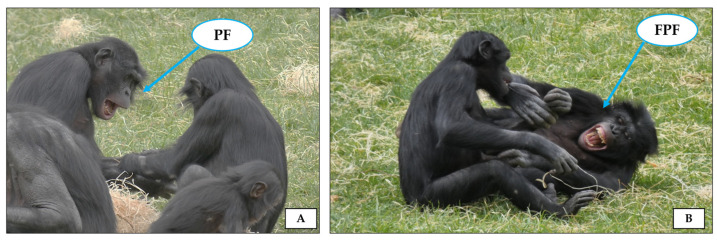
This review focuses on social play, a complex behaviour that is often difficult to categorize. Although play has been typically associated with positive emotional states, a thorough examination of the literature indicates that it may relate to different emotional systems, from attachment to conflict. Play oscillates between competition and cooperation, and includes a spectrum in between; thus, quantitatively identifying and demonstrating the emotional nature of play remains challenging. We considered examples from human and non-human animal studies and explored the emotional and neuro-hormonal systems involved in play. We assessed ethological data possibly indicating the emotional states underlying play, and we focused on the cooperative and competitive elements of play. We investigated the relationship between play and affiliative/aggressive behaviours, the communicative meaning of play signals (especially primate play faces), and the motor and possibly emotional contagion function of rapid motor mimicry during play. From all the literature on play, this review selects and combines studies in an innovative way to present the methods (e.g., play indices and social network analysis), tools (e.g., sequential analysis and facial coding software), and evidence indicative of the emotional states underlying play, which is much more complex than previously thought.
本综述聚焦于社会游戏,这是一种复杂的行为,通常难以进行分类。尽管游戏通常与积极的情绪状态相关联,但对文献的全面审视表明,它可能与从依恋到冲突等不同的情绪系统有关。游戏在竞争与合作之间摇摆不定,且包含两者之间的一系列情况;因此,定量识别和证明游戏的情感本质仍然具有挑战性。我们考虑了来自人类和非人类动物研究的例子,并探讨了参与游戏的情绪和神经激素系统。我们评估了可能表明游戏背后情绪状态的行为学数据,并着重关注了游戏的合作和竞争元素。我们研究了游戏与亲和/攻击性行为之间的关系、游戏信号(尤其是灵长类动物的游戏表情)的交际意义,以及游戏过程中快速动作模仿的运动和可能的情绪传染功能。从所有关于游戏的文献中,本综述以创新的方式挑选并结合各项研究,以呈现方法(如游戏指标和社会网络分析)、工具(如序列分析和面部编码软件),以及表明游戏背后情绪状态的证据,而这种情绪状态比之前认为的要复杂得多。