Gullo Giuseppe, Lopez Alessandra, Loreto Carla, Cucinella Gaspare, La Verde Marco, Andrisani Alessandra, Burgio Sofia, Carotenuto Raffaela, Ganduscio Silvia, Baglio Giovanni, Billone Valentina, Perino Antonio, De Franciscis Pasquale, Marinelli Susanna
Department of Obstetrics and Gynecology, IVF Unit, AOOR Villa Sofia Cervello, University of Palermo, 90146 Palermo, Italy.
Department of Woman, Child and General and Specialized Surgery, University of Campania "Luigi Vanvitelli", 80121 Naples, Italy.
Diagnostics (Basel). 2024 Sep 24;14(19):2118. doi: 10.3390/diagnostics14192118.
Currently available research data points to COVID-19-related multi-organ system damage. This study aims to evaluate the impact of SARS-CoV-2 on the reproductive health, that is, plasma levels of FSH, LH, estradiol, AMH, and antral follicular count, of women undergoing level II ART techniques.
This is a multicenter, prospective, and observational study by the reproductive medicine centers of Palermo's Ospedali Riuniti Villa Sofia-Cervello Hospital and Vanvitelli University. From September 2022 to March 2024, 203 patients aged 24-43 were enrolled, all with diagnosed infertility and a history of SARS-CoV-2 infection. Symptomatic women, patients testing positive for HIV or other liver viruses, and patients with a history of ovarian cancer or who had taken gonadotoxic drugs were excluded. Plasma measurements of FSH, LH, estradiol, AMH, and antral follicular count were performed before and after infection.
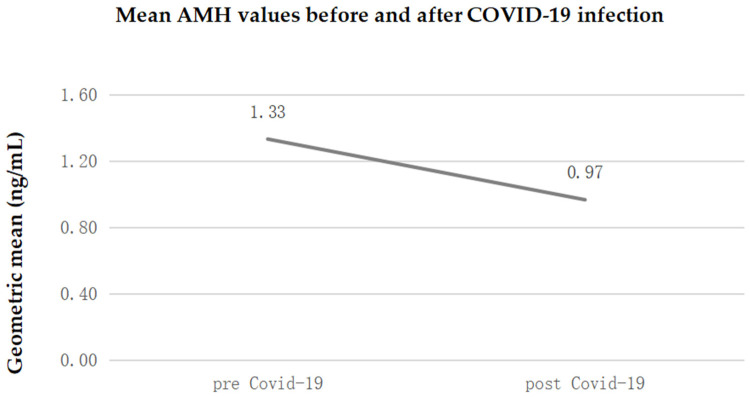
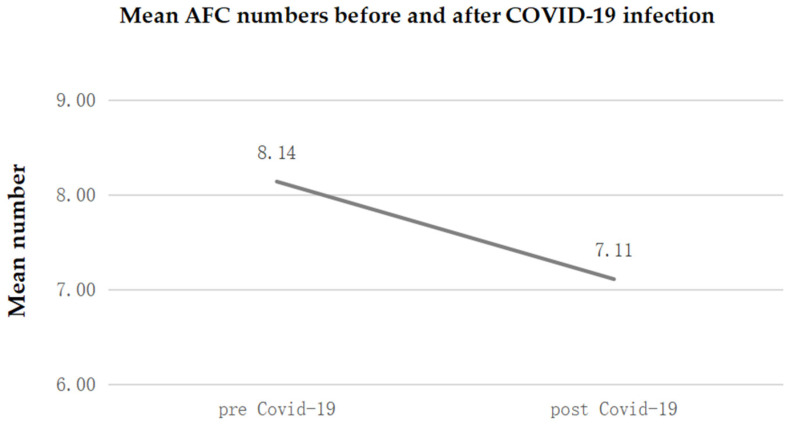
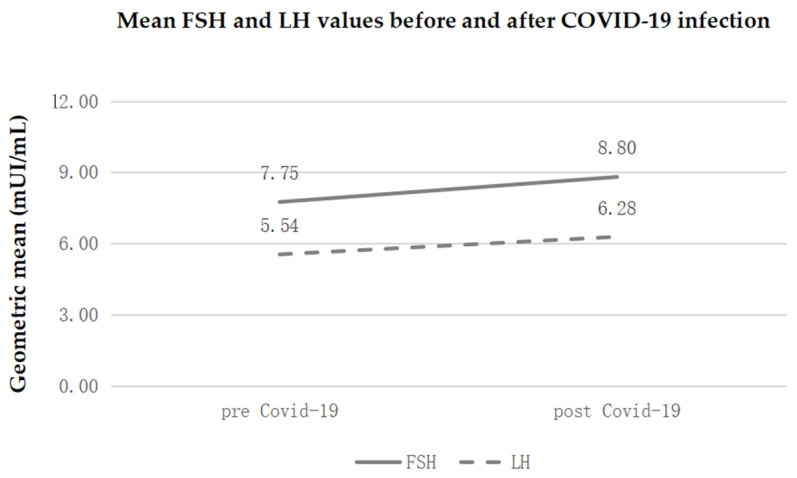
The analysis accounting for the concentration of anti-Müllerian hormone (AMH) before and after COVID-19 infection shows an average concentration decrease from 1.33 ng/mL before SARS-CoV-2 infection to 0.97 ng/mL after infection. Average decrease after infection was -27.4%; average reduction of 1 follicle (95% CI: from -0.74 to -1.33) was reported following SARS-CoV-2 infection. Levels of E2 before and after SARS-CoV-2 infection did not vary significantly. Average FSH and LH levels before and after SARS-CoV-2 infection pointed to an increase.
SARS-CoV-2 infection damages female reproductive health, causing significant reductions in AMH (-27.4%) and AFC (-1 antral follicle) values and an increase in FSH (+13.6%) and LH (+13.4%) values. No effect on E2 levels was reported. The pandemic has also affected the ability of infertile patients to access ART procedures, and that calls for a novel, updated blueprint designed to enhance our preparedness in the event that similar circumstances should occur again.
目前可用的研究数据表明新型冠状病毒肺炎(COVID-19)会导致多器官系统损伤。本研究旨在评估严重急性呼吸综合征冠状病毒2(SARS-CoV-2)对接受二级辅助生殖技术(ART)的女性生殖健康的影响,即促卵泡生成素(FSH)、促黄体生成素(LH)、雌二醇、抗苗勒管激素(AMH)的血浆水平以及窦卵泡计数。
这是一项由巴勒莫综合医院索菲亚-塞尔维洛别墅医院和范维泰利大学的生殖医学中心开展的多中心、前瞻性观察性研究。2022年9月至2024年3月,招募了203名年龄在24至43岁之间的患者,所有患者均被诊断为不孕症且有SARS-CoV-2感染史。有症状的女性、HIV或其他肝脏病毒检测呈阳性的患者、有卵巢癌病史或服用过性腺毒性药物的患者被排除。在感染前后进行FSH、LH、雌二醇、AMH的血浆测量以及窦卵泡计数。
对COVID-19感染前后抗苗勒管激素(AMH)浓度的分析显示,平均浓度从SARS-CoV-2感染前的1.33 ng/mL降至感染后的0.97 ng/mL。感染后的平均降幅为-27.4%;SARS-CoV-2感染后报告平均减少1个卵泡(95%置信区间:从-0.74至-1.33)。SARS-CoV-2感染前后雌二醇(E2)水平无显著变化。SARS-CoV-2感染前后FSH和LH的平均水平有所升高。
SARS-CoV-2感染损害女性生殖健康,导致AMH值显著降低(-27.4%)和AFC值降低(-1个窦卵泡),以及FSH值升高(+13.6%)和LH值升高(+13.4%)。未报告对E2水平有影响。这场大流行还影响了不孕患者接受ART程序的能力,这就需要一个新颖、更新的蓝图,以加强我们在类似情况再次发生时的应对准备。