Center for Integrative Genomics, Faculty of Biology and Medicine, University of Lausanne, Lausanne, Switzerland.
Department of Biology, Hofstra University, Hempstead, NY, USA.
Nature. 2024 Nov;635(8040):951-959. doi: 10.1038/s41586-024-08056-x. Epub 2024 Oct 16.
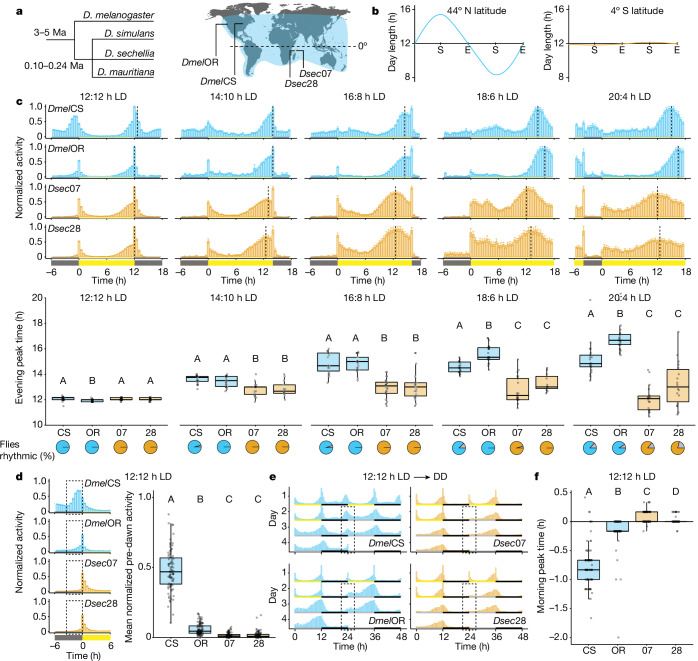
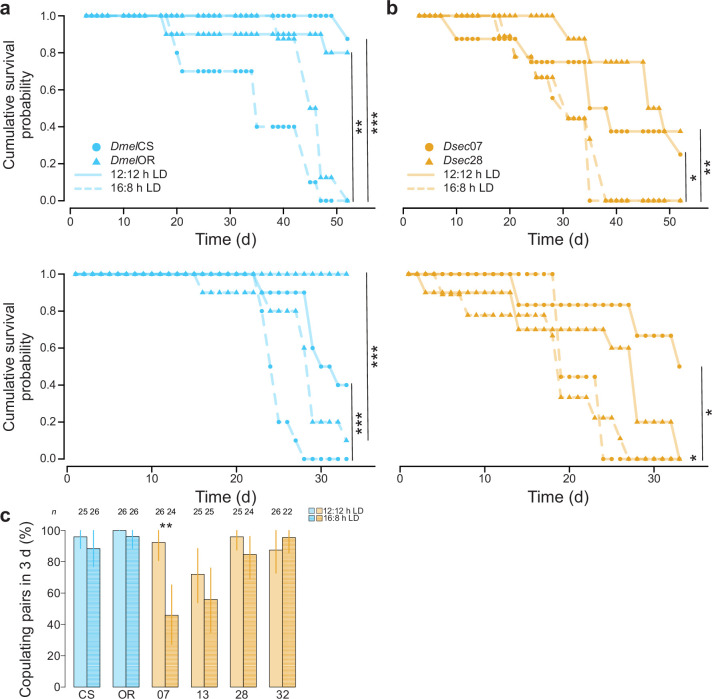
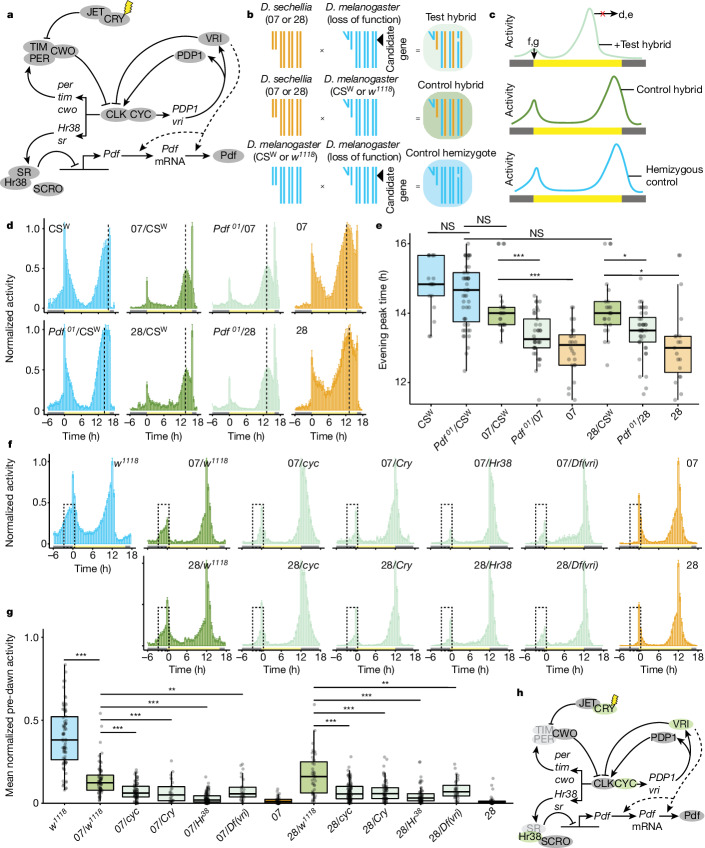
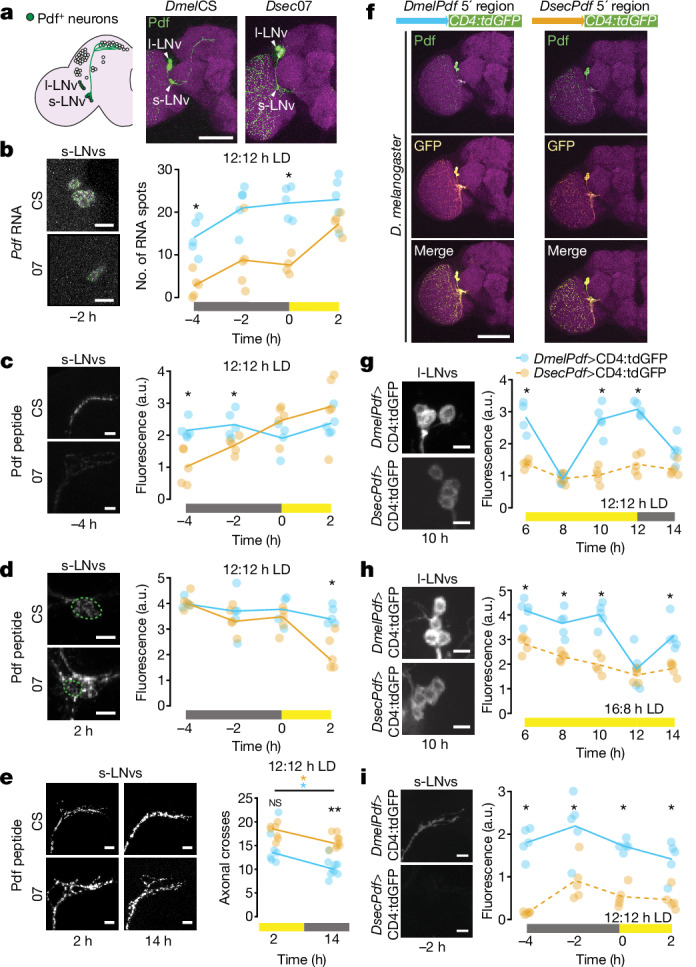
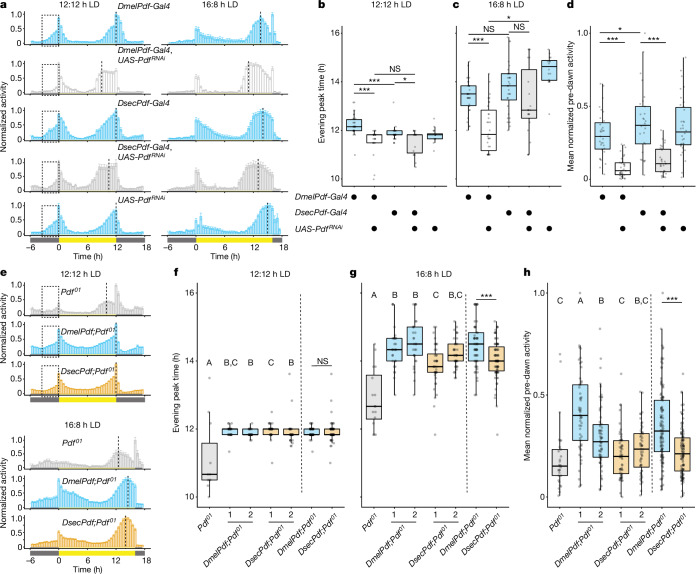
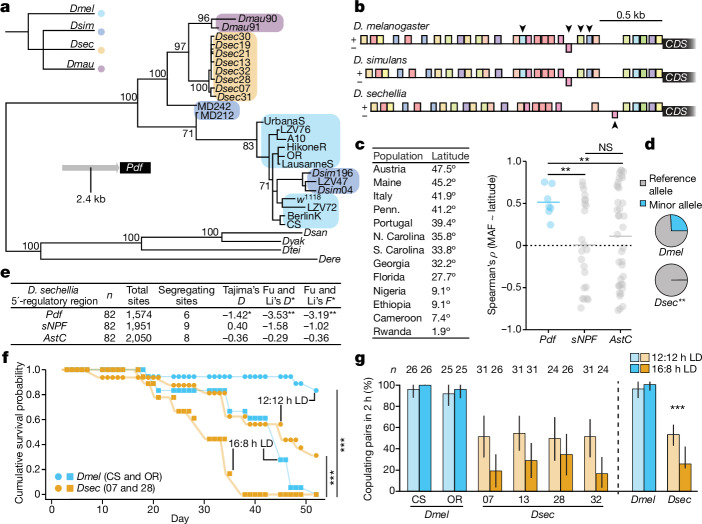
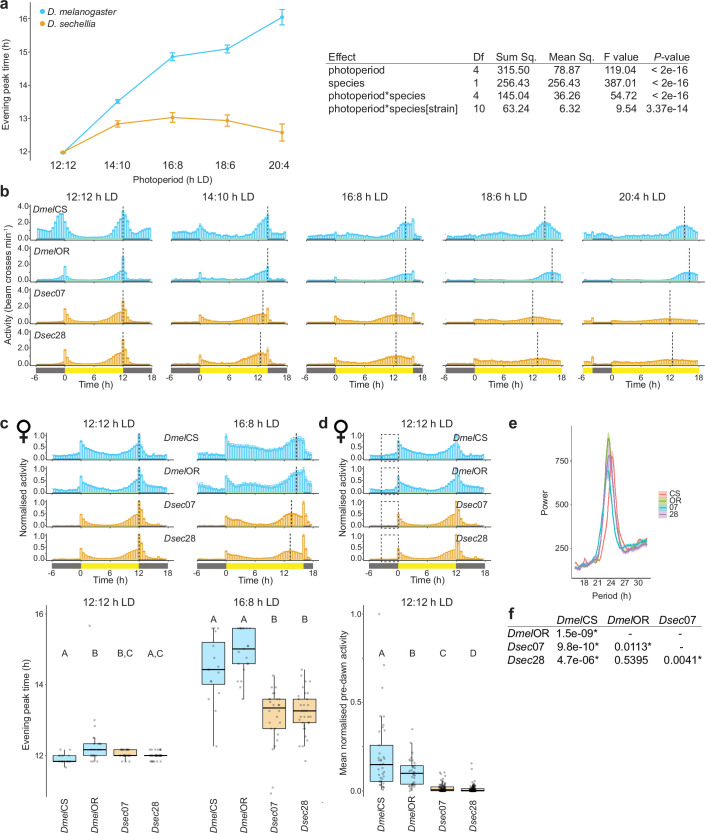
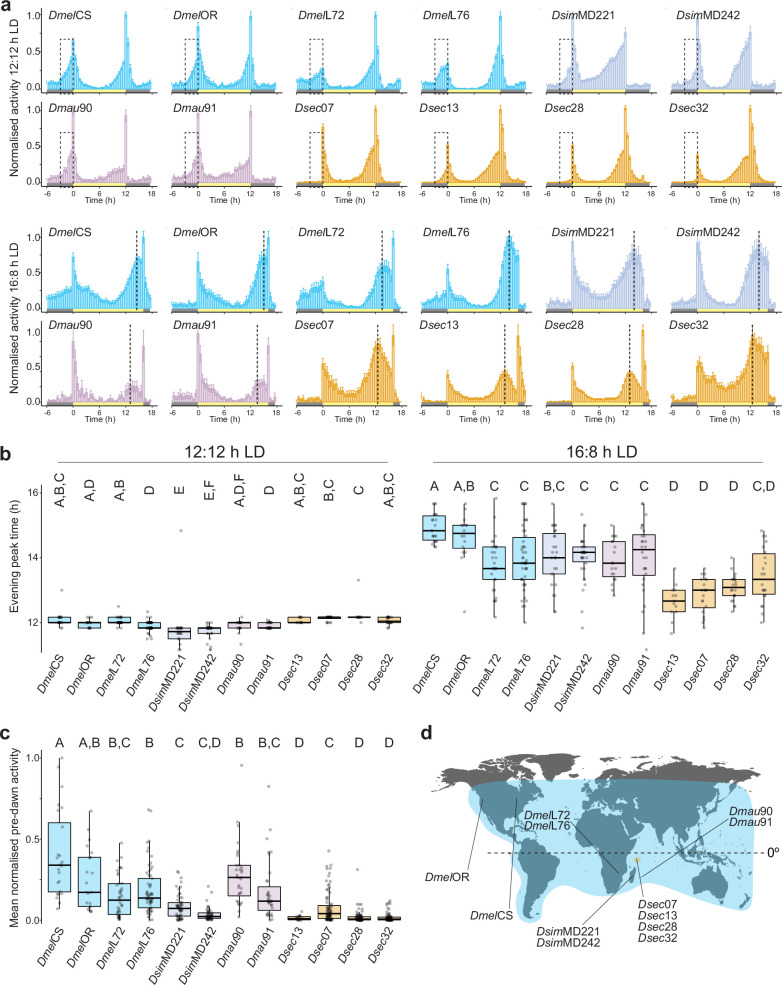
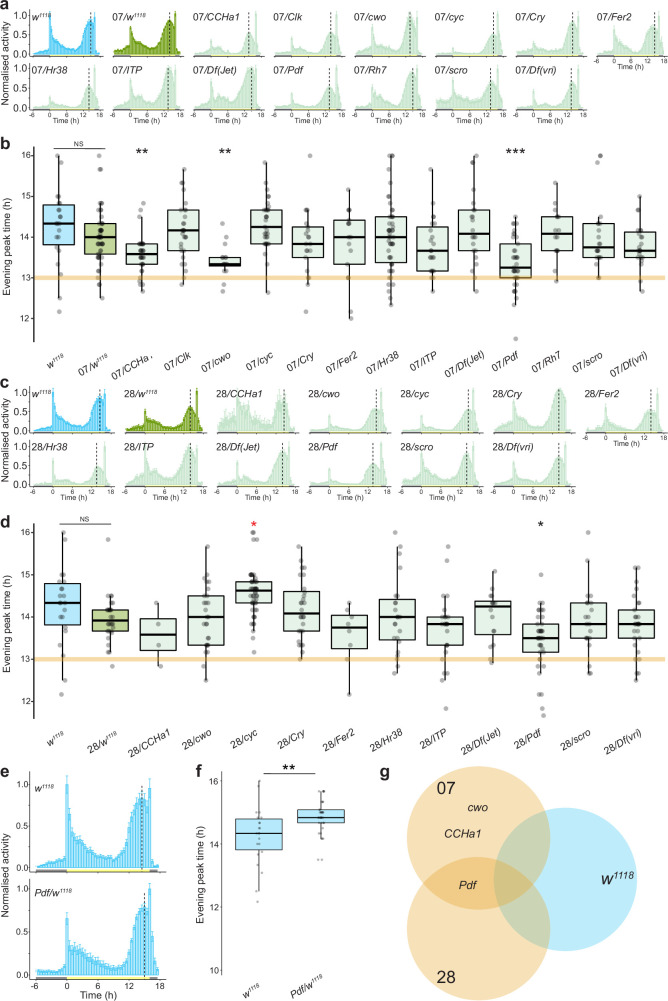
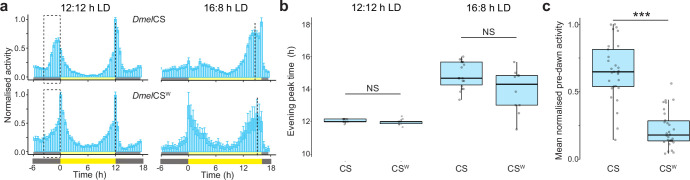
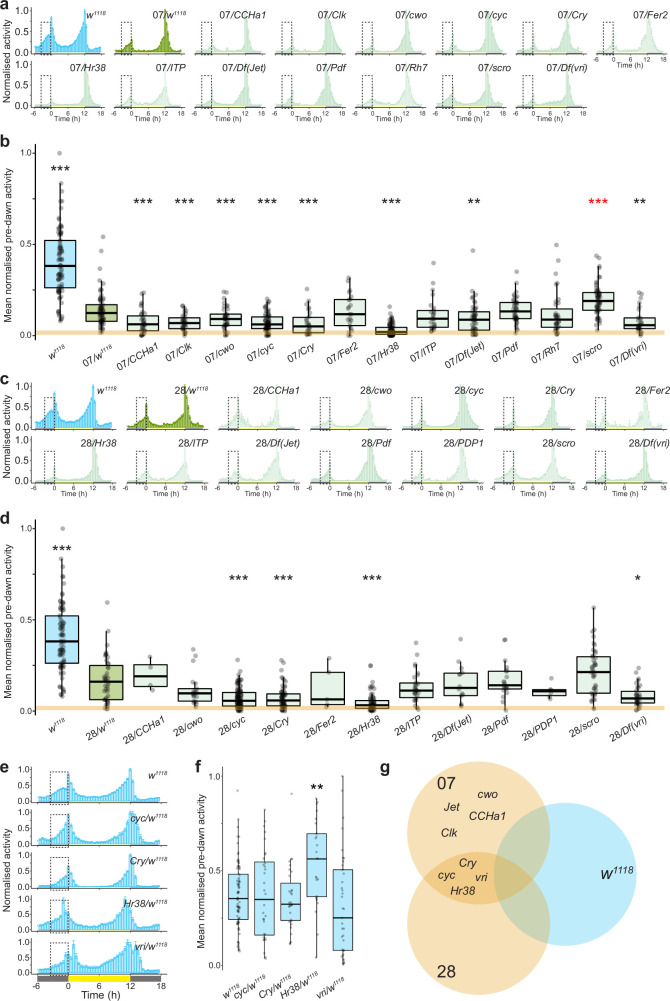
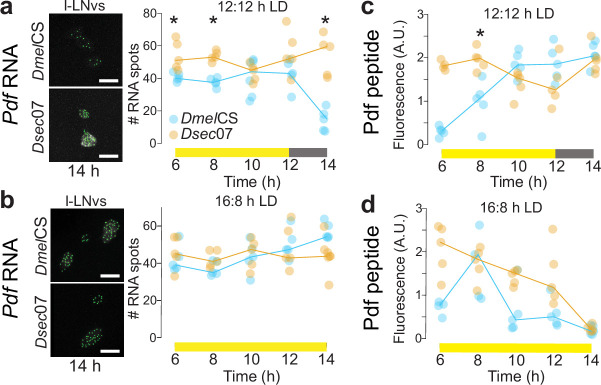
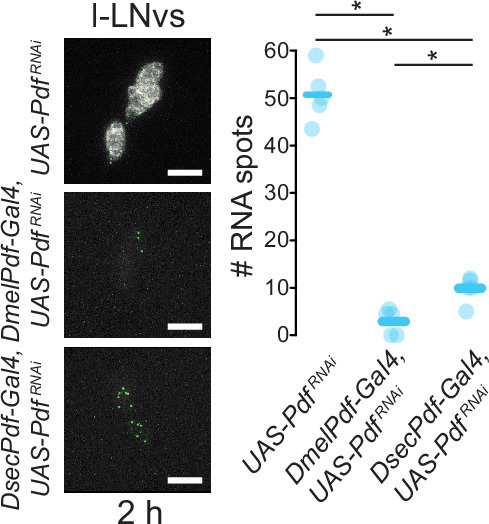
Many organisms, including cosmopolitan drosophilids, show circadian plasticity, varying their activity with changing dawn-dusk intervals. How this behaviour evolves is unclear. Here we compare Drosophila melanogaster with Drosophila sechellia, an equatorial, ecological specialist that experiences minimal photoperiod variation, to investigate the mechanistic basis of circadian plasticity evolution. D. sechellia has lost the ability to delay its evening activity peak time under long photoperiods. Screening of circadian mutants in D. melanogaster/D. sechellia hybrids identifies a contribution of the neuropeptide pigment-dispersing factor (Pdf) to this loss. Pdf exhibits species-specific temporal expression, due in part to cis-regulatory divergence. RNA interference and rescue experiments in D. melanogaster using species-specific Pdf regulatory sequences demonstrate that modulation of this neuropeptide's expression affects the degree of behavioural plasticity. The Pdf regulatory region exhibits signals of selection in D. sechellia and across populations of D. melanogaster from different latitudes. We provide evidence that plasticity confers a selective advantage for D. melanogaster at elevated latitude, whereas D. sechellia probably suffers fitness costs through reduced copulation success outside its range. Our findings highlight this neuropeptide gene as a hotspot locus for circadian plasticity evolution that might have contributed to both D. melanogaster's global distribution and D. sechellia's specialization.
许多生物,包括世界性的果蝇,表现出生物钟的可塑性,随着昼夜时长的变化而改变它们的活动。这种行为是如何进化的尚不清楚。在这里,我们比较了黑腹果蝇和塞舌尔果蝇,塞舌尔果蝇是一种赤道地区的生态专化种,经历的光周期变化最小,以研究生物钟可塑性进化的机制基础。塞舌尔果蝇在长光照条件下丧失了延迟傍晚活动高峰时间的能力。在黑腹果蝇/塞舌尔果蝇杂种中筛选生物钟突变体,发现神经肽色素分散因子(Pdf)对此缺失有贡献。Pdf 表现出物种特异性的时间表达,部分原因是顺式调控区的分化。使用物种特异性的 Pdf 调控序列在黑腹果蝇中进行 RNA 干扰和挽救实验表明,这种神经肽的表达调控影响行为可塑性的程度。Pdf 调控区在塞舌尔果蝇和来自不同纬度的黑腹果蝇种群中都表现出选择信号。我们提供的证据表明,可塑性赋予了黑腹果蝇在高纬度地区的选择性优势,而塞舌尔果蝇在其范围之外的交配成功率降低,可能会遭受适应性代价。我们的研究结果强调了这个神经肽基因是生物钟可塑性进化的热点基因,可能为黑腹果蝇的全球分布和塞舌尔果蝇的专化做出了贡献。