Department of Psychiatry and Psychotherapy, Friedrich-Alexander-Universität Erlangen-Nürnberg, Schwabachanlage 6, 91054, Erlangen, Germany.
Department for Vascular Surgery, Neumarkt in der Oberpfalz, Neumarkt Hospital, Neumarkt in der Oberpfalz, Germany.
BMC Med Educ. 2024 Oct 19;24(1):1177. doi: 10.1186/s12909-024-06181-9.
Medical students experience high levels of stress and related mental health problems. Students' autonomous and controlled motivation and their mental well-being are interconnected. This study aimed to investigate whether an innovative teaching concept based on self-determination theory (SDT) could improve students' motivation and thereby reduce their stress levels, ultimately providing a healthier framework for learning.
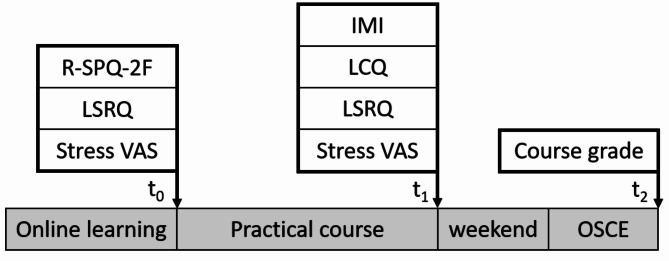
In a week-long practical psychiatry course for medical students, a new didactic concept was implemented in half the groups (n = 73) and compared with the preexisting concept (n = 75) as a randomized controlled trial (RCT). To promote the SDT-target factors of perceived autonomy, competence, and relatedness, the methods used included team building, exclusively positive feedback, group discussions, and choice in task distribution. Significant group differences in motivation, stress, performance, and their relationships were analyzed through t-tests, multiple linear regression analyses, mediation analyses, and hierarchical linear modeling (HLM) using questionnaires collected before (t) and after (t) the course, and students' exam results (t).
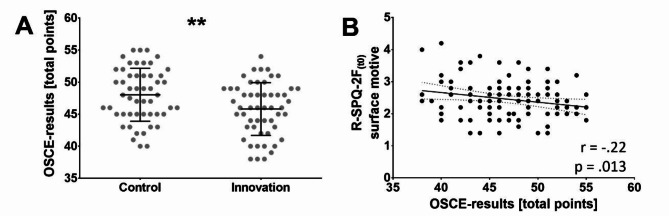
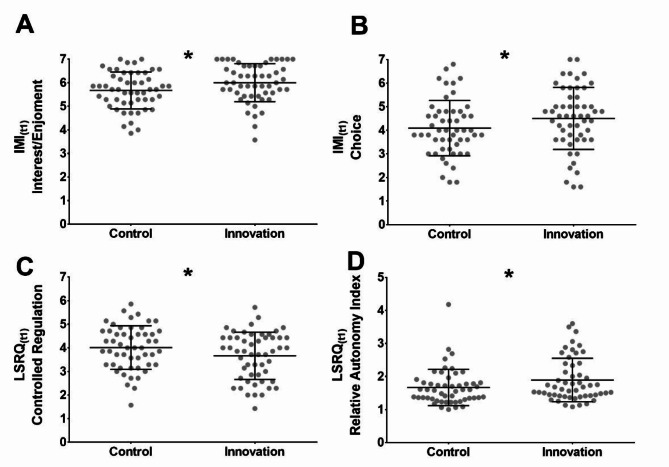
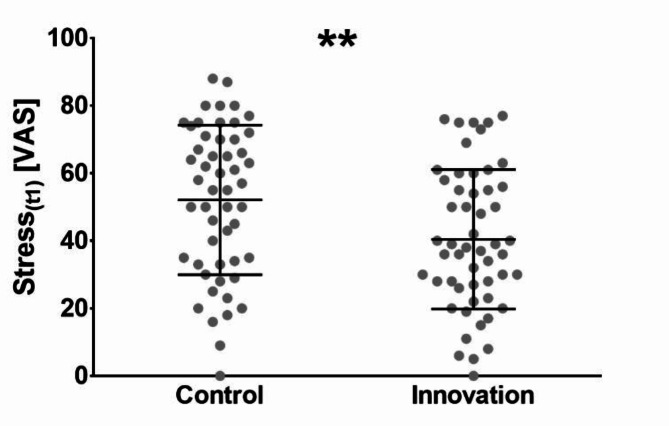
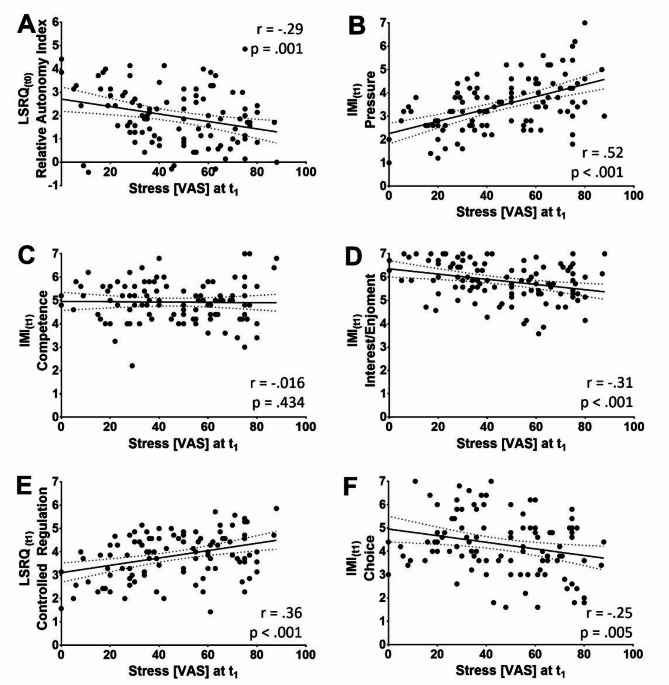
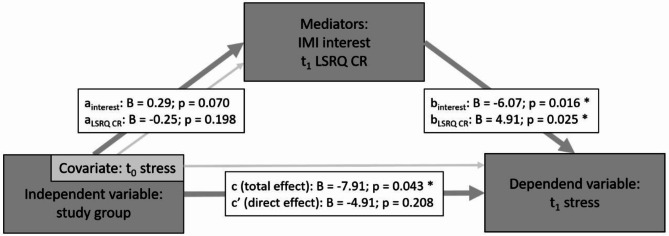
In the innovation group (n = 53), intrinsic motivation/interest (d = 0.41; p = .019) and perceived choice/autonomy (d = 0.33; p = .048) were greater than in the control group (n = 52). While autonomous regulation remained stable, the innovation group showed reduced controlled regulation (d = -0.36; p = .033) and reported significantly lower stress (d = -0.55; p = .003). The observed changes in motivation collectively mediated the stress reduction. However, students in the innovation group achieved lower exam scores, which seemed to result from the absence of critical feedback, but not from the observed differences in motivation or stress.
This study demonstrated that enhancing intrinsic motivation through SDT-based teaching can effectively reduce stress in medical students. Exclusively strengths-based positive feedback may have hindered exam performance, but optimizing educational concepts to promote motivation and reduce stress will be a valuable step toward improving medical students' mental well-being.
医学生承受着较高水平的压力和相关心理健康问题。学生的自主和控制动机以及他们的心理健康是相互关联的。本研究旨在探讨基于自我决定理论(SDT)的创新教学理念是否可以提高学生的动机,从而降低他们的压力水平,为学习提供更健康的框架。
在针对医学生的一周实用精神病学课程中,将新的教学理念应用于一半的小组(n=73),并与现有的理念(n=75)进行随机对照试验(RCT)比较。为了促进感知自主性、能力和关联性等 SDT 目标因素,采用了团队建设、完全积极反馈、小组讨论和任务分配选择等方法。通过 t 检验、多元线性回归分析、中介分析和层次线性建模(HLM),分析了动机、压力、表现及其关系的显著组间差异,使用课程前后(t)和学生考试成绩(t)收集的问卷进行分析。
在创新组(n=53)中,内在动机/兴趣(d=0.41;p=0.019)和感知选择/自主性(d=0.33;p=0.048)大于对照组(n=52)。虽然自主调节保持稳定,但创新组表现出控制调节减少(d=-0.36;p=0.033),压力显著降低(d=-0.55;p=0.003)。观察到的动机变化共同介导了压力的减轻。然而,创新组的学生考试成绩较低,这似乎是由于缺乏批判性反馈造成的,而不是由于观察到的动机或压力差异造成的。
本研究表明,通过基于 SDT 的教学增强内在动机可以有效降低医学生的压力。仅基于优势的积极反馈可能会阻碍考试成绩,但优化教育理念以促进动机和减轻压力将是提高医学生心理健康的重要一步。