Humayun Ahsan, Rehman Mustafain, Liu Bin
International School of Information Science & Engineering (DUT-RUISE), Dalian University of Technology, Dalian, China.
Key Lab of Ubiquitous Network and Service Software of Liaoning Province, Dalian University of Technology, Dalian, China.
Quant Imaging Med Surg. 2024 Oct 1;14(10):7151-7175. doi: 10.21037/qims-24-821. Epub 2024 Sep 26.
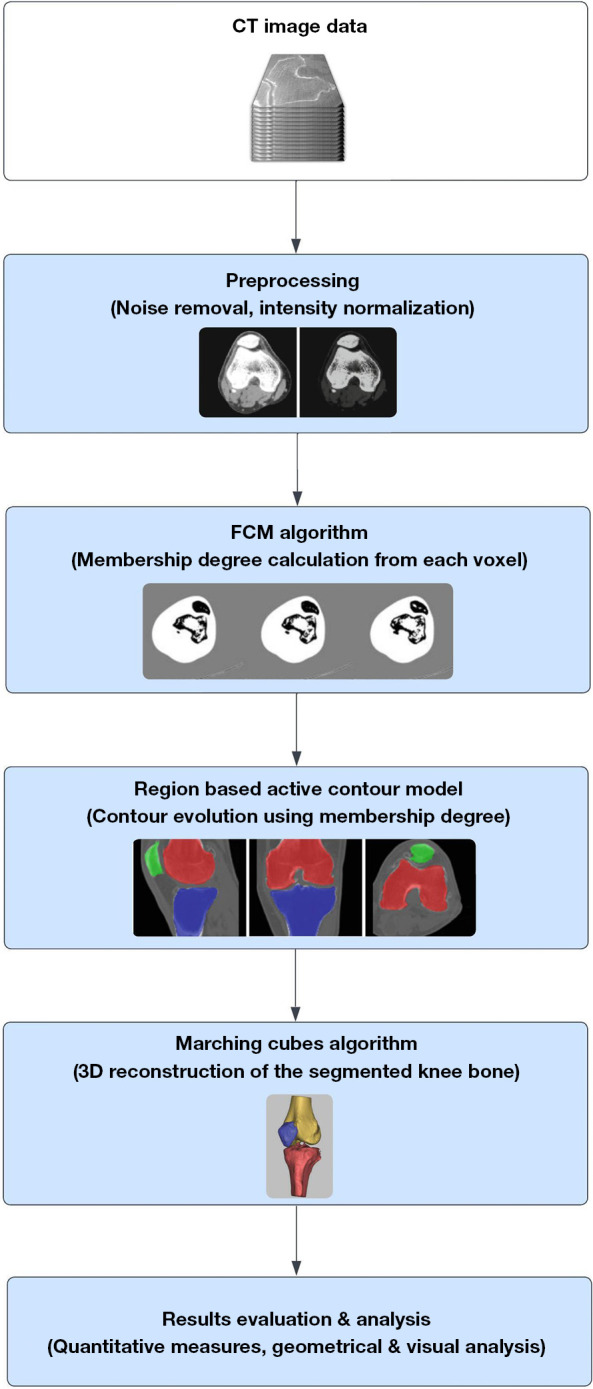
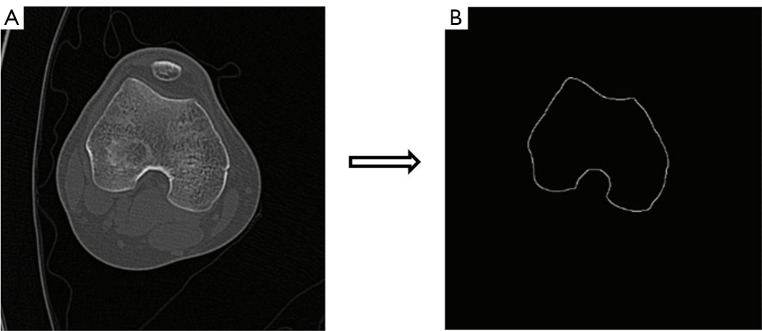
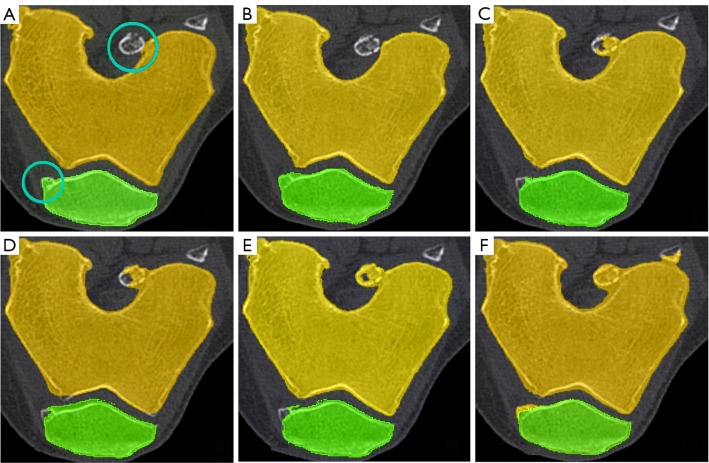
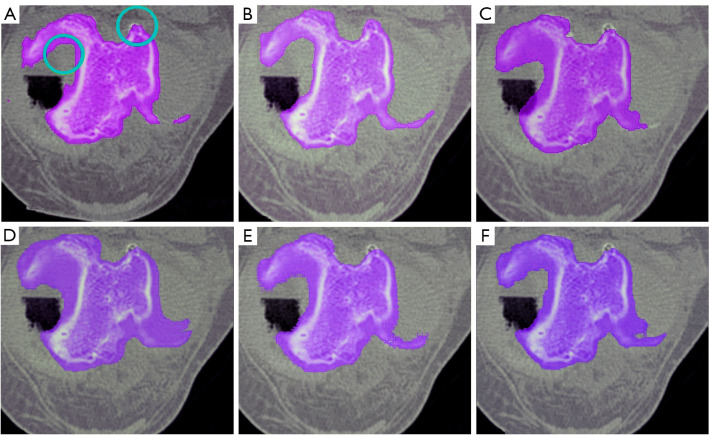
Accurate delineation of knee bone boundaries is crucial for computer-aided diagnosis (CAD) and effective treatment planning in knee diseases. Current methods often struggle with precise segmentation due to the knee joint's complexity, which includes intricate bone structures and overlapping soft tissues. These challenges are further complicated by variations in patient anatomy and image quality, highlighting the need for improved techniques. This paper presents a novel semi-automatic segmentation method for extracting knee bones from sequential computed tomography (CT) images.
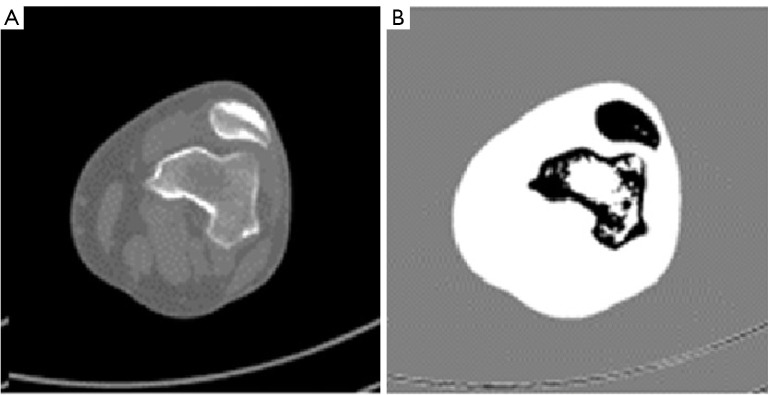
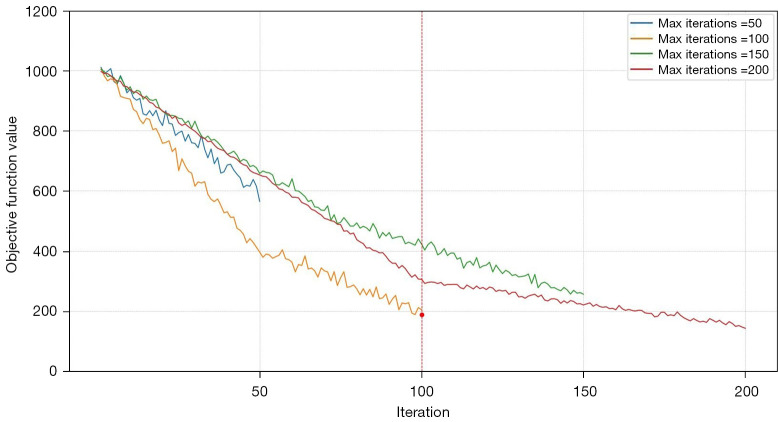
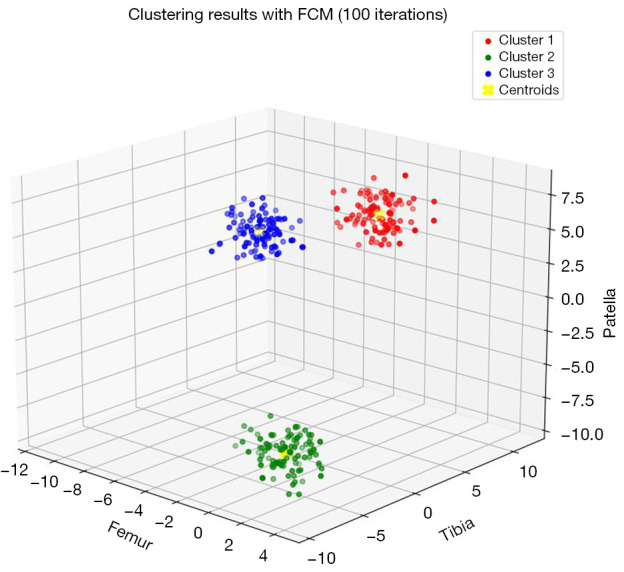
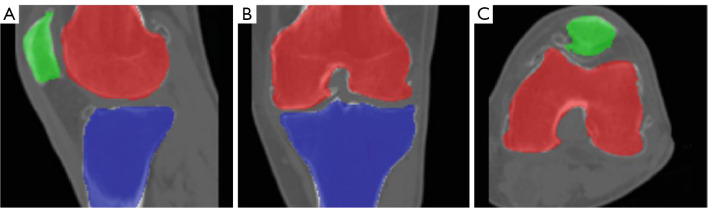
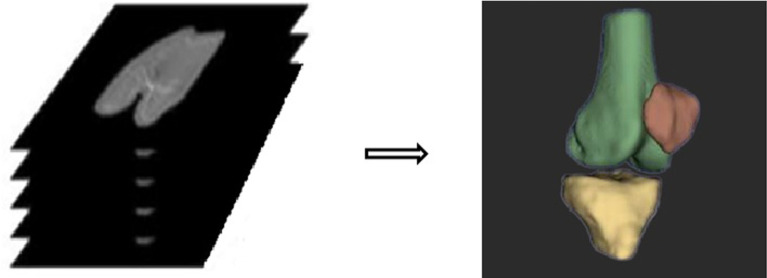
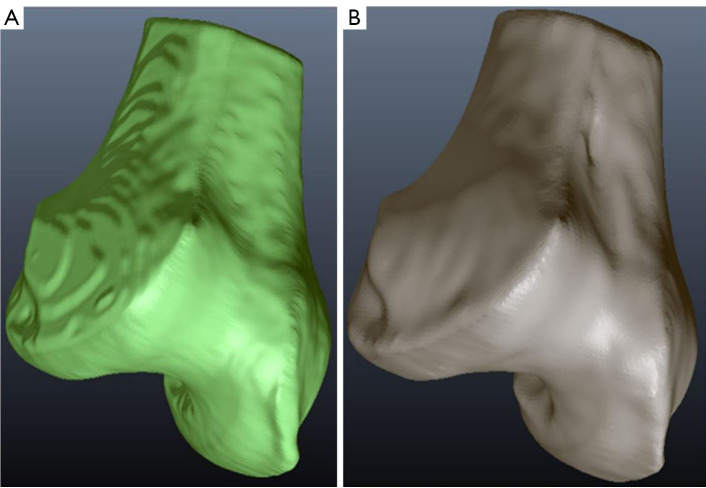
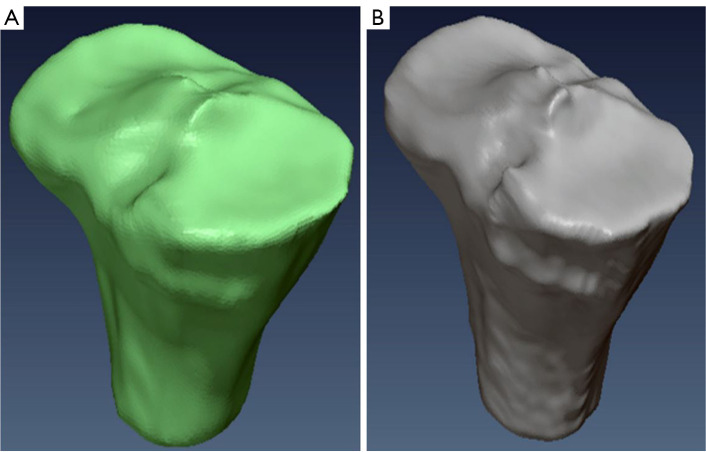
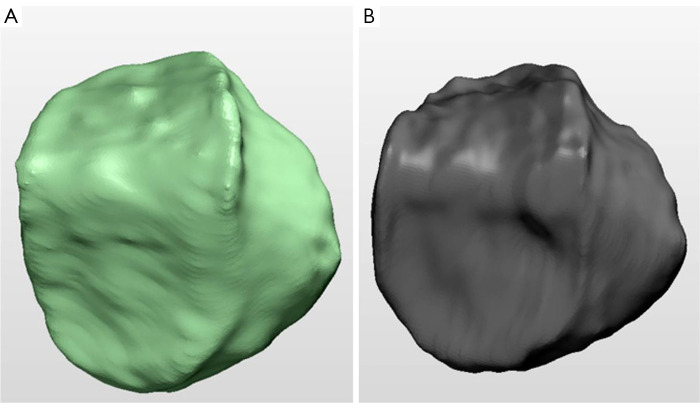
Our approach integrates the fuzzy C-means (FCM) algorithm with an adaptive region-based active contour model (ACM). Initially, the FCM algorithm assigns membership degrees to each voxel, distinguishing bone regions from surrounding soft tissues based on their likelihood of belonging to specific bone regions. Subsequently, the adaptive region-based ACM utilizes these membership degrees to guide the contour evolution and refine segmentation boundaries. To ensure clinical applicability, we further enhance our method using the marching cubes algorithm to reconstruct a three-dimensional (3D) model. We evaluated the method on six randomly selected knee joints.
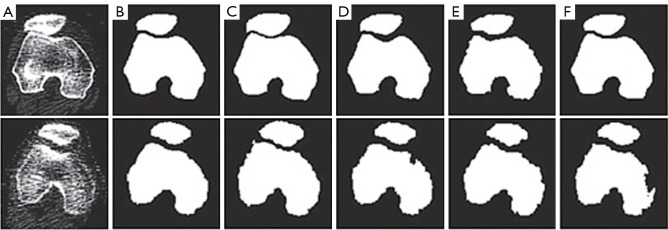
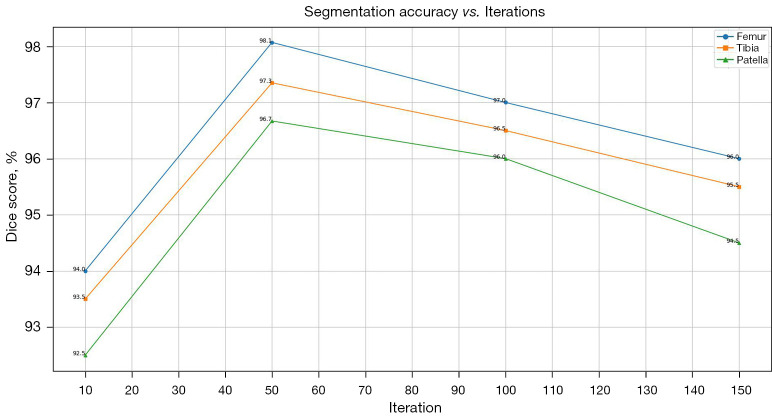
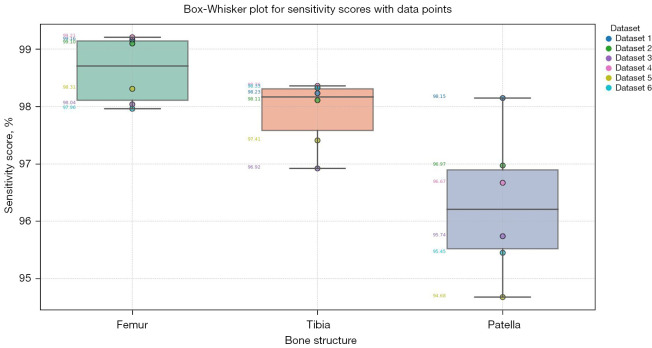
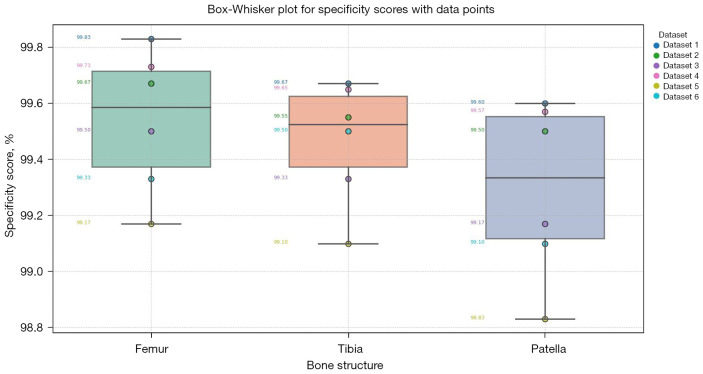
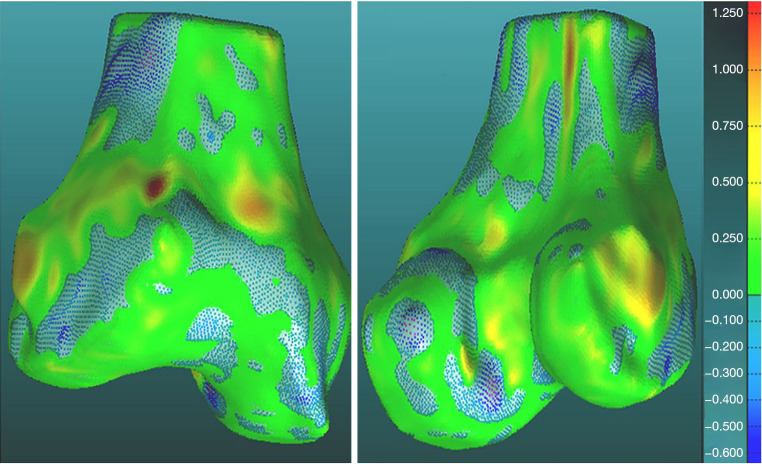
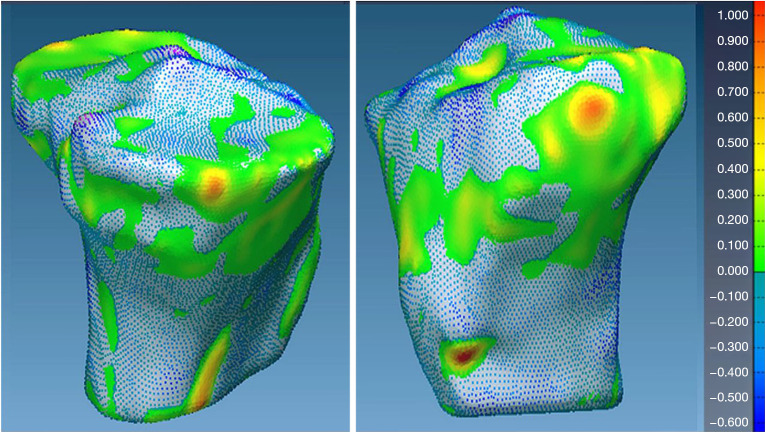
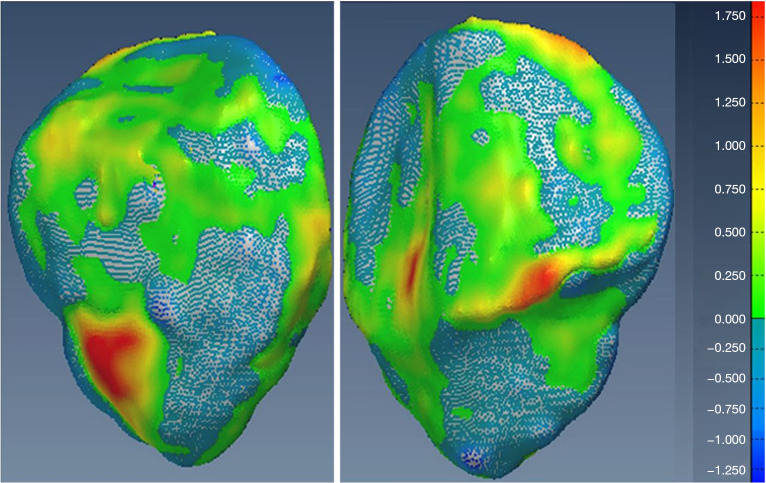
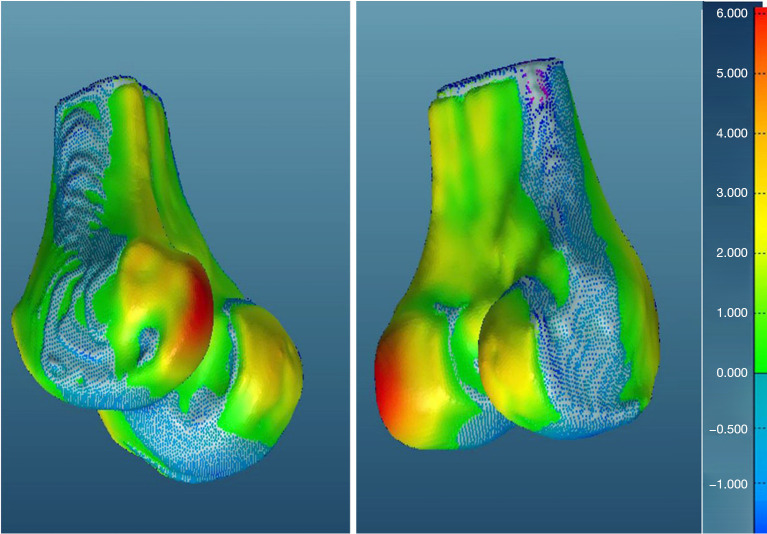
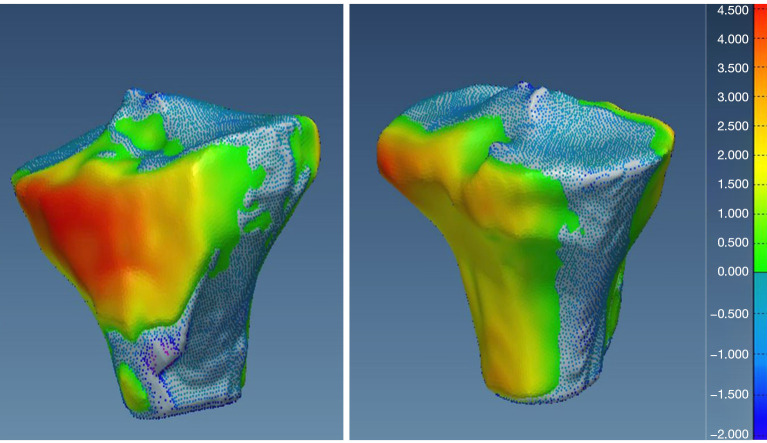
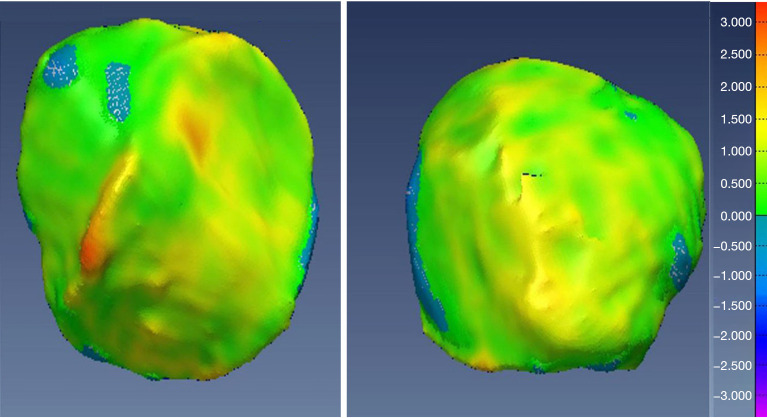
We evaluated the method using quantitative metrics such as the Dice coefficient, sensitivity, specificity, and geometrical assessment. Our method achieved high Dice scores for the femur (98.95%), tibia (98.10%), and patella (97.14%), demonstrating superior accuracy. Remarkably low root mean square distance (RSD) values were obtained for the tibia and femur (0.5±0.14 mm) and patella (0.6±0.13 mm), indicating precise segmentation.
The proposed method offers significant advancements in CAD systems for knee pathologies. Our approach demonstrates superior performance in achieving precise and accurate segmentation of knee bones, providing valuable insights for anatomical analysis, surgical planning, and patient-specific prostheses.
准确描绘膝关节骨边界对于膝关节疾病的计算机辅助诊断(CAD)和有效的治疗规划至关重要。由于膝关节的复杂性,包括复杂的骨骼结构和重叠的软组织,当前方法在精确分割方面常常面临困难。患者解剖结构和图像质量的差异进一步加剧了这些挑战,凸显了改进技术的必要性。本文提出了一种用于从连续计算机断层扫描(CT)图像中提取膝关节骨的新型半自动分割方法。
我们的方法将模糊C均值(FCM)算法与基于自适应区域的活动轮廓模型(ACM)相结合。最初,FCM算法为每个体素分配隶属度,根据其属于特定骨区域的可能性将骨区域与周围软组织区分开来。随后,基于自适应区域的ACM利用这些隶属度来引导轮廓演化并细化分割边界。为确保临床适用性,我们使用移动立方体算法进一步改进我们的方法以重建三维(3D)模型。我们在六个随机选择的膝关节上评估了该方法。
我们使用诸如Dice系数、灵敏度、特异性和几何评估等定量指标评估了该方法。我们的方法在股骨(98.95%)、胫骨(98.10%)和髌骨(97.14%)上获得了较高的Dice分数,证明了卓越的准确性。胫骨、股骨(0.5±0.14毫米)和髌骨(0.6±0.13毫米)的均方根距离(RSD)值极低,表明分割精确。
所提出的方法在膝关节病变的CAD系统中取得了重大进展。我们的方法在实现膝关节骨的精确和准确分割方面表现出卓越性能,为解剖分析、手术规划和定制假体提供了有价值的见解。