Chen Minyu, Marguet Sylvie, Issa Ali, Jradi Safi, Couteau Christophe, Fiorini-Debuisschert Céline, Douillard Ludovic, Soppera Olivier, Ge Dandan, Plain Jérôme, Zhou Xuan, Dang Cuong, Béal Jérémie, Kostcheev Sergei, Déturche Régis, Xu Tao, Wei Bin, Bachelot Renaud
School of Mechatronic Engineering and Automation, Key Lab of Advanced Display and System Application, Ministry of Education, Shanghai University, Shanghai 2000072, PR China.
Light, Nanomaterials & Nanotechnologies (L2n) Laboratory, CNRS UMR 7076. University of Technology of Troyes-UTT, 12 rue Marie Curie, Troyes Cedex F-10004, France.
ACS Photonics. 2024 Aug 22;11(10):3933-3953. doi: 10.1021/acsphotonics.4c00868. eCollection 2024 Oct 16.
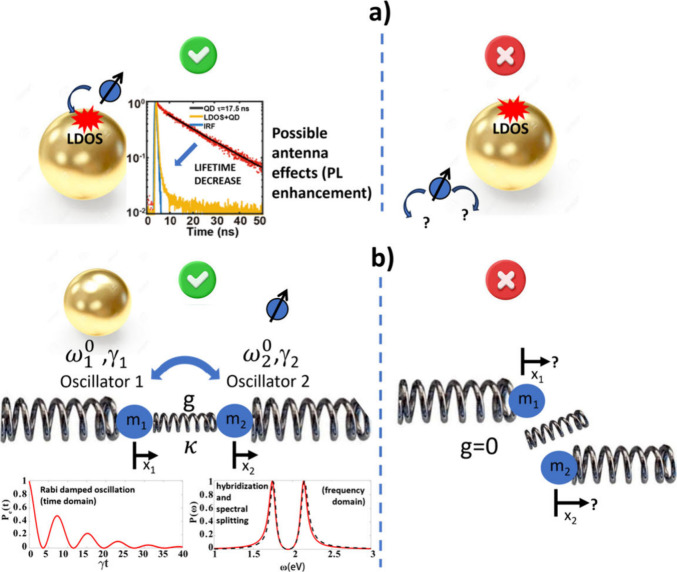
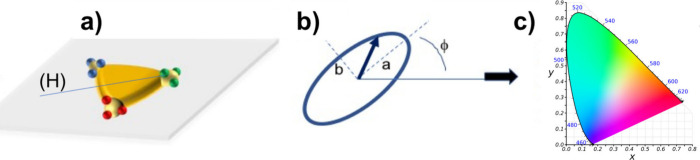
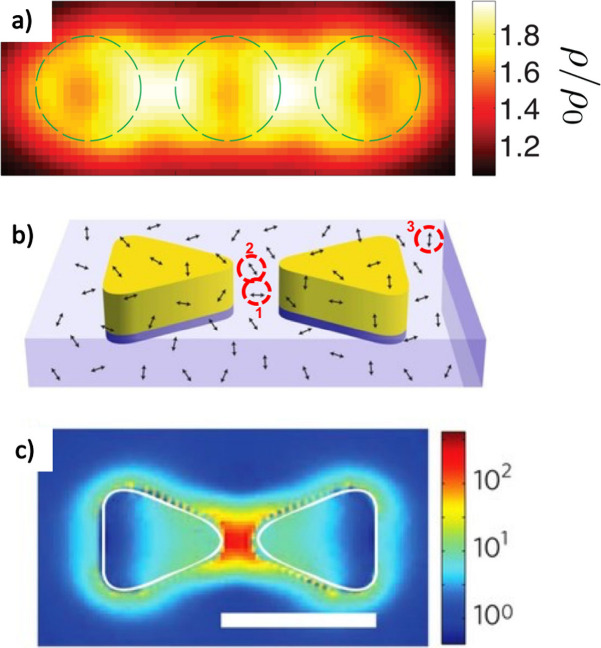
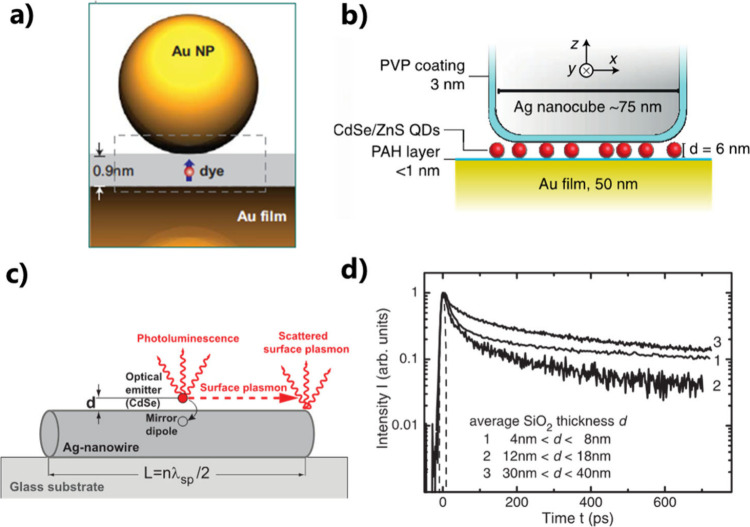
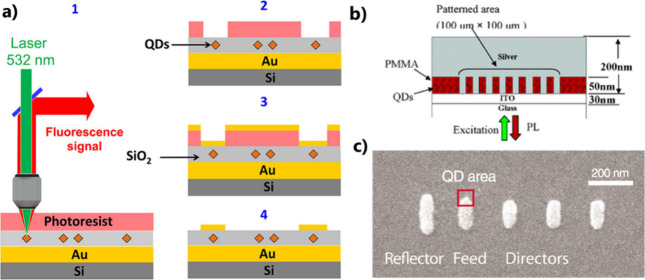
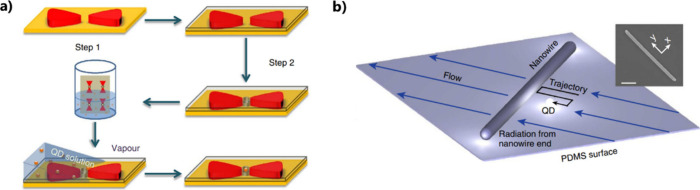
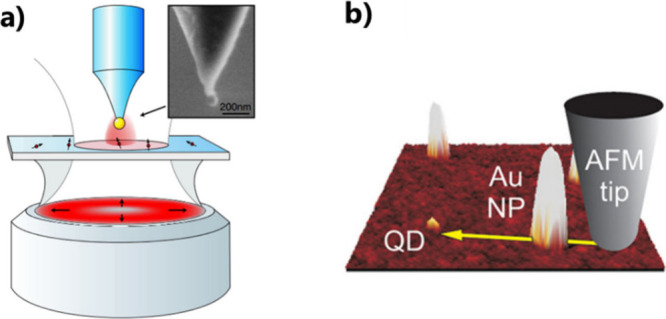
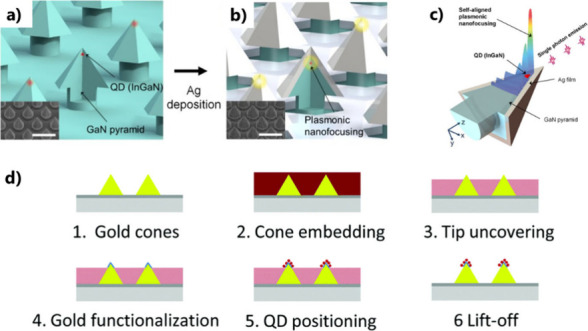
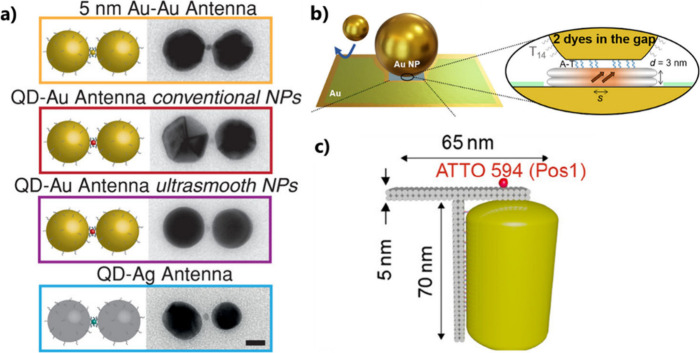
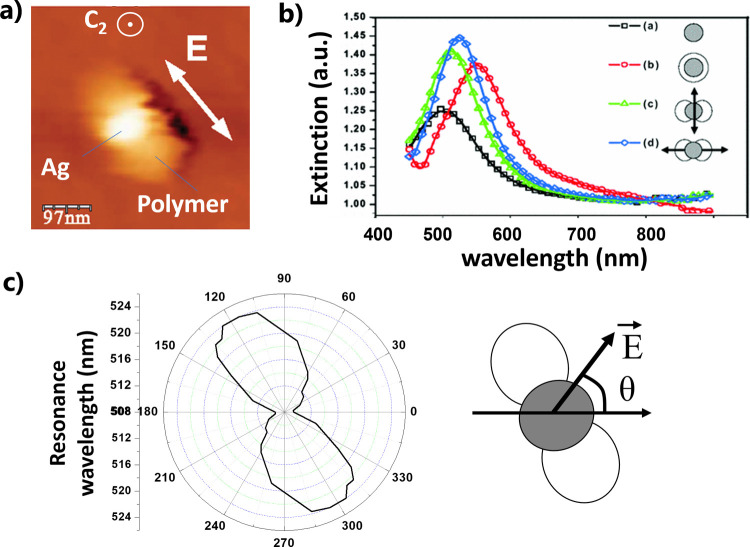
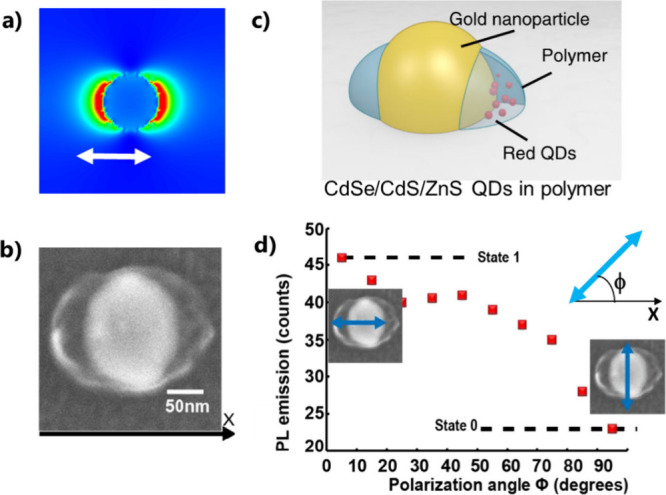
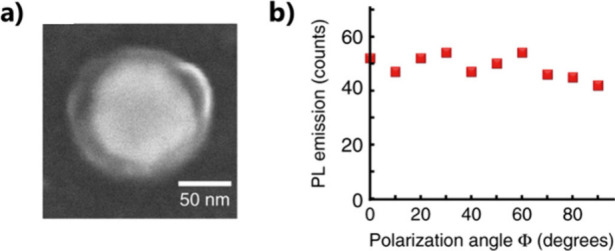
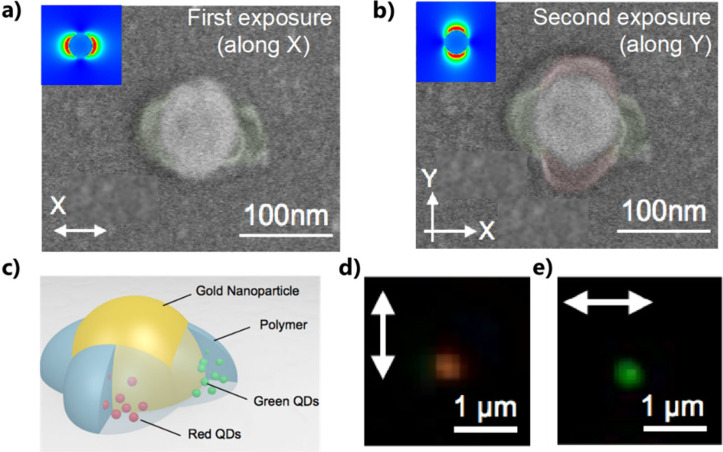
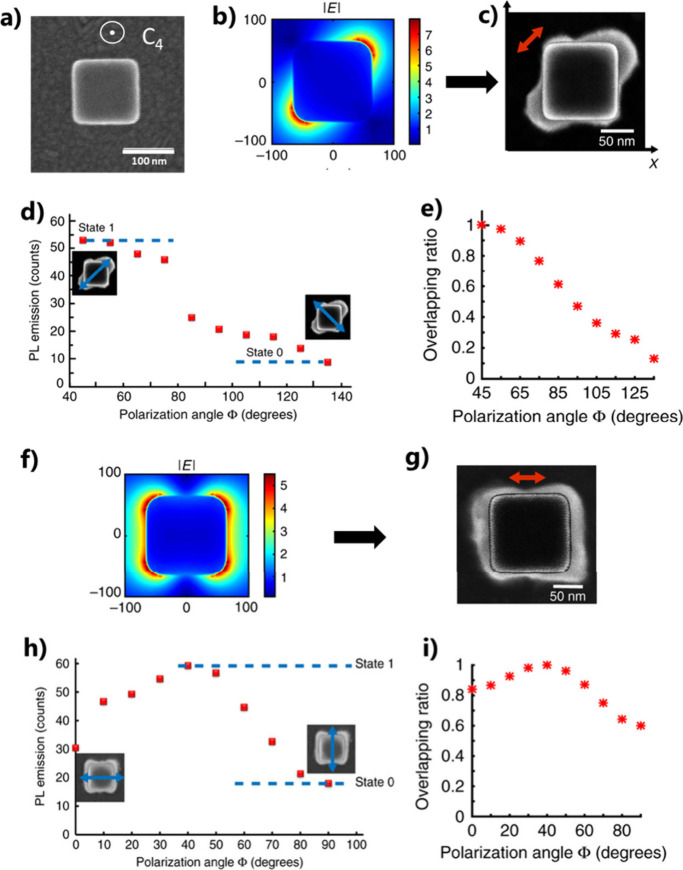
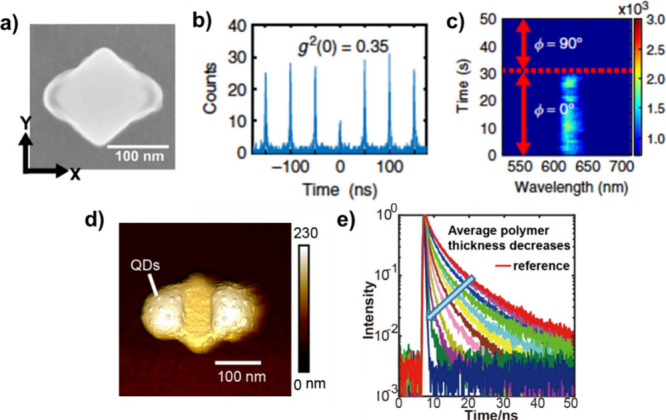
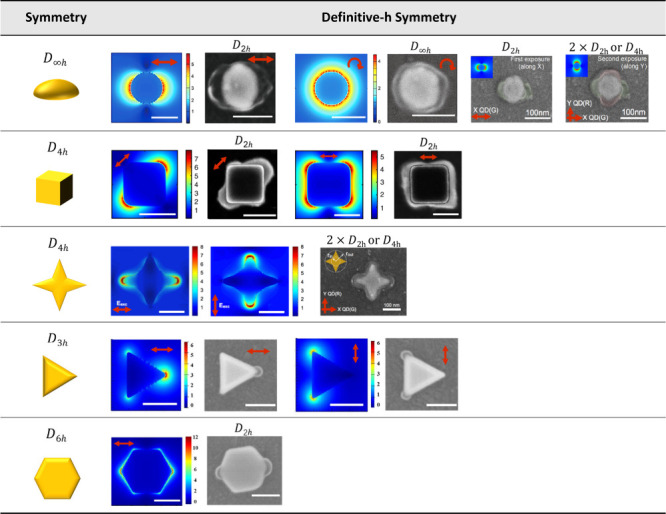
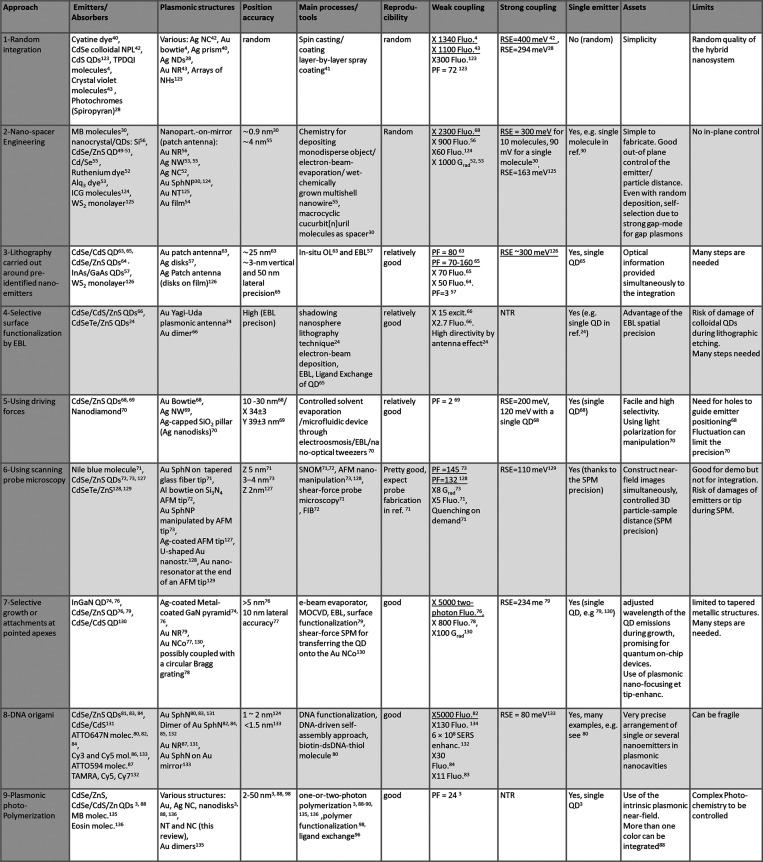
Over the past 20 years, hybrid plasmonics for nanoemitters of light or for nanoabsorbers, based on weak or strong coupling between metallic nanocavities and active media (emissive or absorbing entities), have given rise to important research efforts. One of the main current challenges is the control of the nanoscale spatial distribution and associated symmetry of the active medium in the vicinity of the metallic nanoparticles. In this review, we first recall the main principles of weak and strong coupling by stressing the importance of controlling the spatial distribution of the active medium and present the main approaches developed for achieving this control. Nine different approaches are identified. We then focus our attention on one of them based on plasmonic photopolymerization and discuss the flexibility of this approach in terms of control of the spatial symmetry of the hybrid nanosystem metal-polymer nanoemitters and the resulting polarization dependence of the light emission. The different approaches are analyzed and compared with each other, and some future perspectives and challenges are finally discussed.
在过去20年里,基于金属纳米腔与活性介质(发光或吸收实体)之间的弱耦合或强耦合,用于纳米发光体或纳米吸收体的混合等离子体学引发了重要的研究工作。当前的主要挑战之一是控制金属纳米颗粒附近活性介质的纳米级空间分布及其相关对称性。在本综述中,我们首先通过强调控制活性介质空间分布的重要性来回顾弱耦合和强耦合的主要原理,并介绍为实现这种控制而开发的主要方法。我们确定了九种不同的方法。然后,我们将注意力集中在基于等离子体光聚合的其中一种方法上,并讨论该方法在控制混合纳米系统金属-聚合物纳米发光体的空间对称性以及由此产生的发光偏振依赖性方面的灵活性。我们对不同的方法进行了相互分析和比较,最后讨论了一些未来的前景和挑战。