Livkisa Dora, Lee Tsung-Lin, Yeh Wei-Ting, Jaimes Manuel S V, Szomolay Barbara, Liao Chia-Te, Lundy David J
International PhD Program in Biomedical Engineering, College of Biomedical Engineering, Taipei Medical University, 301 Yuantong Road, New Taipei City, 235603, Taiwan.
Division of Nephrology, Department of Internal Medicine, Shuang Ho Hospital, Taipei Medical University, New Taipei City, 235603, Taiwan.
Immun Ageing. 2024 Oct 21;21(1):72. doi: 10.1186/s12979-024-00472-x.
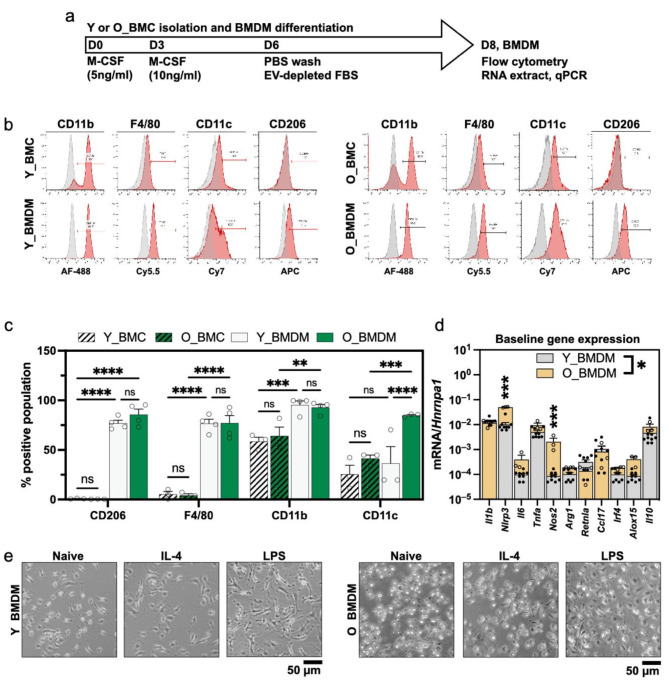
Previous research has indicated that extracellular vesicles (EVs) potentially play significant roles in multiple ageing phenotypes. This study uses a factorial experimental design to explore the interactions between circulating EVs and bone marrow-derived macrophages (BMDMs) isolated from young (7-12 weeks) and aged (70-90 weeks) mice.
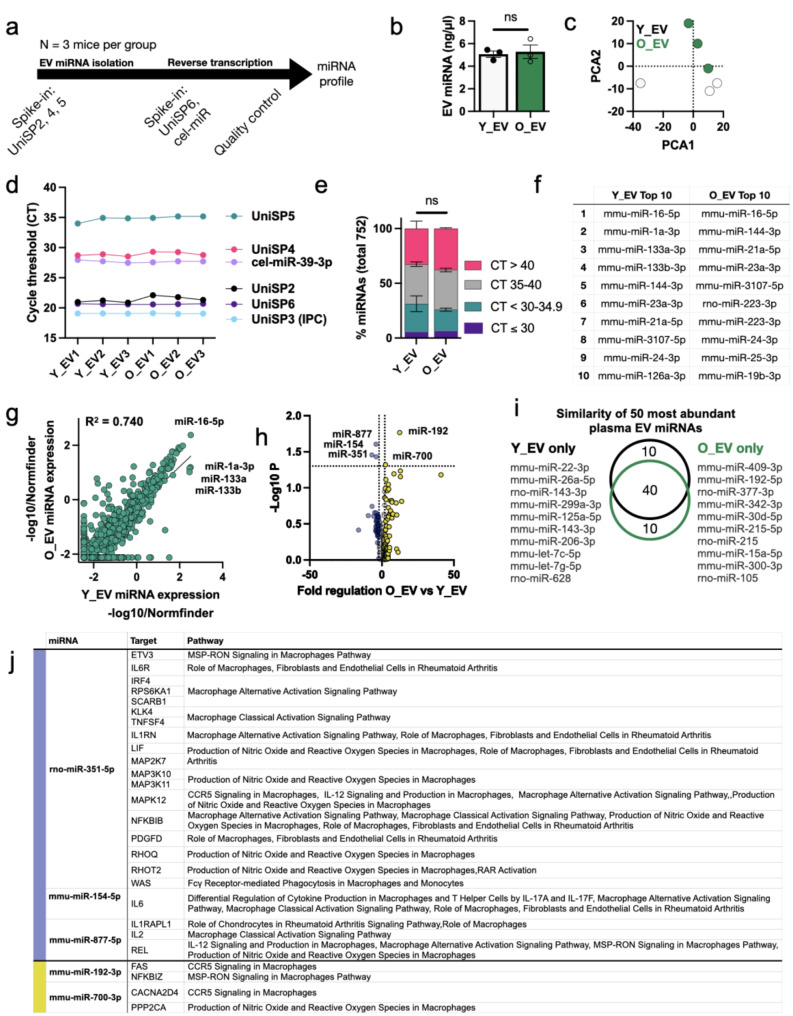
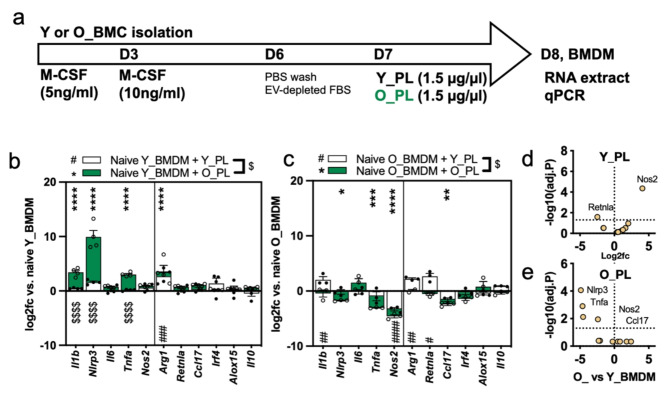
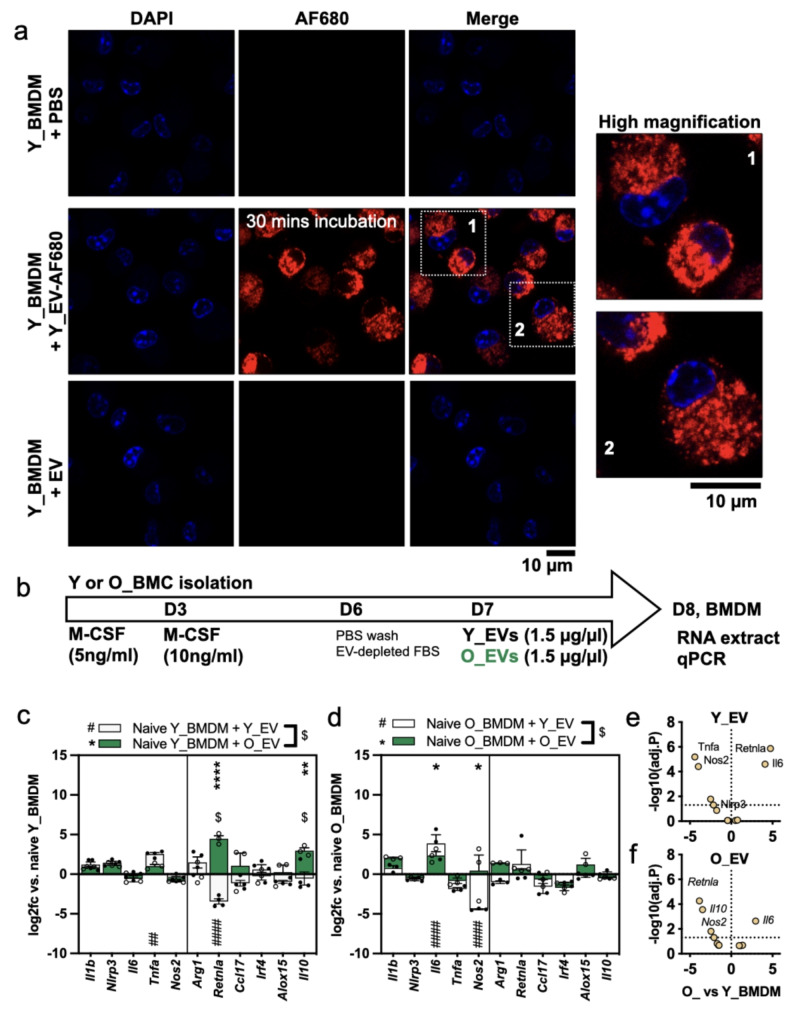
In this study, plasma EVs from young (Y_EV) and aged (O_EV) mice were isolated and compared based on abundance, size, and miRNA cargo. Compared to some previous studies, we found relatively few differences in EV miRNA cargo between Y_EVs and O_EVs. Young and old EVs were then used to stimulate naïve BMDMs isolated from young (Y_BMDM) and aged (O_BMDM) mice. A panel of five "M1" and six "M2" macrophage markers were used to assess the degree of polarisation. Our results revealed differences in the immunomodulatory effects of Y_EVs and O_EVs in Y_BMDMs and O_BMDMs. Y_EVs induced less pro-inflammatory gene expression, while O_EVs exhibited a more varied impact, promoting both pro- and anti-inflammatory markers. However, neither EV population induced a clearly defined 'M1' or 'M2' macrophage phenotype. We also report that EVs elicited responses that differed markedly from those induced by whole plasma. Plasma from old mice had strong pro-inflammatory effects on Y_BMDMs, increasing Il1b, Nlrp3 and Tnfa. However, O_EVs did not have these effects, supporting current evidence that EVs are a separate component of circulating factors during ageing. More research is needed to elucidate specific factors involved in inflammageing processes.
Our findings reveal age-related differences in EV cargo and function, with young EVs tending to suppress inflammatory markers more effectively than aged EVs. However, this is not straightforward, and EVs often promoted both M1 and M2 markers. These results suggest that EVs are a distinct component of circulating factors and hold potential for therapeutic strategies aimed at mitigating age-related inflammation and immune dysregulation.
先前的研究表明,细胞外囊泡(EVs)可能在多种衰老表型中发挥重要作用。本研究采用析因实验设计,以探究从年轻(7 - 12周)和老年(70 - 90周)小鼠分离出的循环EVs与骨髓来源的巨噬细胞(BMDMs)之间的相互作用。
在本研究中,分离出年轻(Y_EV)和老年(O_EV)小鼠的血浆EVs,并基于丰度、大小和miRNA含量进行比较。与之前的一些研究相比,我们发现Y_EVs和O_EVs之间的EV miRNA含量差异相对较少。然后,用年轻和老年的EVs刺激从年轻(Y_BMDM)和老年(O_BMDM)小鼠分离出的未成熟BMDMs。使用一组五个“M1”和六个“M2”巨噬细胞标志物来评估极化程度。我们的结果揭示了Y_EVs和O_EVs在Y_BMDMs和O_BMDMs中的免疫调节作用存在差异。Y_EVs诱导的促炎基因表达较少,而O_EVs表现出更多样化的影响,促进促炎和抗炎标志物。然而,这两种EV群体均未诱导出明确界定的“M1”或“M2”巨噬细胞表型。我们还报告说,EVs引发的反应与全血浆诱导的反应明显不同。老年小鼠的血浆对Y_BMDMs具有强烈的促炎作用,增加了Il1b、Nlrp3和Tnfa。然而,O_EVs没有这些作用,支持了目前的证据,即EVs是衰老过程中循环因子的一个独立组成部分。需要更多的研究来阐明炎症衰老过程中涉及的具体因素。
我们的研究结果揭示了EVs含量和功能的年龄相关差异,年轻的EVs往往比老年的EVs更有效地抑制炎症标志物。然而,情况并非如此简单,EVs通常同时促进M1和M2标志物。这些结果表明,EVs是循环因子的一个独特组成部分,对于旨在减轻与年龄相关的炎症和免疫失调的治疗策略具有潜力。