Waury Katharina, Gogishvili Dea, Nieuwland Rienk, Chatterjee Madhurima, Teunissen Charlotte E, Abeln Sanne
Department of Computer Science Vrije Universiteit Amsterdam Amsterdam The Netherlands.
Laboratory of Experimental Clinical Chemistry, Department of Clinical Chemistry, Amsterdam UMC University of Amsterdam Amsterdam The Netherlands.
J Extracell Biol. 2024 Jan 23;3(1):e120. doi: 10.1002/jex2.120. eCollection 2024 Jan.
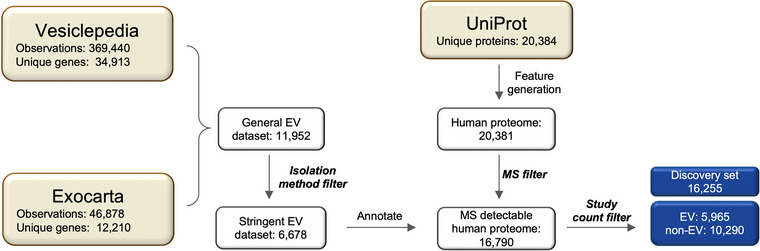
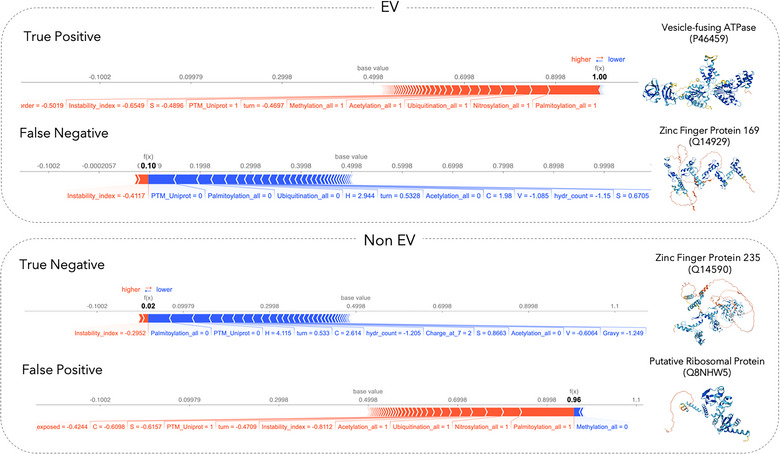
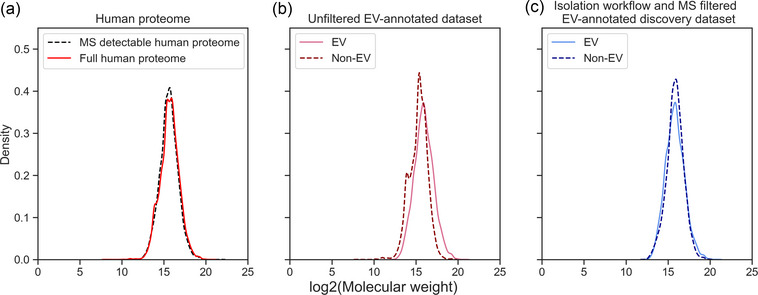
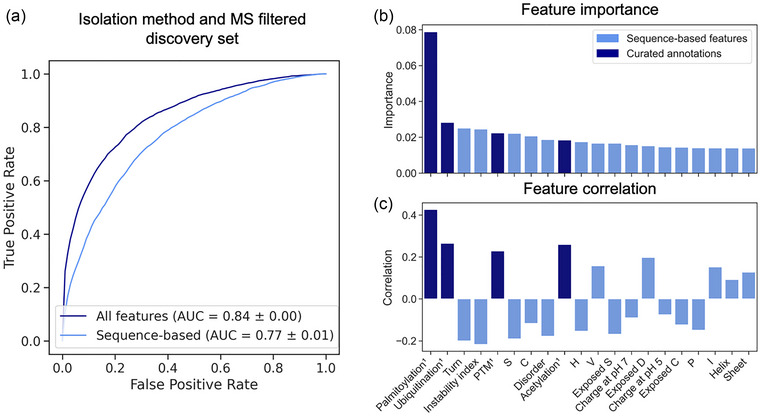
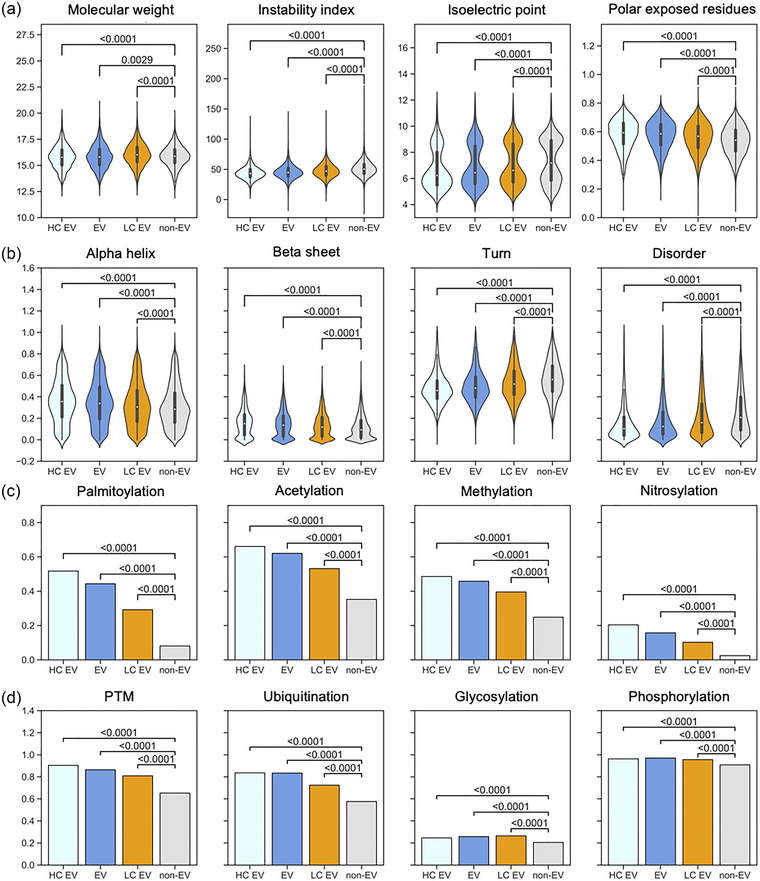
Extracellular vesicles (EVs) are membranous structures released by cells into the extracellular space and are thought to be involved in cell-to-cell communication. While EVs and their cargo are promising biomarker candidates, sorting mechanisms of proteins to EVs remain unclear. In this study, we ask if it is possible to determine EV association based on the protein sequence. Additionally, we ask what the most important determinants are for EV association. We answer these questions with explainable AI models, using human proteome data from EV databases to train and validate the model. It is essential to correct the datasets for contaminants introduced by coarse EV isolation workflows and for experimental bias caused by mass spectrometry. In this study, we show that it is indeed possible to predict EV association from the protein sequence: a simple sequence-based model for predicting EV proteins achieved an area under the curve of 0.77 ± 0.01, which increased further to 0.84 ± 0.00 when incorporating curated post-translational modification (PTM) annotations. Feature analysis shows that EV-associated proteins are stable, polar, and structured with low isoelectric point compared to non-EV proteins. PTM annotations emerged as the most important features for correct classification; specifically, palmitoylation is one of the most prevalent EV sorting mechanisms for unique proteins. Palmitoylation and nitrosylation sites are especially prevalent in EV proteins that are determined by very strict isolation protocols, indicating they could potentially serve as quality control criteria for future studies. This computational study offers an effective sequence-based predictor of EV associated proteins with extensive characterisation of the human EV proteome that can explain for individual proteins which factors contribute to their EV association.
细胞外囊泡(EVs)是细胞释放到细胞外空间的膜性结构,被认为参与细胞间通讯。虽然EVs及其所载物质是很有前景的生物标志物候选物,但蛋白质分选至EVs的机制仍不清楚。在本研究中,我们探讨是否有可能基于蛋白质序列来确定与EVs的关联。此外,我们还探讨了与EVs关联的最重要决定因素是什么。我们使用来自EV数据库的人类蛋白质组数据训练和验证模型,通过可解释的人工智能模型来回答这些问题。校正由粗略的EV分离流程引入的污染物以及质谱法导致的实验偏差对数据集来说至关重要。在本研究中,我们表明确实可以从蛋白质序列预测与EVs的关联:一个简单的基于序列的预测EV蛋白质的模型达到了0.77±0.01的曲线下面积,在纳入经过整理的翻译后修饰(PTM)注释后进一步增加到0.84±0.00。特征分析表明,与非EV蛋白质相比,与EV相关的蛋白质是稳定的、极性的且具有低等电点的结构。PTM注释成为正确分类的最重要特征;具体而言,棕榈酰化是独特蛋白质最普遍的EV分选机制之一。棕榈酰化和亚硝基化位点在通过非常严格的分离方案确定的EV蛋白质中尤其普遍,这表明它们可能作为未来研究的质量控制标准。这项计算研究提供了一种基于序列的有效预测器,用于预测与EV相关的蛋白质,并对人类EV蛋白质组进行了广泛表征,能够解释单个蛋白质中哪些因素促成了它们与EV的关联。