Key Laboratory of Alien Forest Pest Detection and Control-Heilongjiang Province, School of Forestry, Northeast Forestry University, Harbin, China.
Liaoning Provincial Key Laboratory of Dangerous Forest Pest Management and Control, Shenyang Institute of Technology, Shenfu Reform and Innovation Demonstration Zone, Shenyang, China.
Mol Plant Pathol. 2024 Oct;25(10):e70018. doi: 10.1111/mpp.70018.
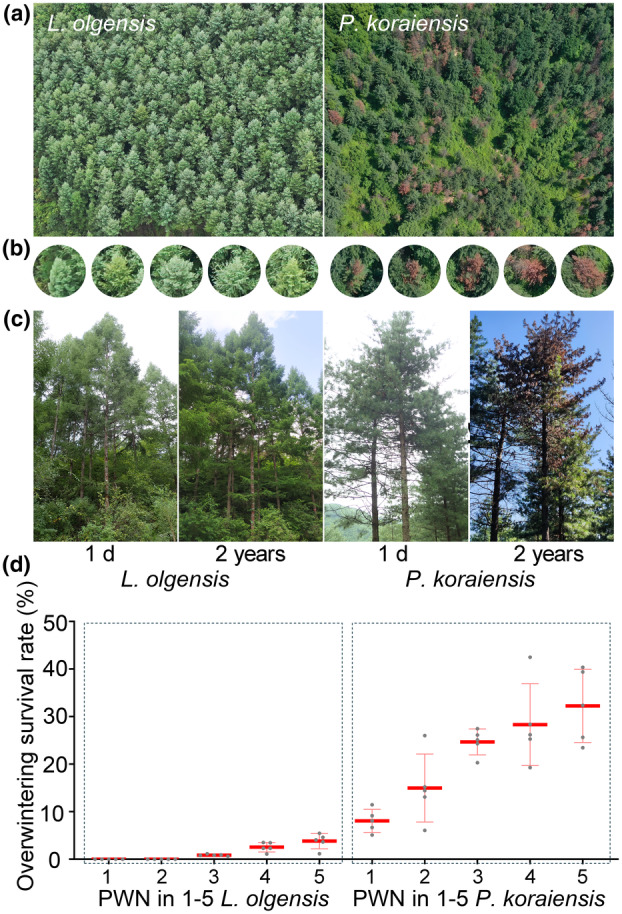
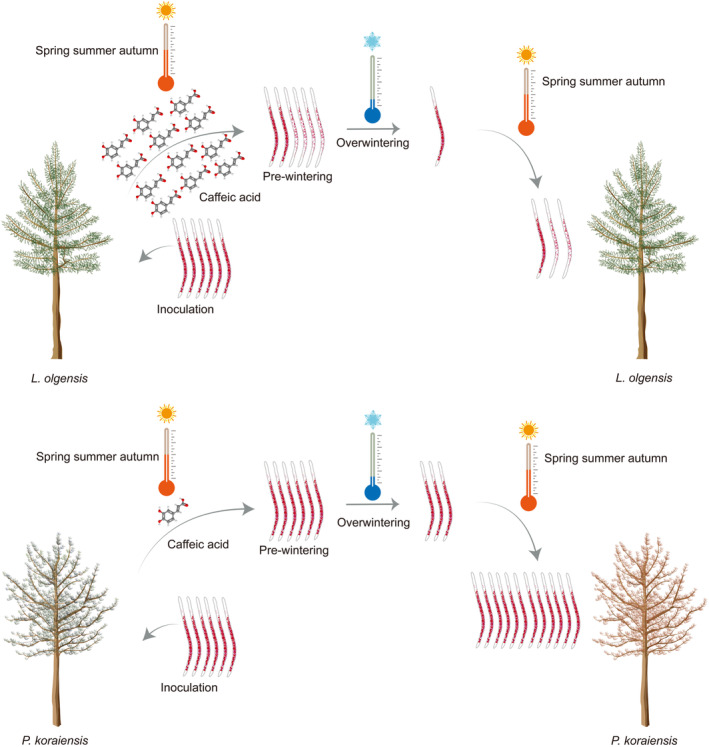
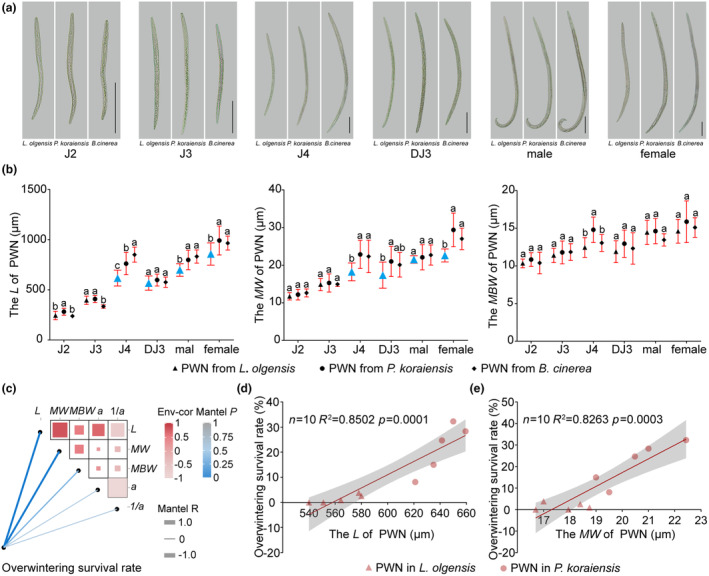
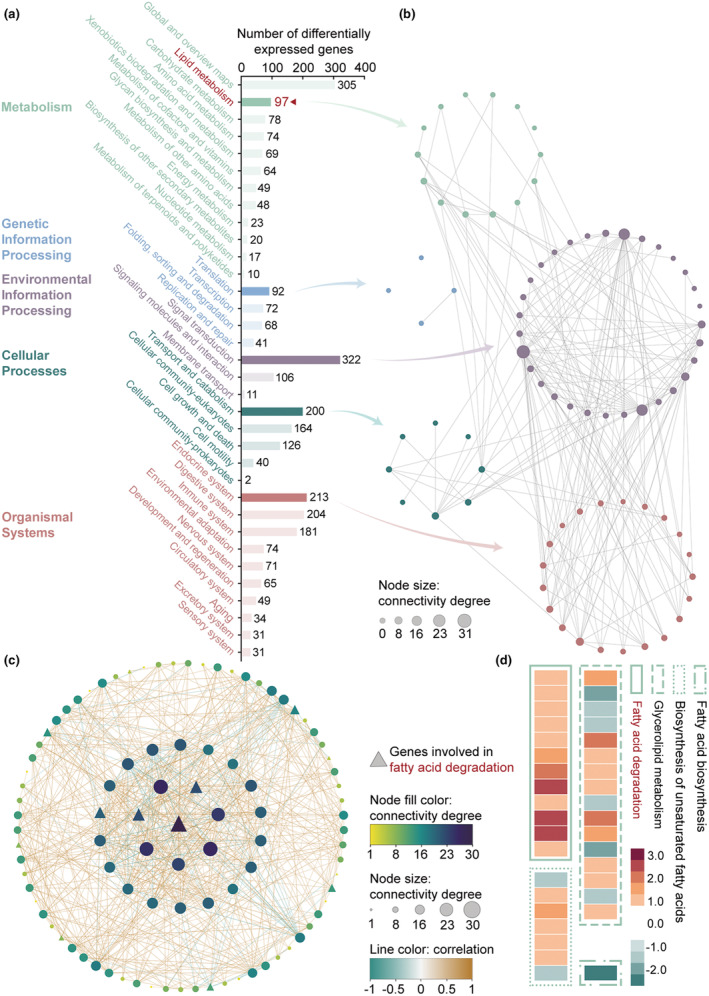
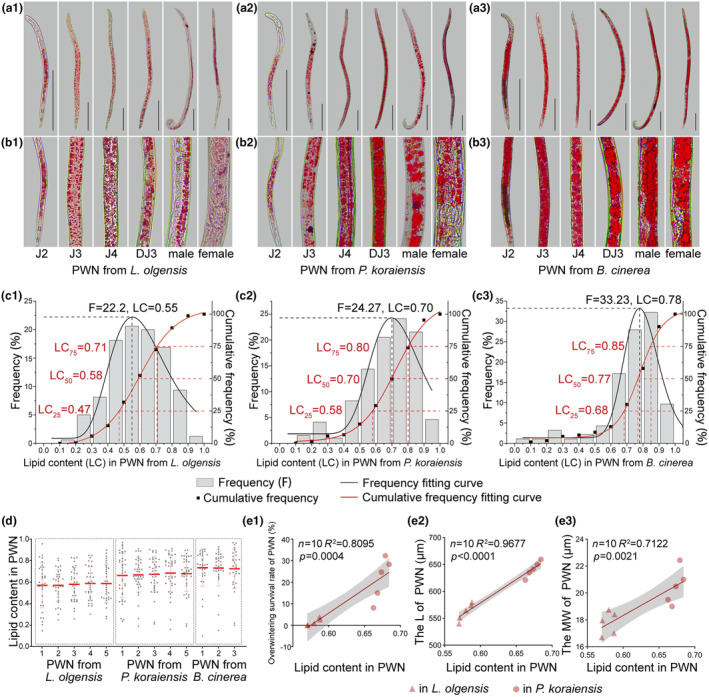
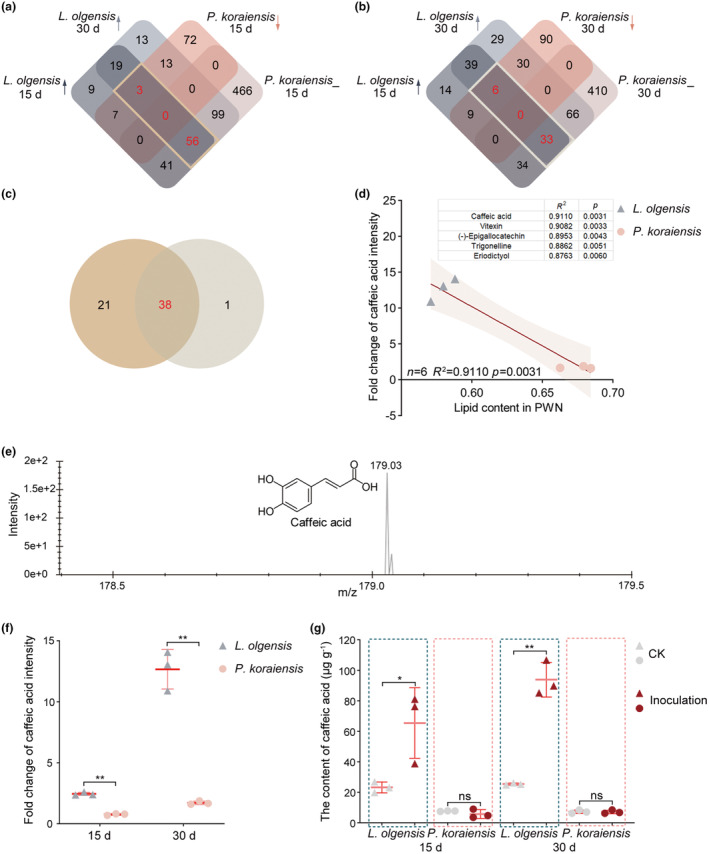
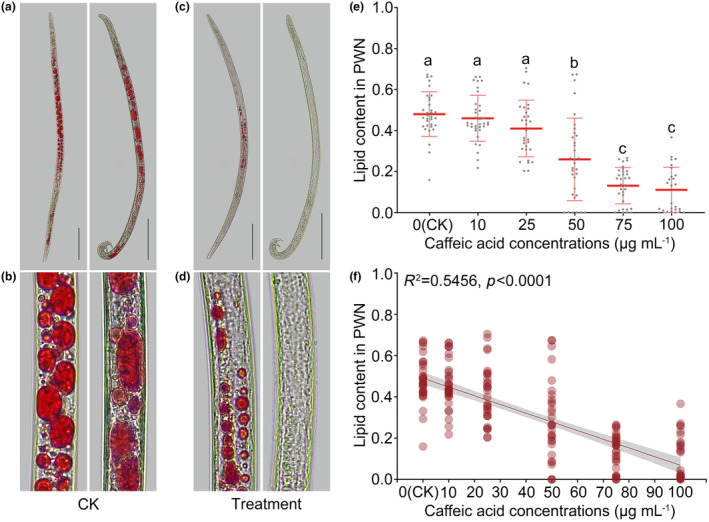
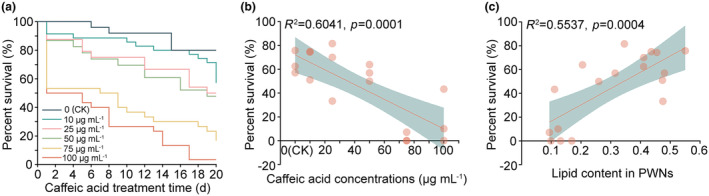
Following the invasion by the pine wood nematode (PWN) into north-east China, a notable disparity in susceptibility was observed among Pinaceae species. Larix olgensis exhibited marked resilience and suffered minimal fatalities, while Pinus koraiensis experienced significant mortality due to PWN infection. Our research demonstrated that the PWNs in L. olgensis showed a 13.43% reduction in lipid content compared to P. koraiensis (p < 0.05), which was attributable to the accumulation of caffeic acid in L. olgensis. This reduction in lipid content was correlated with a decreased overwintering survival of PWNs. The diminished lipid reserves were associated with substantial stunting in PWNs, including reduced body length and maximum body width. The result suggests that lower lipid content is a major factor contributing to the lower overwintering survival rate of PWNs in L. olgensis induced by caffeic acid. Through verification tests, we concluded that the minimal fatalities observed in L. olgensis could be attributed to the reduced overwintering survival of PWNs, a consequence of caffeic acid-induced stunting. This study provides valuable insights into PWN-host interactions and suggests that targeting caffeic acid biosynthesis pathways could be a potential strategy for managing PWN in forest ecosystems.
松材线虫(PWN)入侵中国东北后,松科树种的敏感性表现出显著差异。红松表现出明显的弹性,死亡率最低,而赤松则因感染 PWN 而大量死亡。我们的研究表明,与赤松相比,红松中的 PWN 脂质含量降低了 13.43%(p<0.05),这归因于红松中咖啡酸的积累。这种脂质含量的降低与 PWN 的越冬存活率下降有关。脂质储备的减少与 PWN 的大量发育迟缓有关,包括体长和最大体宽的减少。结果表明,较低的脂质含量是导致咖啡酸诱导的红松中 PWN 越冬存活率较低的主要因素。通过验证试验,我们得出结论,红松中观察到的低死亡率可归因于 PWN 的越冬存活率降低,这是咖啡酸诱导的发育迟缓的结果。本研究为 PWN-宿主相互作用提供了有价值的见解,并表明靶向咖啡酸生物合成途径可能是管理森林生态系统中 PWN 的一种潜在策略。