Xi'an Key Laboratory of Human-Machine Integration and Control Technology for Intelligent Rehabilitation, School of Computer Science, Xijing University, Xi'an, P.R. China.
School of Computer, Xijing University, Xi'an, China.
PLoS One. 2024 Oct 24;19(10):e0308639. doi: 10.1371/journal.pone.0308639. eCollection 2024.
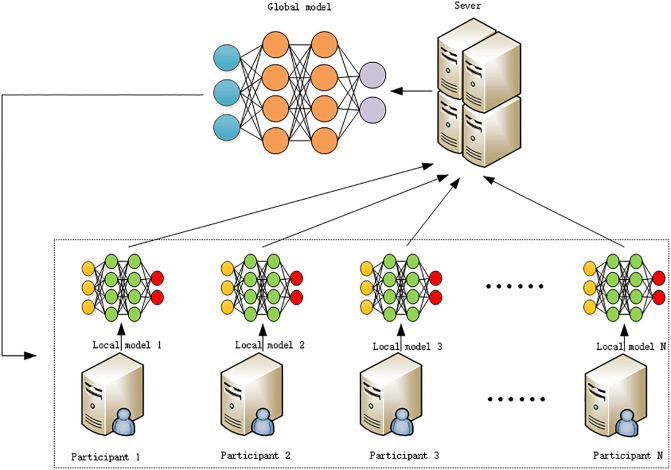
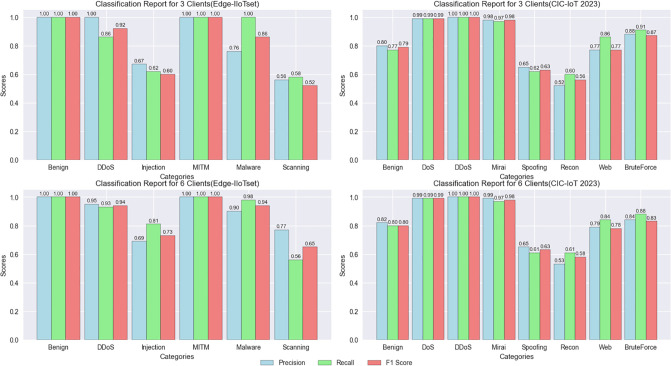
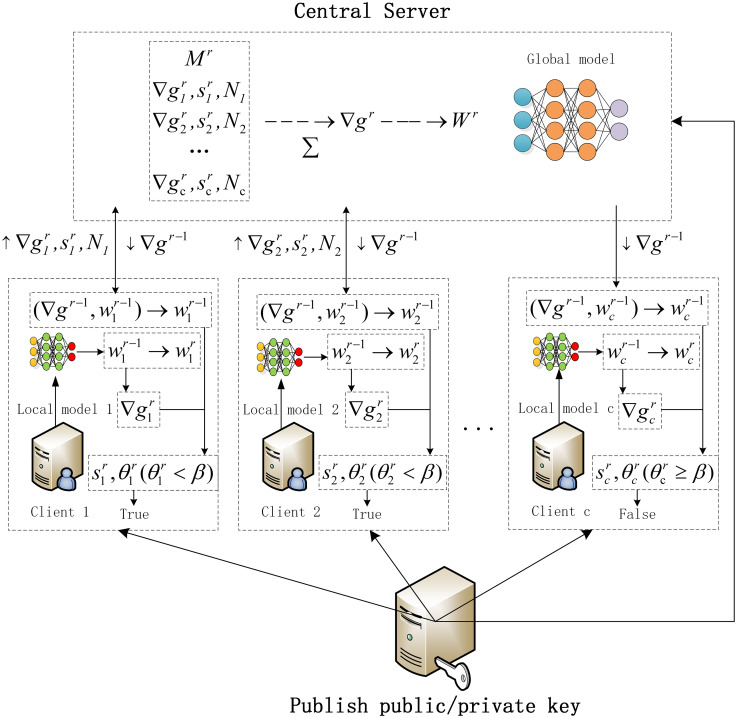
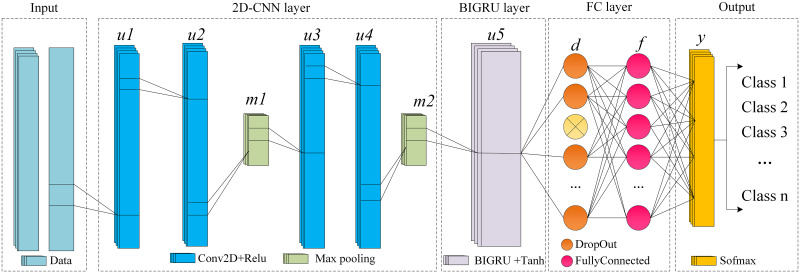
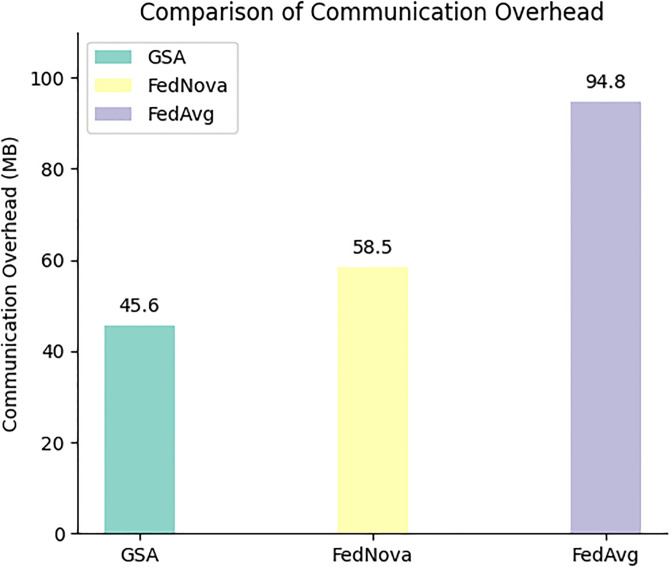
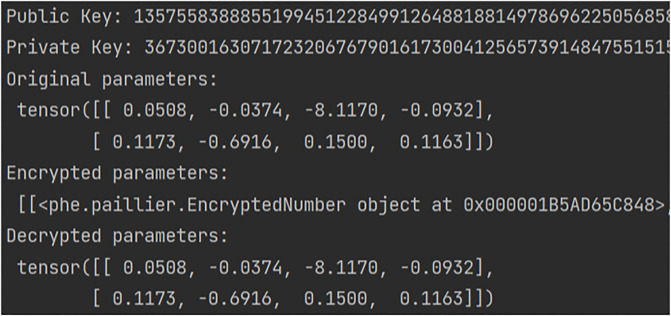
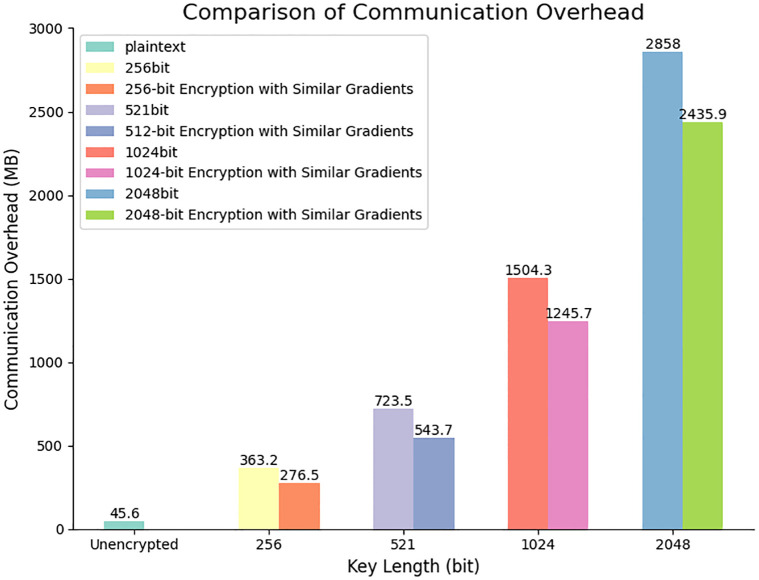
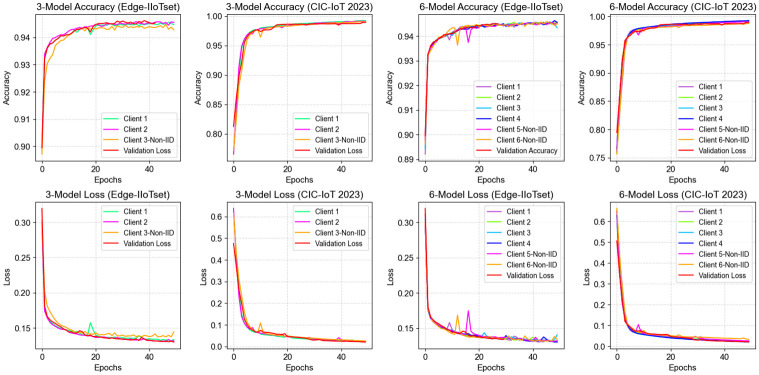
With the rapid development of Industrial Internet of Things (IIoT), network security issues have become increasingly severe, making intrusion detection one of the key technologies for ensuring IIoT security. However, existing intrusion detection systems face challenges such as incomplete data features, missing labels, parameter leakage, and high communication overhead. To address these challenges, this paper proposes a federated learning-based intrusion detection algorithm (NIDS-FGPA) that utilizes gradient similarity model aggregation. This algorithm leverages a federated learning architecture and combines it with Paillier homomorphic encryption technology to ensure the security of the training process. Additionally, the paper introduces the Gradient Similarity Model Aggregation (GSA) algorithm, which dynamically selects and weights updates from different models to reduce communication overhead. Finally, the paper designs a deep learning model based on two-dimensional convolutional neural networks and bidirectional gated recurrent units (2DCNN-BIGRU) to handle incomplete data features and missing labels in network traffic data. Experimental validation on the Edge-IIoTset and CIC IoT 2023 datasets achieves accuracies of 94.5% and 99.2%, respectively. The results demonstrate that the NIDS-FGPA model possesses the ability to identify and capture complex network attacks, significantly enhancing the overall security of the network.
随着工业物联网(IIoT)的快速发展,网络安全问题日益严重,入侵检测成为确保 IIoT 安全的关键技术之一。然而,现有的入侵检测系统面临着数据特征不完整、标签缺失、参数泄露和通信开销高等挑战。为了解决这些挑战,本文提出了一种基于联邦学习的入侵检测算法(NIDS-FGPA),该算法利用梯度相似模型聚合。该算法利用联邦学习架构,并结合 Paillier 同态加密技术,确保训练过程的安全性。此外,本文还引入了梯度相似模型聚合(GSA)算法,该算法可以动态选择和加权来自不同模型的更新,以减少通信开销。最后,本文设计了一个基于二维卷积神经网络和双向门控循环单元(2DCNN-BIGRU)的深度学习模型,用于处理网络流量数据中的不完整数据特征和标签缺失问题。在 Edge-IIoTset 和 CIC IoT 2023 数据集上的实验验证分别达到了 94.5%和 99.2%的准确率。结果表明,NIDS-FGPA 模型具有识别和捕获复杂网络攻击的能力,显著提高了网络的整体安全性。