Gazi University Faculty of Dentistry ABD, Ankara, Turkey.
BMC Oral Health. 2024 Oct 24;24(1):1279. doi: 10.1186/s12903-024-04918-y.
It was aimed to investigate the effect of sandblasting and laser surface treatment on shear bond strength in composite restoration repair in vitro.
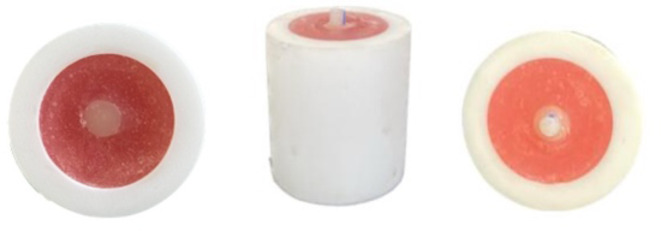
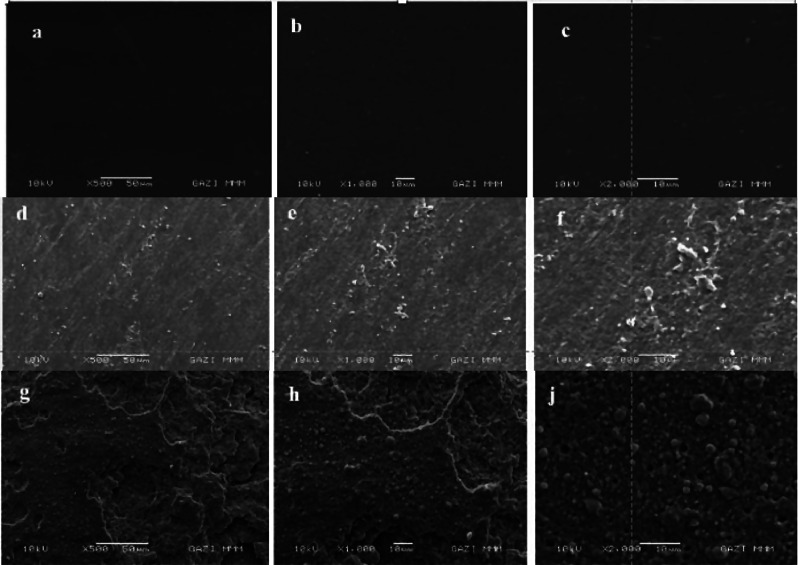
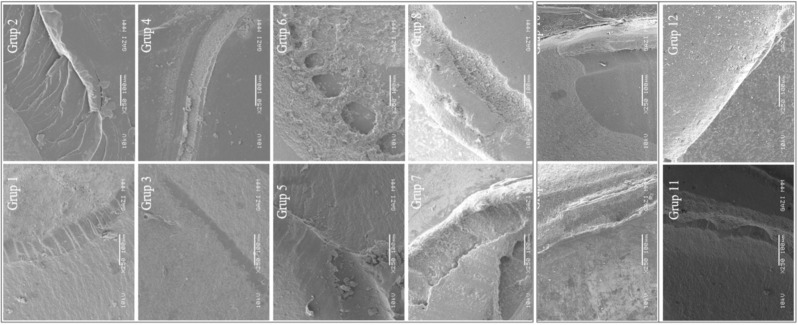
A micro-hybrid composite (Filtek Z250, 3 M-ESPE, USA) was used to prepare 120 samples. The samples were subjected to a thermal cycle test 5,000 times between 5 and 55 C, and they were randomly divided into 12 groups (n = 10). No surface treatment was performed in Groups 1 to 4, which were designed as control groups. The surfaces of the samples in Groups 5 to 8 were sandblasted with a Cojet device, and the surfaces of the samples in Groups 9 to 12 were applied Er, Cr: YSGG laser. After the sample surfaces were divided into groups with and without acid etching, universal adhesive was applied, and the repair process was performed using Filtek Z250 or nano-filled resin composite (Filtek Ultimate, 3 M-ESPE, USA). The thermal cycle test was repeated 5,000 times between 5 and 55 C on all repaired samples. The repair shear bond strength of the samples was measured using a universal testing device (Shimadzu IG-IS, Kyoto, Japan). The fracture types were evaluated by optical microscopy and scanning electron microscopy (SEM). Statistical analyses of the findings were evaluated by the Kruskal Wallis test and Mann Whitney U test at 0.05 significance degree.
The highest mean shear bond strength values were obtained from the samples sandblasted with CoJet, followed by Er, Cr: YSGG laser, and the control group. It was determined that there was a significant difference between the mean shear bond strength values obtained from the control group and the other surface treatment groups (p < 0.05). In general, significantly higher mean shear bond strength values were obtained when the universal adhesive was applied in total-etch mode compared to the application in self-etch mode (p < 0.05). Additionally, it was determined that higher shear bond strength values were obtained with Filtek Ultimate compared to Filtek Z250 (p < 0.05).
Within the limitations of this study, it can be concluded that the use of universal adhesive in total-etch mode, in addition to surface treatments on the resin composite surface in the repair protocol and the use of nano-filled resin composite as repair material can increase the mean shear bond values in repair.
本研究旨在体外探究喷砂和激光表面处理对复合树脂修复体剪切粘结强度的影响。
采用微混合复合树脂(Filtek Z250,3M-ESPE,美国)制备 120 个样本。样本在 5℃至 55℃之间进行 5000 次热循环试验,然后随机分为 12 组(n=10)。第 1 组至第 4 组未进行表面处理,作为对照组。第 5 组至第 8 组的样本用 Cojet 设备喷砂处理,第 9 组至第 12 组的样本用 Er,Cr:YSGG 激光处理。对有酸蚀和无酸蚀的样本表面进行分组后,应用通用粘结剂,并用 Filtek Z250 或纳米填充树脂复合(Filtek Ultimate,3M-ESPE,美国)进行修复。所有修复后的样本均在 5℃至 55℃之间重复进行 5000 次热循环试验。采用万能试验机(Shimadzu IG-IS,日本京都)测量样本的修复剪切粘结强度。采用光学显微镜和扫描电子显微镜(SEM)评估断裂类型。采用 Kruskal Wallis 检验和 Mann Whitney U 检验在 0.05 显著性水平评估发现的统计学差异。
CoJet 喷砂处理的样本获得的平均剪切粘结强度最高,其次是 Er,Cr:YSGG 激光处理和对照组。结果表明,对照组和其他表面处理组获得的平均剪切粘结强度值之间存在显著差异(p<0.05)。通常,全酸蚀模式下应用通用粘结剂的平均剪切粘结强度显著高于自酸蚀模式(p<0.05)。此外,与 Filtek Z250 相比,Filtek Ultimate 获得的剪切粘结强度更高(p<0.05)。
在本研究的限制范围内,可以得出结论,在修复方案中,除了对树脂复合材料表面进行表面处理外,还可以在全酸蚀模式下使用通用粘结剂,并使用纳米填充树脂复合材料作为修复材料,这可以提高修复后的平均剪切粘结强度值。