Varley Thomas F
Vermont Complex Systems Center, University of Vermont, Burlington, VT 05405, USA.
Entropy (Basel). 2024 Oct 21;26(10):883. doi: 10.3390/e26100883.
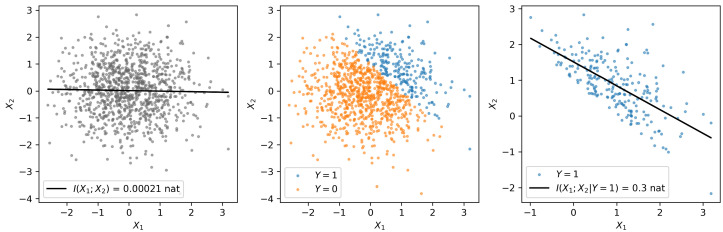
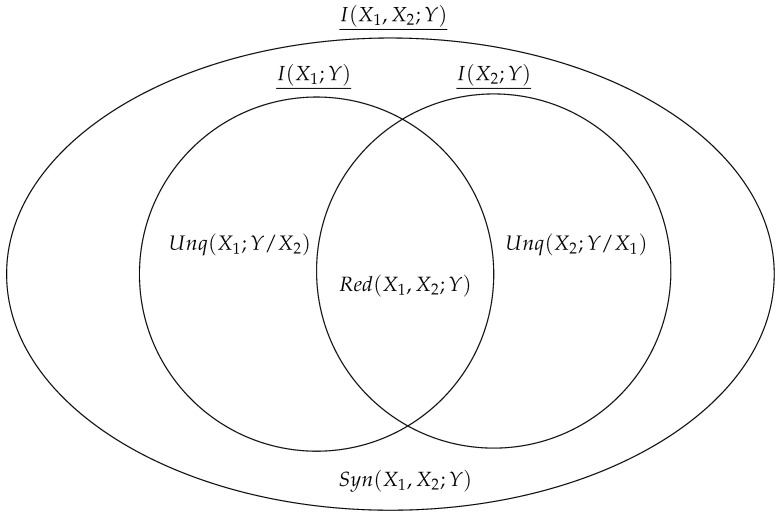
What does it mean for a complex system to "compute" or perform "computations"? Intuitively, we can understand complex "computation" as occurring when a system's state is a function of multiple inputs (potentially including its own past state). Here, we discuss how computational processes in complex systems can be generally studied using the concept of statistical synergy, which is information about an output that can be learned when the joint state of all inputs is known. Building on prior work, we show that this approach naturally leads to a link between multivariate information theory and topics in causal inference, specifically, the phenomenon of causal colliders. We begin by showing how Berkson's paradox implies a higher-order, synergistic interaction between multidimensional inputs and outputs. We then discuss how causal structure learning can refine and orient analyses of synergies in empirical data, and when empirical synergies meaningfully reflect computation versus when they may be spurious. We end by proposing that this conceptual link between synergy, causal colliders, and computation can serve as a foundation on which to build a mathematically rich general theory of computation in complex systems.
对于一个复杂系统而言,“计算”或执行“计算操作”意味着什么?直观地说,当一个系统的状态是多个输入(可能包括其自身的过去状态)的函数时,我们可以理解为发生了复杂的“计算”。在此,我们讨论如何使用统计协同的概念来普遍研究复杂系统中的计算过程,统计协同是指当所有输入的联合状态已知时,可以了解到的关于输出的信息。基于先前的工作,我们表明这种方法自然地在多元信息论与因果推理主题之间建立了联系,具体而言,就是因果对撞机现象。我们首先展示伯克森悖论如何暗示多维输入与输出之间存在高阶协同相互作用。然后我们讨论因果结构学习如何完善和指导对经验数据中协同作用的分析,以及经验协同何时有意义地反映计算,何时可能是虚假的。最后我们提出,协同、因果对撞机和计算之间的这种概念联系可以作为一个基础,在此基础上构建一个数学丰富的复杂系统计算通用理论。