Bishop Rebecca C, Kemper Ann M, Clark Lindsay V, Wilkins Pamela A, McCoy Annette M
Department of Veterinary Clinical Medicine, University of Illinois Urbana-Champaign, Urbana, IL 61802, USA.
High-Performance Computing in Biology, Roy J. Carver Biotechnology Center, University of Illinois Urbana-Champaign, Urbana, IL 61802, USA.
Animals (Basel). 2024 Oct 16;14(20):2979. doi: 10.3390/ani14202979.
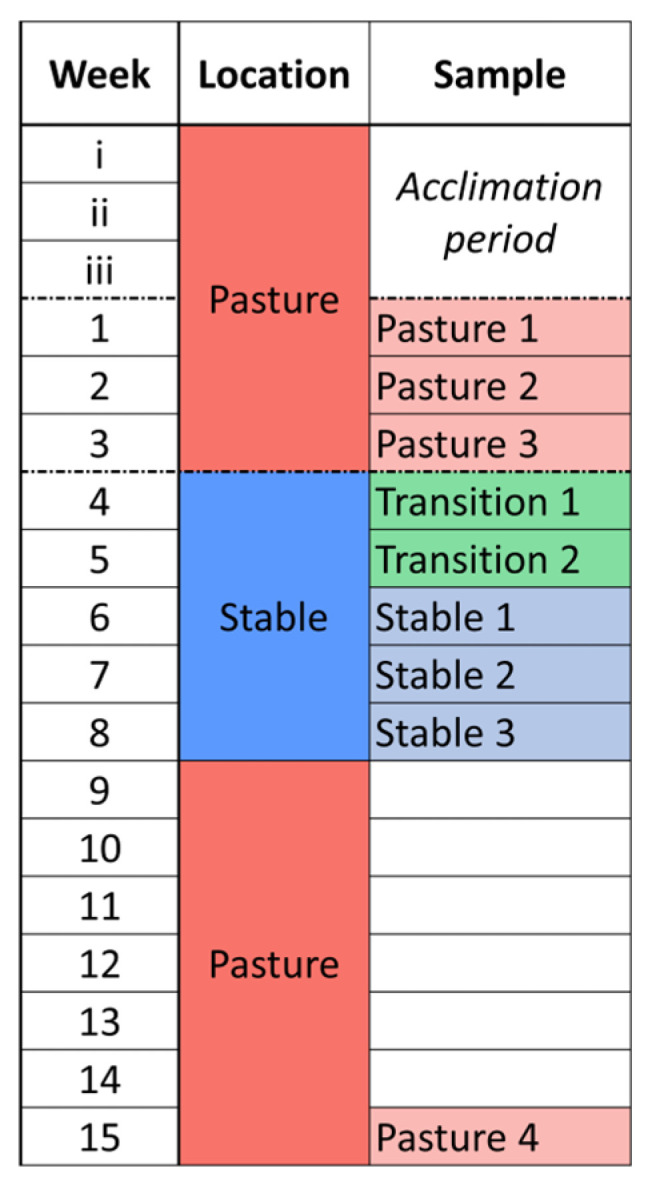
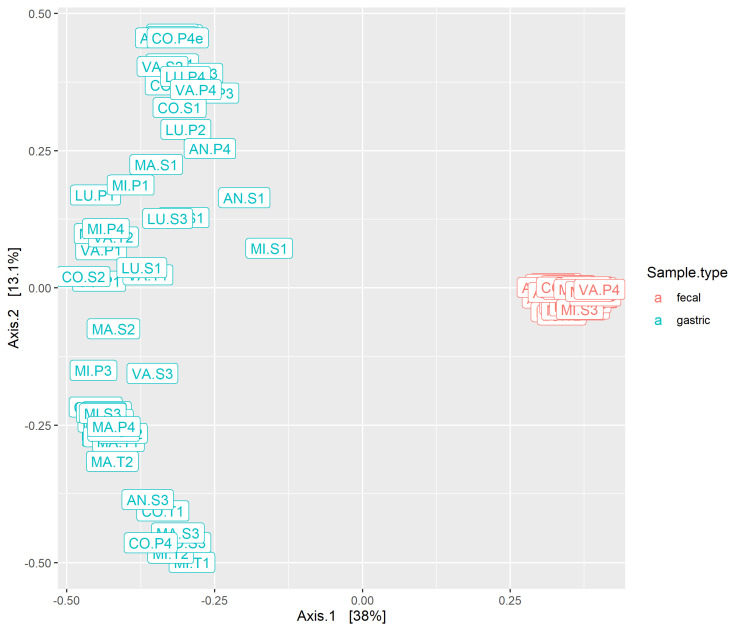
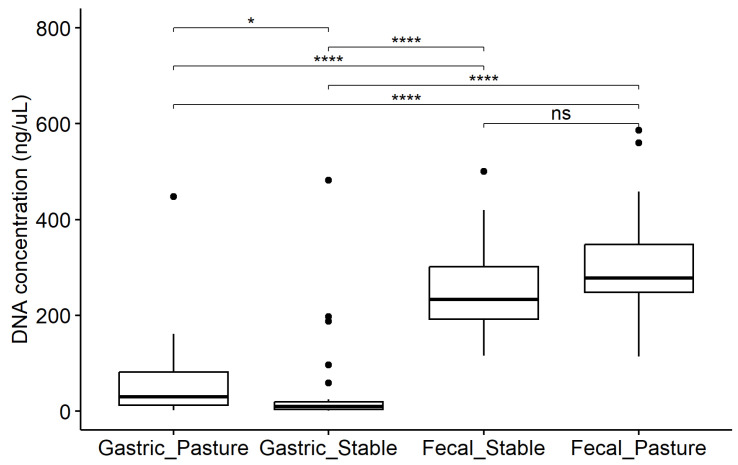
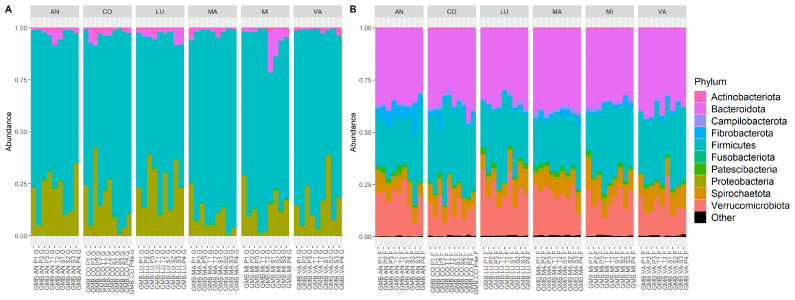
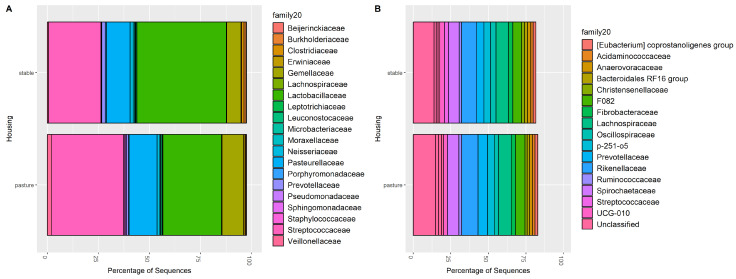
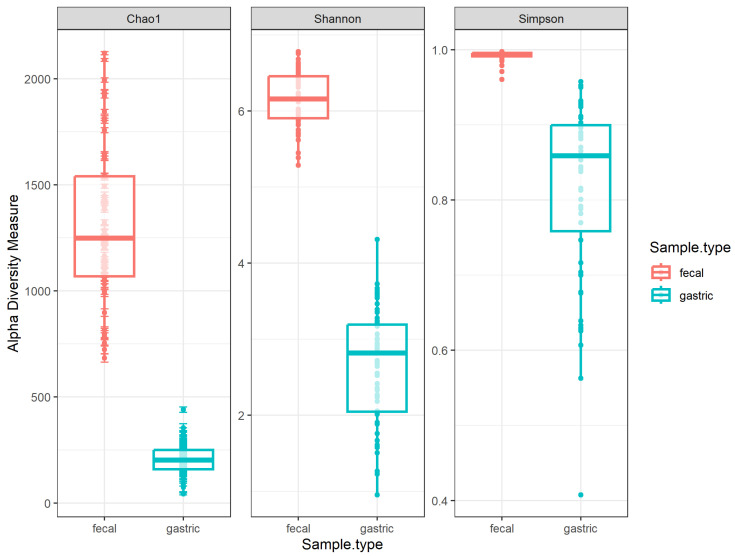
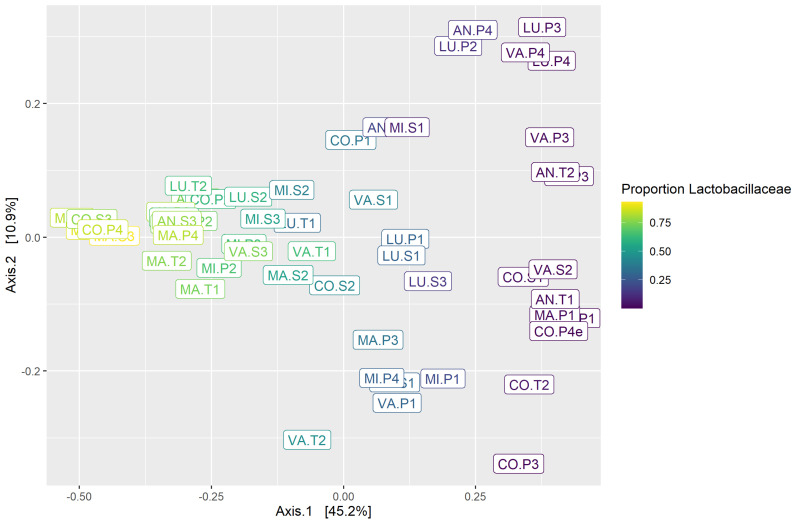
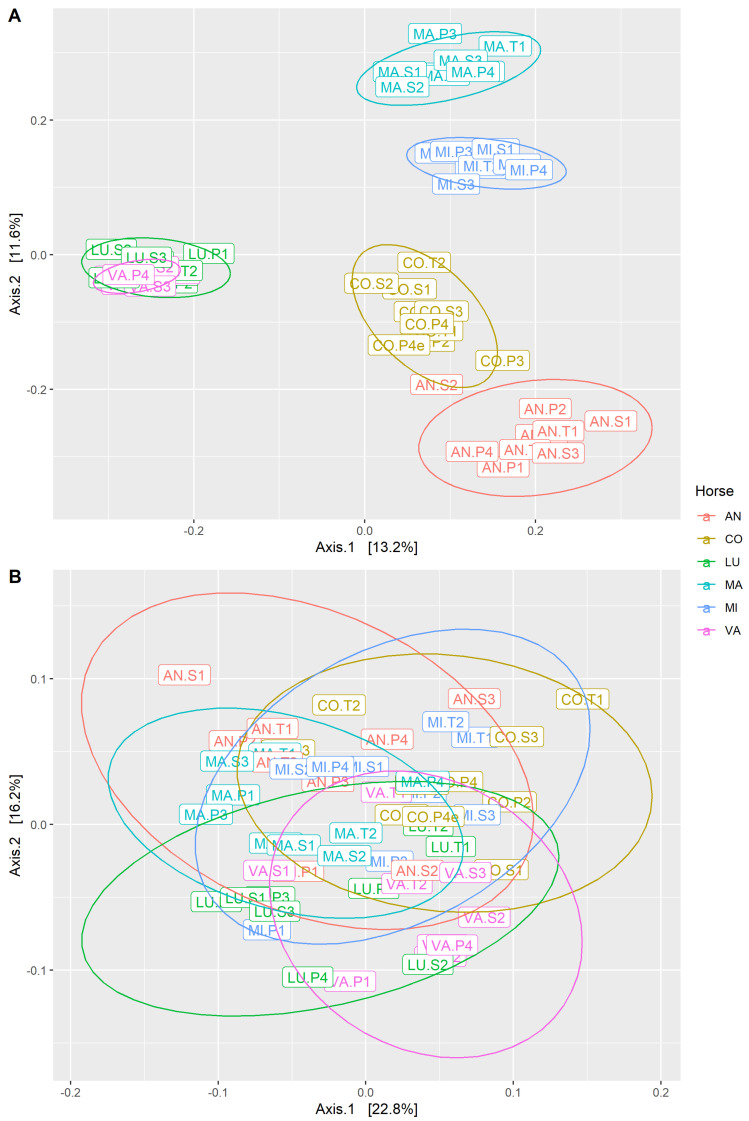
Equine gastrointestinal microbial communities vary across the gastrointestinal tract and in response to diet or disease. Understanding the composition and stability of gastric fluid microbiota in healthy horses is a prerequisite to understanding changes associated with the development of disease. The objective of this study was to describe microbial communities in the gastric fluid and feces of healthy horses longitudinally. Horses were maintained on pasture (6 weeks), stabled (5 weeks), then returned to pasture. A consistent forage diet was provided throughout. Native gastric fluid and feces were collected weekly for full-length 16S ribosomal DNA sequencing and microbial profiling analysis. Fewer taxa were identified in the gastric fluid (770) than in the feces (5284). Species richness and diversity were significantly different between sample types ( < 0.001), but not between housing locations ( = 0.3). There was a significant effect of housing and horse on the Bray-Curtis compositional diversity of gastric ( = 0.005; = 0.009) and fecal ( = 0.001; = 0.001) microbiota. When horses moved from pasture to stable, the relative proportions of gastric fluid Lactobacillaceae increased and Streptococcaceae decreased, while fecal Firmicutes increased and Bacteriodota decreased. Within each housing condition, there was no significant week-to-week variation in gastric ( = 0.9) or fecal ( = 0.09) microbiota. Overall, these findings support the maintenance of stable gastric and fecal microbial populations under each management condition, providing a basis for further investigation of gastric fluid microbiota in diseases of the foregut.
马的胃肠道微生物群落因胃肠道部位不同而有所差异,并且会对饮食或疾病做出反应。了解健康马匹胃液微生物群的组成和稳定性是理解与疾病发展相关变化的先决条件。本研究的目的是纵向描述健康马匹胃液和粪便中的微生物群落。马匹先在牧场饲养6周,然后圈养5周,之后再回到牧场。整个过程中提供一致的草料饮食。每周采集天然胃液和粪便,用于全长16S核糖体DNA测序和微生物谱分析。在胃液中鉴定出的分类单元(770个)比粪便中(5284个)少。样本类型之间的物种丰富度和多样性存在显著差异(<0.001),但饲养地点之间没有差异(=0.3)。饲养环境和马匹对胃液(=0.005;=0.009)和粪便(=0.001;=0.001)微生物群的Bray-Curtis组成多样性有显著影响。当马匹从牧场转移到圈舍时,胃液中乳酸杆菌科的相对比例增加,链球菌科减少,而粪便中厚壁菌门增加,拟杆菌门减少。在每种饲养条件下,胃液(=0.9)或粪便(=0.09)微生物群在周与周之间没有显著变化。总体而言,这些发现支持在每种管理条件下维持稳定的胃液和粪便微生物种群,为进一步研究前肠疾病中的胃液微生物群提供了基础。