Endocrinology Department, Bogomolets National Medical University, Kyiv, Ukraine.
Laboratory of Epigenetics, Institute of Gerontology Academy of Medical Sciences of Ukraine, Kyiv, Ukraine.
Sci Rep. 2024 Oct 26;14(1):25533. doi: 10.1038/s41598-024-77496-2.
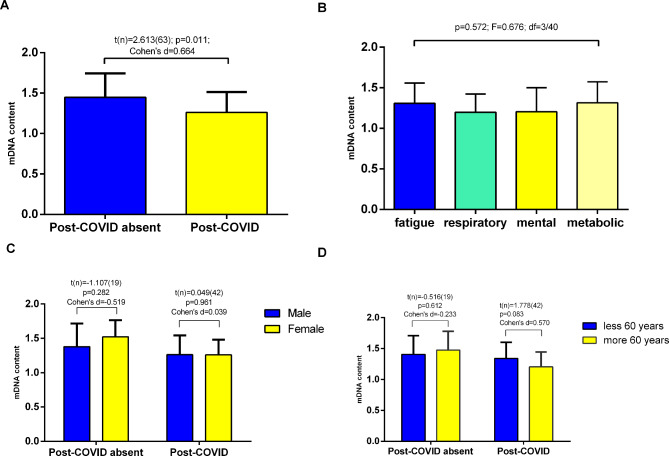
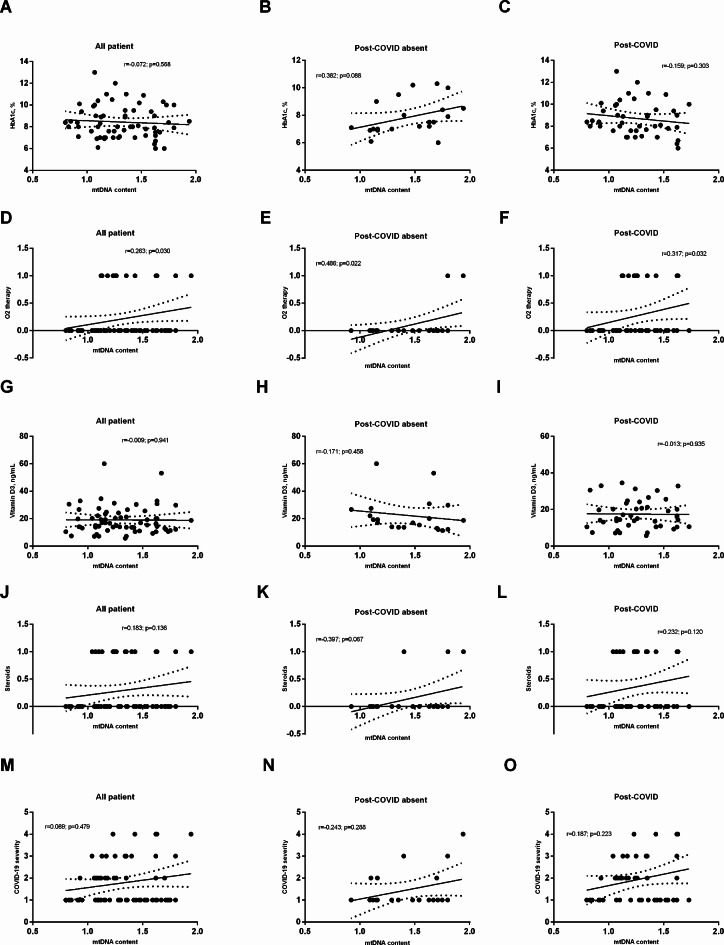
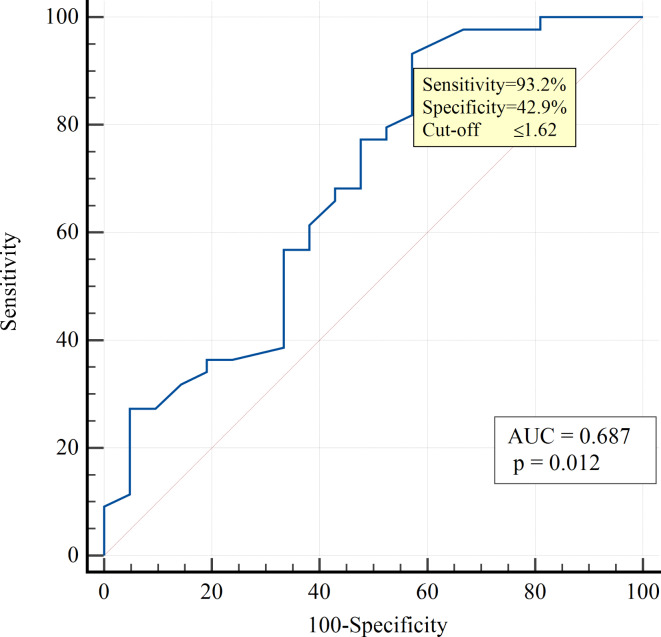
Post-COVID-19 syndrome (PCS) is an emerging health problem in people recovering from COVID-19 infection within the past 3-6 months. The current study aimed to define the predictive factors of PCS development by assessing the mitochondrial DNA (mtDNA) levels in blood leukocytes, inflammatory markers and HbA1c in type 2 diabetes patients (T2D) with regard to clinical phenotype, gender, and biological age. In this case-control study, 65 T2D patients were selected. Patients were divided into 2 groups depending on PCS presence: the PCS group (n = 44) and patients who did not develop PCS (n = 21) for up to 6 months after COVID-19 infection. HbA1c and mtDNA levels were the primary factors linked to PCS in different models. We observed significantly lower mtDNA content in T2D patients with PCS compared to those without PCS (1.26 ± 0.25 vs. 1.44 ± 0.24; p = 0.011). In gender-specific and age-related analyses, the mt-DNA amount did not differ significantly between the subgroups. According to the stepwise multivariate logistic regression analysis, low mtDNA content and HbA1c were independent variables associated with PCS development, regardless of oxygen, glucocorticoid therapy and COVID-19 severity. The top-performing model for PCS prediction was the gradient boosting machine (GBM). HbA1c and mtDNA had a notably greater influence than the other variables, indicating their potential as prognostic biomarkers.
新冠后综合征(PCS)是在过去 3-6 个月内从 COVID-19 感染中康复的人群中出现的一个新兴健康问题。本研究旨在通过评估白细胞中线粒体 DNA(mtDNA)水平、炎症标志物和 2 型糖尿病患者(T2D)的 HbA1c,来定义 PCS 发展的预测因素,同时考虑临床表型、性别和生物年龄。在这项病例对照研究中,选择了 65 名 T2D 患者。根据 PCS 是否存在,将患者分为 2 组:PCS 组(n=44)和 COVID-19 感染后长达 6 个月未发生 PCS 的患者(n=21)。HbA1c 和 mtDNA 水平是与不同模型中 PCS 相关的主要因素。我们观察到,与没有 PCS 的 T2D 患者相比,有 PCS 的 T2D 患者的 mtDNA 含量明显更低(1.26±0.25 对 1.44±0.24;p=0.011)。在性别特异性和年龄相关分析中,亚组之间 mt-DNA 量没有显著差异。根据逐步多元逻辑回归分析,无论是否存在氧气、糖皮质激素治疗和 COVID-19 严重程度,低 mtDNA 含量和 HbA1c 是与 PCS 发展相关的独立变量。用于 PCS 预测的表现最佳模型是梯度提升机(GBM)。HbA1c 和 mtDNA 的影响明显大于其他变量,表明它们可能作为预后生物标志物。