Neuroscience Graduate Group, University of Pennsylvania, Philadelphia, PA, USA.
Department of Genetics, Perelman School of Medicine, University of Pennsylvania, Philadelphia, PA, USA.
Nat Commun. 2024 Oct 28;15(1):9301. doi: 10.1038/s41467-024-53590-x.
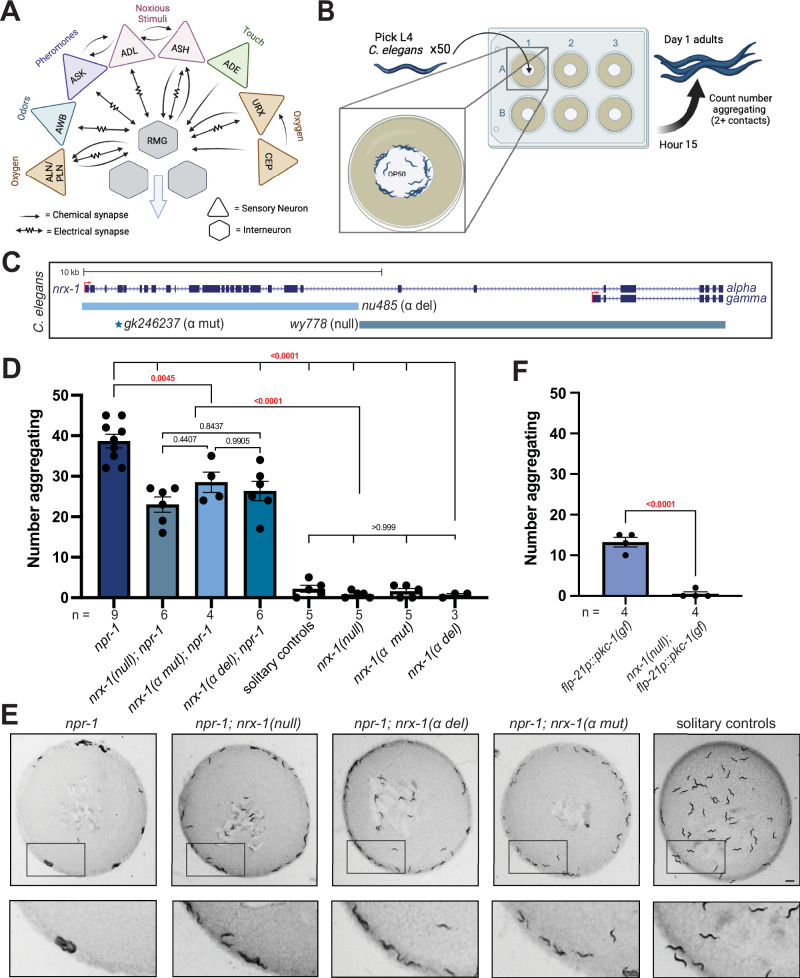
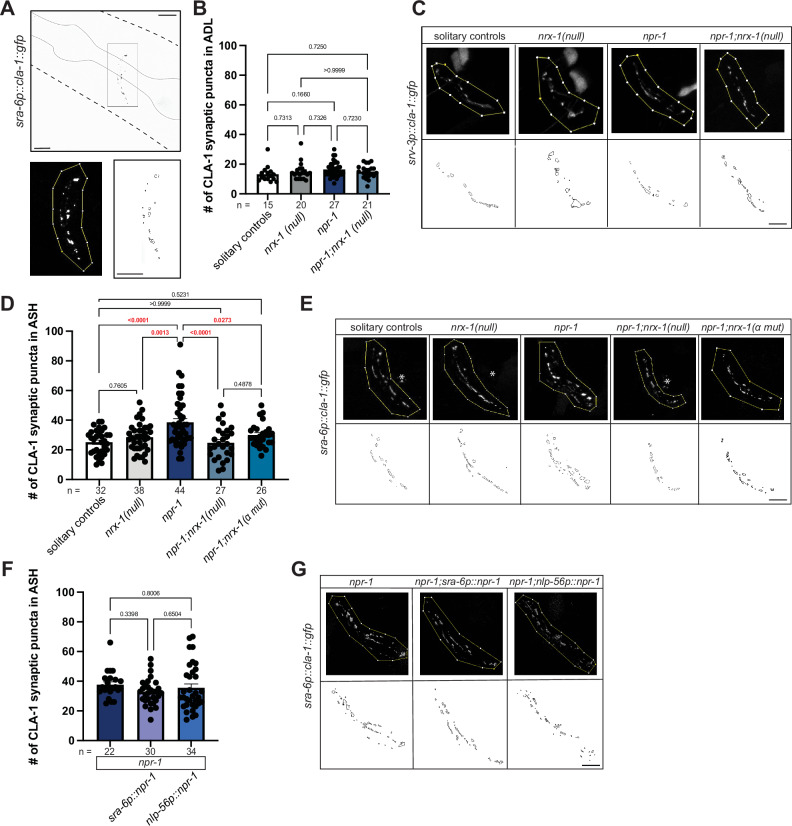
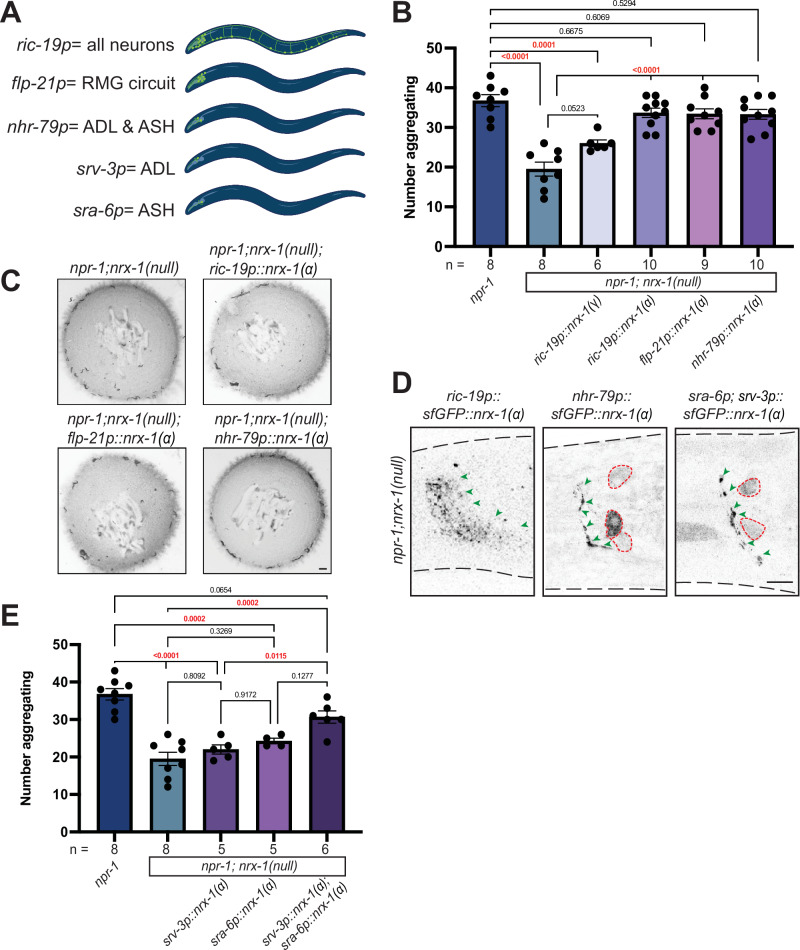
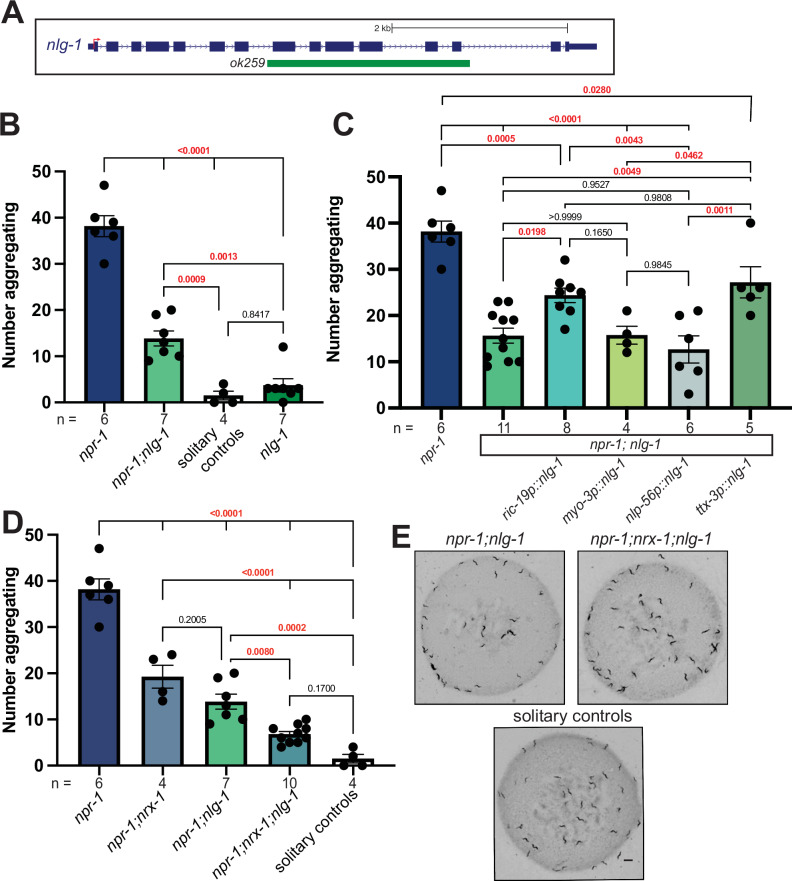
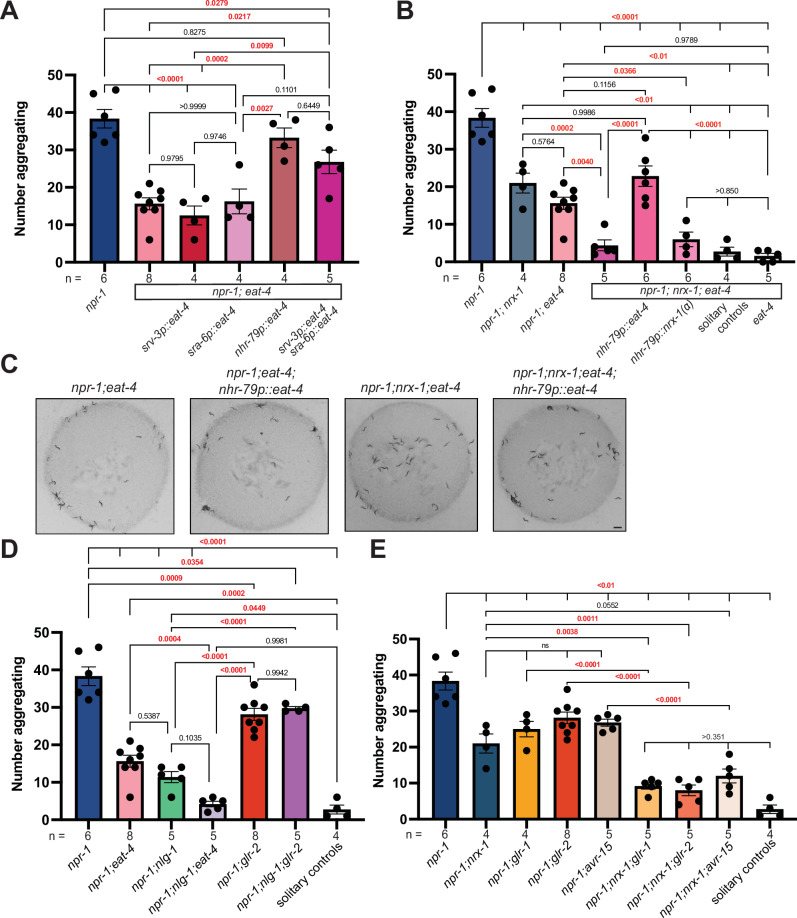
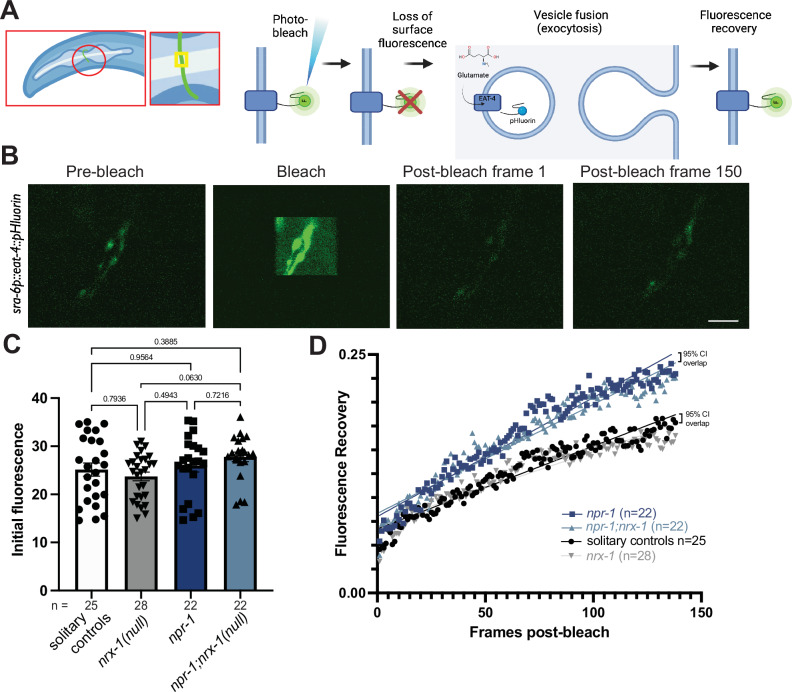
Animal foraging is an essential and evolutionarily conserved behavior that occurs in social and solitary contexts, but the underlying molecular pathways are not well defined. We discover that conserved autism-associated genes (NRXN1(nrx-1), NLGN3(nlg-1), GRIA1,2,3(glr-1), GRIA2(glr-2), and GLRA2,GABRA3(avr-15)) regulate aggregate feeding in C. elegans, a simple social behavior. NRX-1 functions in chemosensory neurons (ADL and ASH) independently of its postsynaptic partner NLG-1 to regulate social feeding. Glutamate from these neurons is also crucial for aggregate feeding, acting independently of NRX-1 and NLG-1. Compared to solitary counterparts, social animals show faster presynaptic release and more presynaptic release sites in ASH neurons, with only the latter requiring nrx-1. Disruption of these distinct signaling components additively converts behavior from social to solitary. Collectively, we find that aggregate feeding is tuned by conserved autism-associated genes through complementary synaptic mechanisms, revealing molecular principles driving social feeding.
动物觅食是一种在社会和孤独环境中发生的基本且进化保守的行为,但潜在的分子途径尚未得到很好的定义。我们发现,保守的自闭症相关基因(NRXN1(nrx-1)、NLGN3(nlg-1)、GRIA1、2、3(glr-1)、GRIA2(glr-2)和 GLRA2、GABRA3(avr-15))调节秀丽隐杆线虫的聚集性摄食,这是一种简单的社交行为。NRX-1 在化学感觉神经元(ADL 和 ASH)中独立于其突触后伴侣 NLG-1 发挥作用,以调节社交摄食。这些神经元中的谷氨酸也对聚集性摄食至关重要,其作用独立于 NRX-1 和 NLG-1。与独居对应物相比,社交动物在 ASH 神经元中表现出更快的突触前释放和更多的突触前释放位点,而只有后者需要 nrx-1。这些不同信号成分的破坏可叠加地将行为从社交转化为独居。总的来说,我们发现聚集性摄食受到保守的自闭症相关基因通过互补的突触机制来调节,揭示了驱动社交摄食的分子原理。