National Rehabilitation Center for Persons with Disabilities, Tokorozawa, Japan.
Japan Society for the Promotion of Science, Tokyo, Japan.
PLoS One. 2024 Oct 30;19(10):e0312471. doi: 10.1371/journal.pone.0312471. eCollection 2024.
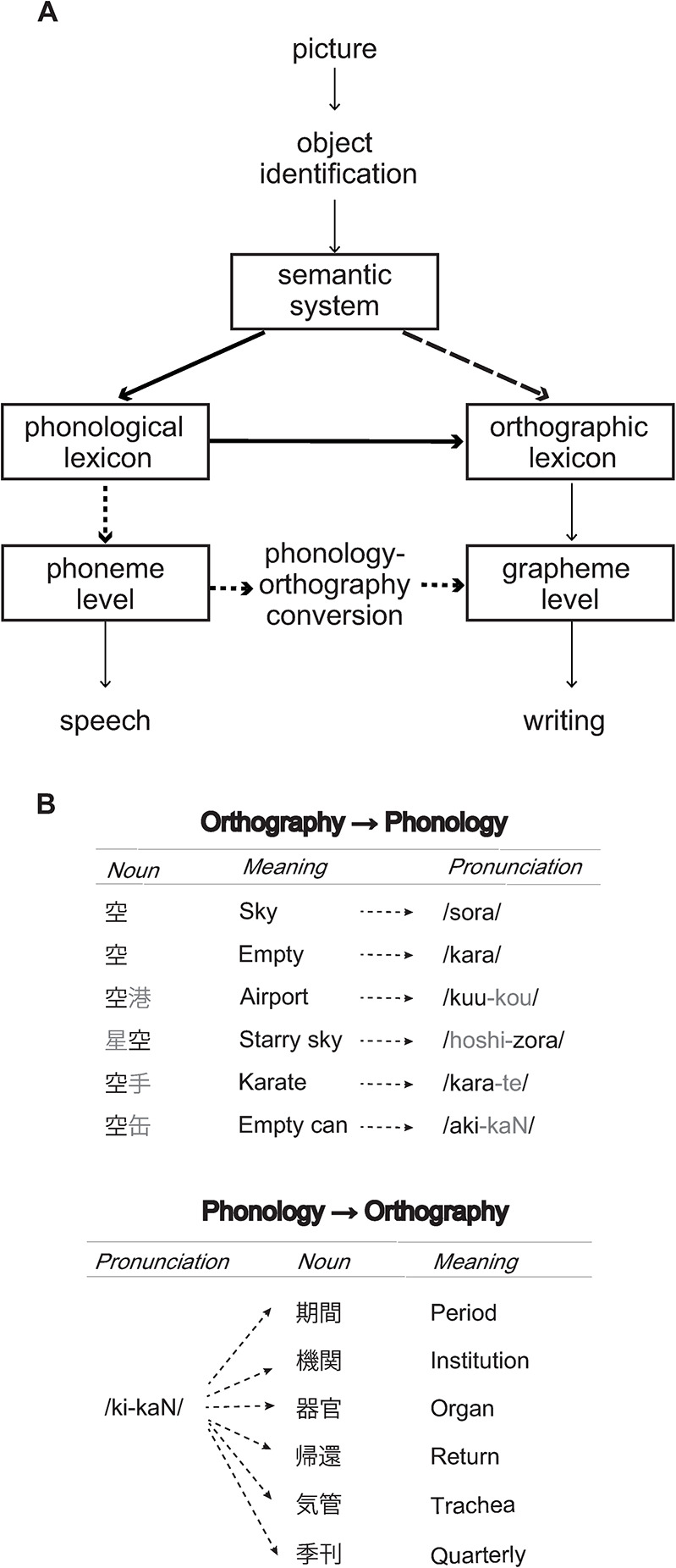
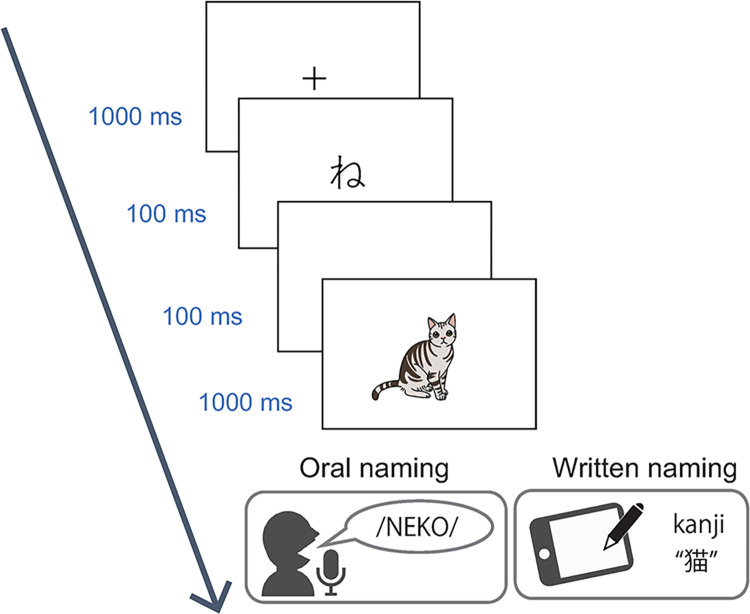
Phonological knowledge plays a pivotal role in many aspects of language processing, but it remains controversial whether it is required for writing. In the present study, we examined the issue by focusing on written production in an opaque logographic script (kanji) with highly irregular pronunciation rules, which allowed for a rigorous test of whether or not phonology contributes to writing. Using a phonological priming paradigm in two experiments, we measured response latency while participants orally named target pictures or wrote down their names in kanji. Each target was preceded by a phonographic character (kana) which represented the same sound (mora) as the beginning of the target name or a different mora. By manipulating the degree of phonological overlap between primes and target names (i.e., morae, consonants and vowels), we found that only the moraic overlap could speed up word production in logographic writing (Experiment 1). In contrast, naming response was facilitated by mora-overlap as well as vowel-overlap. This between-task difference in phonological encoding suggests that phonological codes for spoken production do not necessarily precede orthographic access during logographic writing. In Experiment 2, we further found that the facilitatory effects of moraic information did not differ in magnitude between writing and naming when primes were masked and presented more briefly, suggesting a net component of bottom-up phonological activation which contributes to logographic writing. Collectively, we propose that orthographic codes of kanji are accessed directly from semantics, whereas phonology plays a non-specific modulatory role to enhance neurocognitive systems involved in writing.
语音知识在语言处理的许多方面都起着关键作用,但它是否对写作有必要仍然存在争议。在本研究中,我们通过关注具有高度不规则发音规则的不透明表意文字(汉字)的书面生成来研究这个问题,这为语音是否有助于写作提供了严格的测试。我们在两个实验中使用语音启动范式,测量了参与者在口头命名目标图片或用汉字写下名字时的反应时。每个目标之前都有一个代表目标名称开头相同音(音节)的语音字符(假名)或不同的音节。通过操纵启动和目标名称之间的语音重叠程度(即音节、辅音和元音),我们发现只有音节重叠才能加快汉字书写中的单词生成(实验 1)。相比之下,命名反应也会受到音节重叠和元音重叠的促进。这种任务间语音编码的差异表明,在汉字书写过程中,口语产生的语音代码不一定先于正字法访问。在实验 2 中,我们进一步发现,当启动被掩蔽并更简短呈现时,音节信息的促进作用在书写和命名之间的大小没有差异,这表明了一种对汉字书写有贡献的、源自底部向上的语音激活的净成分。总的来说,我们提出汉字的正字法代码直接从语义中获取,而语音则起着增强涉及写作的神经认知系统的非特定调节作用。