Department of Therapy and Family Medicine, I. Horbachevsky Ternopil National Medical University, Voli Square, 1, Ternopil, 46001, Ukraine.
Department of Biochemistry and Pharmacology, Uzhhorod National University, Uzhhorod, 88000, Ukraine.
Cell Mol Life Sci. 2024 Oct 30;81(1):443. doi: 10.1007/s00018-024-05476-w.
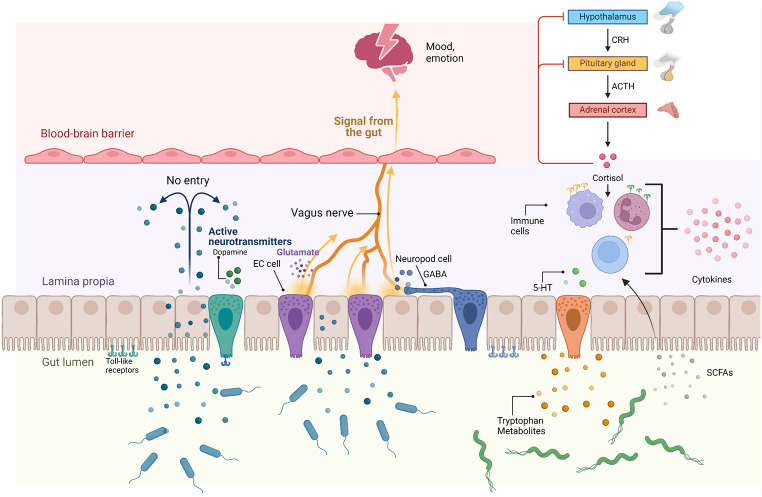
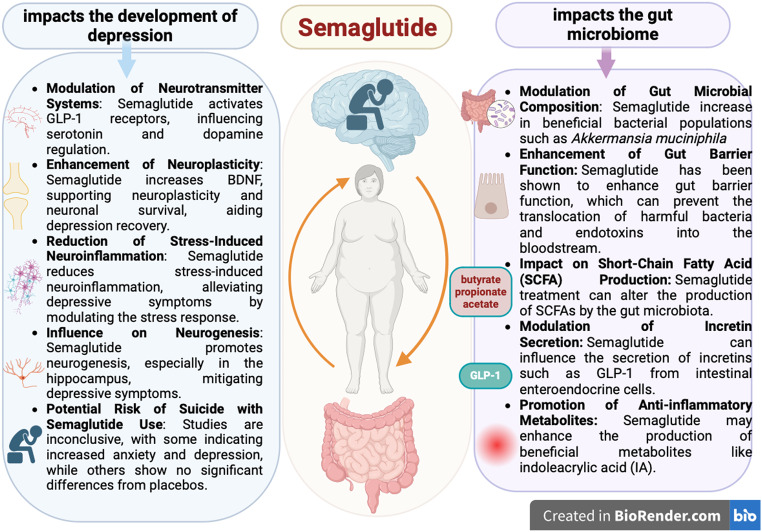
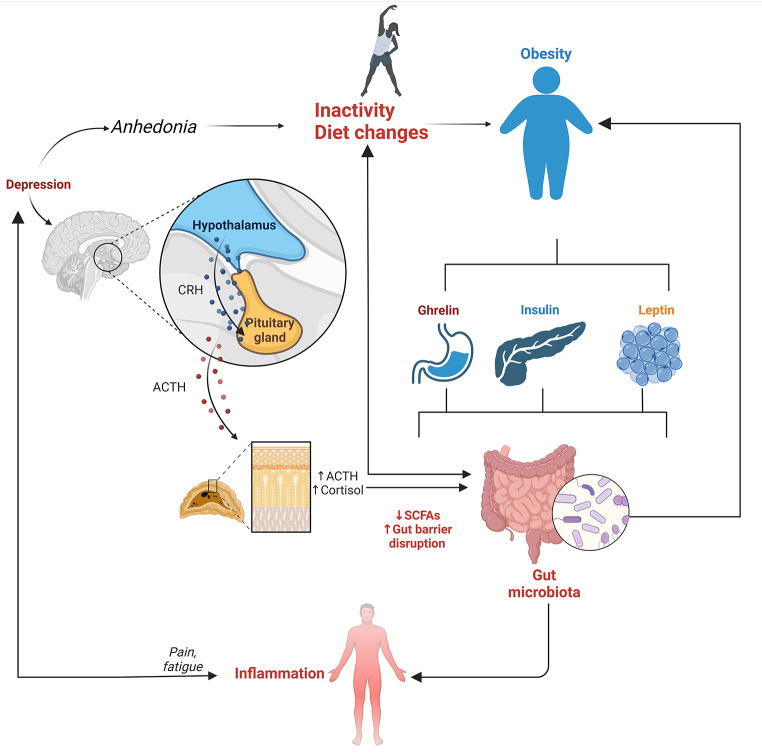
The gut microbiome, body weight, and related comorbidities are intricately linked through a complex interaction of microbial, genetic, environmental, and psychological factors. Alterations in gut microbiota can contribute to the development of weight disorders and depressive symptoms, with the potential for these relationships to be bidirectional. Effective management of these interconnected conditions often involves a combination of lifestyle modifications and psychological support. Medical interventions, including treatments for obesity, antidiabetic drugs, antidepressants, antibiotics, and probiotics, can have beneficial and detrimental effects on gut microbiota and mental health. Further research is needed to better understand their impact on gut microbiome and mental health in the context of obesity.
肠道微生物组、体重和相关合并症通过微生物、遗传、环境和心理因素的复杂相互作用紧密相连。肠道微生物群的改变可能导致体重紊乱和抑郁症状的发展,这些关系可能是双向的。这些相互关联的疾病的有效管理通常需要结合生活方式的改变和心理支持。医疗干预措施,包括肥胖治疗、抗糖尿病药物、抗抑郁药、抗生素和益生菌,可能对肠道微生物组和心理健康产生有益和有害的影响。需要进一步的研究来更好地了解它们在肥胖背景下对肠道微生物组和心理健康的影响。