O'Carroll James, Zucco Liana, Warwick Eleanor, Arbane Gill, Moonesinghe Ramani, El-Boghdadly Kariem, Guo Nan, Carvalho Brendan, Sultan Pervez
Targeted Intervention, University College London, London, GBR.
Anaesthesia and Perioperative Medicine, Guy's and St Thomas' NHS Foundation Trust, London, GBR.
Cureus. 2024 Oct 4;16(10):e70851. doi: 10.7759/cureus.70851. eCollection 2024 Oct.
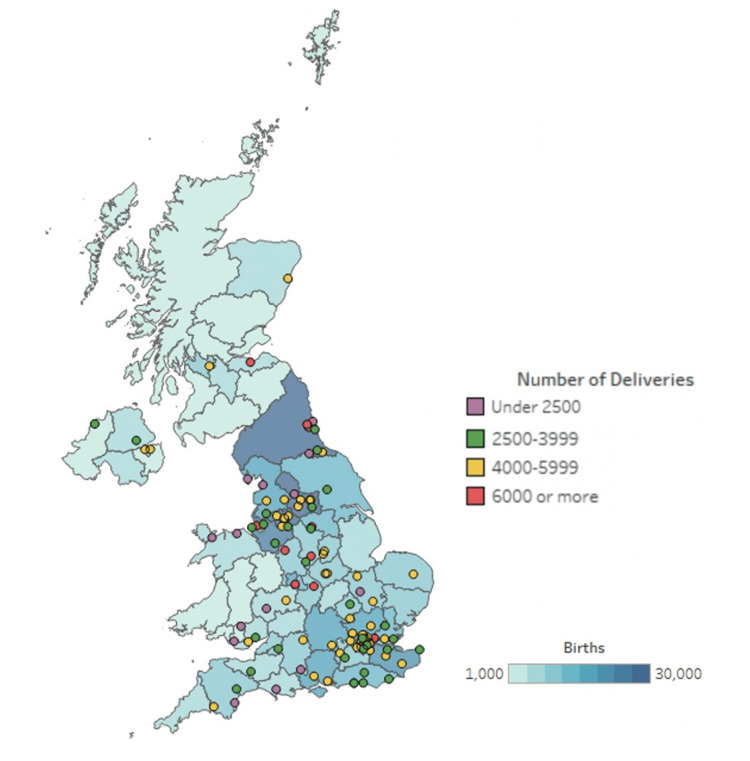
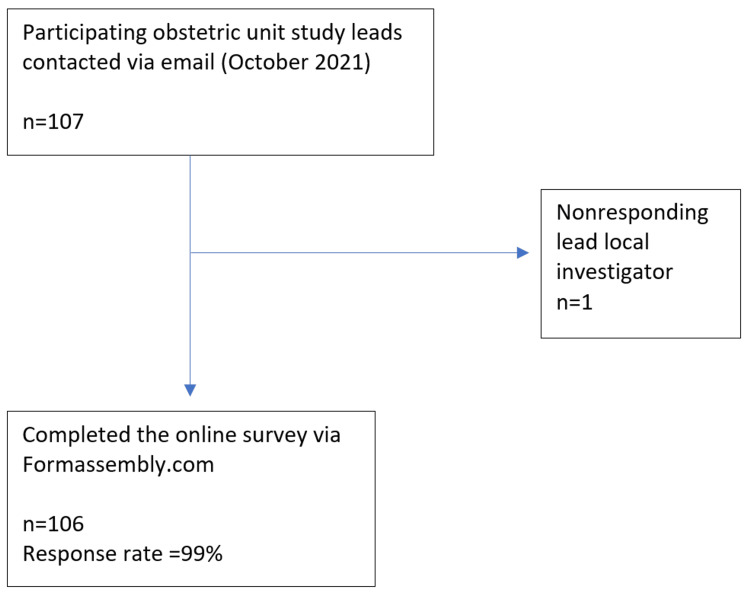
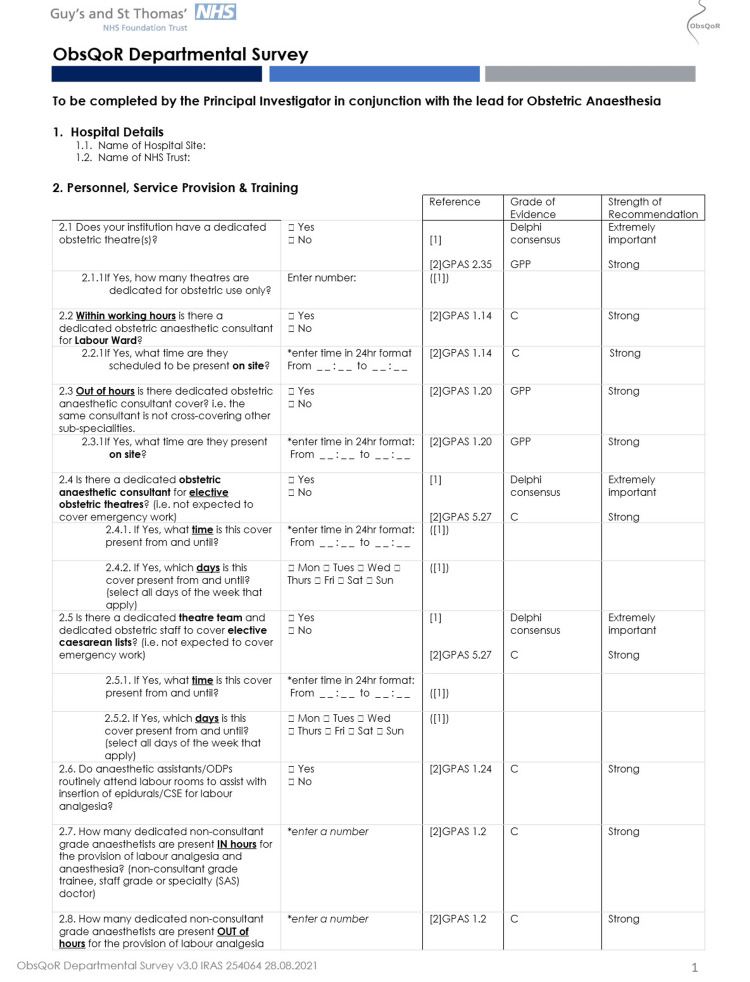
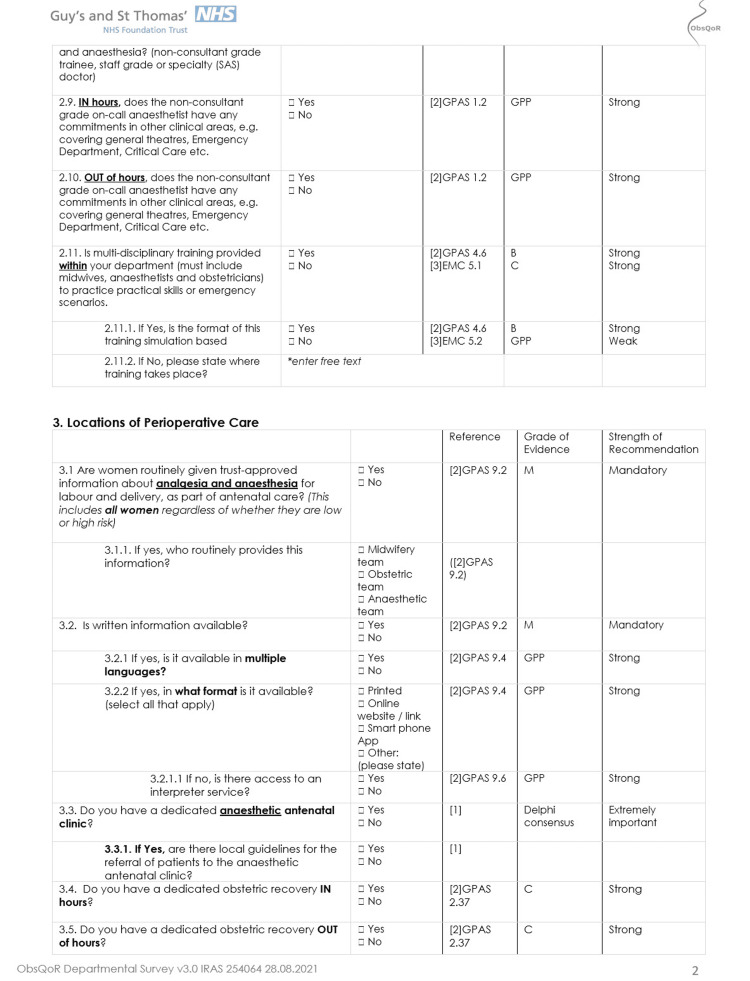
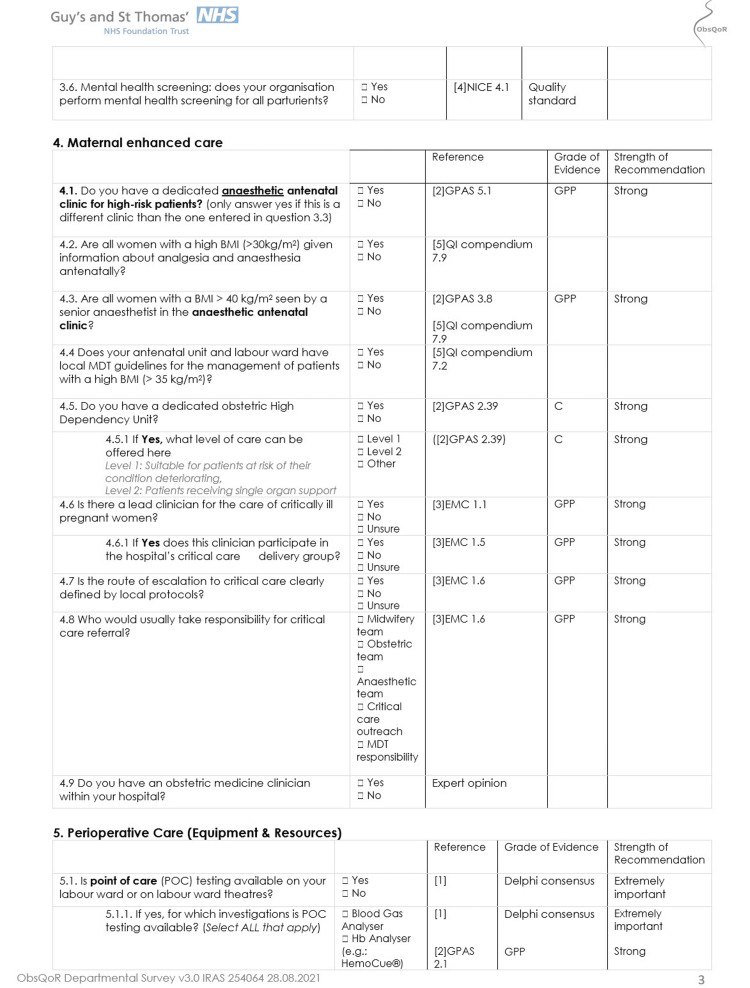
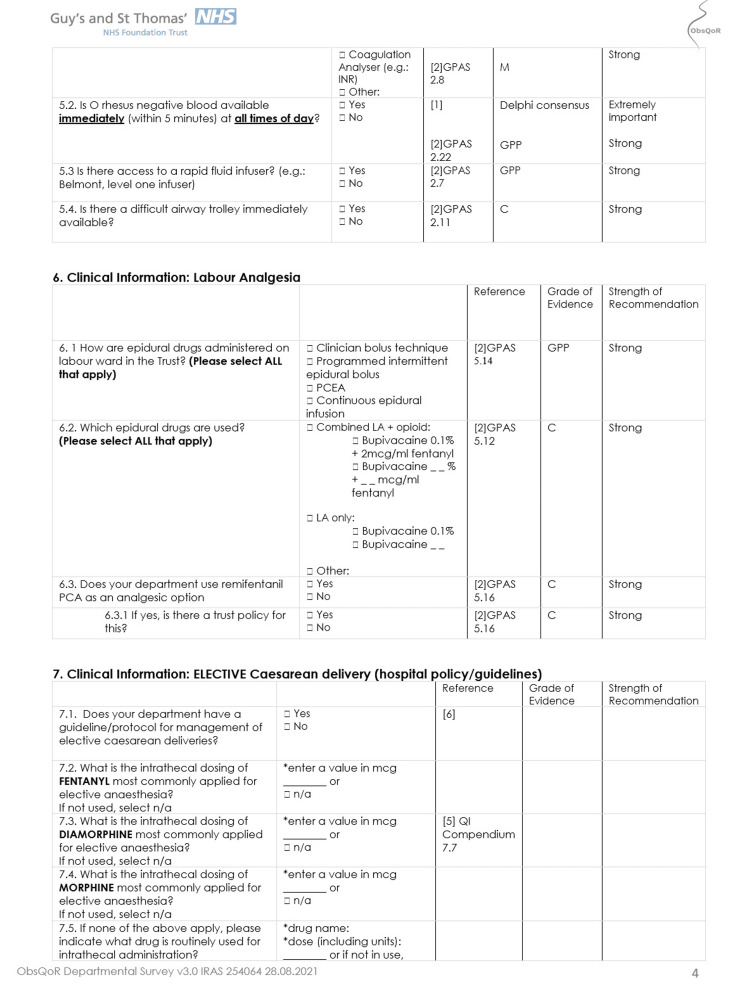
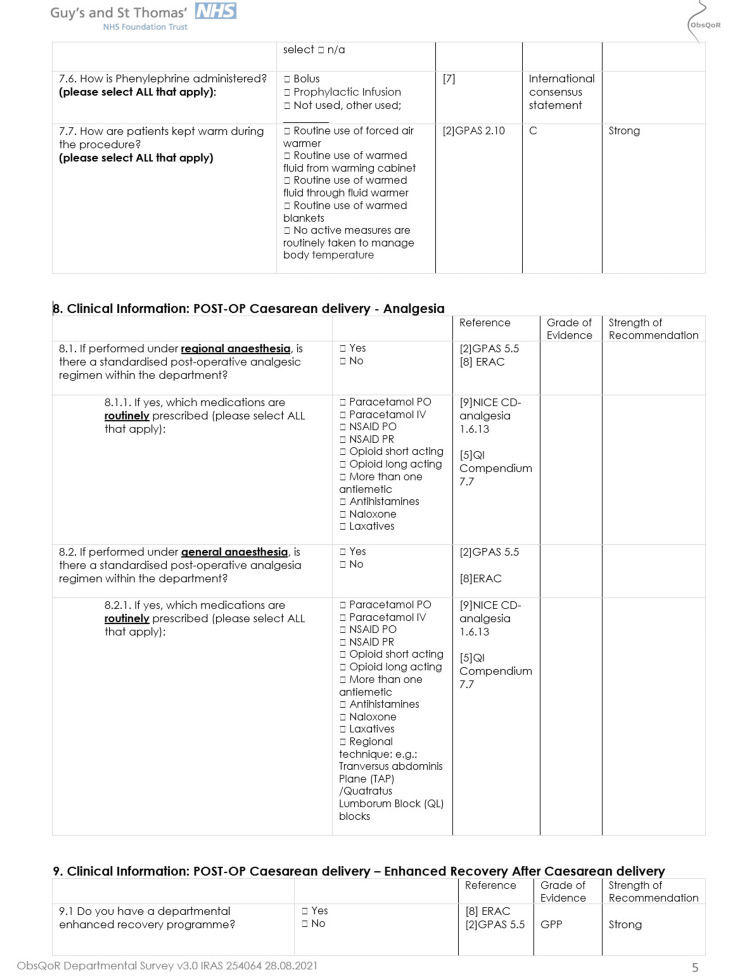
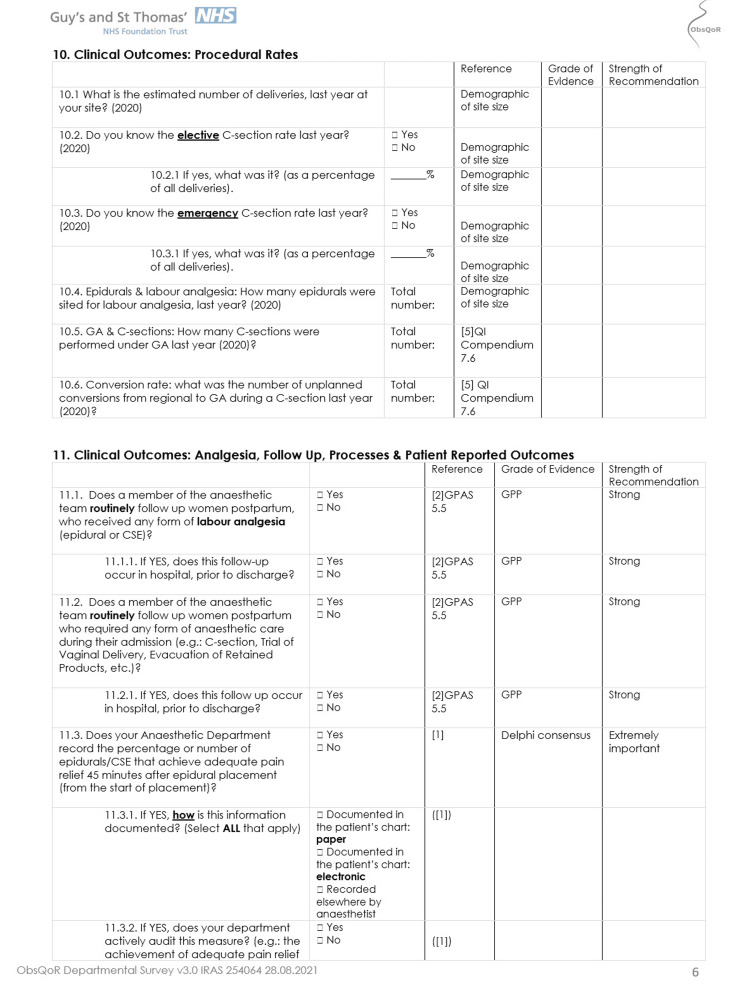
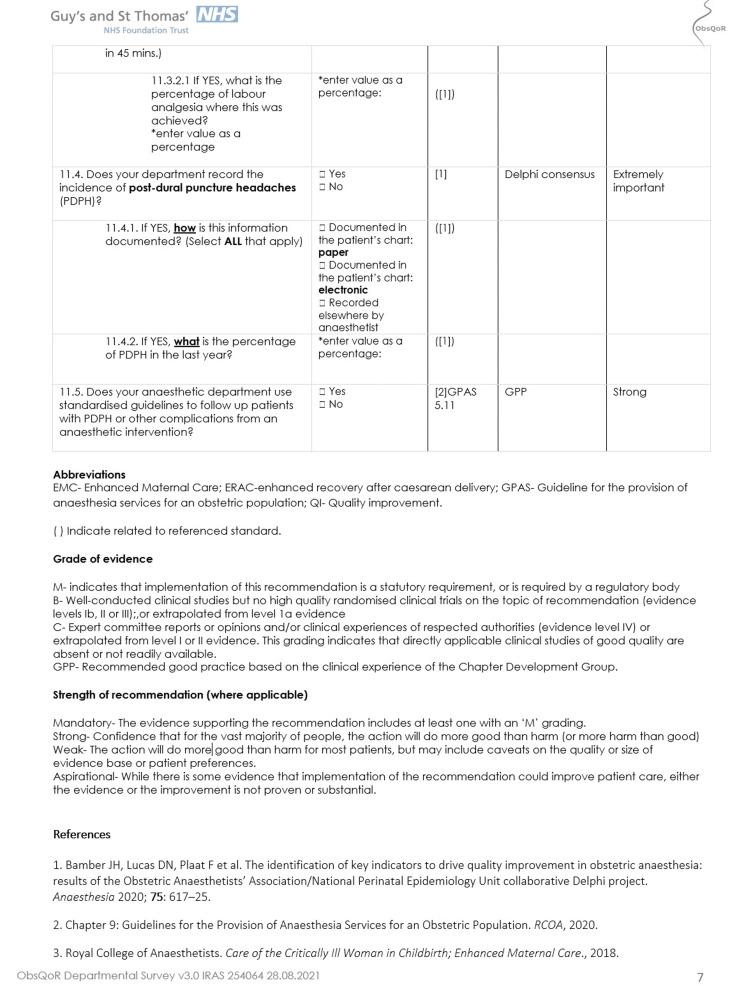
Background Variability in obstetric anaesthetia practice and care delivered within the UK is under-explored. The ObsQoR study explored structures, processes, and outcomes of obstetric anaesthesia in 107 hospitals within the UK's National Health Service, and the results of the hospital-level survey are reported here. Methods Hospitals were surveyed to assess obstetric anaesthesia provision, practice, and care delivery. Questions explored staffing, service provision and training, facilities present, clinical practices, outcome measurement, and key indicators of quality in obstetric anaesthesia. Results We received responses from 106 participating hospitals, representing 69% of all UK obstetric units. One hundred (94%) hospitals had a dedicated consultant obstetric anaesthetist within working hours, with 27 (25%) of hospitals' duty anaesthetists having additional clinical responsibilities outside the care of obstetric patients outside of working hours. Around 102 hospitals (98%) offer multidisciplinary team training, of which 95 (93%) use a simulation-based method. Dedicated high-risk antenatal clinics were present in 50 (47%) hospitals. The majority of hospitals provide written patient information in multiple languages for discussing obstetric anaesthesia options (77, 82%). Seventy-three hospitals (69%) use point-of-care testing to estimate haemoglobin concentration. Labour epidural analgesia is most commonly delivered via patient-controlled epidural analgesia in 80 (76%) hospitals, and the incidence of post-dural puncture headaches was recorded by 80 (76%) hospitals. Conclusions These results demonstrate variation in the provision of staffing, facilities, clinical practices, and outcome measurements across the UK. To deliver safe and equitable care across the UK, there needs to be standardisation of anaesthetic peripartum care based on national recommendations and the benchmarking and measurement of appropriate markers of quality.
英国产科麻醉实践和护理中的变异性尚未得到充分研究。ObsQoR研究探讨了英国国民医疗服务体系内107家医院的产科麻醉结构、流程和结果,本文报告了医院层面调查的结果。方法:对医院进行调查,以评估产科麻醉的提供、实践和护理情况。问题涉及人员配备、服务提供和培训、现有设施、临床实践、结果测量以及产科麻醉质量的关键指标。结果:我们收到了106家参与医院的回复,占英国所有产科单位的69%。100家(94%)医院在工作时间内有专职的产科麻醉顾问,其中27家(25%)医院的值班麻醉师在工作时间之外对产科患者护理之外还有其他临床职责。约102家医院(98%)提供多学科团队培训,其中95家(93%)采用基于模拟的方法。50家(47%)医院设有专门的高危产前诊所。大多数医院提供多种语言的书面患者信息,用于讨论产科麻醉选择(77家,82%)。73家医院(69%)使用即时检验来估计血红蛋白浓度。80家(76%)医院最常通过患者自控硬膜外镇痛进行分娩硬膜外镇痛,80家(76%)医院记录了硬膜外穿刺后头痛的发生率。结论:这些结果表明英国在人员配备、设施、临床实践和结果测量方面存在差异。为了在英国提供安全、公平的护理,需要根据国家建议对围产期麻醉护理进行标准化,并对适当的质量指标进行基准化和测量。