Mitchell Marvin R, Kirchner Margaret, Schneider Ben, McClure Monica, Neil Karen P, Madad Asma, Jemaneh Temesgen, Tijerina Mary, Nolte Kurt, Wellman Allison, Neises Daniel, Pightling Arthur, Swinford Angela, Piontkowski Alyssa, Sexton Rosemary, McKenna Crystal, Cornell Jason, Sandoval Ana Lilia, Wang Hua, Bell Rebecca L, Stager Christan, Nava Mayrén Cristina Zamora, de la Cruz José Luis Lara, Córdova Luis Ignacio Sánchez, Galván Pablo Regalado, Ortiz Javier Arias, Flowers Sally, Grisamore Amber, Gieraltowski Laura, Bazaco Michael, Viazis Stelios
Food and Drug Administration, College Park, MD, USA.
Naval Hospital of Camp Pendleton Department of Mental Health, Oceanside, CA, USA.
Food Control. 2024 Jun;160:110325. doi: 10.1016/j.foodcont.2024.110325.
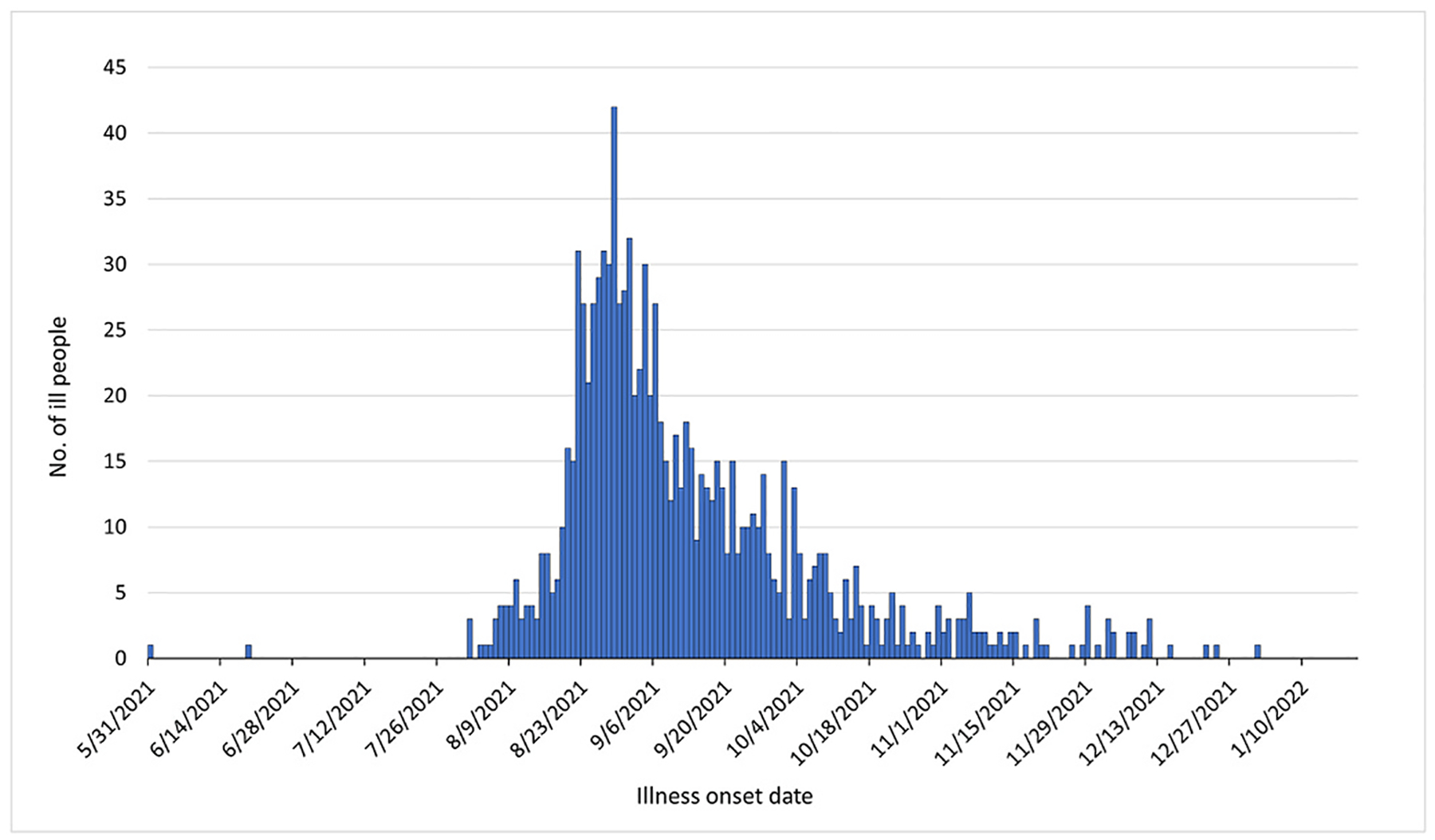
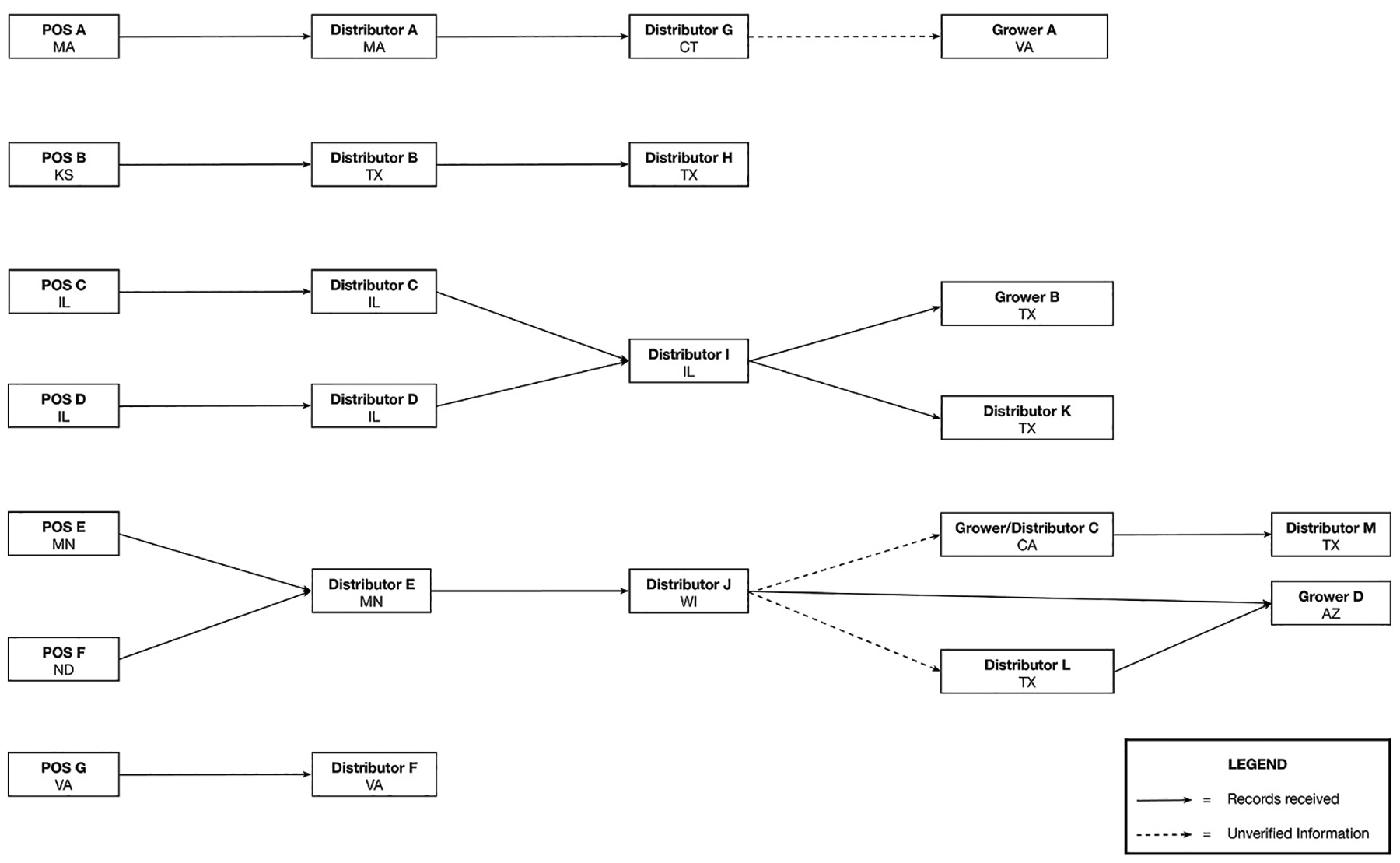
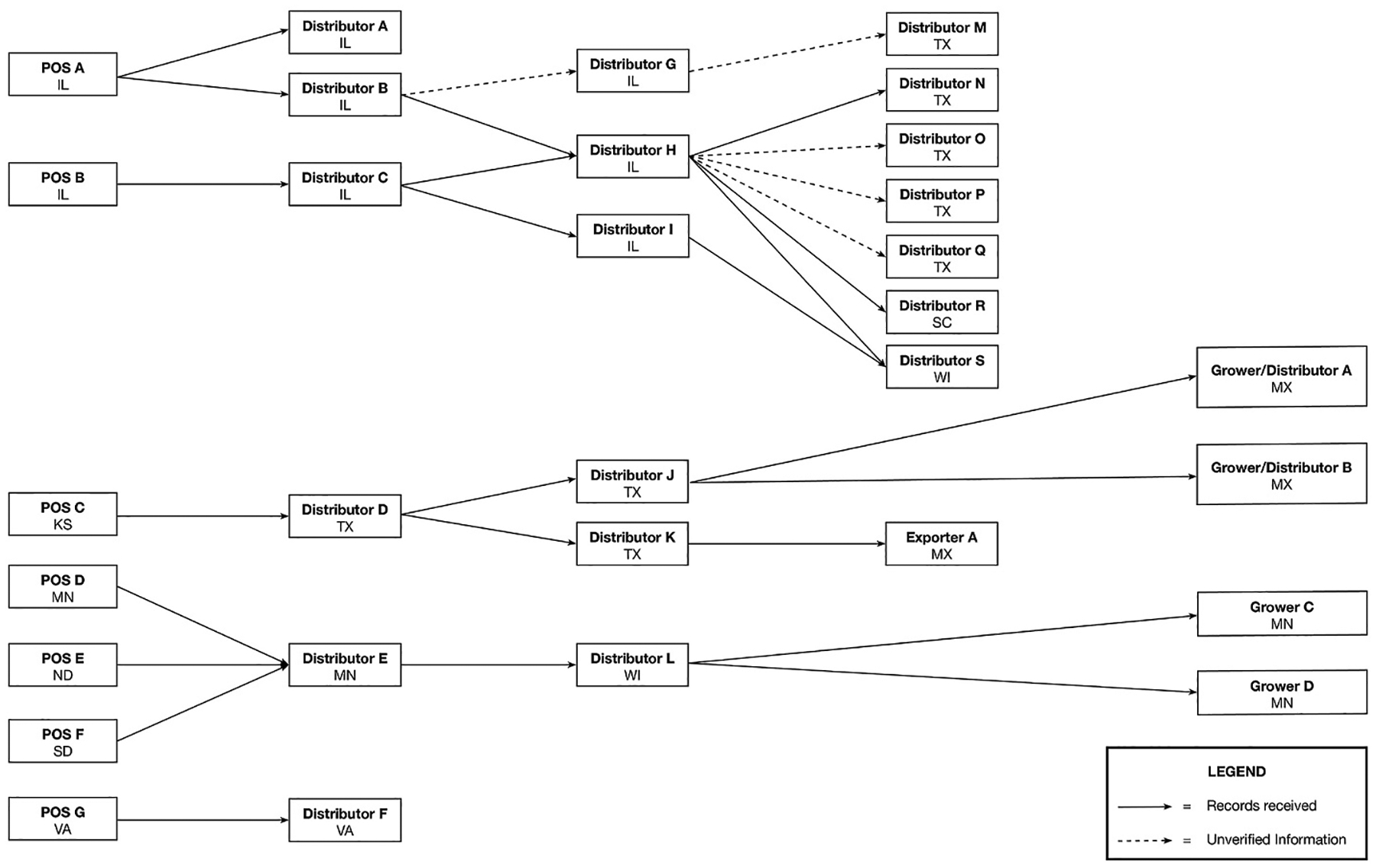
In 2021, the U.S. Food and Drug Administration (FDA), the Centers for Disease Control and Prevention (CDC), and state and local health and regulatory partners investigated an outbreak of serovar Oranienburg infections linked to bulb onions from Mexico, resulting in 1040 illnesses and 260 hospitalizations across 39 states, the District of Columbia, and Puerto Rico. The Kansas Department of Agriculture recovered the outbreak strain of Oranienburg from a sample of condiment collected from an ill person's home. The condiment was made with cilantro, lime, and onions, but, at the time of collection, there were no onions remaining in it. FDA conducted traceback investigations for white, yellow, and red bulb onions, cilantro, limes, tomatoes, and jalapeño peppers. Growers in the state of Chihuahua, Mexico, were identified as supplying the implicated onions that could account for exposure to onions for all illnesses included in the traceback investigation, but investigators could not determine a single source or route of contamination. FDA collected product and environmental samples across the domestic supply chain but did not recover the outbreak strain of . Binational collaboration and information sharing supported Mexican authorities in collecting environmental samples from two packing plants and onion, water, and environmental samples from 15 farms and firms in Chihuahua, Mexico identified through FDA's traceback investigation, but did not recover the outbreak strain.. Distributors of the implicated onions issued voluntary recalls of red, yellow, and white whole, fresh onions imported from the state of Chihuahua, Mexico. This outbreak showcased how investigators overcame significant traceback and epidemiologic challenges, the need for strengthening the ongoing collaboration between U.S. and Mexican authorities and highlighted the need for identifying practices across the supply chain that can help improve the safety of onions.
2021年,美国食品药品监督管理局(FDA)、疾病控制与预防中心(CDC)以及州和地方卫生与监管合作伙伴对一起与来自墨西哥的球茎洋葱相关的奥兰宁堡血清型感染疫情进行了调查,此次疫情导致39个州、哥伦比亚特区和波多黎各出现1040例病例和260例住院治疗。堪萨斯州农业部从一名患者家中采集的一份调味品样本中分离出了奥兰宁堡疫情菌株。该调味品由香菜、酸橙和洋葱制成,但采集时其中已没有洋葱残留。FDA对白色、黄色和红色球茎洋葱、香菜、酸橙、西红柿和墨西哥胡椒进行了溯源调查。墨西哥奇瓦瓦州的种植者被确定为供应了涉事洋葱,这些洋葱可能是溯源调查中所有病例接触洋葱的源头,但调查人员无法确定单一污染源或污染途径。FDA在国内供应链中采集了产品和环境样本,但未分离出疫情菌株。双边合作和信息共享支持墨西哥当局从两家包装厂采集环境样本,并从FDA溯源调查确定的墨西哥奇瓦瓦州的15个农场和公司采集洋葱、水和环境样本,但也未分离出疫情菌株。涉事洋葱经销商自愿召回从墨西哥奇瓦瓦州进口的红色、黄色和白色整颗新鲜洋葱。此次疫情展示了调查人员如何克服重大的溯源和流行病学挑战,凸显了加强美墨当局之间持续合作的必要性,并强调了识别整个供应链中有助于提高洋葱安全性的做法的必要性。