
分析TikTok和哔哩哔哩上与脑肿瘤相关的中文短视频的传播、质量和可靠性:一项横断面研究。
Analyzing dissemination, quality, and reliability of Chinese brain tumor-related short videos on TikTok and Bilibili: a cross-sectional study.
作者信息
Zhang Ren, Zhang Zhiwei, Jie Hui, Guo Yi, Liu Yi, Yang Yuan, Li Chuan, Guo Chenglin
机构信息
Department of Thoracic Surgery and Institute of Thoracic Oncology, West China Hospital, Sichuan University, Chengdu, China.
West China School of Medicine, Sichuan University, Chengdu, China.
出版信息
Front Neurol. 2024 Oct 18;15:1404038. doi: 10.3389/fneur.2024.1404038. eCollection 2024.
BACKGROUND
As the Internet becomes an increasingly vital source of medical information, the quality and reliability of brain tumor-related short videos on platforms such as TikTok and Bilibili have not been adequately evaluated. Therefore, this study aims to assess these aspects and explore the factors influencing the dissemination of such videos.
METHODS
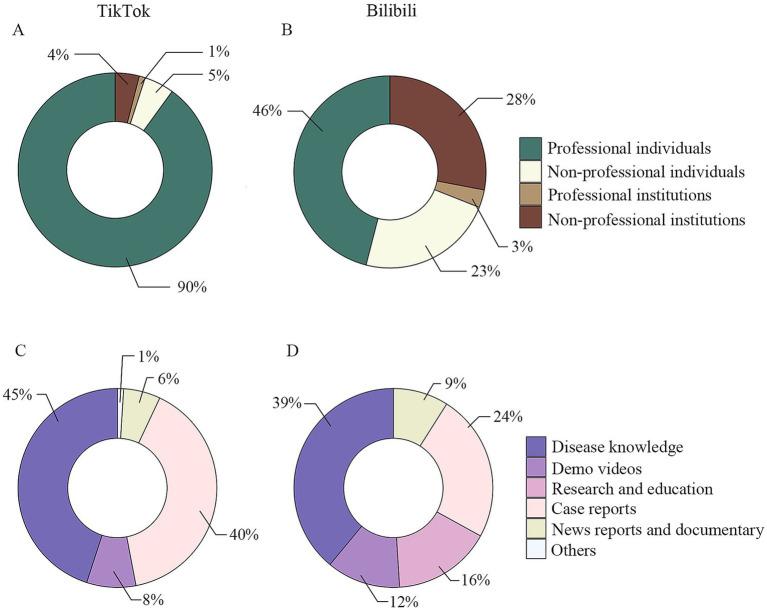
A cross-sectional analysis was conducted on the top 100 brain tumor-related short videos from TikTok and Bilibili. The videos were evaluated using the Global Quality Score and the DISCERN reliability instrument. An eXtreme Gradient Boosting algorithm was utilized to predict dissemination outcomes. The videos were also categorized by content type and uploader.
RESULTS
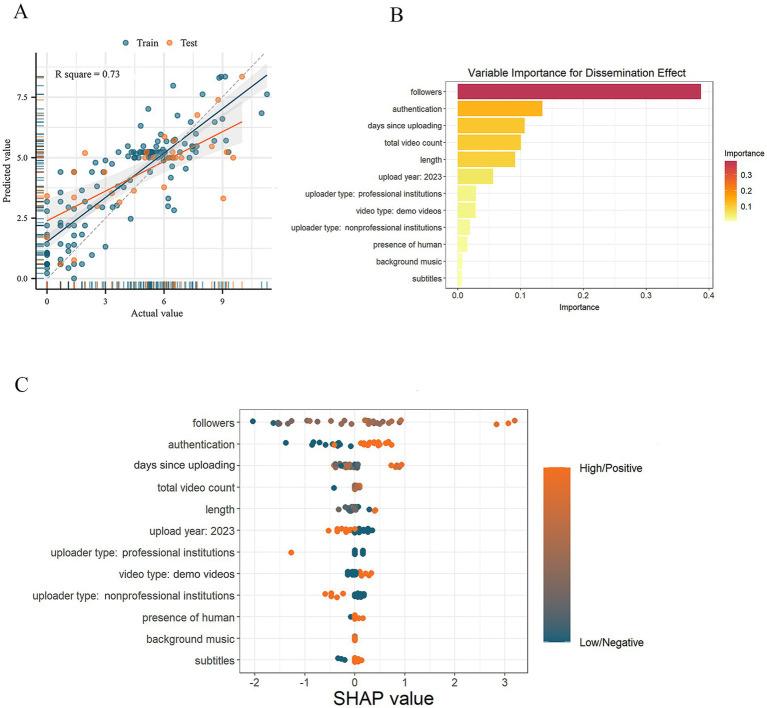
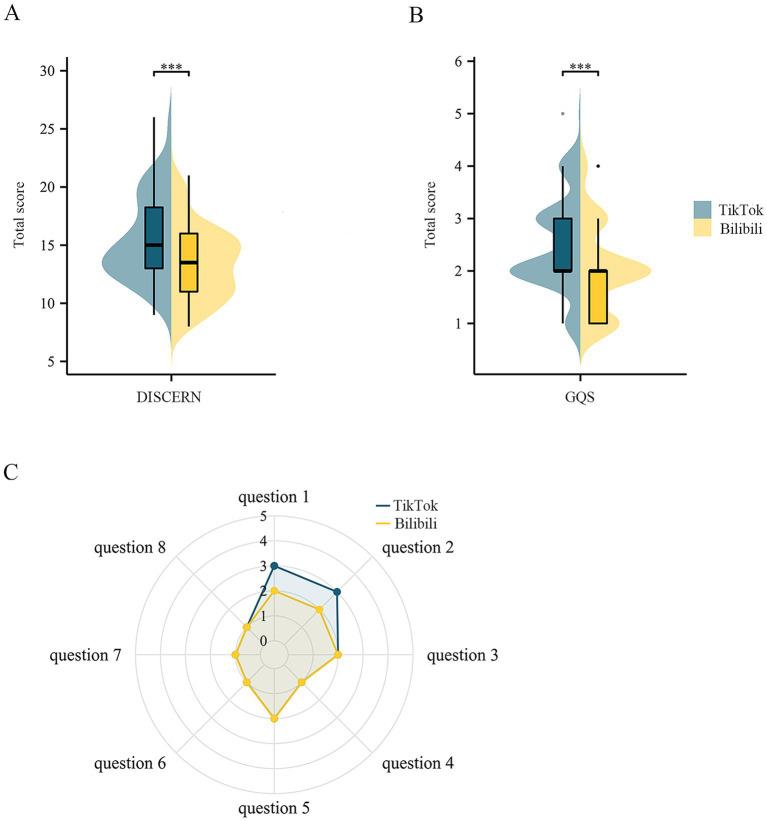
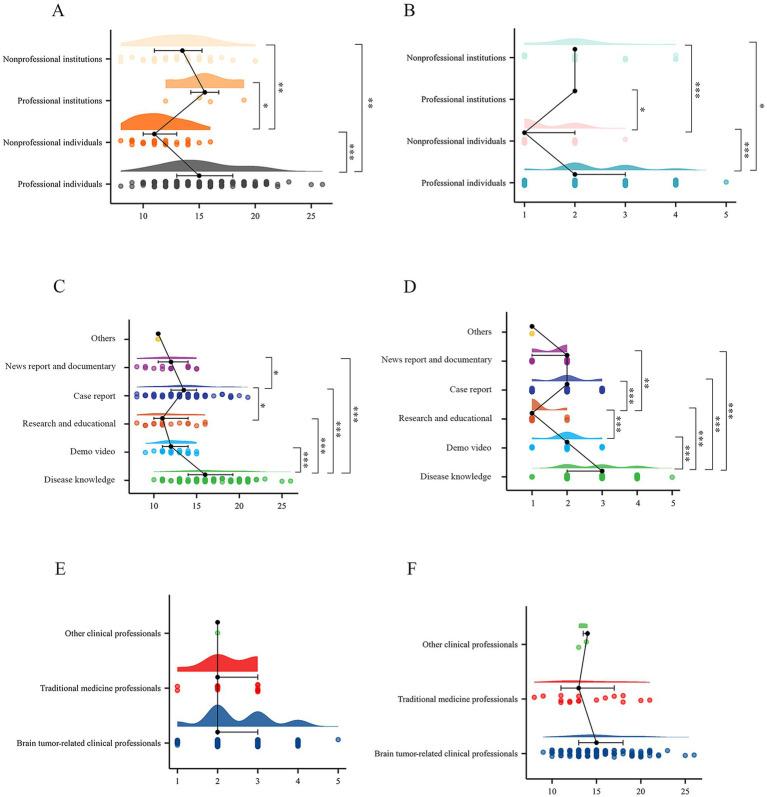
TikTok videos scored relatively higher on both the Global Quality Score (median 2, interquartile range [2, 3] on TikTok vs. median 2, interquartile range [1, 2] on Bilibili, = 1.51E-04) and the DISCERN reliability instrument (median 15, interquartile range [13, 18.25] on TikTok vs. 13.5, interquartile range [11, 16] on Bilibili, = 1.66E-04). Subgroup analysis revealed that videos uploaded by professional individuals and institutions had higher quality and reliability compared to those uploaded by non-professional entities. Videos focusing on disease knowledge exhibited the highest quality and reliability compared to other content types. The number of followers emerged as the most important variable in our dissemination prediction model.
CONCLUSION
The overall quality and reliability of brain tumor-related short videos on TikTok and Bilibili were unsatisfactory and did not significantly influence video dissemination. Future research should expand the scope to better understand the factors driving the dissemination of medical-themed videos.
背景
随着互联网成为越来越重要的医学信息来源,TikTok和哔哩哔哩等平台上与脑肿瘤相关的短视频质量和可靠性尚未得到充分评估。因此,本研究旨在评估这些方面,并探索影响此类视频传播的因素。
方法
对TikTok和哔哩哔哩上排名前100的与脑肿瘤相关的短视频进行横断面分析。使用全球质量评分和DISCERN可靠性工具对视频进行评估。采用极端梯度提升算法预测传播结果。视频还按内容类型和上传者进行分类。
结果
TikTok视频在全球质量评分(TikTok的中位数为2,四分位间距[2,3],而哔哩哔哩的中位数为2,四分位间距[1,2],=1.51E-04)和DISCERN可靠性工具(TikTok的中位数为15,四分位间距[13,18.25],而哔哩哔哩的为13.5,四分位间距[11,16],=1.66E-04)上得分相对较高。亚组分析显示,与非专业实体上传的视频相比,专业个人和机构上传的视频质量和可靠性更高。与其他内容类型相比,专注于疾病知识的视频质量和可靠性最高。在我们的传播预测模型中,关注者数量是最重要的变量。
结论
TikTok和哔哩哔哩上与脑肿瘤相关的短视频的整体质量和可靠性不尽人意,对视频传播没有显著影响。未来的研究应扩大范围,以更好地了解推动医学主题视频传播的因素。
 Zotero 插件