
使用自然语言处理技术筛查抑郁症:文献综述
Screening for Depression Using Natural Language Processing: Literature Review.
作者信息
Teferra Bazen Gashaw, Rueda Alice, Pang Hilary, Valenzano Richard, Samavi Reza, Krishnan Sridhar, Bhat Venkat
机构信息
Unity Health Toronto, St. Michael's Hospital, Interventional Psychiatry Program, Toronto, ON, Canada.
Toronto Metropolitan University, Department of Computer Science, Toronto, ON, Canada.
出版信息
Interact J Med Res. 2024 Nov 4;13:e55067. doi: 10.2196/55067.
BACKGROUND
Depression is a prevalent global mental health disorder with substantial individual and societal impact. Natural language processing (NLP), a branch of artificial intelligence, offers the potential for improving depression screening by extracting meaningful information from textual data, but there are challenges and ethical considerations.
OBJECTIVE
This literature review aims to explore existing NLP methods for detecting depression, discuss successes and limitations, address ethical concerns, and highlight potential biases.
METHODS
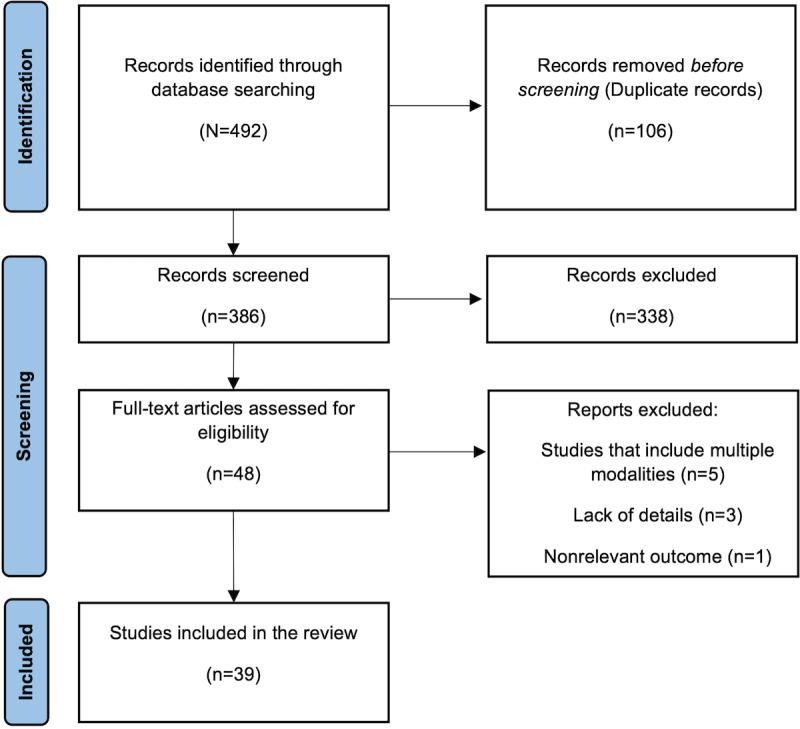
A literature search was conducted using Semantic Scholar, PubMed, and Google Scholar to identify studies on depression screening using NLP. Keywords included "depression screening," "depression detection," and "natural language processing." Studies were included if they discussed the application of NLP techniques for depression screening or detection. Studies were screened and selected for relevance, with data extracted and synthesized to identify common themes and gaps in the literature.
RESULTS
NLP techniques, including sentiment analysis, linguistic markers, and deep learning models, offer practical tools for depression screening. Supervised and unsupervised machine learning models and large language models like transformers have demonstrated high accuracy in a variety of application domains. However, ethical concerns related to privacy, bias, interpretability, and lack of regulations to protect individuals arise. Furthermore, cultural and multilingual perspectives highlight the need for culturally sensitive models.
CONCLUSIONS
NLP presents opportunities to enhance depression detection, but considerable challenges persist. Ethical concerns must be addressed, governance guidance is needed to mitigate risks, and cross-cultural perspectives must be integrated. Future directions include improving interpretability, personalization, and increased collaboration with domain experts, such as data scientists and machine learning engineers. NLP's potential to enhance mental health care remains promising, depending on overcoming obstacles and continuing innovation.
背景
抑郁症是一种普遍存在的全球心理健康障碍,对个人和社会都有重大影响。自然语言处理(NLP)作为人工智能的一个分支,通过从文本数据中提取有意义的信息,为改善抑郁症筛查提供了潜力,但也存在挑战和伦理考量。
目的
本综述旨在探讨现有的用于检测抑郁症的自然语言处理方法,讨论其成功之处和局限性,解决伦理问题,并突出潜在的偏差。
方法
使用语义学者、PubMed和谷歌学术进行文献检索,以识别使用自然语言处理进行抑郁症筛查的研究。关键词包括“抑郁症筛查”“抑郁症检测”和“自然语言处理”。如果研究讨论了自然语言处理技术在抑郁症筛查或检测中的应用,则纳入研究。对研究进行筛选并根据相关性进行选择,提取和综合数据以识别文献中的共同主题和差距。
结果
自然语言处理技术,包括情感分析、语言标记和深度学习模型,为抑郁症筛查提供了实用工具。监督式和无监督式机器学习模型以及像Transformer这样的大语言模型在各种应用领域都表现出了很高的准确性。然而,出现了与隐私、偏差、可解释性以及缺乏保护个人的法规相关的伦理问题。此外,文化和多语言视角凸显了对具有文化敏感性的模型的需求。
结论
自然语言处理为加强抑郁症检测带来了机遇,但仍存在相当大的挑战。必须解决伦理问题,需要治理指导来降低风险,并且必须整合跨文化视角。未来的方向包括提高可解释性、个性化,并加强与数据科学家和机器学习工程师等领域专家的合作。自然语言处理在增强心理健康护理方面的潜力仍然很有前景,这取决于克服障碍并持续创新。
 Zotero 插件