Institute for Biomedicine, Eurac Research, Bolzano, Italy.
Department of Food Chemistry and Toxicology, University of Vienna, Vienna, Austria.
Sci Rep. 2024 Nov 4;14(1):26635. doi: 10.1038/s41598-024-75627-3.
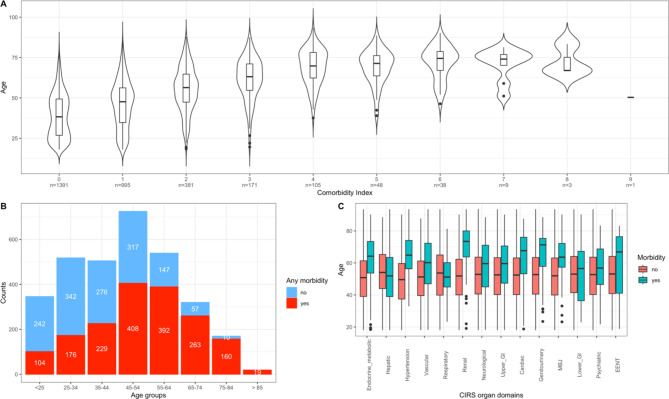
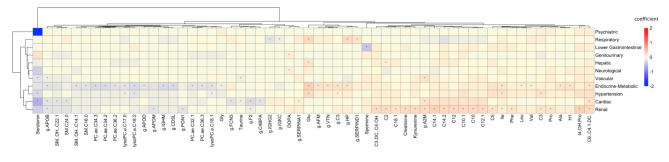
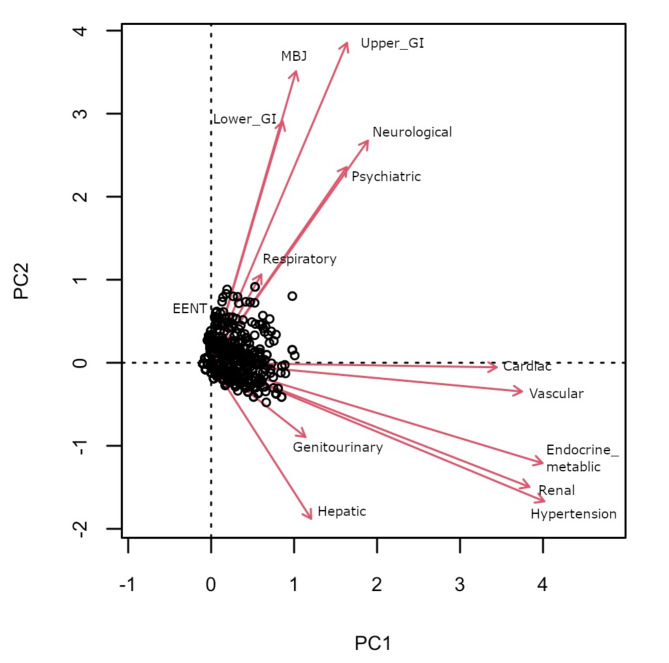
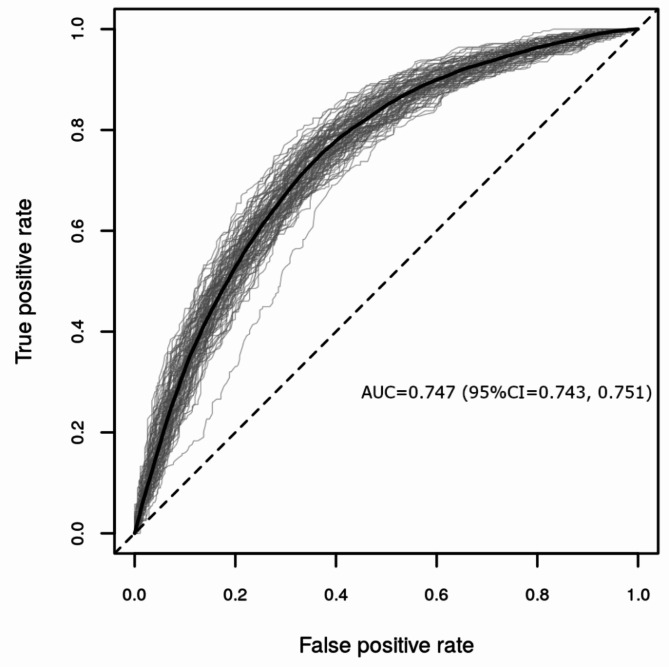
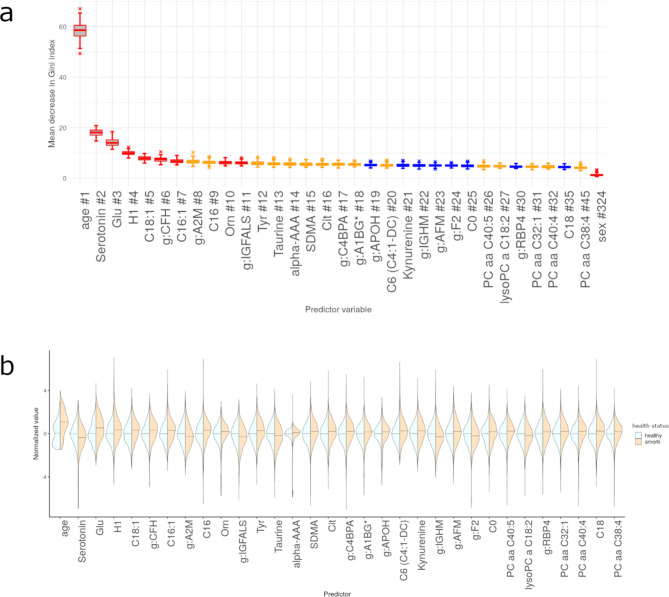
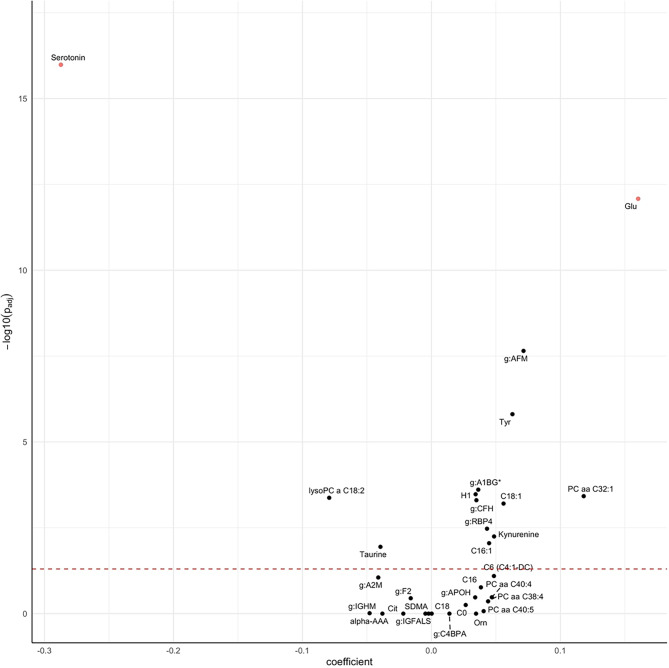
Identifying biomarkers able to discriminate individuals on different health trajectories is crucial to understand the molecular basis of age-related morbidity. We investigated multi-omics signatures of general health and organ-specific morbidity, as well as their interconnectivity. We examined cross-sectional metabolome and proteome data from 3,142 adults of the Cooperative Health Research in South Tyrol (CHRIS) study, an Alpine population study designed to investigate how human biology, environment, and lifestyle factors contribute to people's health over time. We had 174 metabolites and 148 proteins quantified from fasting serum and plasma samples. We used the Cumulative Illness Rating Scale (CIRS) Comorbidity Index (CMI), which considers morbidity in 14 organ systems, to assess health status (any morbidity vs. healthy). Omics-signatures for health status were identified using random forest (RF) classifiers. Linear regression models were fitted to assess directionality of omics markers and health status associations, as well as to identify omics markers related to organ-specific morbidity. Next to age, we identified 21 metabolites and 10 proteins as relevant predictors of health status and results confirmed associations for serotonin and glutamate to be age-independent. Considering organ-specific morbidity, several metabolites and proteins were jointly related to endocrine, cardiovascular, and renal morbidity. To conclude, circulating serotonin was identified as a potential novel predictor for overall morbidity.
确定能够区分不同健康轨迹个体的生物标志物对于理解与年龄相关的发病机制的分子基础至关重要。我们研究了一般健康和特定器官发病的多组学特征,以及它们的相互联系。我们检查了来自 3142 名合作健康研究在南蒂罗尔(CHRIS)研究的成年人的横断面代谢组学和蛋白质组学数据,这是一项阿尔卑斯地区的人群研究,旨在研究人类生物学、环境和生活方式因素如何随着时间的推移影响人们的健康。我们从空腹血清和血浆样本中定量了 174 种代谢物和 148 种蛋白质。我们使用累积疾病评分量表(CIRS)合并症指数(CMI)评估健康状况(任何发病与健康),该指数考虑了 14 个器官系统的发病情况。使用随机森林(RF)分类器确定与健康状况相关的组学特征。拟合线性回归模型以评估组学标志物和健康状况关联的方向性,以及识别与特定器官发病相关的组学标志物。除了年龄,我们还确定了 21 种代谢物和 10 种蛋白质作为健康状况的相关预测因子,结果证实了血清素和谷氨酸与年龄无关的关联。考虑到特定器官的发病情况,几种代谢物和蛋白质与内分泌、心血管和肾脏发病都有共同的关联。总之,循环血清素被确定为整体发病的潜在新预测因子。