University of Chinese Academy of Sciences, Beijing, 101408, China.
Key Laboratory of Phytochemistry and Natural Medicines, Dalian Institute of Chemical Physics, Chinese Academy of Sciences, Dalian, 116023, Liaoning, China.
BMC Bioinformatics. 2024 Nov 4;25(1):343. doi: 10.1186/s12859-024-05962-9.
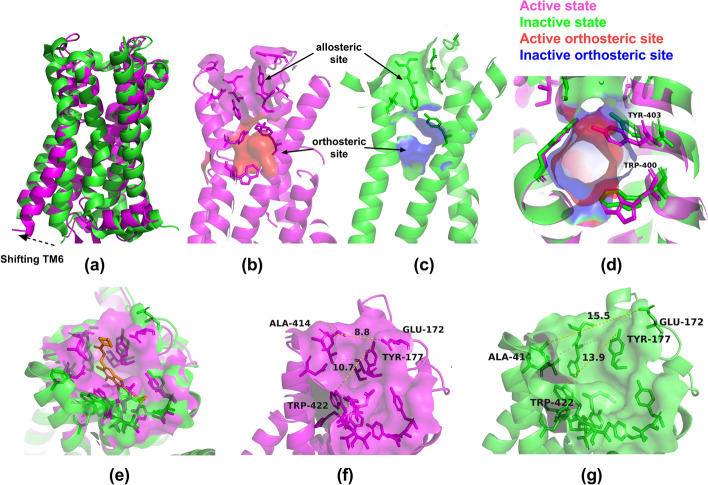
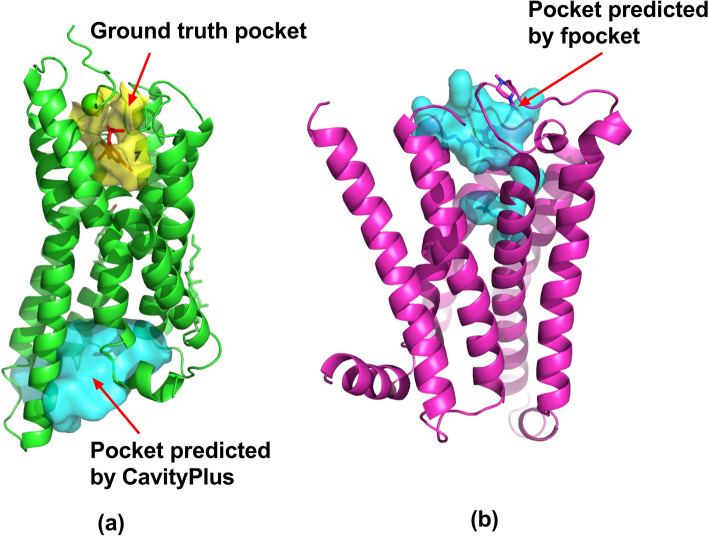
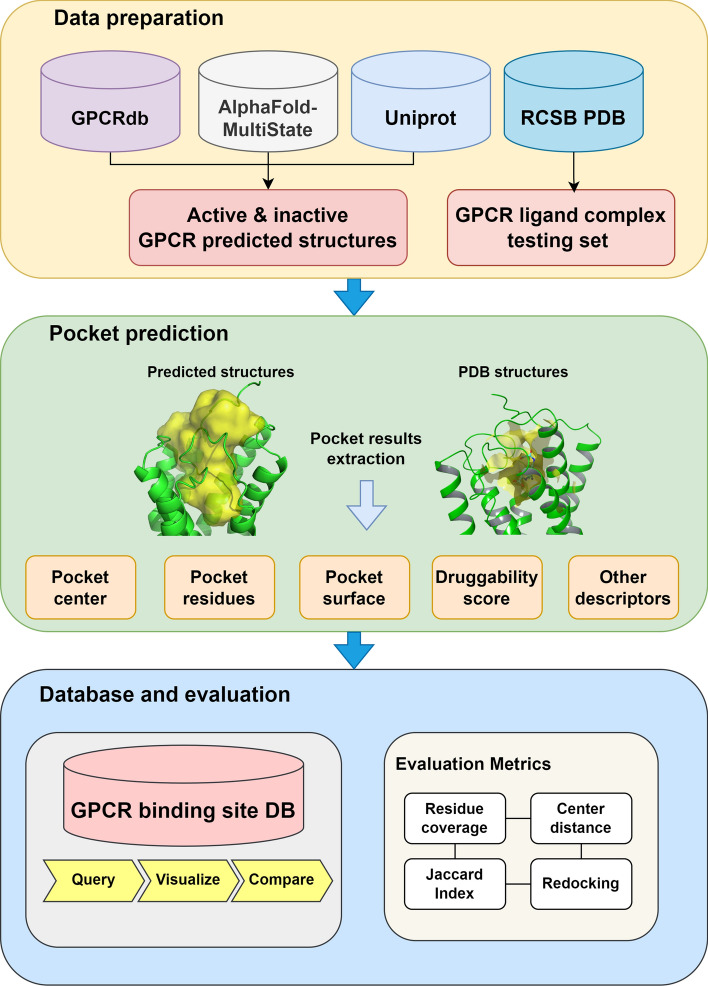
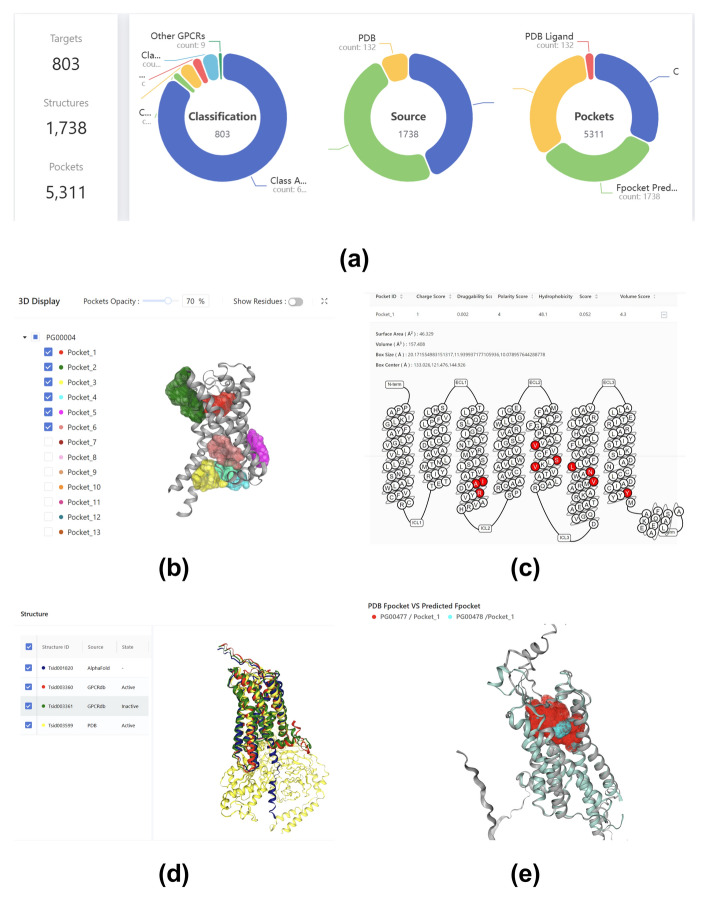
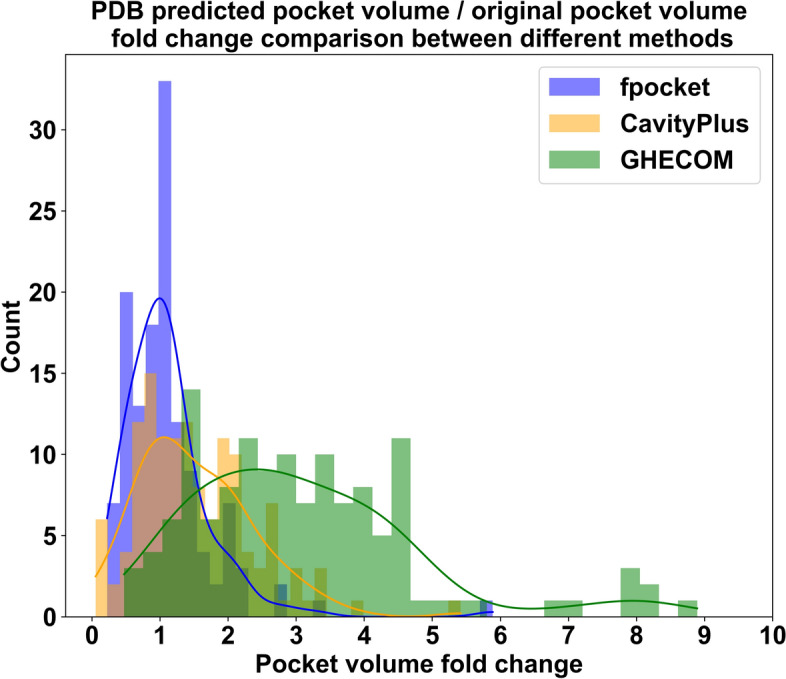
G-protein coupled receptors (GPCRs), the largest family of membrane proteins in human body, involve a great variety of biological processes and thus have become highly valuable drug targets. By binding with ligands (e.g., drugs), GPCRs switch between active and inactive conformational states, thereby performing functions such as signal transmission. The changes in binding pockets under different states are important for a better understanding of drug-target interactions. Therefore it is critical, as well as a practical need, to obtain binding sites in human GPCR structures. We report a database (called GPCR-BSD) that collects 127,990 predicted binding sites of 803 GPCRs under active and inactive states (thus 1,606 structures in total). The binding sites were identified from the predicted GPCR structures by executing three geometric-based pocket prediction methods, fpocket, CavityPlus and GHECOM. The server provides query, visualization, and comparison of the predicted binding sites for both GPCR predicted and experimentally determined structures recorded in PDB. We evaluated the identified pockets of 132 experimentally determined human GPCR structures in terms of pocket residue coverage, pocket center distance and redocking accuracy. The evaluation showed that fpocket and CavityPlus methods performed better and successfully predicted orthosteric binding sites in over 60% of the 132 experimentally determined structures. The GPCR Binding Site database is freely accessible at https://gpcrbs.bigdata.jcmsc.cn . This study not only provides a systematic evaluation of the commonly-used fpocket and CavityPlus methods for the first time but also meets the need for binding site information in GPCR studies.
G 蛋白偶联受体(GPCRs)是人体内最大的膜蛋白家族,涉及多种生物过程,因此已成为极具价值的药物靶点。通过与配体(例如药物)结合,GPCR 可在活性和非活性构象状态之间切换,从而执行信号传递等功能。不同状态下结合口袋的变化对于更好地理解药物-靶标相互作用至关重要。因此,获得人类 GPCR 结构中的结合位点不仅是关键,也是实际需求。我们报告了一个数据库(称为 GPCR-BSD),其中收集了 803 个处于活性和非活性状态的 GPCR 的 127,990 个预测结合位点(总共 1,606 个结构)。通过执行三种基于几何的口袋预测方法(fpocket、CavityPlus 和 GHECOM),从预测的 GPCR 结构中识别出结合位点。该服务器提供了对 PDB 中记录的预测 GPCR 结构和实验确定的结构的预测结合位点的查询、可视化和比较。我们根据口袋残基覆盖率、口袋中心距离和重新对接准确性评估了 132 个实验确定的人类 GPCR 结构中识别出的口袋。评估表明,fpocket 和 CavityPlus 方法表现更好,成功预测了超过 60%的 132 个实验确定结构中的正位结合位点。GPCR 结合位点数据库可在 https://gpcrbs.bigdata.jcmsc.cn 免费访问。这项研究不仅首次对常用的 fpocket 和 CavityPlus 方法进行了系统评估,还满足了 GPCR 研究中对结合位点信息的需求。