Department of Human Neurosciences, Sapienza University of Rome, Viale dell'Università 30, Rome, 00185, RM, Italy.
Department of Neuroscience, Istituto Superiore di Sanità, Viale Regina Elena 299, Rome, 00161, Italy.
Alzheimers Res Ther. 2024 Nov 4;16(1):244. doi: 10.1186/s13195-024-01607-4.
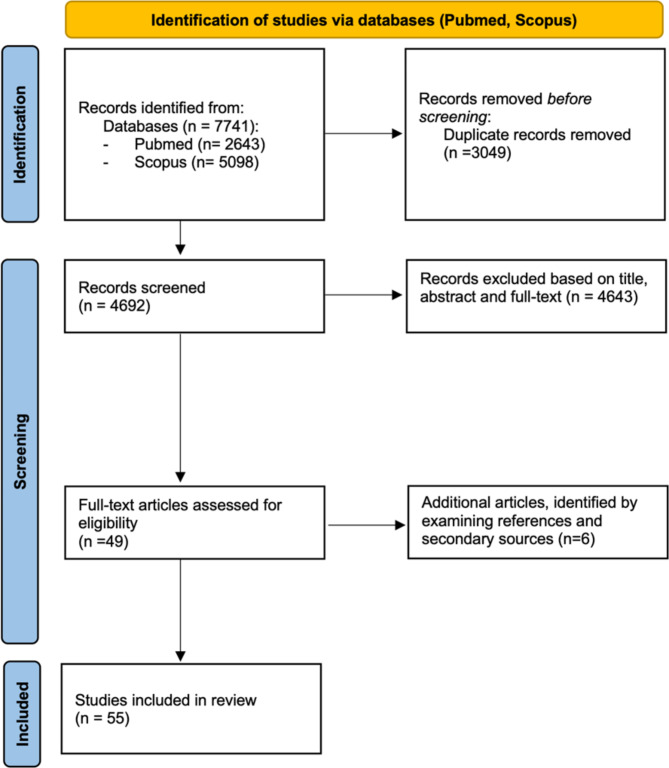
Alzheimer disease (AD) remains a significant global health concern. The progression from preclinical stages to overt dementia has become a crucial point of interest for researchers. This paper reviews the potential of neurophysiological biomarkers in predicting AD progression, based on a systematic literature search following PRISMA guidelines, including 55 studies. EEG-based techniques have been predominantly employed, whereas TMS studies are less common. Among the investigated neurophysiological measures, spectral power measurements and event-related potentials-based measures, including P300 and N200 latencies, have emerged as the most consistent and reliable biomarkers for predicting the likelihood of conversion to AD. In addition, TMS-based indices of cortical excitability and synaptic plasticity have also shown potential in assessing the risk of conversion to AD. However, concerns persist regarding the methodological discrepancies among studies, the accuracy of these neurophysiological measures in comparison to established AD biomarkers, and their immediate clinical applicability. Further research is needed to validate the predictive capabilities of EEG and TMS measures. Advancements in this area could lead to cost-effective, reliable biomarkers, enhancing diagnostic processes and deepening our understanding of AD pathophysiology.
阿尔茨海默病(AD)仍然是一个重大的全球健康问题。从临床前阶段到明显痴呆的进展已经成为研究人员关注的一个关键点。本文基于 PRISMA 指南进行的系统文献检索,综述了神经生理学生物标志物在预测 AD 进展方面的潜力,共纳入了 55 项研究。其中,基于脑电图(EEG)的技术被广泛应用,而经颅磁刺激(TMS)研究则相对较少。在所研究的神经生理学指标中,频谱功率测量和基于事件相关电位的测量(包括 P300 和 N200 潜伏期)已成为预测向 AD 转化可能性的最一致和可靠的生物标志物。此外,TMS 测量的皮质兴奋性和突触可塑性的指标也显示出在评估 AD 转化风险方面的潜力。然而,研究之间存在方法学差异、这些神经生理学测量与已建立的 AD 生物标志物的准确性以及它们的即时临床应用适用性等问题仍令人担忧。需要进一步的研究来验证 EEG 和 TMS 测量的预测能力。该领域的进展可能会带来具有成本效益且可靠的生物标志物,从而增强诊断过程并加深我们对 AD 病理生理学的理解。