Luo Yanan, Zhong Panliang, Huang Yujie, Zhao Yihao, Hong Chenlu, Zheng Xiaoying
Department of Global Health, School of Public Health, Peking University, Beijing, China.
Institute for Global Health and Development, Peking University, Beijing, China.
China CDC Wkly. 2024 Sep 27;6(39):996-1003. doi: 10.46234/ccdcw2024.208.
WHAT IS ALREADY KNOWN ABOUT THIS TOPIC?: The Asia-Pacific region is the most populous and diverse globally, encompassing nations with both the longest and shortest life expectancies (LE). However, less is known about the health-adjusted life expectancy (HALE) situation in this region.
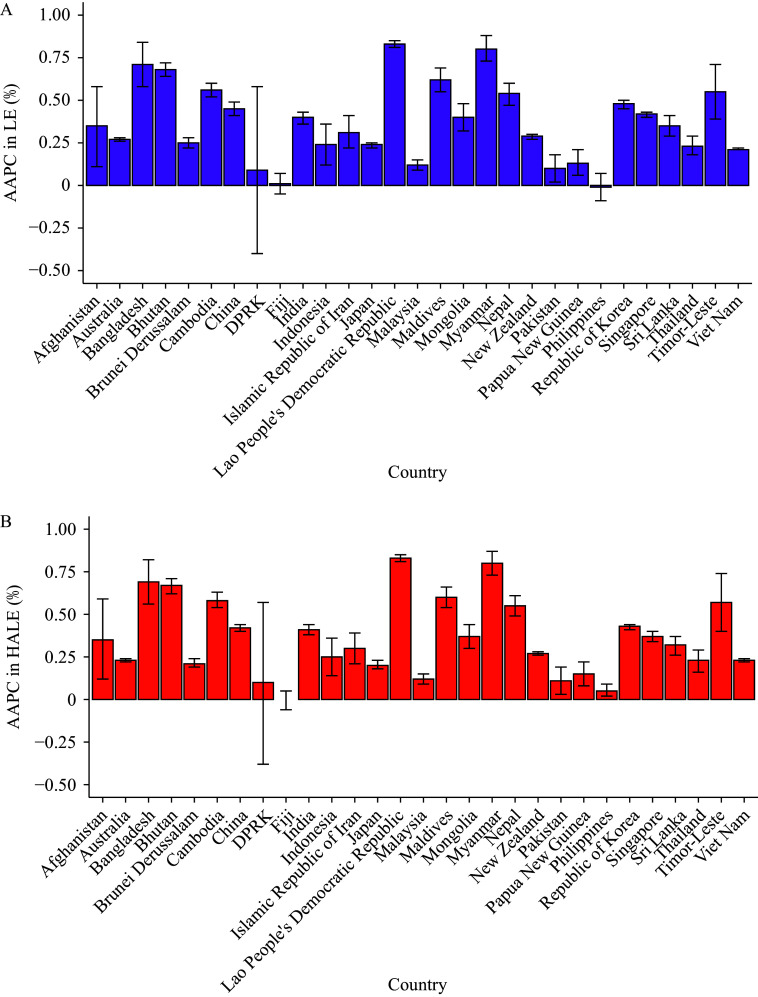
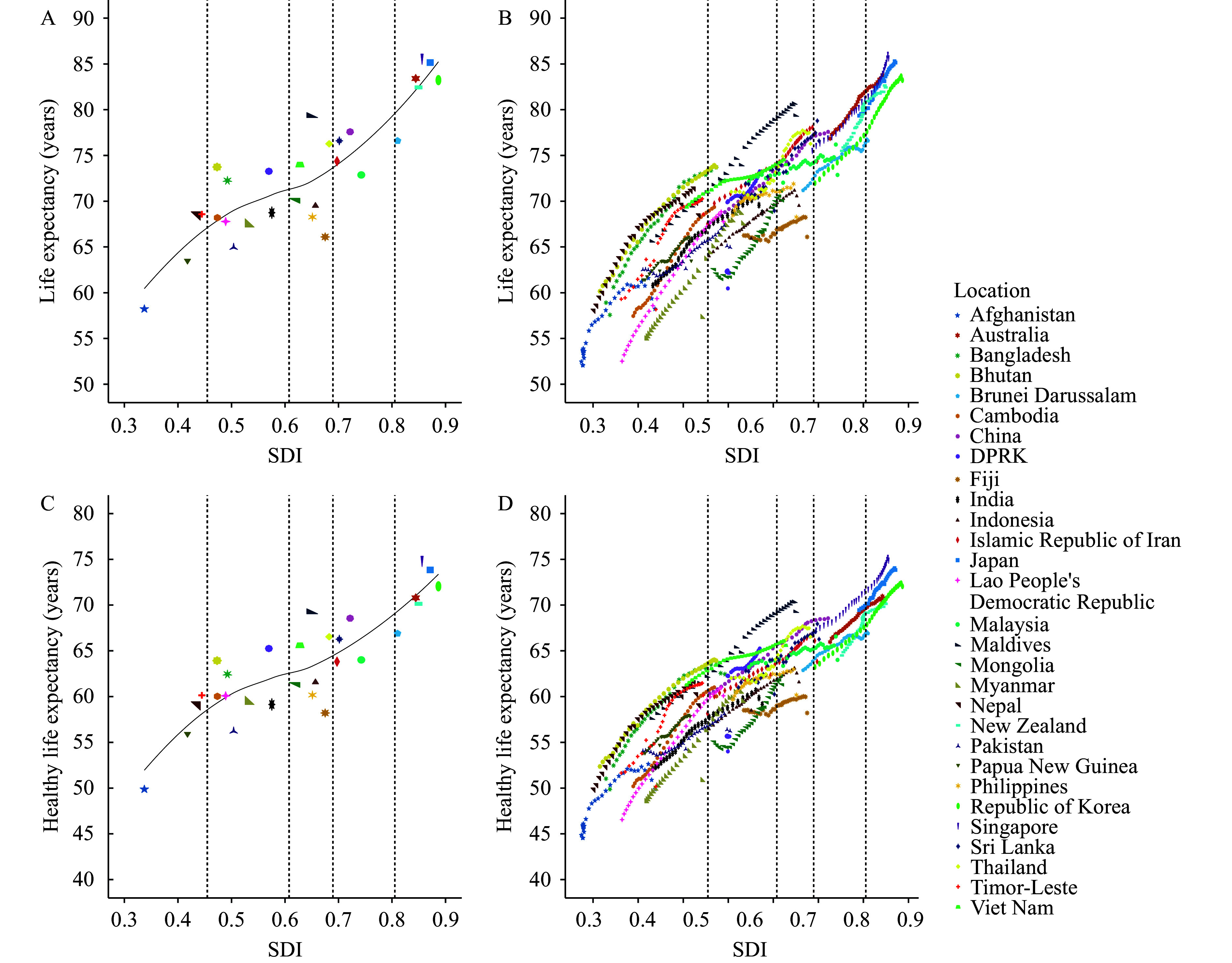
WHAT IS ADDED BY THIS REPORT?: This study found diversity in the levels and trends of HALE among countries in the Asia-Pacific region, with HALE in 2021 ranging from 49.87 years in Afghanistan to 74.96 years in Singapore. The largest HALE increase from 1990 to 2021 was observed in the Lao People's Democratic Republic and the smallest in Fiji. HALE continually increased as SDI increased, but different patterns of HALE across countries varied by SDI level.
WHAT ARE THE IMPLICATIONS FOR PUBLIC HEALTH PRACTICE?: The diversity among these countries provides a prerequisite and scientific basis for promoting the achievement of health goals in the Asia-Pacific region through multilateral and bilateral cooperation.
关于该主题已知的信息有哪些?:亚太地区是全球人口最多且最多样化的地区,涵盖了预期寿命最长和最短的国家。然而,关于该地区健康调整生命 expectancy(HALE)的情况却知之甚少。
本报告补充了哪些内容?:本研究发现亚太地区各国之间HALE的水平和趋势存在差异,2021年HALE从阿富汗的49.87岁到新加坡的74.96岁不等。1990年至2021年期间,老挝人民民主共和国的HALE增幅最大,斐济最小。随着社会人口指数(SDI)的增加,HALE持续上升,但各国不同的HALE模式因SDI水平而异。
对公共卫生实践有哪些启示?:这些国家之间的差异为通过多边和双边合作促进亚太地区实现健康目标提供了前提条件和科学依据。