Aponte Adriana Milena Olarte, Ospina Victoria, Pulido Sergio A, Ríos-Vásquez Luz Amalia, Jaramillo Luz Adriana Betancur, Peña Carlos Mario Muñetón, Ocampo-Cardona Rogelio, Robledo Sara M
PECET-Facultad de Medicina, Universidad de Antioquia, Medellín, Colombia.
Grupo Estudios Preclínicos, Corporación de Innovación para el Desarrollo de Productos, Medellín, Colombia.
Adv Pharmacol Pharm Sci. 2024 Oct 30;2024:2671547. doi: 10.1155/2024/2671547. eCollection 2024.
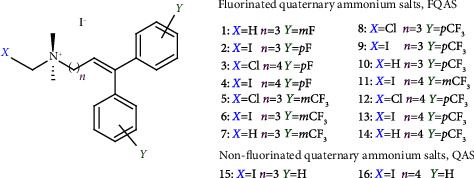
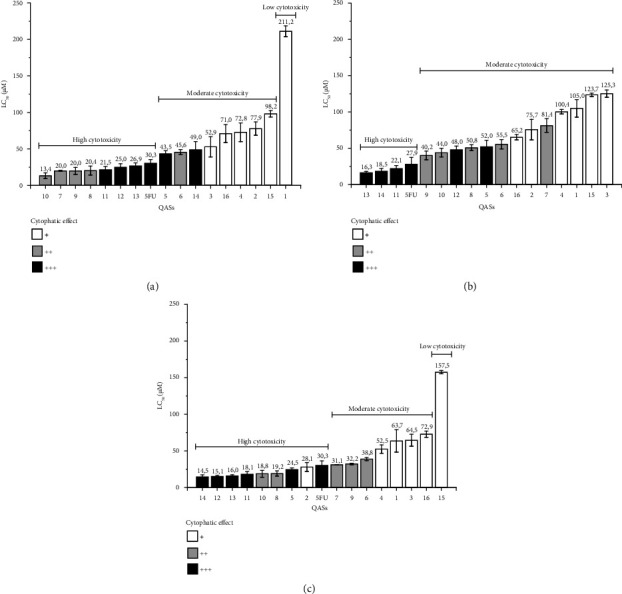
Colorectal cancer (CRC) is a multifactorial disease driven by genetic and epigenetic alterations that modulate specific metabolic pathways. Despite the availability of effective treatments like 5-fluorouracil (5-FU), pharmacological therapy for CRC still faces significant challenges, including drug resistance, toxicity, and limited specificity. Therefore, discovering new compounds remains critical to overcoming these barriers and expanding treatment options. This study evaluated the cytotoxicity of fluorinated quaternary ammonium salts (FQAS) library in CRC-derived cell lines with premetastatic and metastatic phenotypes. The genetic and epigenetic background of the CRC cell lines and the selectivity of cytotoxicity compared to nontumor cells and between different CRC stages were also assessed. Additionally, the in silico pharmacological properties of these FQASs were analyzed. Results showed that FQASs exhibited significant cytotoxic activity against both premetastatic and metastatic CRC cell lines, with FQASs , , and displaying selective toxicity toward CRC cells over normal murine colorectal cells. However, in silico studies indicated poor oral bioavailability for these compounds, suggesting that an injection-based delivery route may be more effective for targeting CRC cells. In conclusion, CF-containing FQASs are promising therapeutic candidates for CRC treatment.
结直肠癌(CRC)是一种由遗传和表观遗传改变驱动的多因素疾病,这些改变会调节特定的代谢途径。尽管有5-氟尿嘧啶(5-FU)等有效治疗方法,但CRC的药物治疗仍面临重大挑战,包括耐药性、毒性和特异性有限。因此,发现新化合物对于克服这些障碍和扩大治疗选择仍然至关重要。本研究评估了氟化季铵盐(FQAS)文库对具有转移前和转移表型的CRC衍生细胞系的细胞毒性。还评估了CRC细胞系的遗传和表观遗传背景以及与非肿瘤细胞相比和不同CRC阶段之间细胞毒性的选择性。此外,分析了这些FQAS的计算机模拟药理学特性。结果表明,FQAS对转移前和转移的CRC细胞系均表现出显著的细胞毒性活性,其中FQAS 、 和 对CRC细胞显示出比对正常小鼠结肠直肠细胞更高的选择性毒性。然而,计算机模拟研究表明这些化合物的口服生物利用度较差,这表明基于注射的给药途径可能对靶向CRC细胞更有效。总之,含CF的FQAS是CRC治疗有前景的候选治疗药物。