Department of Orthopedics, Qilu Hospital of Shandong University, Jinan, Shandong, China.
Department of Otorhinolaryngology, Qilu Hospital of Shandong University, National Health Commission Key Laboratory of Otorhinolaryngology, Jinan, Shandong, China.
Sci Rep. 2024 Nov 14;14(1):28039. doi: 10.1038/s41598-024-78663-1.
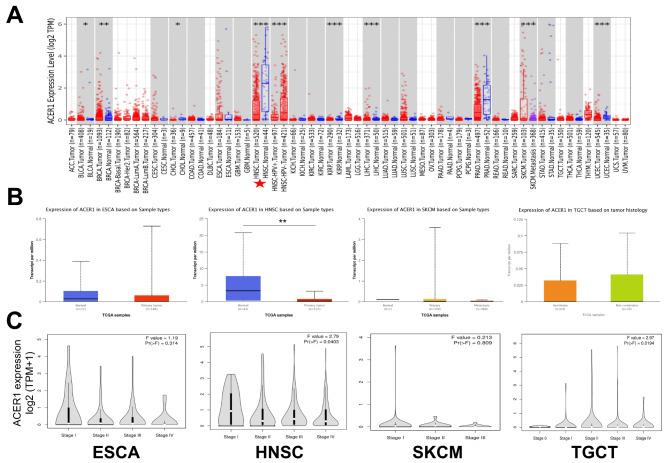
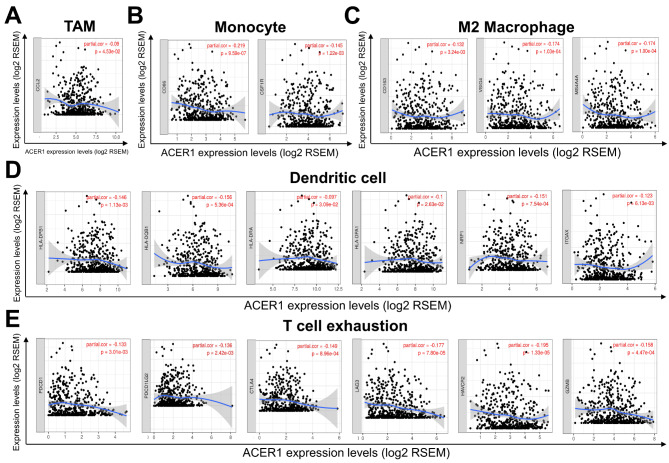
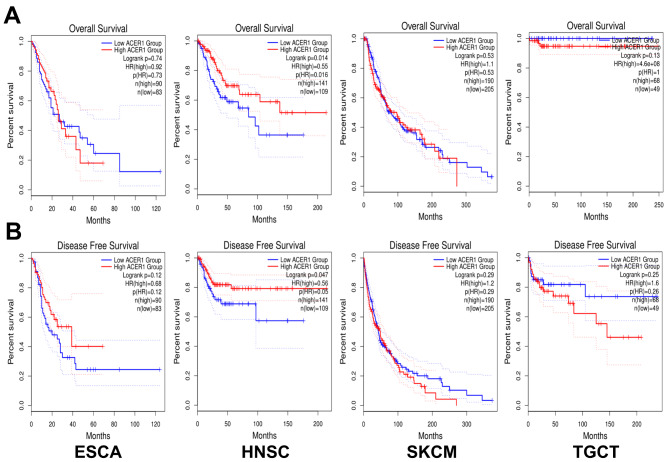
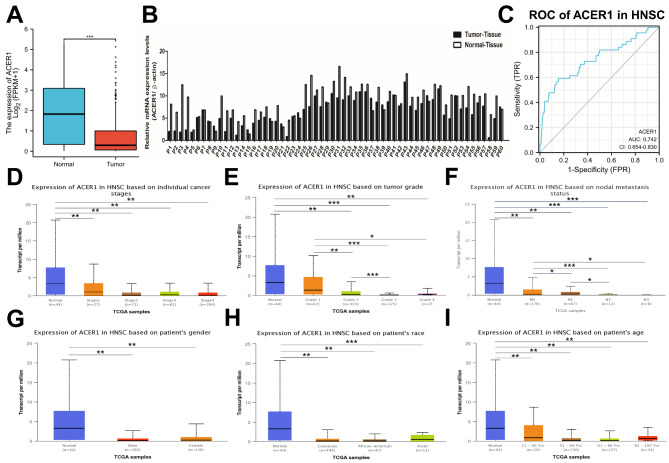
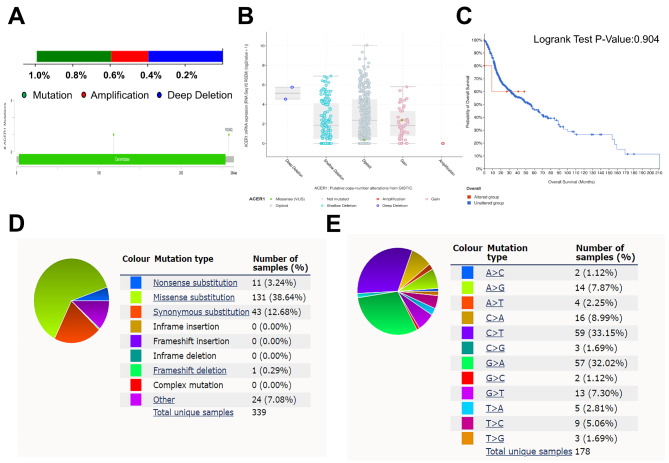
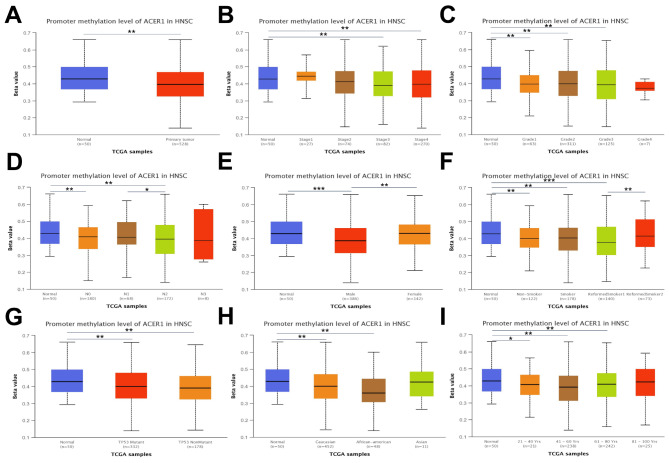
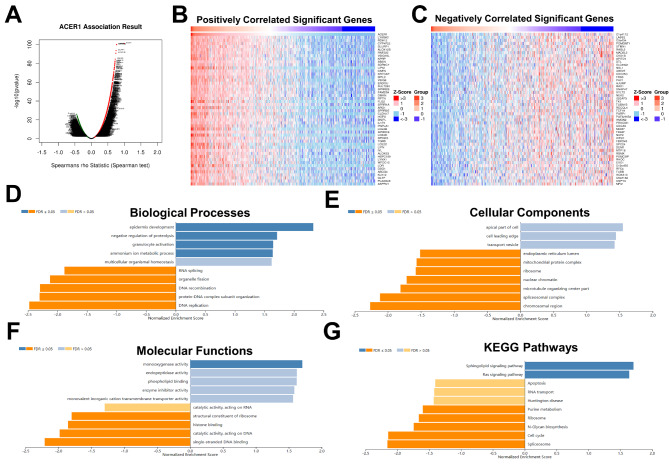
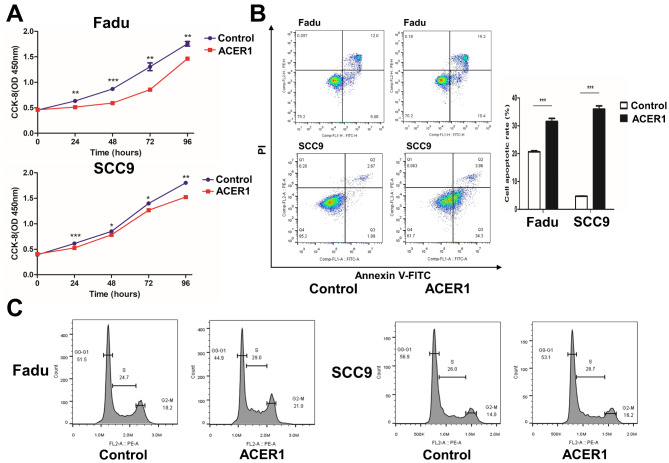
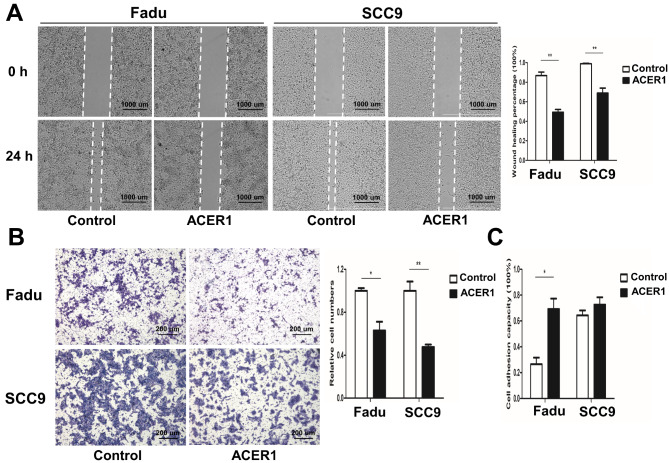
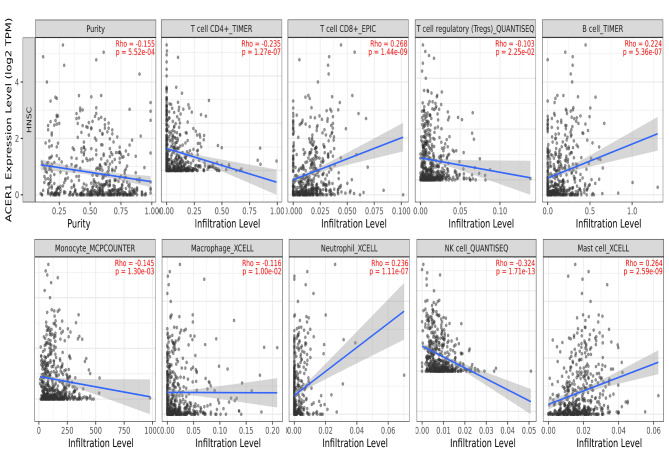
Head and neck squamous cell carcinoma (HNSCC) is notorious for poor prognoses, and effective biomarkers are urgently needed for early diagnosis of HNSCC patients. We investigate the role of alkaline ceramidase 1 (ACER1) and its relationship with immune infiltration in HNSCC. The differential expression and clinical prognostic significance of ACER1 in HNSCC patients are explored using bioinformatics methods and verified in human HNSCC samples. Genetic mutation, DNA methylation and drug sensitivity linked with ACER1 are examined. The potential biological function of ACER1 co-expression genes is assessed, and a series of functional assays are performed on ACER1in vitro. The results comprehensively reveal a relationship between ACER1 and immune infiltration in HNSCC patients. ACER1 expression is significantly downregulated in HNSCC tissues and closely correlated with better prognoses for HNSCC patients, and this prognostic significance is determined by distinct clinical characteristics. Genetic alteration and promoter hypomethylation of ACER1 are involved in progression of HNSCC, and ACER1 expression is significantly related to several drug sensitivities. Functional analysis shows that ACER1 co-expression genes are mainly enriched in the sphingolipid signaling pathway associated with inhibition of tumorigenesis, leading to better prognoses for HNSCC patients. In vitro, ACER1 overexpression inhibits proliferation and migration, induces apoptosis, and promotes adhesion of Fadu and SCC9 cells. In addition, high ACER1 expression is closely linked with infiltration levels of immune cells, and strongly associated with biomarkers of immune cells in HNSCC, suggesting the important role of ACER1 in regulating tumor immunity in HNSCC patients. In summary, ACER1 may be a useful indicator for diagnosis and prognosis, and may regulate immune infiltration in HNSCC patients, thus promising targeted immunotherapy for HNSCC.
头颈部鳞状细胞癌(HNSCC)预后不良,迫切需要有效的生物标志物用于 HNSCC 患者的早期诊断。我们研究了碱性神经酰胺酶 1(ACER1)及其与 HNSCC 患者免疫浸润的关系。利用生物信息学方法探讨了 ACER1 在 HNSCC 患者中的差异表达及其临床预后意义,并在人 HNSCC 样本中进行了验证。检查了与 ACER1 相关的遗传突变、DNA 甲基化和药物敏感性。评估了 ACER1 共表达基因的潜在生物学功能,并在体外对 ACER1 进行了一系列功能测定。结果全面揭示了 ACER1 与 HNSCC 患者免疫浸润之间的关系。ACER1 在 HNSCC 组织中的表达显著下调,与 HNSCC 患者的较好预后密切相关,而这种预后意义由不同的临床特征决定。ACER1 的遗传改变和启动子低甲基化参与了 HNSCC 的进展,ACER1 的表达与几种药物敏感性显著相关。功能分析表明,ACER1 共表达基因主要富集在与抑制肿瘤发生相关的神经酰胺信号通路中,导致 HNSCC 患者的预后较好。在体外,ACER1 过表达抑制增殖和迁移,诱导细胞凋亡,并促进 Fadu 和 SCC9 细胞的黏附。此外,高 ACER1 表达与免疫细胞浸润水平密切相关,并与 HNSCC 中免疫细胞的标志物强烈相关,提示 ACER1 在调节 HNSCC 患者肿瘤免疫中起重要作用。综上所述,ACER1 可能是一种有用的诊断和预后指标,可调节 HNSCC 患者的免疫浸润,从而有望为 HNSCC 提供靶向免疫治疗。