Department of Medicine, University of Chicago, Chicago, IL, USA.
Geisinger Cancer Institute, Danville, PA, USA.
Sci Adv. 2024 Nov 15;10(46):eadq0856. doi: 10.1126/sciadv.adq0856.
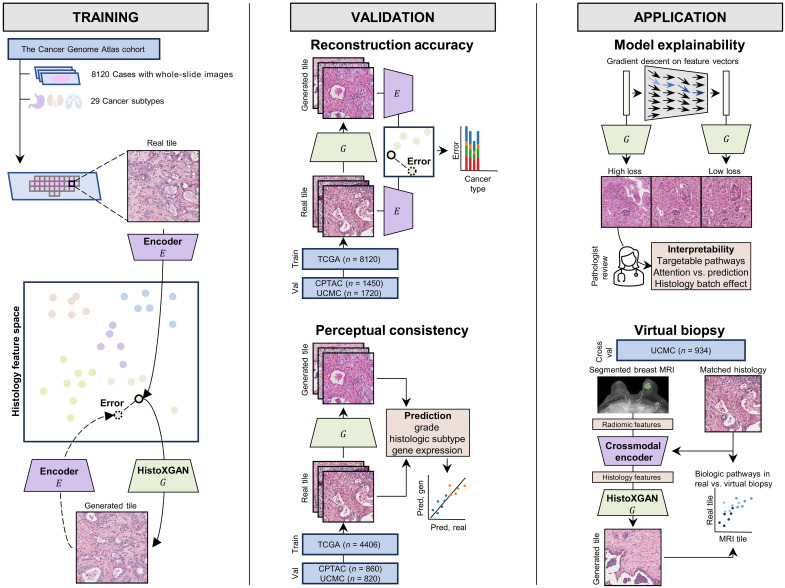
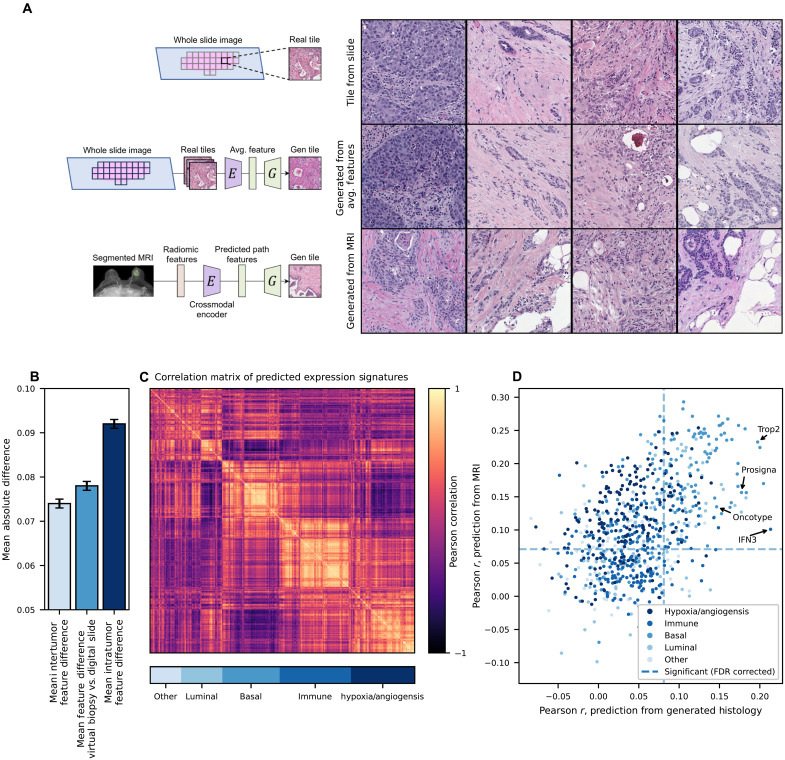
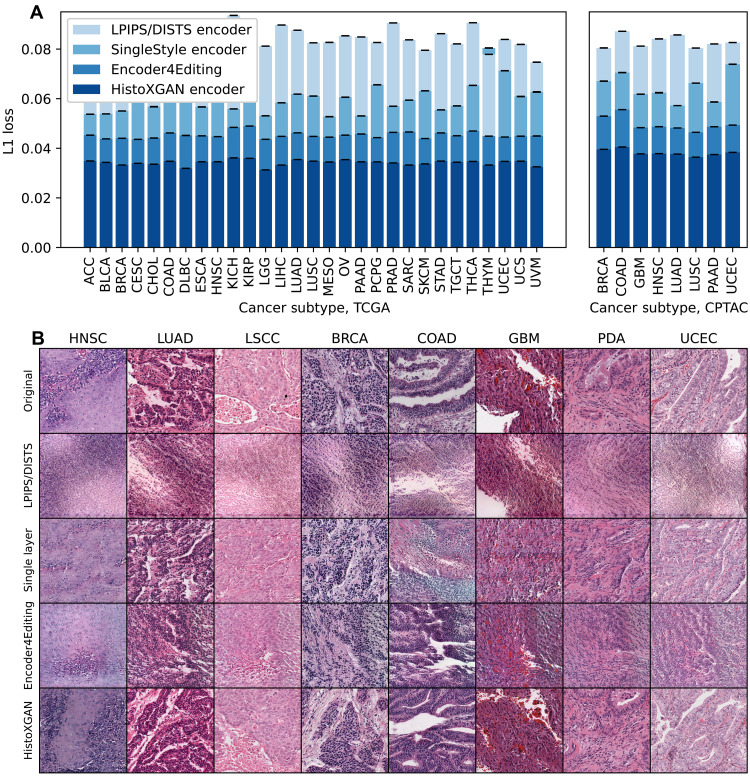
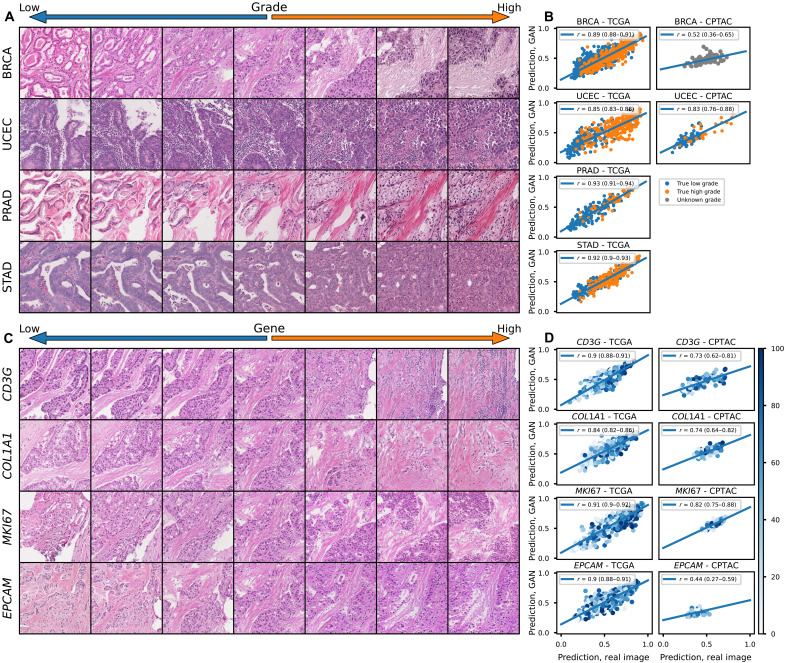
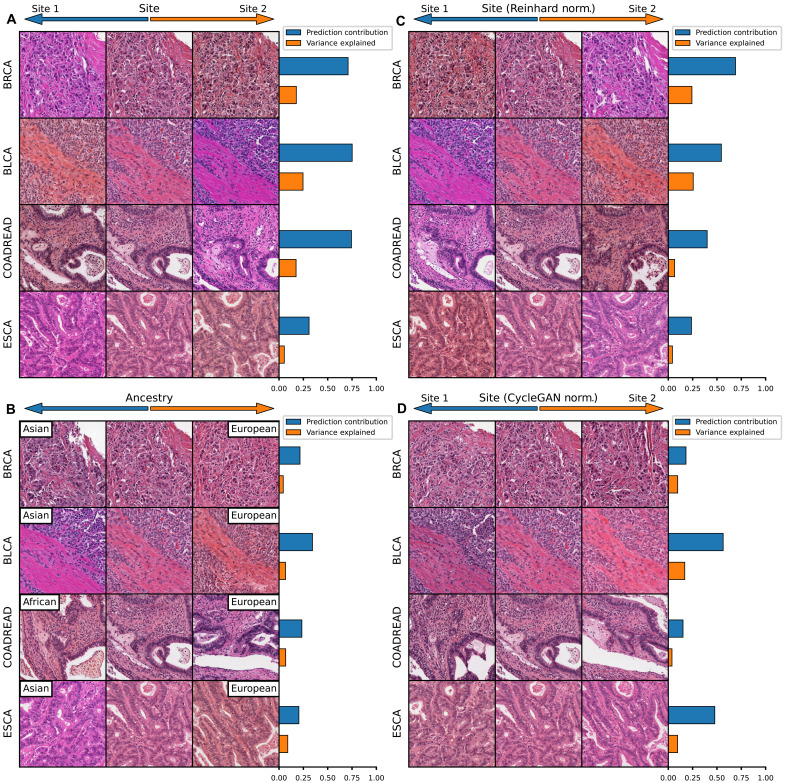
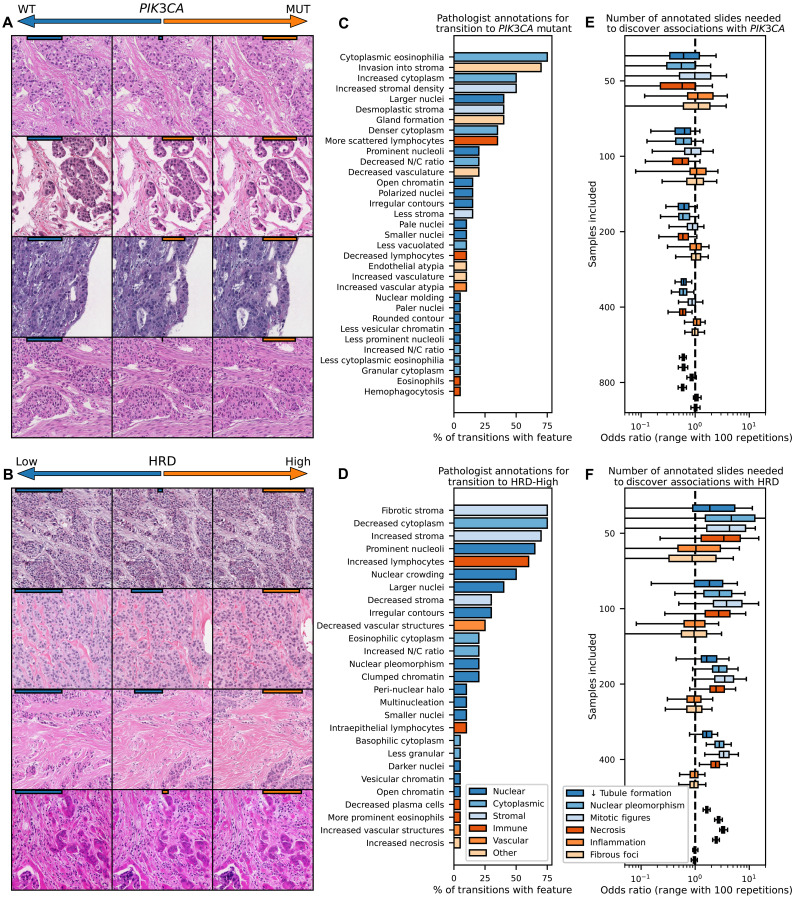
Artificial intelligence models have been increasingly used in the analysis of tumor histology to perform tasks ranging from routine classification to identification of molecular features. These approaches distill cancer histologic images into high-level features, which are used in predictions, but understanding the biologic meaning of such features remains challenging. We present and validate a custom generative adversarial network-HistoXGAN-capable of reconstructing representative histology using feature vectors produced by common feature extractors. We evaluate HistoXGAN across 29 cancer subtypes and demonstrate that reconstructed images retain information regarding tumor grade, histologic subtype, and gene expression patterns. We leverage HistoXGAN to illustrate the underlying histologic features for deep learning models for actionable mutations, identify model reliance on histologic batch effect in predictions, and demonstrate accurate reconstruction of tumor histology from radiographic imaging for a "virtual biopsy."
人工智能模型越来越多地被用于肿瘤组织学分析,以执行从常规分类到识别分子特征等任务。这些方法将癌症组织学图像提取为高级特征,用于预测,但理解这些特征的生物学意义仍然具有挑战性。我们提出并验证了一种定制的生成对抗网络-HistoXGAN-能够使用常见特征提取器生成的特征向量来重建有代表性的组织学图像。我们在 29 种癌症亚型中评估了 HistoXGAN,并证明重建图像保留了有关肿瘤分级、组织学亚型和基因表达模式的信息。我们利用 HistoXGAN 来说明可操作突变的深度学习模型的潜在组织学特征,识别模型在预测中对组织学批次效应的依赖,并展示从放射影像学准确重建肿瘤组织学的“虚拟活检”。