School of Data Science, Fudan University, Shanghai, China.
Institute of Science and Technology for Brain-Inspired Intelligence, Fudan University, Shanghai, China.
Sci Adv. 2024 Nov 15;10(46):eadp3751. doi: 10.1126/sciadv.adp3751.
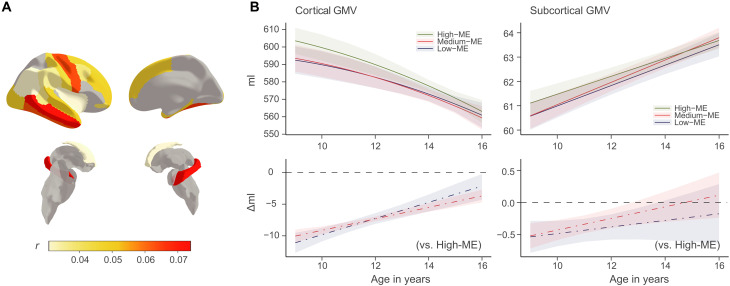
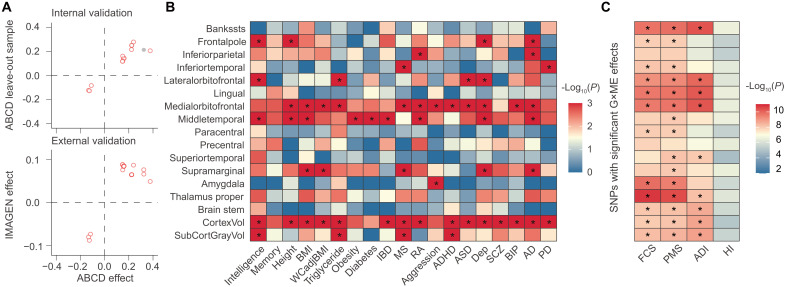
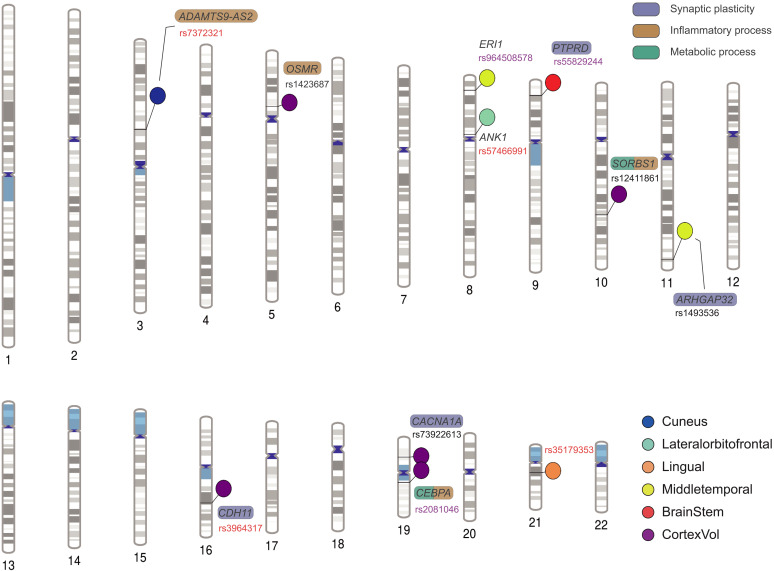
Maternal education was strongly correlated with adolescent brain morphology, cognitive performances, and mental health. However, the molecular basis for the effects of maternal education on the structural neurodevelopment remains unknown. Here, we conducted gene-environment-wide interaction study using the Adolescent Brain Cognitive Development cohort. Seven genomic loci with significant gene-environment interactions (G×E) on regional gray matter volumes were identified, with enriched biological functions related to metabolic process, inflammatory process, and synaptic plasticity. Additionally, genetic overlapping results with behavioral and disease-related phenotypes indicated shared biological mechanism between maternal education modified neurodevelopment and related behavioral traits. Finally, by decomposing the multidimensional components of maternal education, we found that socioeconomic status, rather than family environment, played a more important role in modifying the genetic effects on neurodevelopment. In summary, our study provided analytical evidence for G×E effects regarding adolescent neurodevelopment and explored potential biological mechanisms as well as social mechanisms through which maternal education could modify the genetic effects on regional brain development.
母亲的教育程度与青少年的大脑形态、认知表现和心理健康密切相关。然而,母亲教育对结构神经发育影响的分子基础尚不清楚。在这里,我们使用青少年大脑认知发展队列进行了基因-环境广泛相互作用研究。鉴定出 7 个与区域灰质体积有显著基因-环境相互作用(G×E)的基因组位点,其富集的生物学功能与代谢过程、炎症过程和突触可塑性有关。此外,与行为和疾病相关表型的遗传重叠结果表明,母亲教育修饰神经发育和相关行为特征之间存在共同的生物学机制。最后,通过分解母亲教育的多维成分,我们发现社会经济地位,而不是家庭环境,在修饰遗传对神经发育的影响方面起着更重要的作用。总之,我们的研究为青少年神经发育的 G×E 效应提供了分析证据,并探讨了潜在的生物学机制和社会机制,通过这些机制,母亲教育可以修饰遗传对区域大脑发育的影响。