Sun Yat-Sen University Cancer Center, State Key Laboratory of Oncology in South China, Guangdong Provincial Clinical Research Center for Cancer, 651 Dongfeng Road East, Guangzhou, 510060, People's Republic of China.
Center of Digestive Disease, Scientific Research Center, The Seventh Affiliated Hospital, Sun Yat-Sen University, Shenzhen, 518107, People's Republic of China.
J Exp Clin Cancer Res. 2024 Nov 18;43(1):303. doi: 10.1186/s13046-024-03224-3.
Bladder cancer (BLCA) is a common malignancy characterized by dysregulated transcription and a lack of effective therapeutic targets. In this study, we aimed to identify and evaluate novel targets with clinical potential essential for tumor growth in BLCA.
CRISPR-Cas9 screening was used to identify transcription factors essential for bladder cancer cell viability. The biological functions of KLF16 in bladder cancer were investigated both in vitro and in vivo. The regulatory mechanism between KLF16 and MYC was elucidated through a series of analyses, including RNA sequencing, quantitative polymerase chain reaction (qPCR), RNA immunoprecipitation, Western blotting, Mass spectrometry, Dual-luciferase reporter assays, Cleavage Under Targets and Tagmentation (CUT&Tag) sequencing, OptoDroplets assays, and RNA stability assay. The clinical relevance of KLF16 and MYC in bladder cancer was evaluated through analyses of public databases and immunohistochemistry.
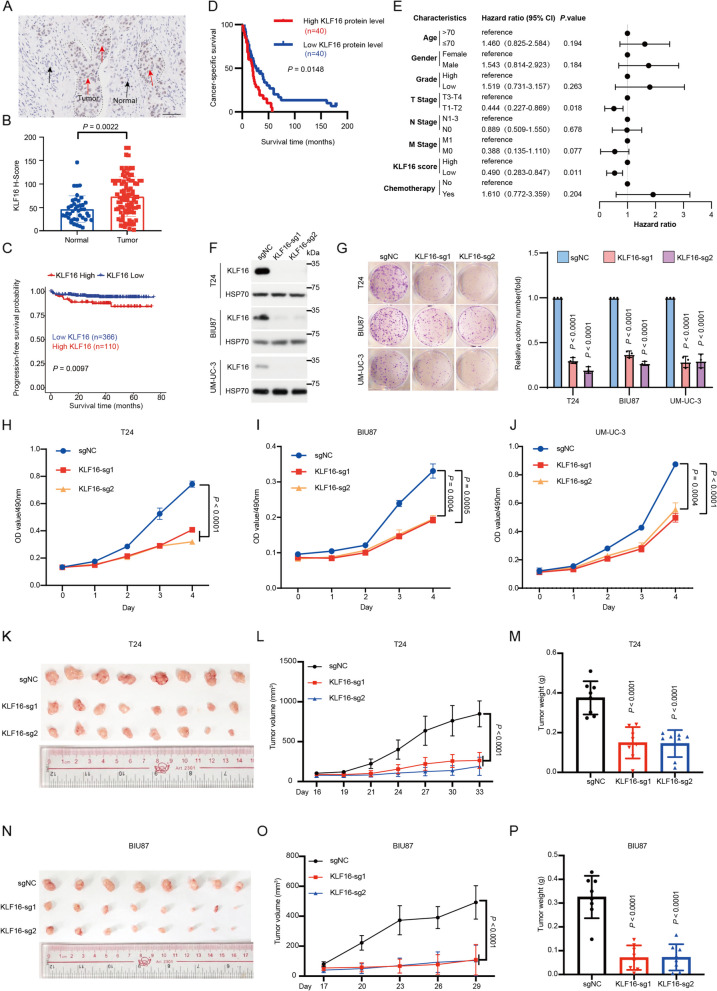
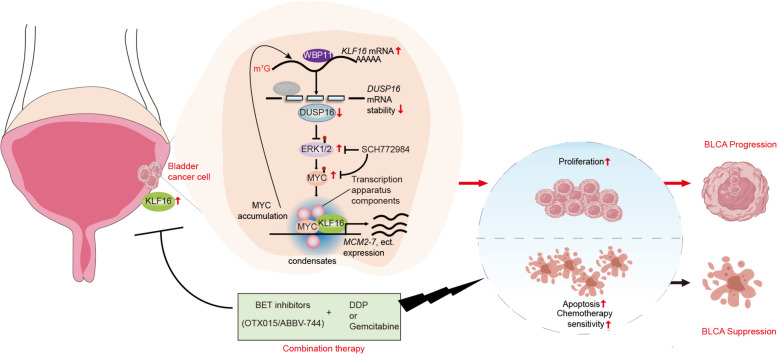
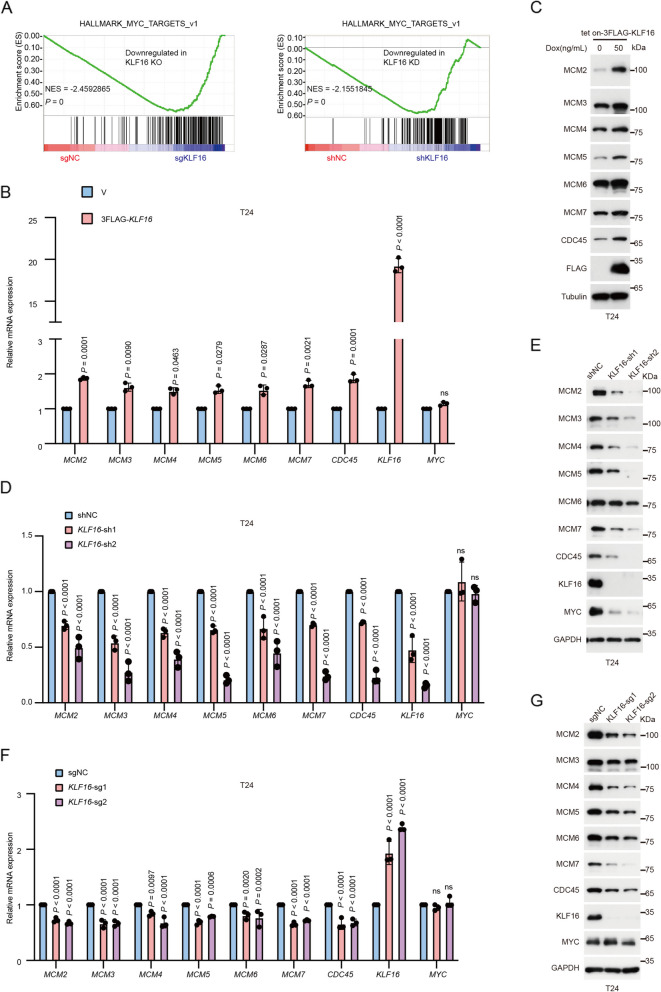
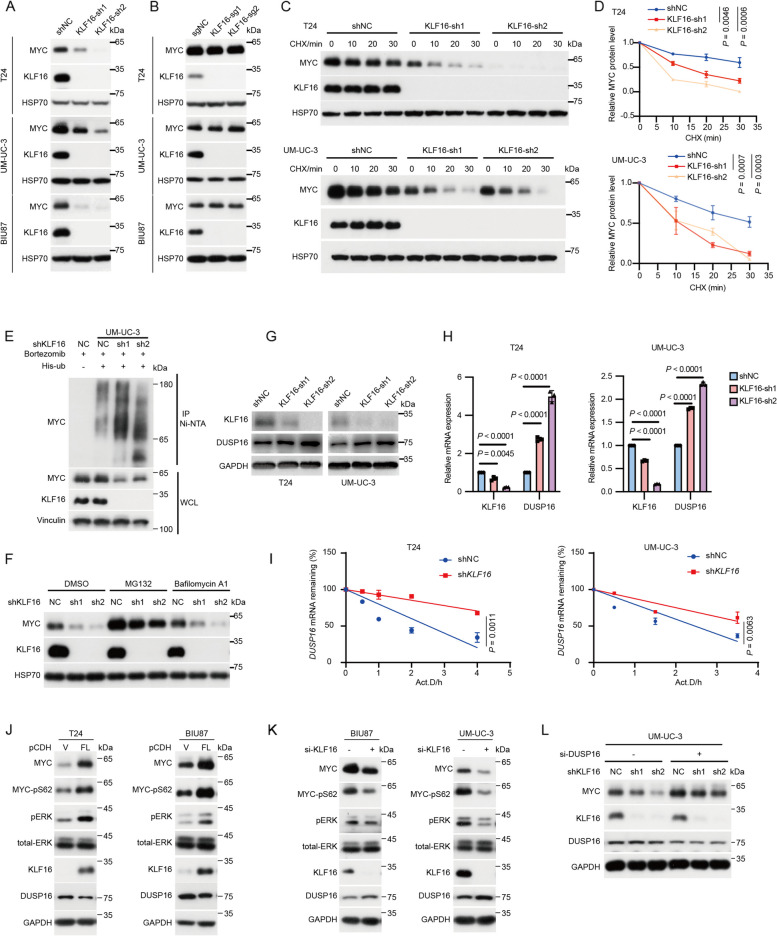
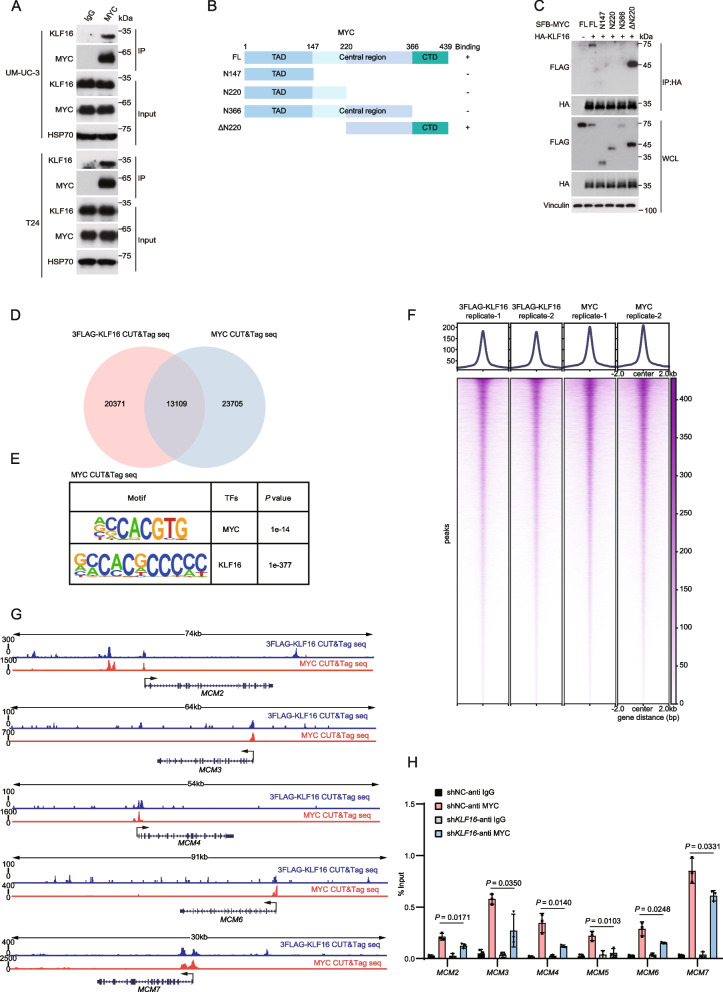
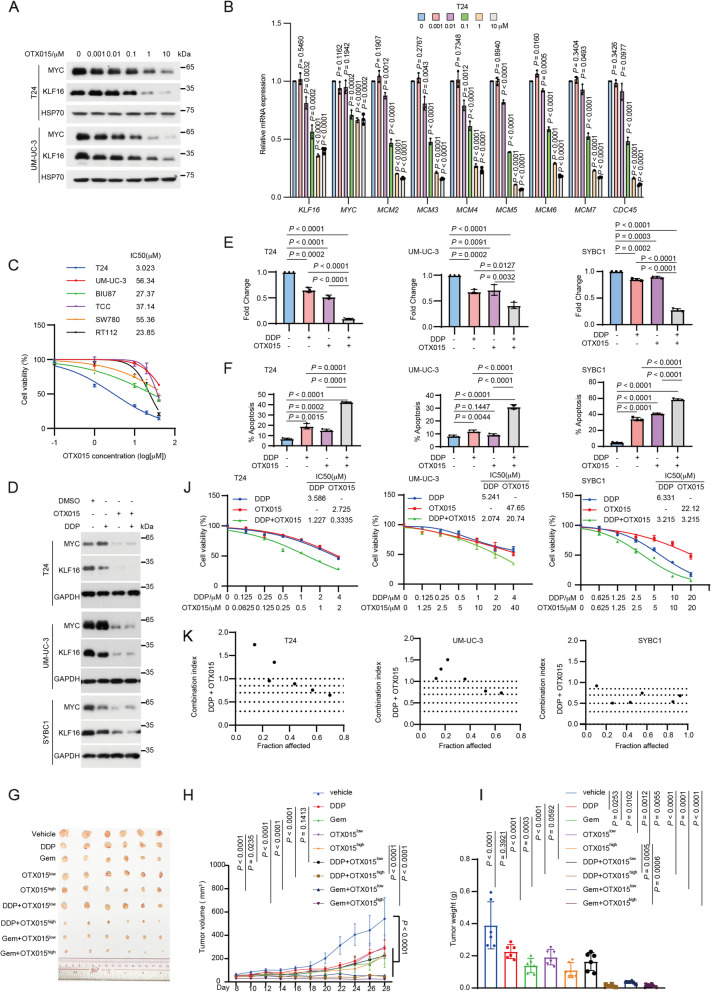
Krüppel-like factor 16 (KLF16) was essential for BLCA cell viability. Elevated expression of KLF16 was observed in bladder cancer tissues, and higher expression levels of KLF16 were correlated with poor progression-free survival (PFS) and cancer-specific survival (CSS) probabilities in BLCA patients. Mechanistically, KLF16 mRNA competed with the mRNA of dual-specificity phosphatase 16 (DUSP16) for binding to the RNA-binding protein, WW domain binding protein 11 (WBP11), resulting in destabilization of the DUSP16 mRNA. This, in turn, led to activation of ERK1/2, which stabilized the MYC protein. Furthermore, KLF16 interacted with MYC to form nuclear condensates, thereby enhancing MYC's transcriptional activity. Additionally, MYC transcriptionally upregulated KLF16, creating a positive feedback loop between KLF16 and MYC that amplified their oncogenic functions. Targeting this loop with bromodomain inhibitors, such as OTX015 and ABBV-744, suppressed the transcription of both KLF16 and MYC, resulting in reduced BLCA cell viability and tumor growth, as well as increased sensitivity to chemotherapy.
Our study revealed the crucial role of the KLF16/MYC regulatory axis in modulating tumor growth and chemotherapy sensitivity in BLCA, suggesting that combining bromodomain inhibitors, such as OTX015 or ABBV-744, with DDP or gemcitabine could be a promising therapeutic intervention for BLCA patients.
膀胱癌(BLCA)是一种常见的恶性肿瘤,其特征为转录失调和缺乏有效的治疗靶点。在本研究中,我们旨在鉴定和评估对 BLCA 肿瘤生长具有临床潜力的新型靶标。
使用 CRISPR-Cas9 筛选鉴定对膀胱癌细胞活力至关重要的转录因子。在体外和体内研究 KLF16 在膀胱癌中的生物学功能。通过一系列分析,包括 RNA 测序、定量聚合酶链反应(qPCR)、RNA 免疫沉淀、Western blot、质谱分析、双荧光素酶报告基因检测、靶向切割和标签化(CUT&Tag)测序、OptoDroplets 检测和 RNA 稳定性检测,阐明 KLF16 和 MYC 之间的调控机制。通过分析公共数据库和免疫组织化学评估 KLF16 和 MYC 在膀胱癌中的临床相关性。
Krüppel 样因子 16(KLF16)对 BLCA 细胞活力至关重要。在膀胱癌组织中观察到 KLF16 表达升高,并且 KLF16 表达水平较高与 BLCA 患者无进展生存期(PFS)和癌症特异性生存期(CSS)概率降低相关。在机制上,KLF16 mRNA 与双特异性磷酸酶 16(DUSP16)的 mRNA 竞争与 RNA 结合蛋白 WW 结构域结合蛋白 11(WBP11)结合,导致 DUSP16 mRNA 不稳定。这反过来又激活了 ERK1/2,从而稳定了 MYC 蛋白。此外,KLF16 与 MYC 相互作用形成核凝聚物,从而增强了 MYC 的转录活性。此外,MYC 转录上调 KLF16,在 KLF16 和 MYC 之间形成正反馈环,放大它们的致癌功能。用溴结构域抑制剂,如 OTX015 和 ABBV-744 靶向该环,抑制 KLF16 和 MYC 的转录,导致 BLCA 细胞活力和肿瘤生长降低,并增加对化疗的敏感性。
本研究揭示了 KLF16/MYC 调节轴在调节 BLCA 肿瘤生长和化疗敏感性中的关键作用,表明联合溴结构域抑制剂,如 OTX015 或 ABBV-744,与 DDP 或吉西他滨联合使用可能是 BLCA 患者有前途的治疗干预措施。