Tsuchida Tomoya, Hirose Masanori, Fujii Hirotoshi, Hisatomi Ryunosuke, Ishizuka Kosuke, Inoue Yoko, Katayama Kohta, Nakagama Yu, Kido Yasutoshi, Matsuda Takahide, Ohira Yoshiyuki
Department of General Internal Medicine St. Marianna University School of Medicine Kawasaki Japan.
Ochsner LSU Health Shreveport Family Medicine Resident Alexandria Louisiana USA.
J Gen Fam Med. 2024 Jul 8;25(6):324-332. doi: 10.1002/jgf2.716. eCollection 2024 Nov.
Evidence for the pathogenesis and treatment of postacute coronavirus disease 2019 (COVID-19) (long COVID) is lacking. As long COVID symptoms are predicted to have an impact on the global economy, clarification of the pathogenesis is urgently needed. Our experiences indicated that some symptoms were complicated by diseases established before the COVID-19 pandemic.
Using a retrospective, cross-sectional study, we aimed to evaluate the diseases complicating long COVID. Using the medical records of patients with confirmed COVID-19 exhibiting residual symptoms lasting ≥60 days postinfection who visited our clinic in January 2021-February 2023, we investigated the symptoms and diseases observed. We identified diseases that occurred after COVID-19 and excluded those that were exacerbations of existing diseases.
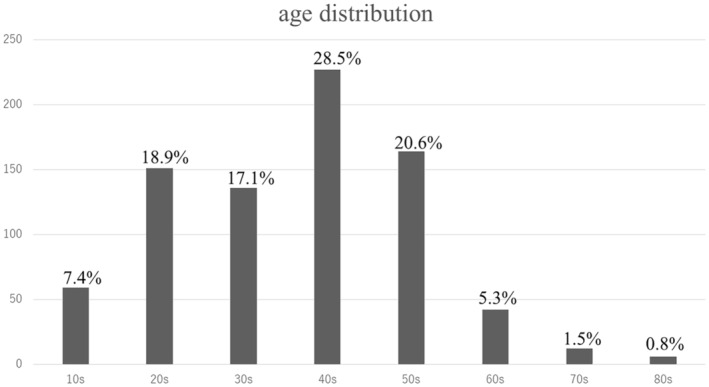
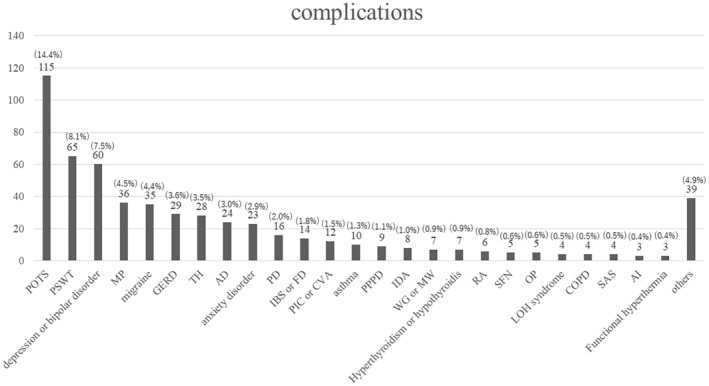
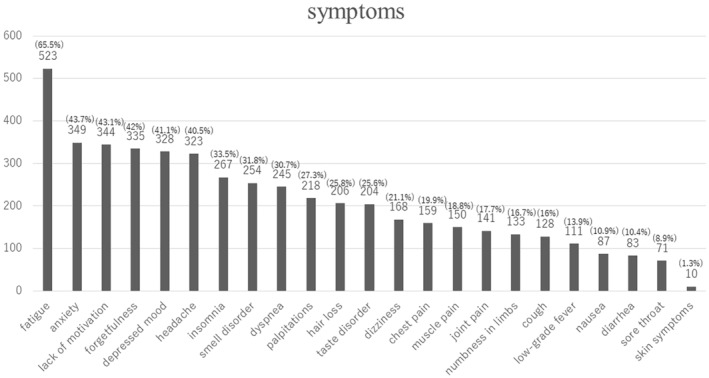
During the first visit, the most common symptoms reported in a total of 798 patients were fatigue (523 patients), anxiety (349 patients), and lack of motivation (344 patients). Complicating diseases were observed in 452 patients (57%). There were 115, 65, and 60 patients with postural tachycardia syndrome, postural syndrome without tachycardia, and mood disorders, respectively. Some diseases requiring immediate treatment included pulmonary thromboembolism, purulent shoulder arthritis, cerebellopontine angle tumors, myasthenia gravis, and cervical myelopathy.
Not all symptoms that occur after COVID-19 should be treated as long COVID. Similar to normal medical treatment, a list of differential diagnoses should be maintained based on symptoms to obtain definitive diagnoses.
目前缺乏关于2019年冠状病毒病(COVID-19)后急性期(长新冠)发病机制和治疗的证据。由于预计长新冠症状会对全球经济产生影响,因此迫切需要阐明其发病机制。我们的经验表明,一些症状因COVID-19大流行之前就已存在的疾病而变得复杂。
我们采用回顾性横断面研究,旨在评估使长新冠复杂化的疾病。利用2021年1月至2023年2月期间到我们诊所就诊的确诊COVID-19且感染后残留症状持续≥60天的患者的病历,我们调查了观察到的症状和疾病。我们确定了COVID-19后出现的疾病,并排除了现有疾病的加重情况。
在首次就诊时,总共798名患者报告的最常见症状为疲劳(523例患者)、焦虑(349例患者)和缺乏动力(344例患者)。452例患者(57%)出现了并发症。分别有115例、65例和60例患者患有体位性心动过速综合征、无心动过速的体位综合征和情绪障碍。一些需要立即治疗的疾病包括肺血栓栓塞、化脓性肩关节炎、桥小脑角肿瘤、重症肌无力和颈椎病。
并非所有COVID-19后出现的症状都应被视为长新冠。与正常医疗一样,应根据症状列出鉴别诊断清单以获得明确诊断。