Kolié Delphin, Sow Abdoulaye, Ghesquiere Graziella, Van Bastelaere Stefaan, Sandouno Maurice, Diallo Thierno Souleymane, Soropogui Sabine, Barry Yaya, Fofana Thierno Oumar, Camara Bienvenu Salim, Sidibé Sidikiba, Delvaux Thérèse, Delamou Alexandre
Ministry of Health and Public Hygiene, National Research and Training Centre in Rural Health of Maferinyah, Forécariah, Guinea.
Centre of Excellence for the Prevention and Control of Communicable Diseases, University of Conakry, Conakry, Guinea.
Front Glob Womens Health. 2024 Nov 1;5:1365601. doi: 10.3389/fgwh.2024.1365601. eCollection 2024.
Gender-based violence (GBV), particularly sexual violence, is a significant global public health issue with severe physical, psychological, and social consequences for survivors and their communities, especially among women and girls. In Guinea, limited data exist on the frequency and management of sexual violence in rural areas. This study aimed to analyze the perceptions, responses, and challenges faced by women and girls' survivors of sexual violence and their communities in two rural districts of Guinea in 2020.
A parallel mixed-methods approach was employed, integrating quantitative and qualitative data. For the quantitative analysis, all reported cases of GBV from public health facilities and directorates of girls and women' promotion were collected from January 1 to December 31, 2020 in the health districts of Télimélé and Mamou. The qualitative component involved key informant interviews with four main participant groups: survivors of GBV and their support networks, healthcare providers, stakeholders and partners involved in GBV prevention and response, and community leaders. Data were analyzed to identify patterns in case reporting, perceptions of violence, responses by survivors and communities, and challenges to effective management.
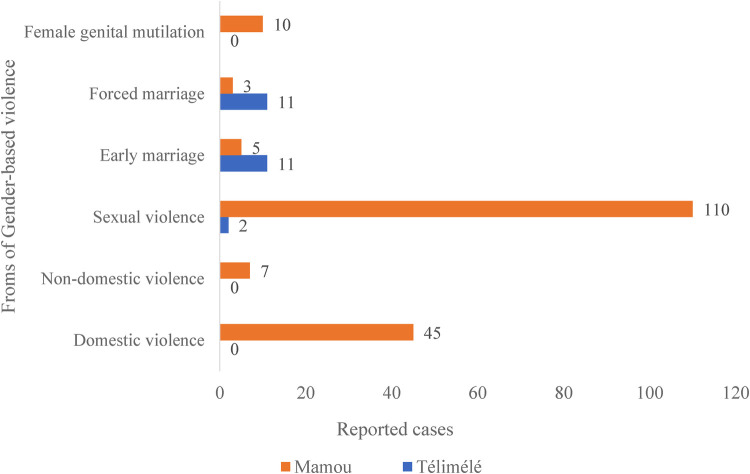
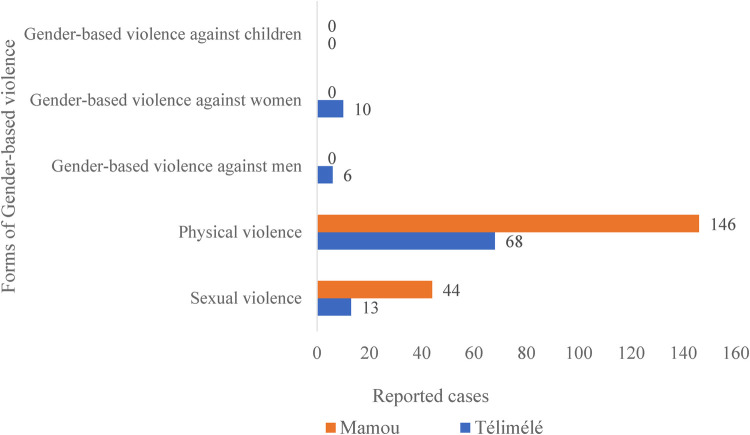
The study revealed a high frequency of reported sexual violence among women, with substantial disparities between the two districts. In Mamou, sexual violence among women constituted 61% of all reported GBV cases, whereas in Télimélé, it accounted for only 8%. Additionally, data on sexual violence were inconsistent, with discrepancies in terminology and significant underreporting of cases. Survivors and their families predominantly sought conciliation with perpetrators' families, motivated by fear of retaliation, social stigmatization, and exclusion. This response was more prevalent in communities with limited law enforcement, where perpetrators were often released after short periods of detention. Participants highlighted several barriers to accessing health services and providing comprehensive care to survivors. These barriers included socio-economic constraints, a lack of skilled healthcare providers, frequent stock-outs of essential medical supplies, and the absence of psycho-social and legal support at the community level.
The findings highlight the urgent need to enhance the capacity of decentralized health and social services to deliver integrated, patient-centered care for sexual violence. There is also a pressing need for stronger enforcement of laws related to sexual violence, enhanced training for healthcare providers, and the harmonization of GBV data reporting tools. Tackling socio-cultural barriers through community education, while enhancing access to legal and psychological support are crucial for reducing the frequency of sexual violence and ensuring timely, quality care for survivors in Guinea.
基于性别的暴力(GBV),尤其是性暴力,是一个重大的全球公共卫生问题,对幸存者及其社区,特别是妇女和女孩,会造成严重的身体、心理和社会后果。在几内亚,农村地区性暴力的发生频率和管理方面的数据有限。本研究旨在分析2020年几内亚两个农村地区性暴力女性和女童幸存者及其社区所面临的认知、应对措施和挑战。
采用平行混合方法,整合定量和定性数据。对于定量分析,收集了2020年1月1日至12月31日期间在泰利梅莱和马穆卫生区公共卫生设施以及促进女童和妇女发展局报告的所有GBV病例。定性部分包括对四个主要参与群体的关键信息访谈:GBV幸存者及其支持网络、医疗保健提供者、参与GBV预防和应对的利益相关者及合作伙伴,以及社区领袖。对数据进行分析,以确定病例报告模式、对暴力的认知、幸存者和社区的应对措施以及有效管理面临的挑战。
该研究揭示了女性中报告的性暴力发生率很高,两个地区之间存在显著差异。在马穆,女性中的性暴力占所有报告的GBV病例的61%,而在泰利梅莱,仅占8%。此外,性暴力数据不一致,术语存在差异,且病例报告严重不足。幸存者及其家人主要因害怕报复、社会污名化和排斥而寻求与施暴者家庭和解。这种应对方式在执法有限的社区更为普遍,在这些社区,施暴者往往在短期拘留后就被释放。参与者强调了获得医疗服务和为幸存者提供全面护理的几个障碍。这些障碍包括社会经济限制、缺乏熟练的医疗保健提供者、基本医疗用品经常缺货,以及社区层面缺乏心理社会和法律支持。
研究结果凸显了迫切需要提高分散的卫生和社会服务能力,以便为性暴力提供以患者为中心的综合护理。还迫切需要加强与性暴力相关法律的执行力度,加强对医疗保健提供者培训,并统一GBV数据报告工具。通过社区教育解决社会文化障碍,同时增加获得法律和心理支持的机会,对于减少几内亚性暴力的发生频率以及确保为幸存者提供及时、高质量的护理至关重要。